
Cabo Diving Center
Google 4.7/5 (121 reviews)
1.7 km away as the crow flies
Sal · Cape Verde · Atlantic
Max. depth · 20 mDunas offers a unique dive experience on Sal, navigating shifting underwater sand dunes alongside a modest wall, an environment known for rays and resident flatfish.
Dunas, also referred to as Dunes, presents a distinct underwater topography compared to many of Sal's more typical reef or wreck dives. Here, the seafloor is primarily composed of undulating sand, forming a series of ridges and valleys that shift with the ocean's influence. This dynamic sandy environment gradually transitions into a minor wall section, adding a structural element to an otherwise open landscape. You'll find yourself drifting along these underwater dunes, with the bottom contour changing subtly throughout the dive, reflecting the ongoing interaction between current and sediment.
The dive profile at Dunas is generally shallow, beginning around 5 metres and descending to a maximum of 20 metres. Your descent takes you into a sandy realm where light plays across the rippled bottom, creating a sense of movement even when the current is mild. The transition from the open sandy flats to the more defined small wall offers a shift in habitat, concentrating marine life. As you navigate these varied contours, you're constantly aware of the Atlantic conditions influencing the site, making for an engaging dive that asks you to pay attention to your surroundings.
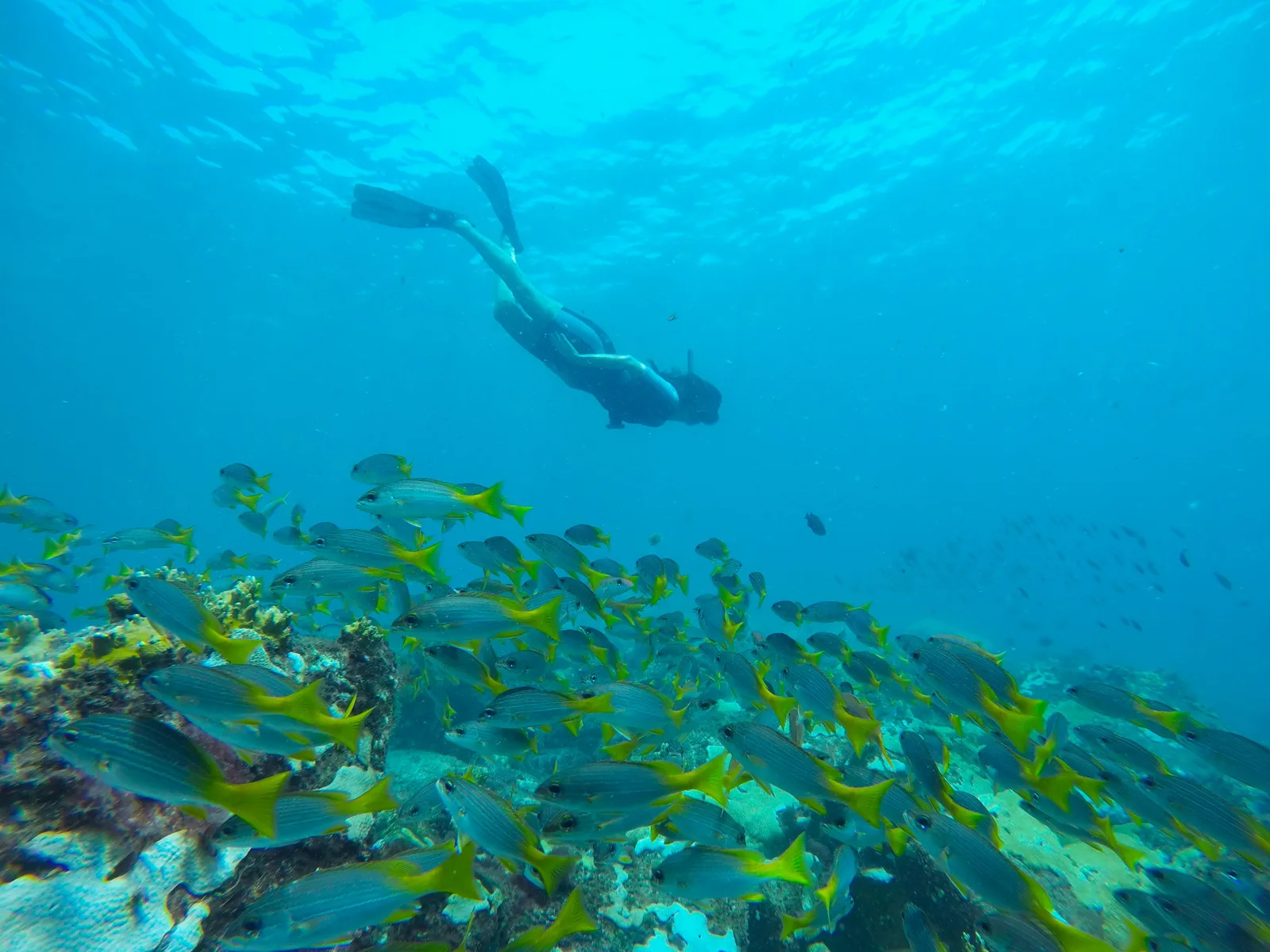
The site's soft bottom is home to a range of marine life adapted to this environment. Flatfish are common, often camouflaged against the sand, requiring a keen eye to spot. You'll also encounter various rays, cruising over the dunes or resting partially buried. The small wall provides shelter and crevices for moray eels and numerous tropical fish that populate its surfaces. This mix of open sandy habitat and structured wall offers a diverse cross-section of local fauna, highlighting the adaptability of species to different parts of the same site.
One of Dunas' significant features is its role as a habitat for turtles, particularly between June and December, when they frequent the area. While not a guaranteed sighting on every dive, the presence of these animals adds another layer to the site's appeal. Beyond the larger creatures, Dunas is also a good spot for macro enthusiasts, with nudibranchs often found on the more stable parts of the small wall. This site isn't about dramatic drop-offs or intricate reef structures; it's about the subtle beauty of a living sandscape and its resident community.
Current at Dunas is variable, and can range from mild, allowing for a relaxed drift, to stronger flows that guide you along the dune formations. This variability means dive plans need to remain flexible, adapting to the day's conditions. Visibility generally holds strong, often between 20 and 30 metres, which allows you to appreciate the expanse of the sand dunes and any larger pelagic visitors from a distance. The interplay of current and visibility defines the experience here, making each dive slightly different.
Unlike the more rugged volcanic reefs or the historical wrecks found elsewhere around Sal, Dunas offers a unique, softer ecosystem. Its primary draw is the dynamic sand topography and the life it supports, rather than fixed geological structures. This makes Dunas a distinctive site for those looking to experience a different aspect of Cap-Vert's underwater world, focusing on the interactions within a less structured environment. The site is a reminder that rich marine ecosystems exist beyond the typical reef settings, often in unexpected places.
Dunas is accessible for Open Water divers, though the variable current means a comfort with drift diving and at least 20 logged dives is advisable for a more relaxed experience. The dive depth ranges from 5 metres to a maximum of 20 metres. Visibility typically remains good, between 20 and 30 metres. While turtles are more present between June and December, the period from April to June generally offers the most favourable diving conditions overall.
April to June generally offers favourable diving conditions at Dunas. Turtles are more present between June and December, so that period may suit you if they are a focus. The two periods overlap in June, while conditions remain influenced by the Atlantic.
Dunas is accessible to Open Water divers. Because the current is variable, you should be comfortable with drift diving; at least 20 logged dives is advisable for a more relaxed experience. This combination makes the site relevant to you if you can adapt to changing flow.
Dunas starts at 5 metres and reaches a maximum of 20 metres. Its current is variable, ranging from mild drift conditions to stronger flows that guide you along the dune formations. You need to keep the plan flexible and adapt to the conditions on the day.
At Dunas, you can explore underwater sand dunes, ridges, valleys and a small wall section. Flatfish hide against the sand, while rays move across the dunes. The wall shelters moray eels, tropical fish and nudibranchs, and turtles are more present between June and December.