
Scuba Nosy Be
Google 4.8/5 (195 reviews)
Nosy Be · Madagascar · Indian Ocean
Max. depth · 28 mDescend onto two closely set seamounts where whitetip reef sharks patrol sandy bottoms and schools of snappers thrive between the pinnacles.
Diving Camel begins with the orientation around two prominent seamounts that inspired the site's name, resembling a camel's humps. As you descend, the rugged rocky formations quickly reveal a vibrant coral landscape, contrasting with the smooth, sandy stretches that encircle their base. The topography naturally guides you, inviting exploration of the crevices and overhangs that pepper these submerged peaks, teeming with life waiting to be discovered.
The journey unfolds as you explore the transition from the sandy bottom to the flourishing reef. At depths ranging from 14 to 28 metres, the base of the seamounts offers a clear view of sand-dwelling species, though your attention will likely be drawn to the larger residents. Whitetip reef sharks (Triaenodon obesus) are a regular sight, gliding effortlessly over the sand, often in close proximity to the rocky structures. Their presence adds a thrilling dimension to the dive, observing them in their natural patrolling grounds.
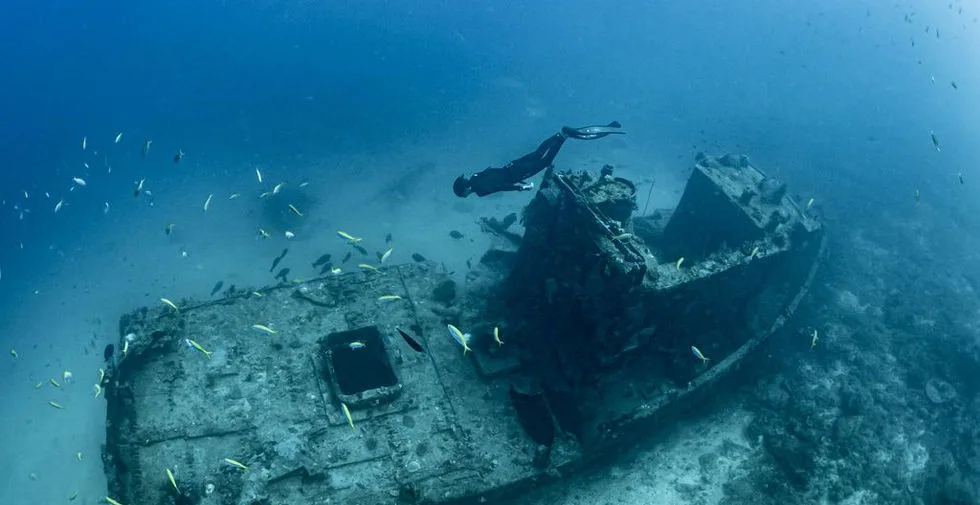
Between the two main 'humps' of the seamount lies a bustling thoroughfare, a dynamic zone favoured by schooling fish. Here, you'll find thick aggregations of snappers and fusiliers, moving with a synchronised fluidity that mesmerises. These schools often congregate in the sheltered areas between the two pinnacles, creating a living curtain of silver and gold that shifts with the subtle underwater currents, a truly immersive experience.
Beyond the larger spectacles, the Camel site is rich in subtle details for the observant diver. Blue-spotted stingrays (Neotrygon kuhlii) are frequently found camouflaged against the sandy terrain, their distinctive patterns blending seamlessly with the seafloor. Closer inspection of the reef itself will reveal the delicate beauty of leaf fish (Taenianotus triacanthus), masters of disguise that perfectly mimic drifting leaves, requiring a keen eye to spot amidst the coral polyps.
Dive depth at Camel ranges from a minimum of 14 metres to a maximum of 28 metres. The best period to dive in Nosy Be generally extends from March to January, advising against the rainy season between January and March.
1 liveaboard departs from Nosy Be another way to explore the region, over several days at sea.
You can generally plan a dive at Camel from March through January. The rainy season falls between January and March, and diving is advised against during that period. This seasonal guidance helps you choose a time to explore the two seamounts, coral formations, sandy areas and marine life around the site.
Camel ranges from 14 to 28 metres deep. The dive takes you around two closely set seamounts, with rocky formations, coral landscapes, crevices and overhangs rising from sandy stretches. At the seamounts’ base, you can observe sand-dwelling species alongside the reef and larger animals patrolling nearby.
At Camel, subtle underwater currents move through the sheltered area between the two pinnacles. These currents shift the large schools of snappers and fusiliers as they gather between the seamounts. You can watch the schooling fish form a moving curtain while exploring the passage between the two rocky formations.
You can see whitetip reef sharks patrolling sandy areas, large schools of snappers and fusiliers between the pinnacles, and blue-spotted stingrays blending into the sand. The coral formations contain crevices and overhangs, while leaf fish hide among the coral, rewarding careful observation during your exploration.