Sun Siyam Iru Fushi with Free Transfer
★★★★★
Google 4.8/5 (2,204 reviews)
Maldives · Indian Ocean
Sloping reefs, channel currents, turtles and seasonal manta rays meet around Manadhoo, reached from a lived-in island rather than a sealed resort.
For subtitles in English: start the video firstthen click the gearat the top right of the video, select “Subtitles/CC”, then “Auto-translate” and choose “English”.
A turtle over a sloping reef at Manadhoo Beyru is the sort of encounter that sets the tone here. Manadhoo is a lived-in island base for exploring Noonu Atoll by boat, not a resort sealed off from local life. Diving ranges from sheltered reef and cave sites to thilas, drop-offs and current-running channels. That makes it a sensible choice for divers who want a week on land, with lagoon swimming and village walks for non-divers, while accepting that the more demanding shark country is not automatically on the doorstep.
Most outings leave by boat and combine sloping reefs, drop-offs, thilas, caves and channel passages. Manadhoo Beyru is the more immediately approachable picture: a reef slope with plenty of fish, morays and turtles, plus the seasonal possibility of manta rays at a cleaning station. Away from that sort of site, Noonu’s channels bring the moving water that attracts grey reef sharks, barracudas, tuna and rays. Current is variable rather than a constant feature of every dive. Sheltered sites can suit a broad range of divers, while a channel may become a proper drift dive, with a downcurrent section and a planned exit rather than a leisurely reef circuit. Visibility should be treated as part of the day’s conditions, not as a fixed promise. The sensible approach is to keep the plan flexible and let the local team match the site to the current.
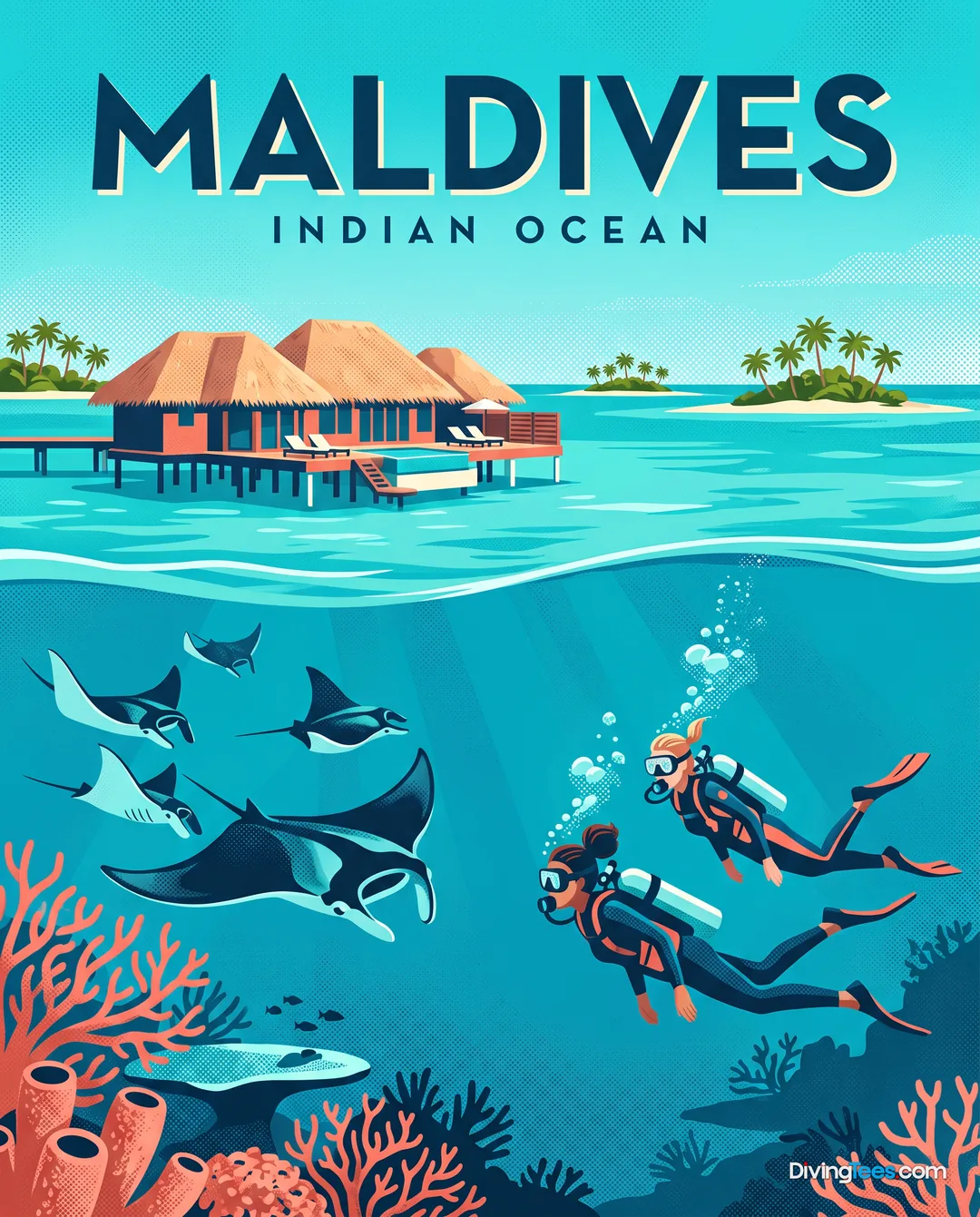
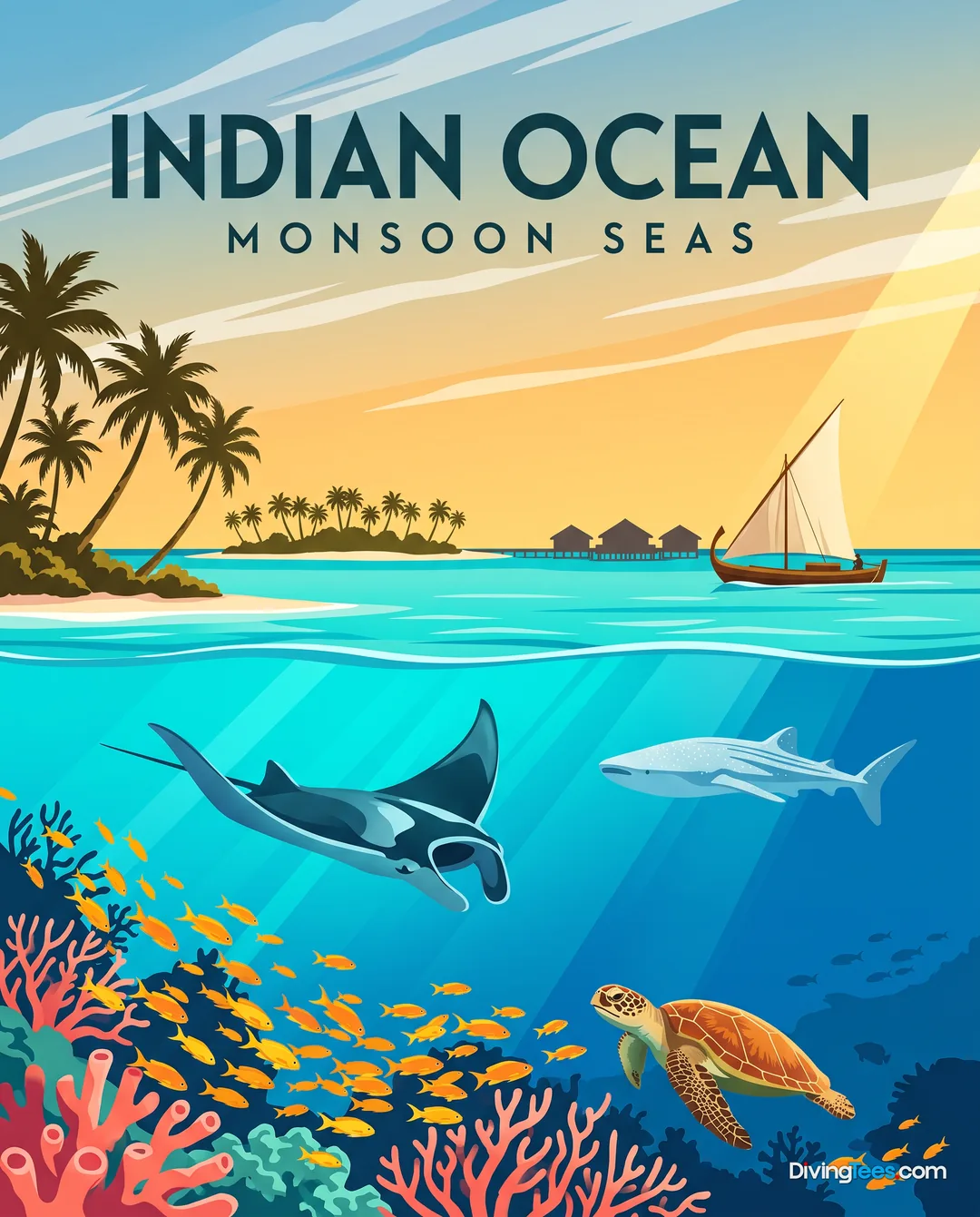
Turtles are a regular possibility around Noonu, particularly on reef slopes such as Manadhoo Beyru, where morays and tightly packed reef fish add interest between the larger encounters. Grey reef sharks are regularly reported on the atoll’s current-affected sites, while whitetip reef sharks and nurse sharks are more occasional possibilities. Barracudas, tuna and rays suit the channel dives, where the moving water concentrates both predators and divers’ attention. Manadhoo Beyru is also described as a seasonal manta ray cleaning station. The timing is not fixed enough to treat mantas as a daily expectation, but they are the encounter that can change an ordinary reef dive into something memorable. Napoleon wrasse may also appear, although they are an occasional rather than dependable sighting.
December to April is the most practical window for Manadhoo, with the northeast monsoon generally bringing calmer surface conditions from January into May. That matters here because most diving involves a boat, and the more exposed channel sites are easier to use when transfers and entries are less affected by wind. Diving remains possible throughout the year, so the rainy season is not an automatic reason to rule out the island. It simply makes flexibility more valuable. The seasonal manta opportunity at Manadhoo Beyru should be treated as an added possibility rather than the reason to choose a particular month.
Manadhoo can suit beginners, provided the itinerary stays with sheltered reef and cave sites and the centre knows the diver’s experience. Advanced or equivalent experience is more appropriate for deeper thilas and channel passages. A drift-diving qualification is useful where the current becomes moderate or strong. Whether qualified through BSAC, PADI or SSI, divers should be comfortable with changing the plan when the water is running harder than expected. Nitrox may be useful for repetitive boat diving if it is available locally.
From London Heathrow, London Gatwick or Manchester, the journey is built around reaching Malé and then arranging a sea transfer to Manadhoo. The transfer is a structural part of the trip, not a minor hotel shuttle, so allow room between the flight and the boat connection. Another route combines a flight to Hanimaadhoo with a ferry to Manadhoo. Which option works depends on the air itinerary and the maritime links running at the time. Once on the island, diving is organised by boat, while ferries also connect several islands of the atoll through Manadhoo. Keep the return journey similarly loose: a delayed boat can put a flight connection at risk.
Do not fill the week with channel dives before you know how the current behaves around Manadhoo. Ask which outings stay close to the island and which involve a longer run, then keep enough spare days for the sites that are actually comfortable in the prevailing conditions. If Manadhoo Beyru is on the list, ask when resort boats usually visit it, since it is not exclusively a local-island dive. Divers chasing grey reef sharks should confirm the depth and current before committing, as the better-known shark sectors are not all beginner territory. Keep one complete day free before the flight home. That buffer protects the air connection if a maritime transfer slips, and it also leaves room for a final lagoon swim or island outing. If considering a liveaboard, check that its route genuinely includes the Manadhoo area: a Noonu Atoll itinerary can otherwise spend its time near other islands.
Allow seven to ten days for a land-based stay, with several boat-diving days, a weather and current buffer, and time away from the water. Manadhoo works well for companions who prefer lagoon swimming, beaches, island walks, snorkelling or a boat trip to nearby islands. It offers local daily life rather than a self-contained resort setting. A liveaboard is the alternative when the priority is covering more distant parts of Noonu Atoll, while Manadhoo keeps the focus on the reefs reached from one inhabited island.
Hello, I'm Marina, DivingDeal.com's AI assistant. I guide you through destinations, areas and countries.
Thinking about the whole trip and the flights? Talk it over with Edith →
Marina is an AI. Some links are affiliate links: DivingDeal may earn a commission, at no extra cost to you. Bookings are made with the partner.
December to April is the most practical period for Manadhoo, with generally calmer surface conditions during the northeast monsoon from January into May. Diving remains possible throughout the year, though rainy-season conditions make flexibility more valuable. Seasonal manta rays at Manadhoo Beyru are an added possibility, not a reason to select a specific month.
Manadhoo can suit beginners when the itinerary focuses on sheltered reefs and caves, provided the dive centre understands your experience. Deeper thilas and channel passages are more appropriate for advanced or equivalent divers. Drift-diving experience is useful when currents become moderate or strong, and you should be comfortable changing plans.
Around Manadhoo, you may see turtles, morays and dense reef fish on sloping reefs such as Manadhoo Beyru. Seasonal manta rays may visit its cleaning station. Current-affected channel sites can bring grey reef sharks, barracudas, tuna and rays, while whitetip reef sharks, nurse sharks and Napoleon wrasse are occasional possibilities.
Plan a land-based stay with several boat-diving days, spare time for weather and current changes, and a complete day before your flight home. Arrange the sea transfer from Malé or consider the Hanimaadhoo and ferry route. Ask about local and longer outings, keep the itinerary flexible, and allow time for village life, lagoon swimming or island trips.