

Bigorno Diving Center
Google 5/5 (558 reviews)
5.4 km away as the crow flies
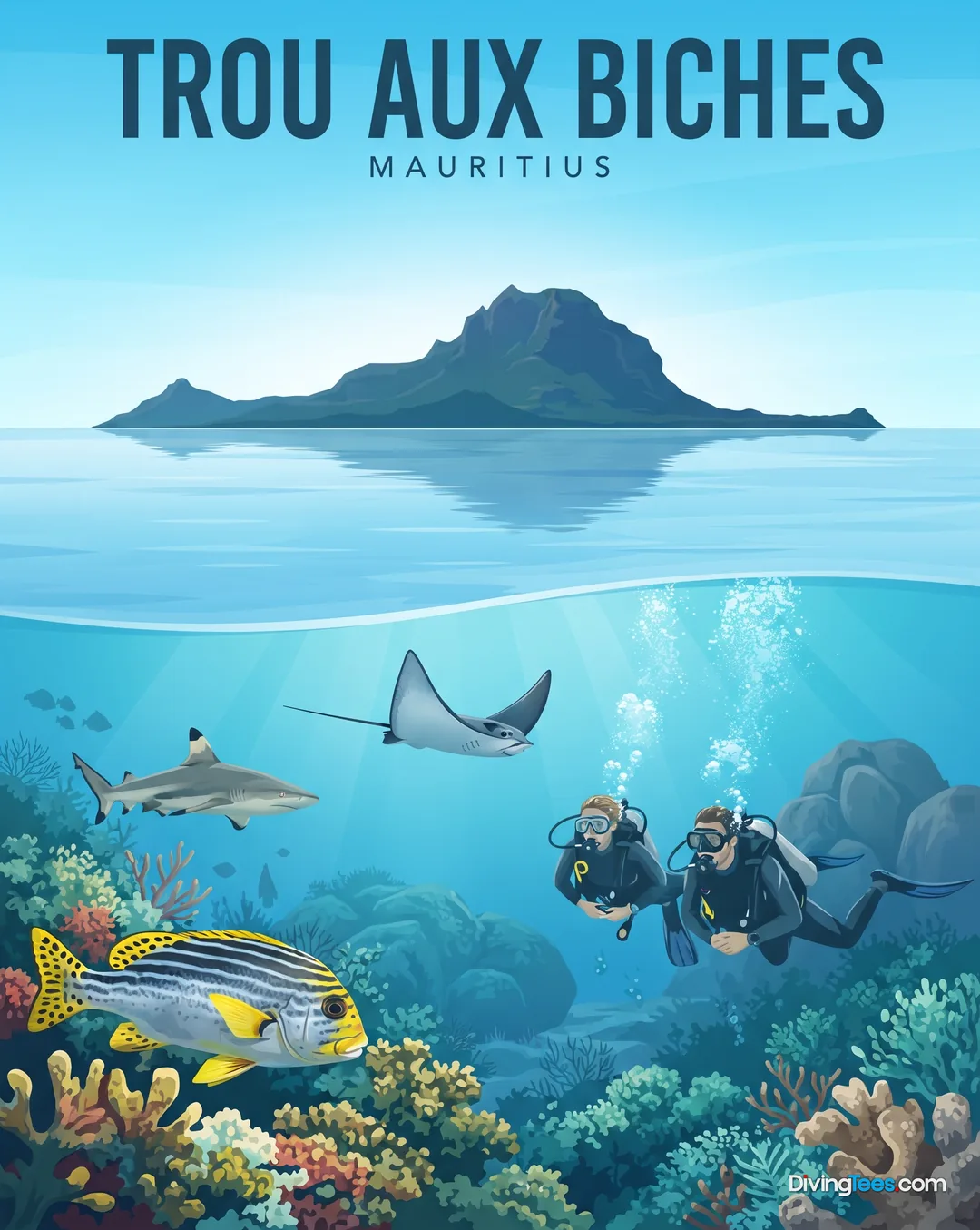
Trou aux biches · Mauritius · Indian Ocean
Max. depth · 39 mExplore the intact Silver Star Wreck, a purpose-sunk fishing vessel teeming with diverse marine life, from camouflaged frogfish to schooling barracudas and resting guitar sharks.
For subtitles in English: start the video firstthen click the gearat the top right of the video, select “Subtitles/CC”, then “Auto-translate” and choose “English”.
The Silver Star Wreck, a former fishing vessel, was purposefully scuttled in 1992 to create an artificial reef off the northern coast of Mauritius, near Trou aux Biches and Grand Baie. This silent sentinel now rests upright and largely intact on the sandy seabed at a maximum depth of 39 metres, with its main deck accessible at approximately 27 metres. The wreck still retains its propeller, providing a substantial hub for marine life. Before January 2002, the wreck's mast was adorned with soft corals, creating a vibrant vertical garden, but Cyclone Dina stripped much of this growth away. While the process of recolonization has been steady, the soft corals have yet to return to their former density, offering an evolving tableau of the underwater world.
The structure itself is a magnet for a variety of marine species. Schooling bannerfish (Heniochus diphreutes) and angelfish (Pomacanthidae family) congregate around the hull, gracefully circling its upper sections. Beyond the reef fish, the Silver Star also attracts larger visitors. Stingrays (Dasyatidae family) are frequently observed resting on the sandy bottom nearby or cruising the deeper sections of the wreck. Keep an eye out for the unique spectacle of mating stingrays or observe guitar sharks (Rhinobatos typus) resting patiently on the bottom, blending with the sand until you're almost upon them. The potential for encounters with larger pelagics makes every dive here unpredictable and exciting.
The waters around the Silver Star are also frequented by schooling barracudas (Sphyraena), wahoos (Acanthocybium solandri), and powerful trevallies (Carangidae), which often patrol the deeper sections of the wreck. These active hunters add a dynamic element to the dive, their swift movements a contrast to the more sedentary wreck inhabitants. One of the more elusive residents of the Silver Star is a pair of frogfish (Antennariidae), masters of camouflage. Spotting them requires a keen eye and a patient approach, as they blend almost seamlessly with the wreck's structure, waiting for unsuspecting prey to pass by. Their presence underscores the rich biodiversity that has made this sunken ship its home, transforming a man-made object into a thriving marine ecosystem.
For experienced wreck divers, the ship offers various potential entry points for penetration, allowing exploration of its interior while remaining mindful of gas management and overhead environments. The light filtering down to these depths creates an ethereal atmosphere, enhancing the sense of discovery as you explore the vessel's exterior and its surrounding environment.
This dive is suitable for Advanced Open Water certified divers or those with equivalent experience in deep diving, descending to a maximum depth of 39 metres, with the top of the wreck structure at a minimum depth of 34 metres and the main deck at 27 metres. The best period for diving the north-west coast of Mauritius is generally year-round, with water temperatures ranging comfortably between 23°C and 30°C. While strong currents are not specifically noted, divers should prepare for potential current shifts, especially when navigating around the wreck's structure, as currents in the region can be influenced by distant winds. Visibility aligns with the generally clear waters found around Mauritius. Divers utilizing enriched air nitrox will find longer bottom times more accessible for exploring the wreck's full extent.
You can generally dive Silver Star Wreck year-round, during the best period for Mauritius’s north-west coast. Water temperatures range from 23°C to 30°C, offering comfortable conditions for exploring the vessel, its sandy surroundings, and the marine life gathering around this artificial reef near Trou aux Biches.
Silver Star Wreck is suitable for Advanced Open Water certified divers or divers with equivalent deep-diving experience. The main deck is accessible at approximately 27 metres, the top of the wreck begins at 34 metres, and the seabed reaches a maximum depth of 39 metres.
Strong currents are not specifically noted at Silver Star Wreck, but you should prepare for possible current shifts while navigating around the wreck’s structure. Currents in the region can be influenced by distant winds, so careful navigation is relevant when exploring the vessel and its surroundings.
You can explore a largely intact purpose-sunk fishing vessel, including its propeller, main deck, and potential internal penetration points. Around the wreck, look for mating stingrays, resting guitar sharks, barracudas, wahoos, trevallies, camouflaged frogfish, bannerfish, angelfish, and other marine life inhabiting the artificial reef.