Liveaboards · Seychelles
Sea Star — a classic sailing yacht built for island-hopping and diving
What makes this boat unique
- Sea Star is a 40-metre steel sailing yacht with classic wood finishings and nine guest cabins.
- The yacht carries up to 20 passengers and has a dedicated dive instructor onboard.
- The diving setup includes two compressors, a camera table, charging stations, DIN adaptors and a diving tender.
- The Mahé round-trip cruise lasts 8 days and 7 nights, with wrecks, granite walls and artificial reefs on the route.
The invitation
Sea Star suits divers who want the Seychelles between dives, not just a boat that moves them from one site to the next. The yacht combines the look of a traditional sailing vessel with air-conditioned cabins, proper indoor and open-air spaces, and enough room for non-diving companions to make their own day. Underwater, the route stays close to Mahé and concentrates on wrecks, artificial reefs and granite formations rather than trying to cover the whole archipelago. A dedicated dive instructor travels with the group, while kayaks, paddleboards, snorkelling and island excursions give the surface day some purpose. The choice is simple: Sea Star is for a mixed group that wants a comfortable sailing base with serious access to the inner-island dive sites.
Boarding
From the dock, Sea Star presents herself as a sailing yacht rather than a purpose-built dive platform: a steel hull, classic wood finishings and broad areas arranged for living as much as for passage-making. The interior has the polished, warm look of a traditional yacht, while the saloon is air-conditioned for the hottest part of the day. Outside, the sun deck and open-air saloon give passengers somewhere to watch the islands slide past without retreating to a cabin. The layout is suited to a mixed group: divers can work around the dive deck, while snorkelers, kayakers and non-divers have other ways to spend the day. Sea Star began operating in 2004, so her character comes from a combination of classic styling and the practical demands of a modern liveaboard.
The atmosphere on board
Sea Star carries the kind of mixed group that can make a week feel broader than a standard dive charter: certified divers, snorkelers, children and non-diving companions can all use the boat. The crew speaks English, French and Italian, and the onboard team includes a captain, chef, mechanic, stewardesses, deckhands and a dive instructor. That division matters over a week: the crew can keep the yacht running while the dive side stays focused on briefings, equipment and entries. Evenings belong to the bar, dining saloon or open deck rather than to a Wi-Fi feed, and friends or family on land can contact passengers through the office or the boat’s telephone number. Sea Star works best for travellers who want a social liveaboard without making diving the only possible activity.
The sites you’ll dive
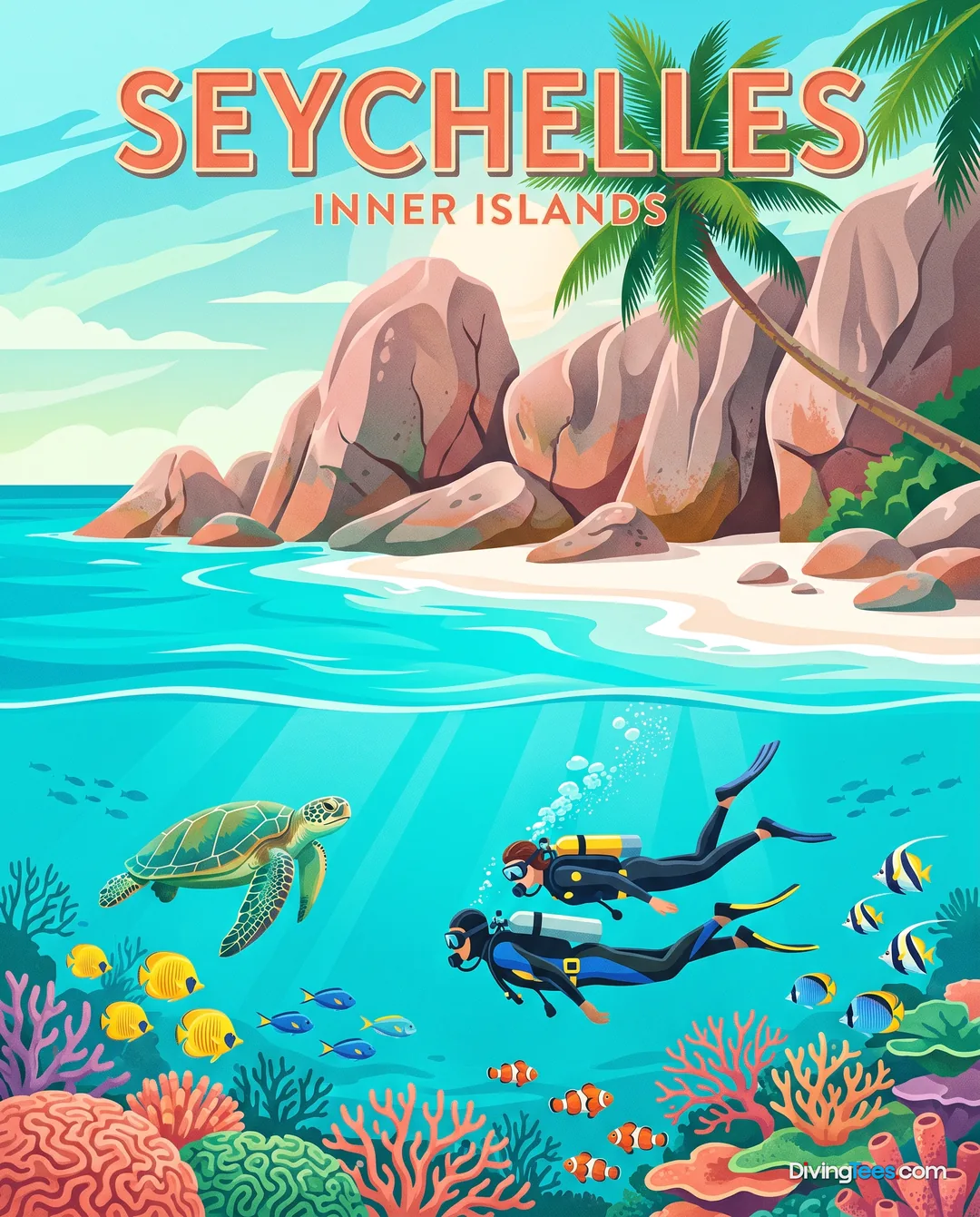
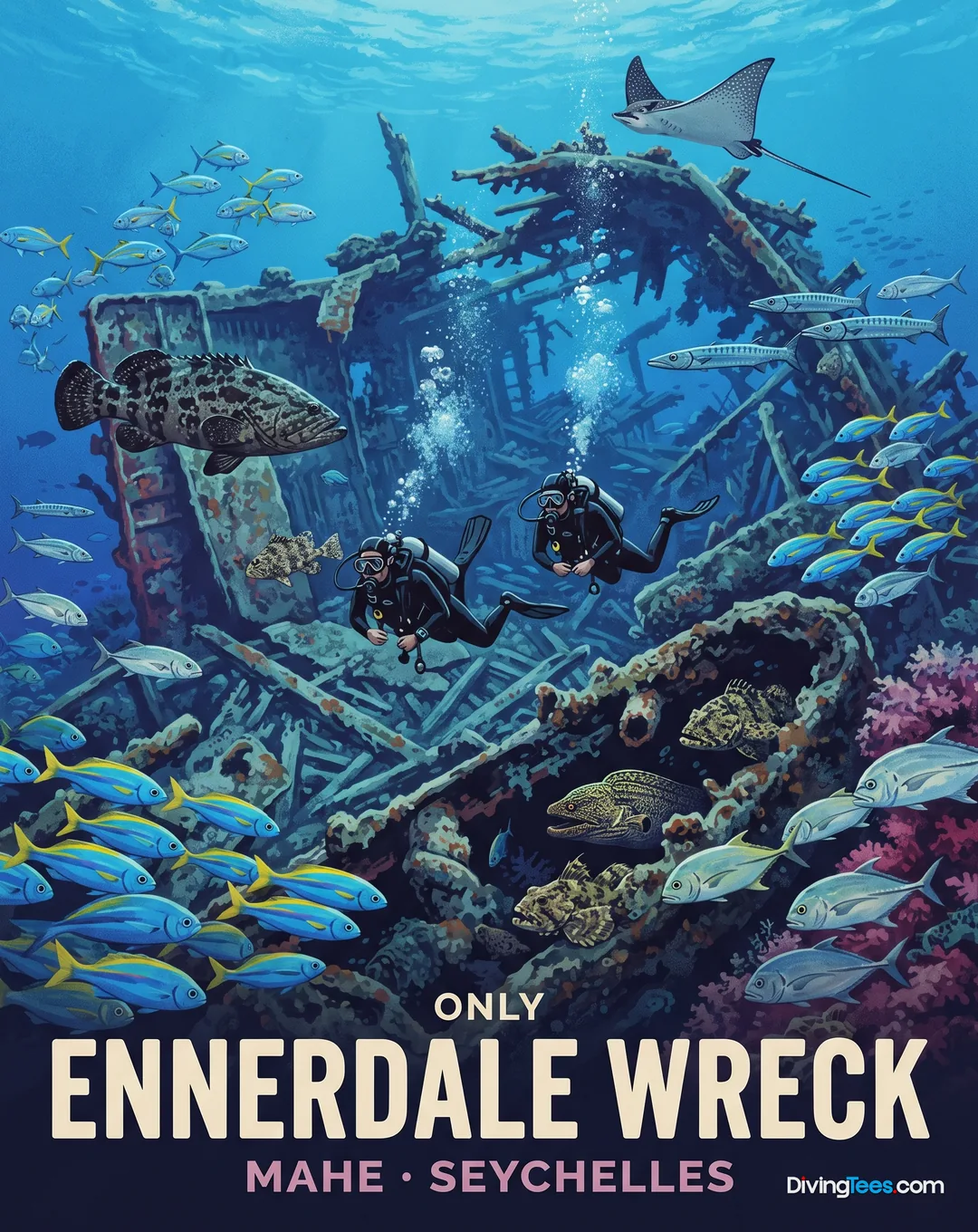
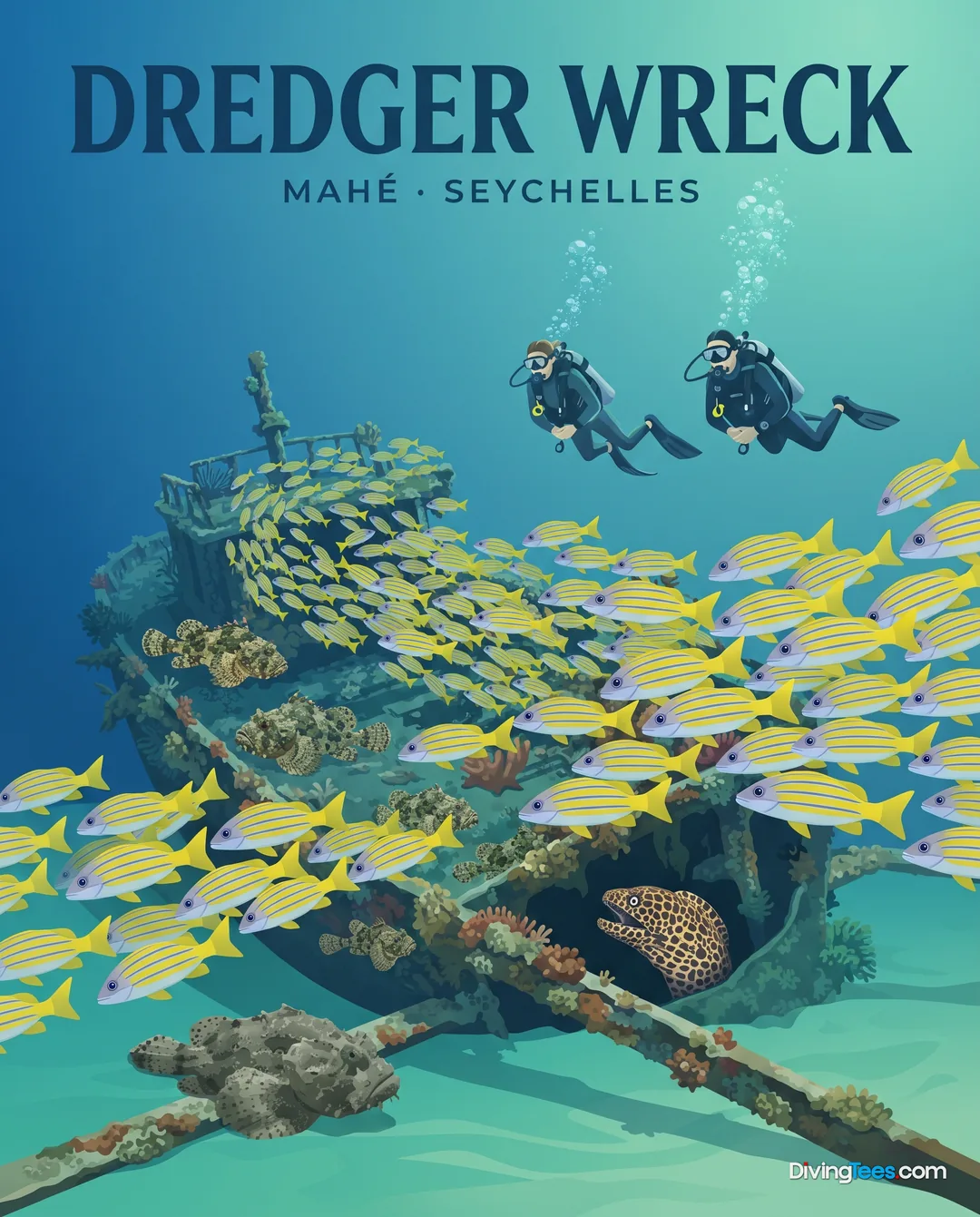
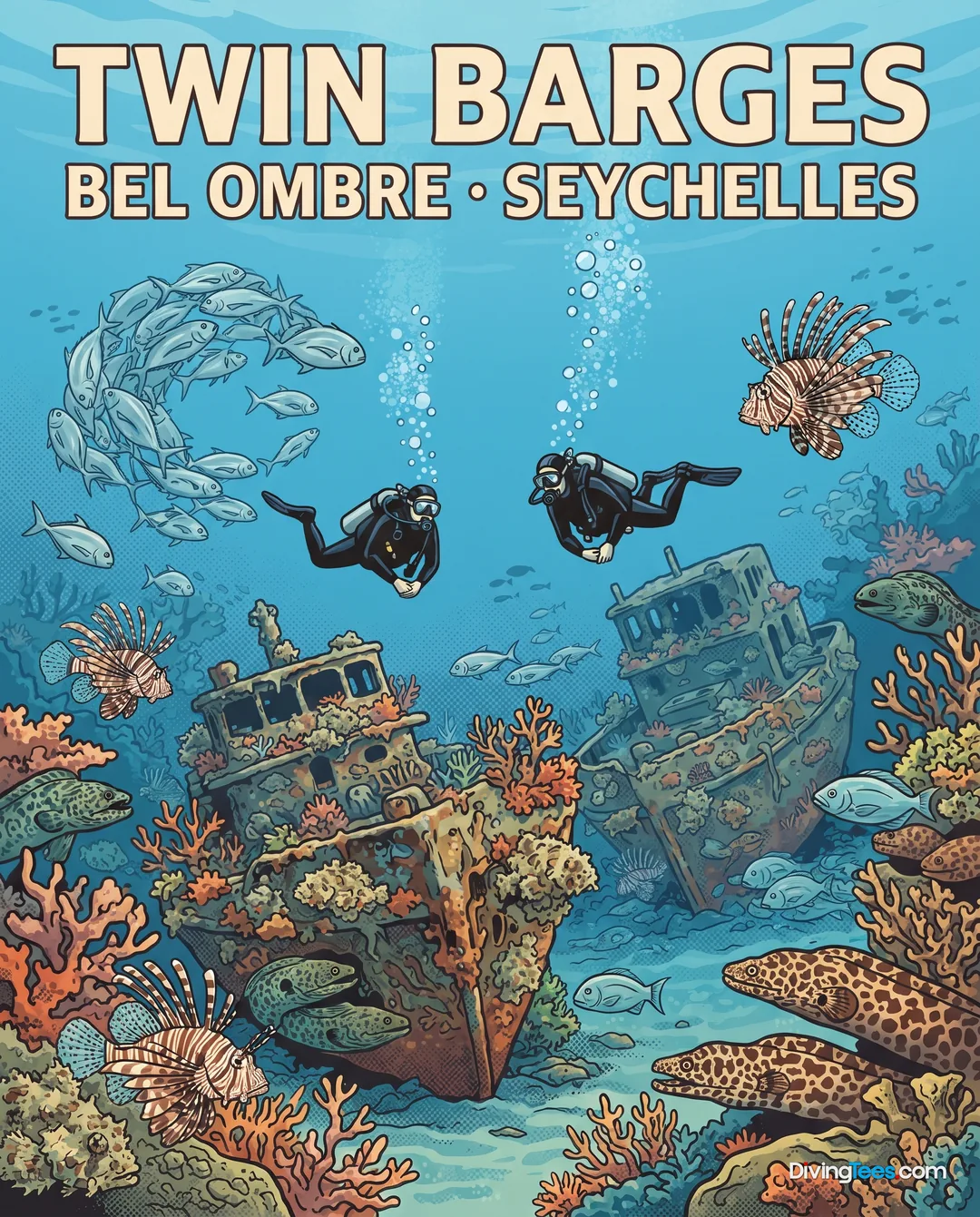
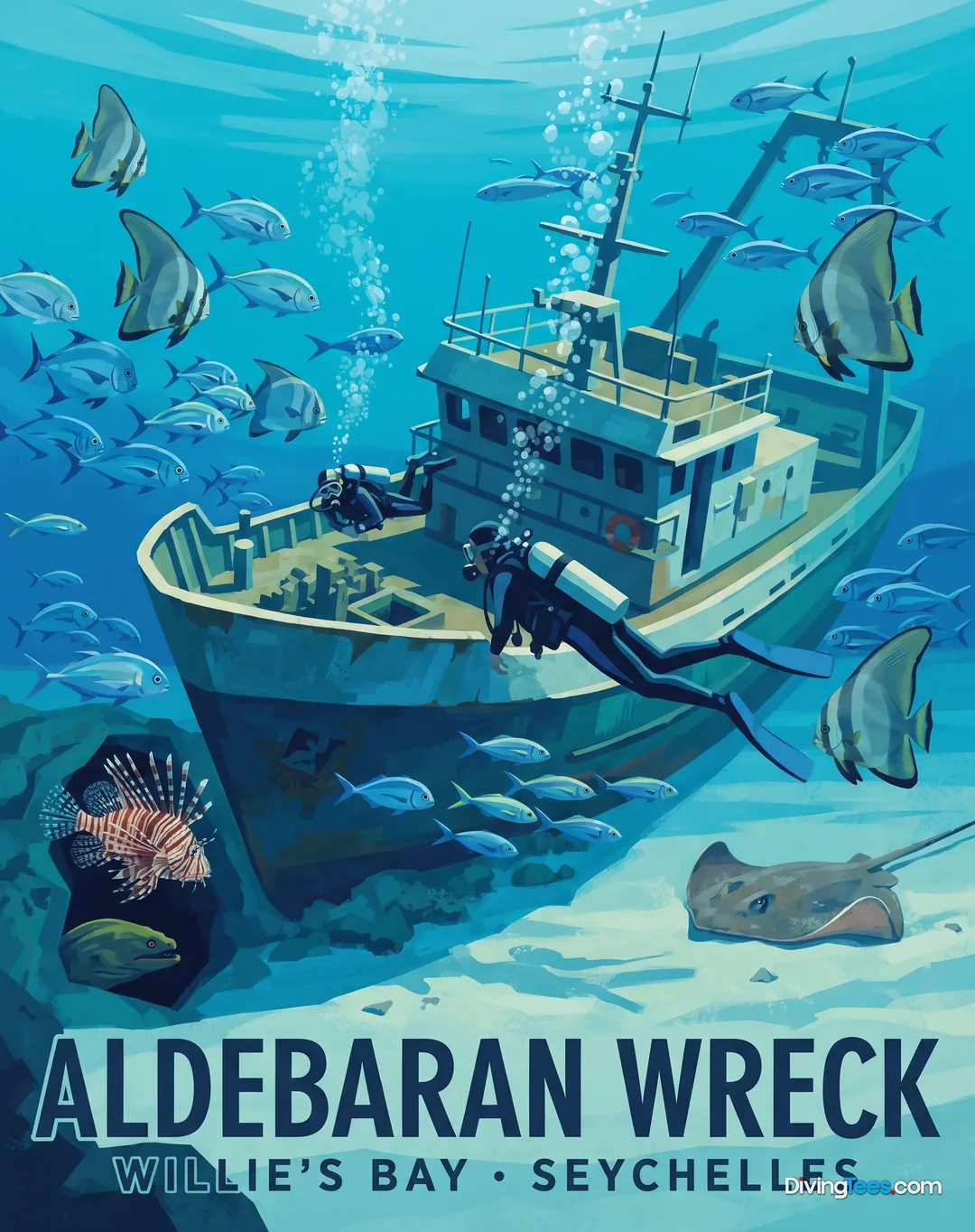
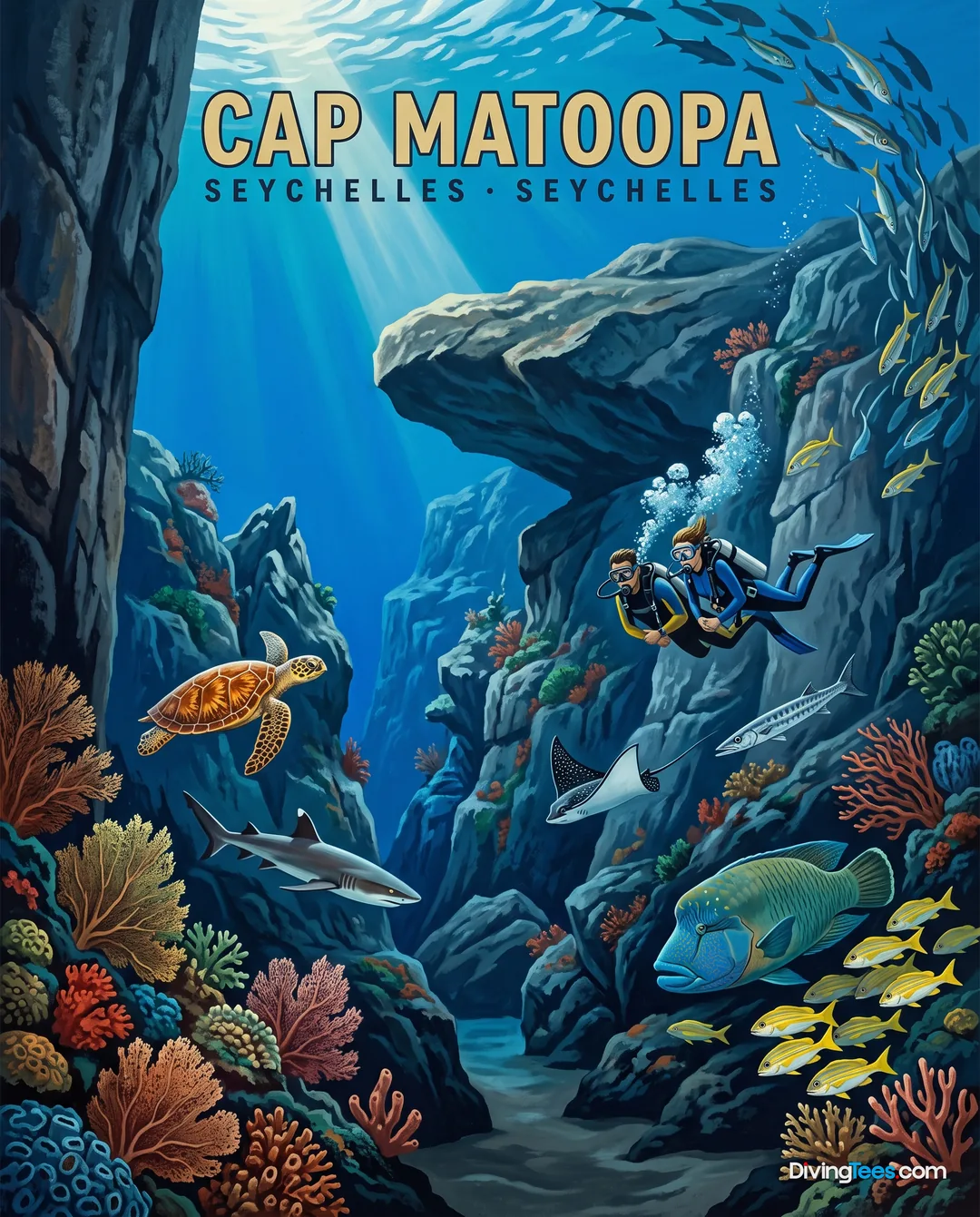
The 8-day, 7-night round trip from Mahé stays among the inner-island sites and gives the route a clear wreck-and-granite identity. Ennerdale Wreck reaches -30m: the colossal 62,000-ton British auxiliary tanker has become habitat for giant groupers, morays and circling reef sharks. Dredger Wreck, also at -30m, is an intentionally scuttled hull now covered by schooling snapper and artificial-reef life. Twin Barges off Bel Ombre reaches -26m, where two deliberately sunk barges hold morays, lionfish, scorpionfish and jacks. Aldebaran Wreck is the deeper option, descending to -40m around the remarkably preserved 28-metre structure. Cap Matoopa is shallower at -24m, with granite gullies, steep walls and a deep-water channel where sharks and rays may pass. These are compact, varied dives: steel, concrete and granite each give the week a different shape.
What you’ll meet underwater
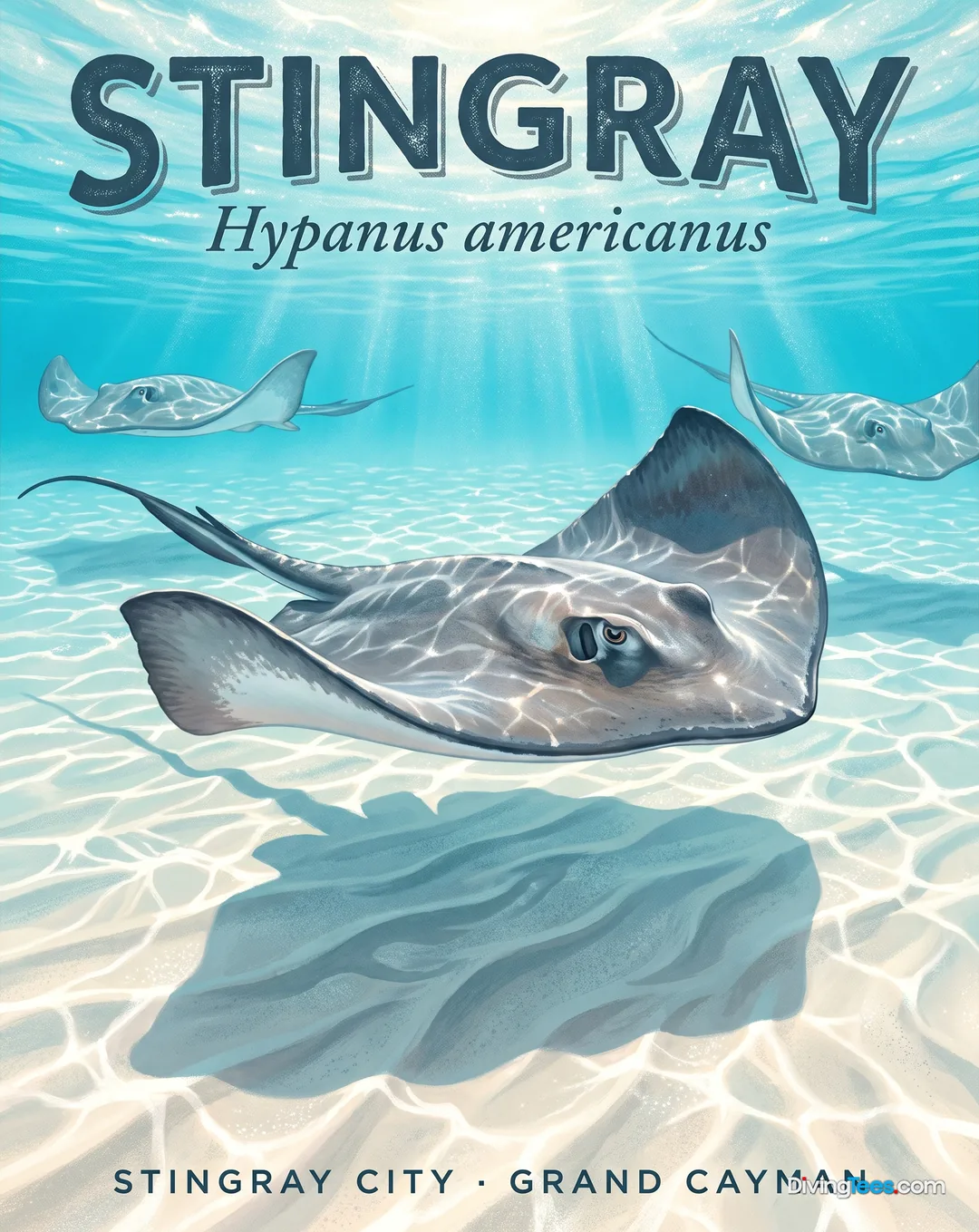
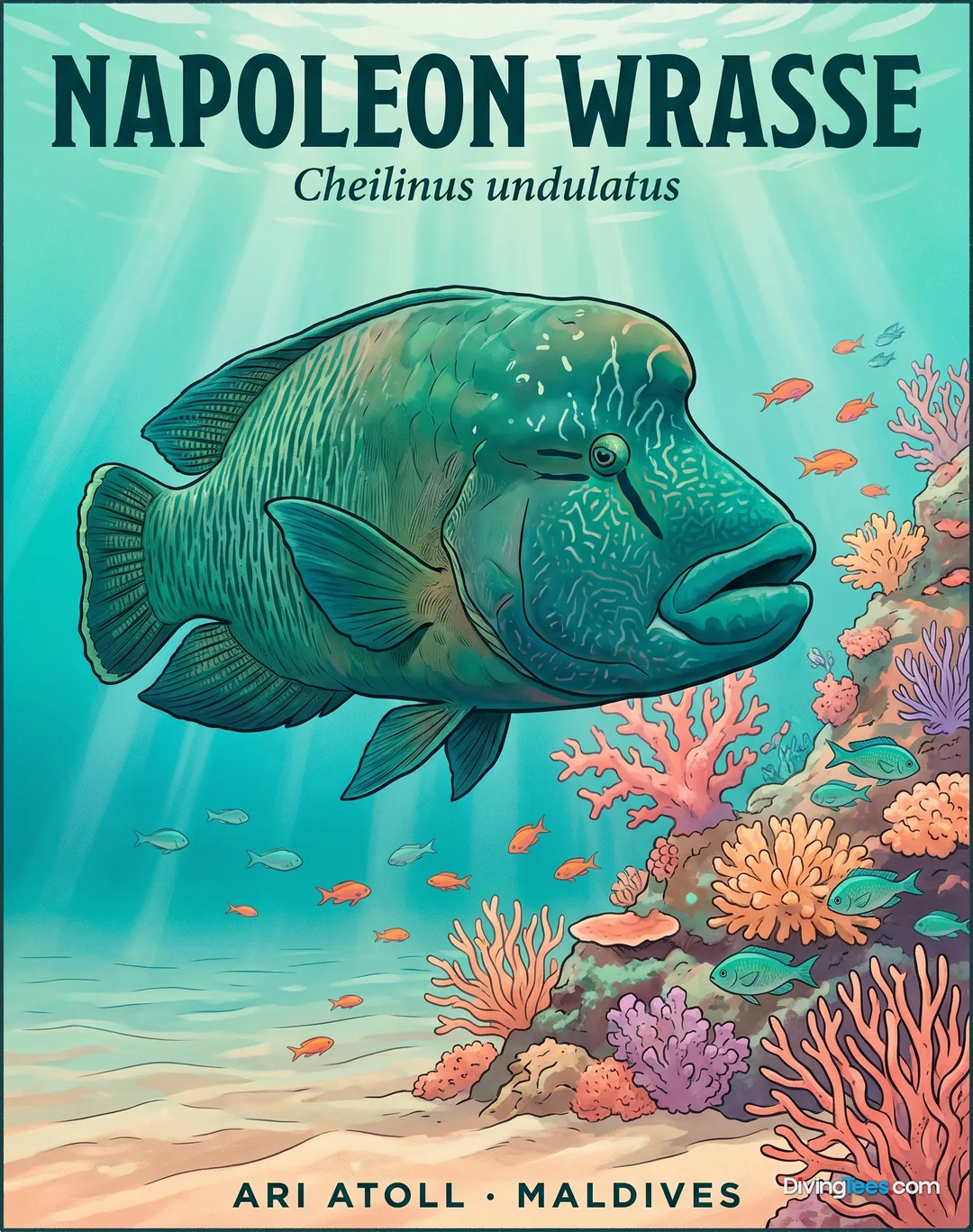
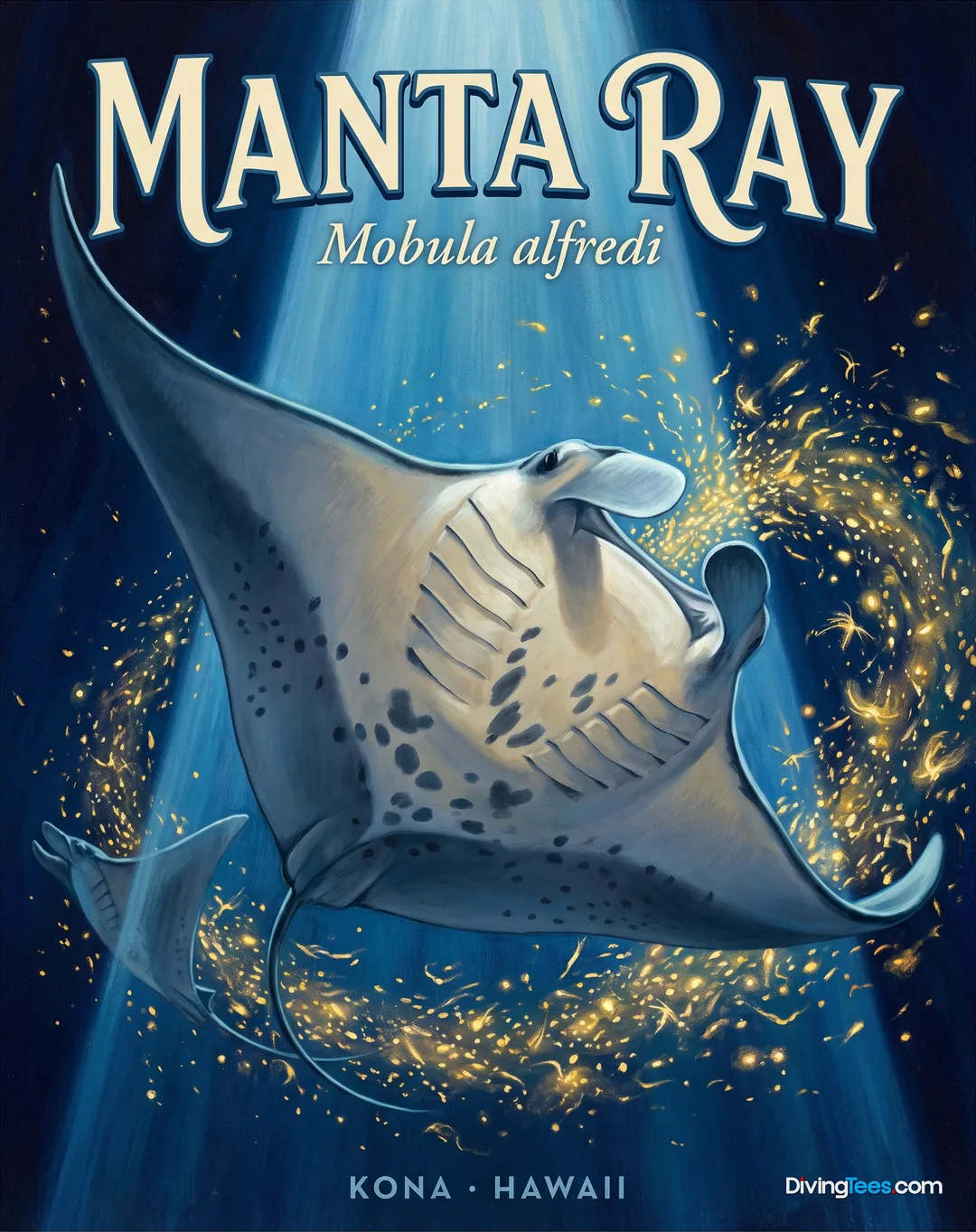
Across the route, the recurring cast is made up of jacks, giant morays, scorpionfish, fusiliers, batfish, stingrays, lionfish and yellow snapper. These are the animals that give the wrecks and granite formations their movement: fish schooling over the artificial reefs, morays holding in cracks and scorpionfish disappearing against the structure. The site-specific possibilities are what make the route worth repeating. Cap Matoopa is the place to look for a Napoleon wrasse, manta ray, whitetip reef shark or green turtle. Ennerdale Wreck is where reef sharks and grey reef sharks are recorded. Twin Barges has the route’s record of sea turtles, octopus, porcupinefish, angelfish, parrotfish and big-eye jacks. None of these sightings is guaranteed; the point is that each site gives the search a different reason.
Who puts you in the water
A dedicated dive instructor is onboard, and the crew speaks English, French and Italian. The stated entry level is Open Water Diver or equivalent, with a minimum of 10 logged dives, so Sea Star is aimed at divers who have already made a start and want to build experience rather than complete their first certification casually. Introductory dives and PADI Open Water Diver and Advanced Open Water Diver courses are available through the operator, with course arrangements made in advance. Briefings and group ratios are not defined here, nor are specific emergency systems such as oxygen or a recall signal, so divers who need those details should ask before booking. The dedicated instructor remains the useful point of contact for site conditions, grouping and course planning during the cruise.
The dive deck and the gear
The dive setup is built around a dedicated dive deck, a tender for diving, two compressors and warm-water showers for the return from a dive. Rinse hosts, a camera table and charging stations cover the practical needs of photographers, while DIN adaptors help divers whose regulators are set up for DIN valves. Nitrox is not available, and the boat is not set up for technical diving. Rental equipment is available at an additional charge; the listed diving service covers tanks and belts rather than assuming a full rental kit. The tender is a 6-metre Mini Mahe with a 55 hp engine. Divers use it to reach the sites and return to the yacht, keeping the main vessel free to serve as the living and working base.
Between dives
Between dives, Sea Star gives passengers several different kinds of space. The sun deck and loungers are for drying out and watching the granite islands pass; the open-air saloon keeps people outside without leaving them fully exposed to the sun. The air-conditioned indoor saloon, bar and dining area provide a cooler retreat when the heat builds. Kayaks, stand-up paddleboards and snorkelling equipment are available for passengers who want to stay on the water without carrying a tank. Land excursions and fishing add another option when the boat is not diving. The result is a useful split between active surface time and genuine shade, rather than one crowded lounge serving every purpose.
A day on board
A day on Sea Star is organised around the dives rather than around a fixed sightseeing timetable. The dive team briefs before each descent, equipment moves to the tender, and the yacht becomes the place to rinse, shower, eat and recover before the next water entry. Meals mark the spaces between dives, with tea, coffee, snacks and afternoon cake filling the less formal gaps. When the boat is underway, the sun deck and open-air saloon turn the crossing into part of the day instead of dead time. A non-diver can kayak, paddleboard, snorkel or join a land excursion while the divers are below. Later, the group returns to the saloon or deck for food and conversation, then starts again with the next day’s briefing.
What you eat aboard
Meals combine Western and local food, with full board served through a mix of buffet and plate service. Dietary restrictions can be catered for, and tea, coffee, afternoon cake, soft drinks and snacks are part of the food service. Alcoholic drinks and spirits are available separately. On a diving trip, the useful detail is not ceremony but continuity: food is available around the dives, with something small to take the edge off after a long surface interval and proper meals to restore energy before the next descent. The local element gives the table a Seychellois accent instead of making the week feel like a hotel buffet transplanted to a boat.
Nights at sea
The nine guest cabins are air-conditioned and have private bathrooms, with Double + Single Bed Cabin and Double Cabin categories. That matters after a day of salt, sun and repeated descents: the cabin is a private place to dry out and sleep rather than just a berth behind a curtain. The wood finishings continue below deck, giving the rooms a warmer feel than a plain commercial interior. Common areas include an air-conditioned bar and dining saloon, so passengers can move out of the cabin without moving straight into the heat. There is no Wi-Fi onboard, which makes the yacht better suited to people happy to let the islands replace the signal. Electrical sockets use 220V European two-prong round-pin plugs.
Double + Single Bed Cabin
Double Cabin
What to know before boarding
The cruise departs from and returns to Port of Mahé. Transfers are not included and should be arranged separately from the airport or accommodation. Arriving in Mahé the night before is the sensible choice, leaving room for flight delays and making the embarkation day less pressured.
- Year built
- 2002
- Length
- 40 m
- Beam
- 8.2 m
- Maximum number of passengers
- 20
- Number of cabins
- 9
- Engines
- 2 × 575 hp Iveco
- Tenders
- 6 m Mini Mahe 55 hp
- Website
- seychelles-cruises.com ↗
Hello, I'm Marina, DivingDeal.com's AI assistant. I answer in detail about hotels, dive centres and liveaboards.

Thinking about the whole trip and the flights? Talk it over with Edith →
Marina is an AI. Some links are affiliate links: DivingDeal may earn a commission, at no extra cost to you. Bookings are made with the partner.