
Trek Divers
Google 4.8/5 (324 reviews)
26 km away as the crow flies
La Digue · Seychelles · Indian Ocean
Max. depth · 30 mDescend onto Bitter Rock, an isolated granite pinnacle between Mahé and Praslin, where strong currents bring pelagic encounters to dramatic underwater landscapes.
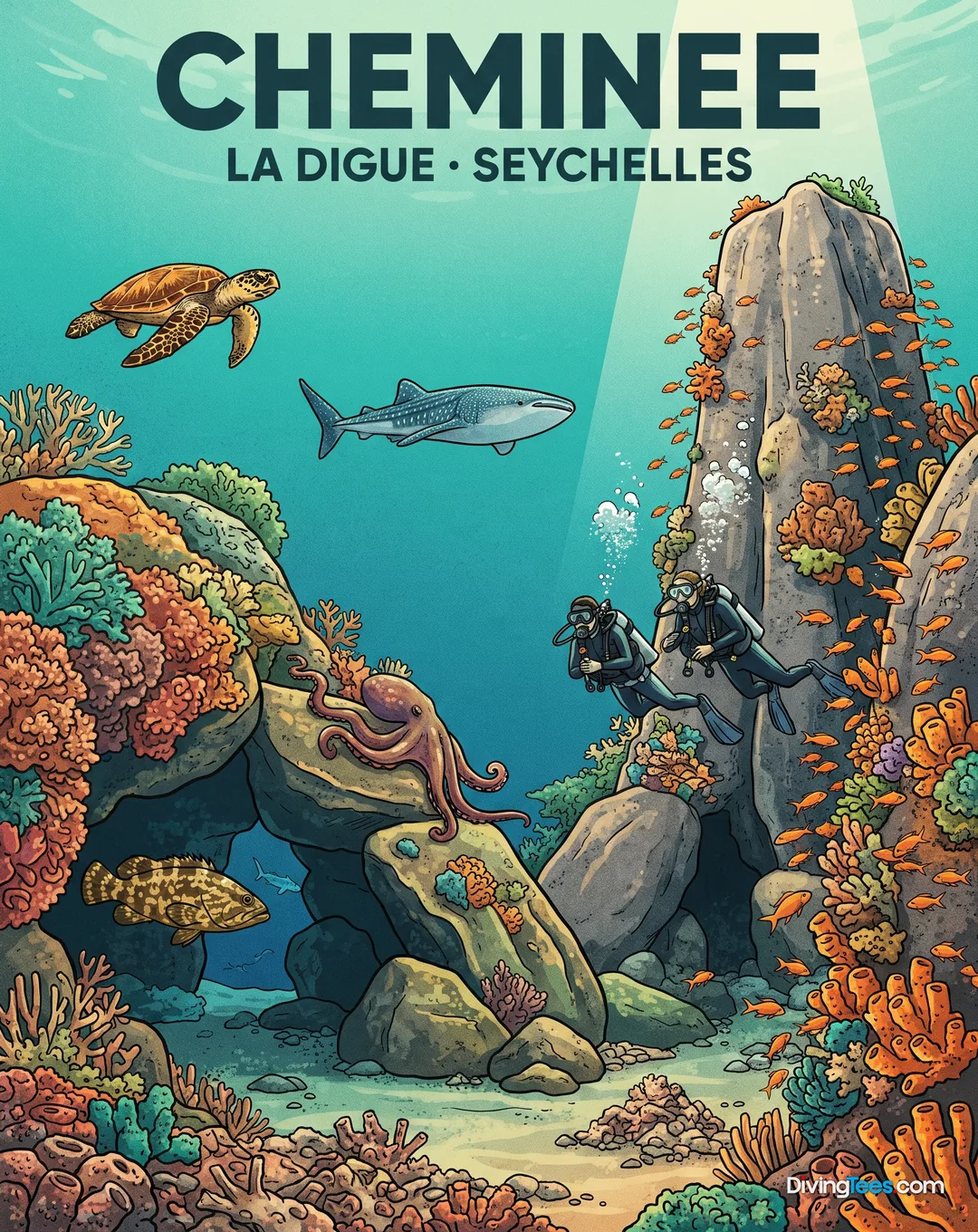
Bitter Rock is an isolated granite pinnacle, not directly off La Digue but situated in open water between Mahé and Praslin. This offshore location gives it the character of a seamount, exposed to the full force of oceanic currents. As you descend, the sense of entering a truly wild space is immediate, with massive granite boulders forming an intricate underwater landscape that plunges into the deep blue, hinting at the vastness of the surrounding Indian Ocean.
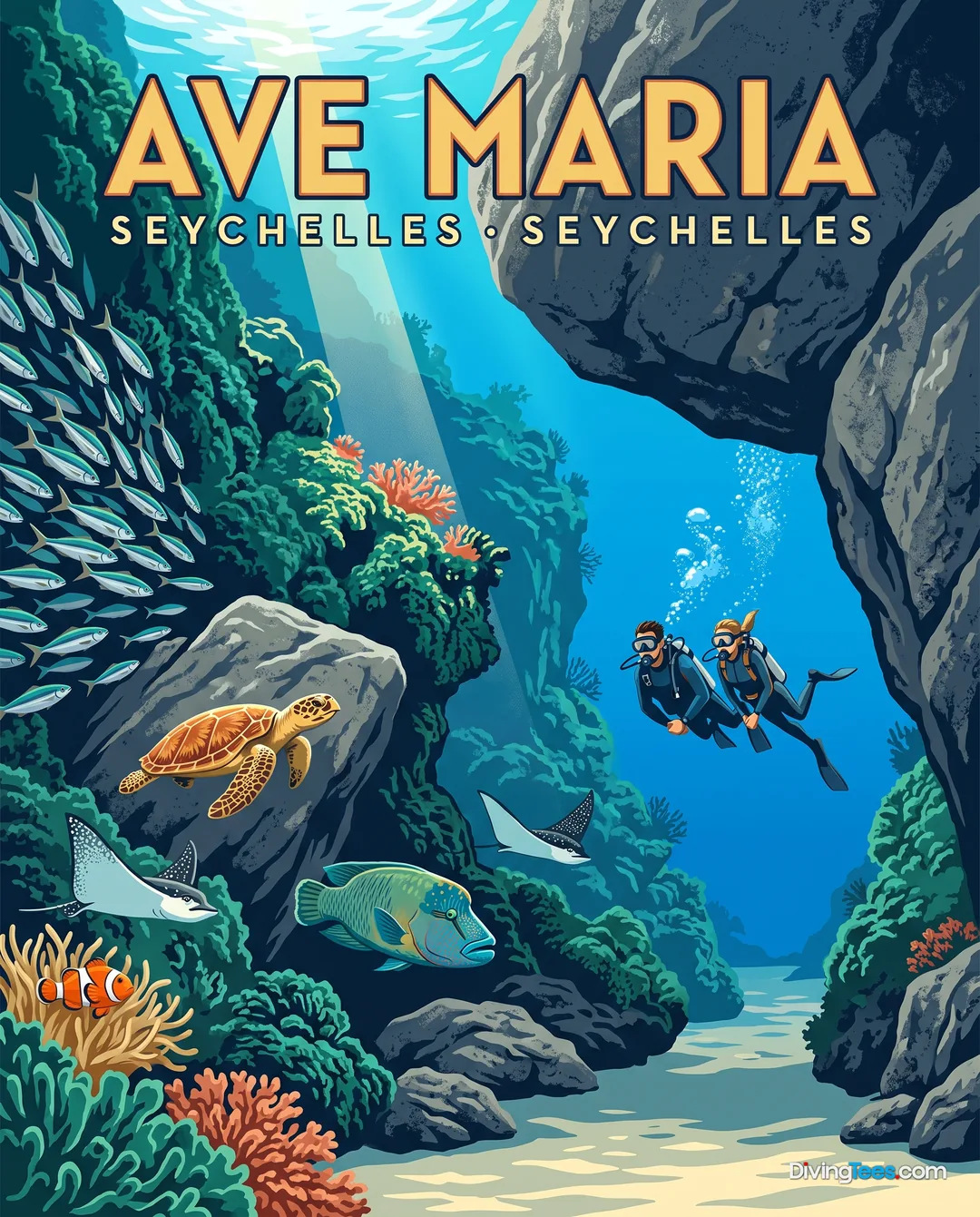
The topography of Bitter Rock is defined by a series of oval-shaped granite boulders, rising from a seabed at approximately 30 metres to a minimum depth of 17 metres. These formations create a complex environment of natural swim-throughs, deep overhangs, and sheltered pockets. Navigating these structures reveals a vibrant ecosystem where corals and sponges cling to the rock faces, providing shelter and hunting grounds for a diverse array of reef fish.
What sets Bitter Rock apart is its exposure to open-ocean currents. These currents are a common feature of the site, often strong, and are responsible for bringing in the larger pelagic species that frequent this area. While demanding, these conditions contribute to the site's untouched nature and the natural behaviour of its marine life, which often displays a curiosity born from infrequent human interaction.
The strong currents at Bitter Rock are a magnet for pelagic life. You can expect to encounter grey reef sharks and other reef sharks patrolling the deeper sections and along the current lines. Barracuda and trevally are often seen in schooling formations, moving with the flow. Snapper and tuna are also common, adding to the dynamic feel of the dive as they hunt among the rock formations.
Beyond the resident reef and pelagic species, Bitter Rock is also known for larger visitors. Manta rays and various other rays are regularly sighted, often gliding gracefully through the currents. During the months of August to October, there is an increased chance of encountering schooling grey reef sharks and even whale sharks, making these periods particularly active for big animal encounters.
The health of Bitter Rock's marine ecosystems is a direct result of its remote and rarely visited status. The pristine coral formations and thriving fish populations are a testament to the benefits of its secluded position. This undisturbed environment allows marine life to behave naturally, offering a glimpse into an authentic, wild underwater world that is increasingly rare in more accessible dive locations.
Bitter Rock is a deep dive, with depths ranging from 17 metres to 30 metres. Due to its exposed location and the consistent presence of strong open-ocean currents, this site is suited for experienced divers. An Advanced Open Water certification is a minimum requirement, coupled with comfort in demanding current conditions. Visibility can reach up to 30 metres, offering clear views of the extensive pelagic action. While diving is possible year-round, calmer sea conditions are typically found from March to May and October to early December. August to October is particularly noted for increased sightings of schooling grey reef sharks, manta rays, and whale sharks.
You can dive Bitter Rock year-round, while calmer sea conditions are typically found from March to May and from October to early December. August to October is particularly noted for increased sightings of schooling grey reef sharks, manta rays, and whale sharks, making this period active for larger animal encounters.
Bitter Rock is suited for experienced divers because its isolated offshore location is exposed to strong open-ocean currents. You need at least an Advanced Open Water certification and should be comfortable in demanding current conditions before choosing this site. The remote pinnacle also requires confidence navigating complex granite formations and swim-throughs.
Bitter Rock ranges from 17 metres to 30 metres, with granite boulders rising from the deeper seabed. Strong open-ocean currents are consistently present because the pinnacle sits in exposed water between Mahé and Praslin. These conditions can be demanding, but they attract pelagic species along the current lines.
You can explore oval granite boulders, natural swim-throughs, deep overhangs, and sheltered pockets covered with corals and sponges. Marine life includes grey reef sharks, barracuda, trevally, snapper, tuna, manta rays, and other rays. From August to October, schooling grey reef sharks and whale sharks are seen more often.