
Santorini Scuba Academy
Google 5/5 (610 reviews)
5.7 km away as the crow flies
Santorini · Greece · Mediterranean
Max. depth · 12 mExplore a series of lava-formed tunnels and arches set within a sheltered volcanic cove.
For subtitles in English: start the video firstthen click the gearat the top right of the video, select “Subtitles/CC”, then “Auto-translate” and choose “English”.
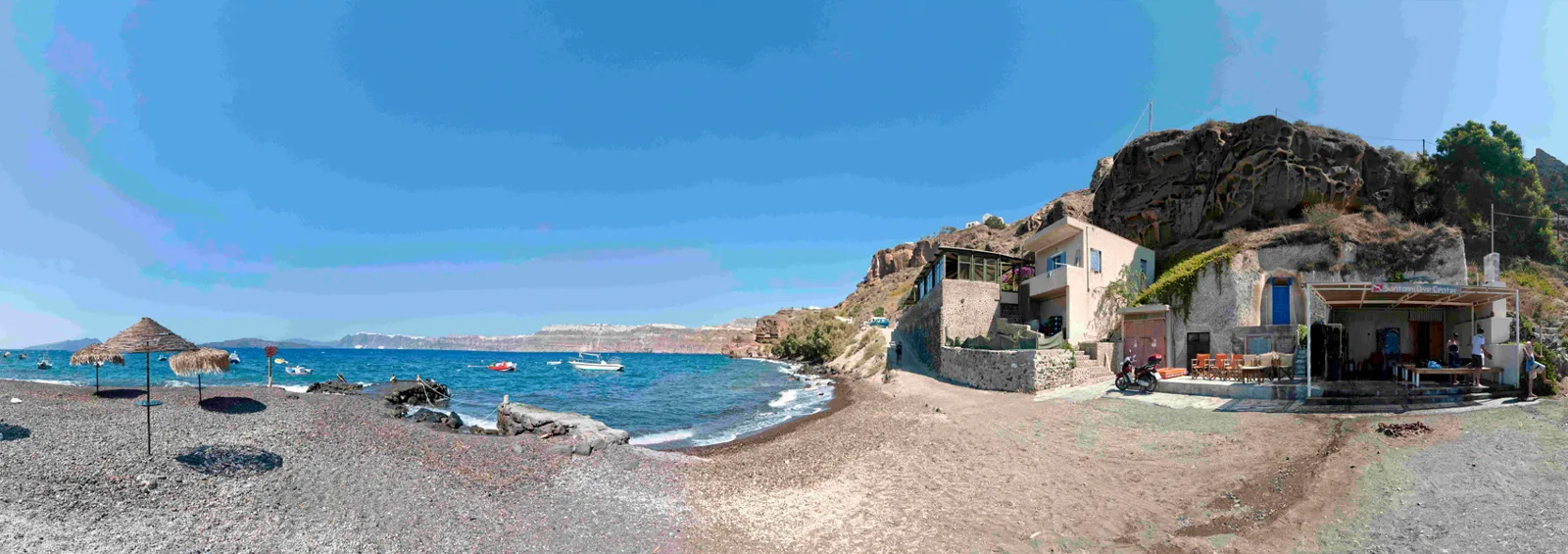
Mesa Pigadia is located within a protected volcanic cove on the southern coast of Santorini, characterized by high cliffs that shield the area from the prevailing north meltemi winds. Unlike the deep, open-water wall dives found elsewhere in the caldera, this site is defined by its proximity to the shoreline and its unique geological structure. The topography consists of a gently sloping bottom that leads directly toward the base of the cliffs, where the volcanic rock has been shaped into complex formations. Divers approach the site primarily by boat from Akrotiri or surrounding southern marinas, anchoring in the bay to access the various outcrops.
The underwater landscape is dominated by lava-formed structures that have been carved into the cliff face over time. As you move along the bottom, you will encounter a variety of enclosed tunnels, natural archways, and swim-throughs built into the dark volcanic rock. These structures are not deep, often occurring in the upper reaches of the water column, which allows sunlight to penetrate the openings. This creates a constant play of light and shadow inside the caverns, making the visual experience heavily dependent on the angle of the sun. The geological diversity makes it a site focused on structural exploration rather than depth or current management.
The dive profile is relatively shallow and manageable, with depths staying between 7 and 12 metres throughout the main areas of interest. This shallow range allows for extended bottom times and makes the site accessible for those who prefer to stay within the sunlight zone while still exploring cave-like environments. The descent usually begins on the sloping seabed, moving toward the more complex rocky outcrops and the cliff base. As you navigate through the swim-throughs, the sense of enclosure changes frequently, moving from open water to tight, rock-bounded passages.
The local marine life is typical of the sheltered volcanic environments in this part of the Aegean. You will frequently encounter moray eels tucked into the crevices of the lava rock, often watching divers as they pass through the narrowest tunnels. Cardinalfish are common residents around the rocky structures, hovering in the calmer pockets of water near the cliff walls. Smaller organisms, such as various species of shrimp, can be found scavenging near the edges of the cave entrances and within the more shaded recesses of the volcanic formations.
Visibility at Mesa Pigadia is generally good, typically ranging between 15 and 25 metres depending on the season and recent swell. Because the site is situated in a sheltered cove, the water remains relatively calm, which helps maintain these clarity levels. The dark color of the volcanic rock and the black pebble shallows provide a high-contrast background that makes the movement of small fish and the details of the rock formations stand out. This contrast is particularly effective when navigating the transition between the bright open water and the darker interiors of the sea caves.
Conditions at the site can shift slightly depending on the seasonal wind patterns and the presence of swell on the south coast. While the high cliffs provide a reliable buffer against the north meltemi, stronger southern winds or heavy swell can reach the bay and affect the water movement. During these times, the water may become less calm than usual, though it rarely reaches the intensity of the open caldera sites. For most of the diving season, the site remains a low-energy environment suitable for relaxed navigation through the cavern systems.
Accessing the site can be done via boat or, for those preferring a shore entry, by using the unpaved road descending from Akrotiri village. A sturdy vehicle or local taxi is often necessary to navigate the terrain leading to the coast. Most divers opt for the boat approach to maximize time spent at the various outcrops and to avoid the rougher footing of the shore access. Regardless of the method, the site remains a signature example of the volcanic geology that defines the Santorini coastline.
Depths range from 7 to 12 metres. The site is accessible from Open Water Diver level, provided you are comfortable with caverns and swim-throughs. Water is typically calm due to the sheltering cliffs, though visibility is expected between 15 and 25 metres. The best time to dive is from May to October.
You can dive Mesa Pigadia from May to October. The sheltered volcanic cove is protected by high cliffs against the prevailing north meltemi winds, while stronger southern winds or heavy swell can affect conditions. Visibility is typically 15 to 25 metres, depending on the season and recent swell.
Mesa Pigadia is accessible from Open Water Diver level if you are comfortable with caverns and swim-throughs. The site is relatively shallow and manageable, with navigation changing between open water and enclosed, rock-bounded passages. You can explore lava-formed tunnels and natural arches while remaining in the sunlight zone.
Mesa Pigadia stays between 7 and 12 metres throughout the main areas of interest. You descend over a gently sloping seabed toward volcanic outcrops and the cliff base, where tunnels, archways and swim-throughs occur in the upper water column. The shallow profile supports extended bottom times.
At Mesa Pigadia, the sheltered cove usually offers calm water and light currents, making relaxed navigation through the cavern systems possible. Stronger southern winds or heavy swell can increase movement. In the lava crevices and shaded formations, you may see moray eels, cardinalfish and shrimp.