


Santorini Scuba Academy
Google 5/5 (610 reviews)
3.4 km away as the crow flies
Santorini · Greece · Mediterranean
Max. depth · 20.3 mExplore the volcanic slopes of the Akrotiri caldera in shallow, clear waters.
For subtitles in English: start the video firstthen click the gearat the top right of the video, select “Subtitles/CC”, then “Auto-translate” and choose “English”.
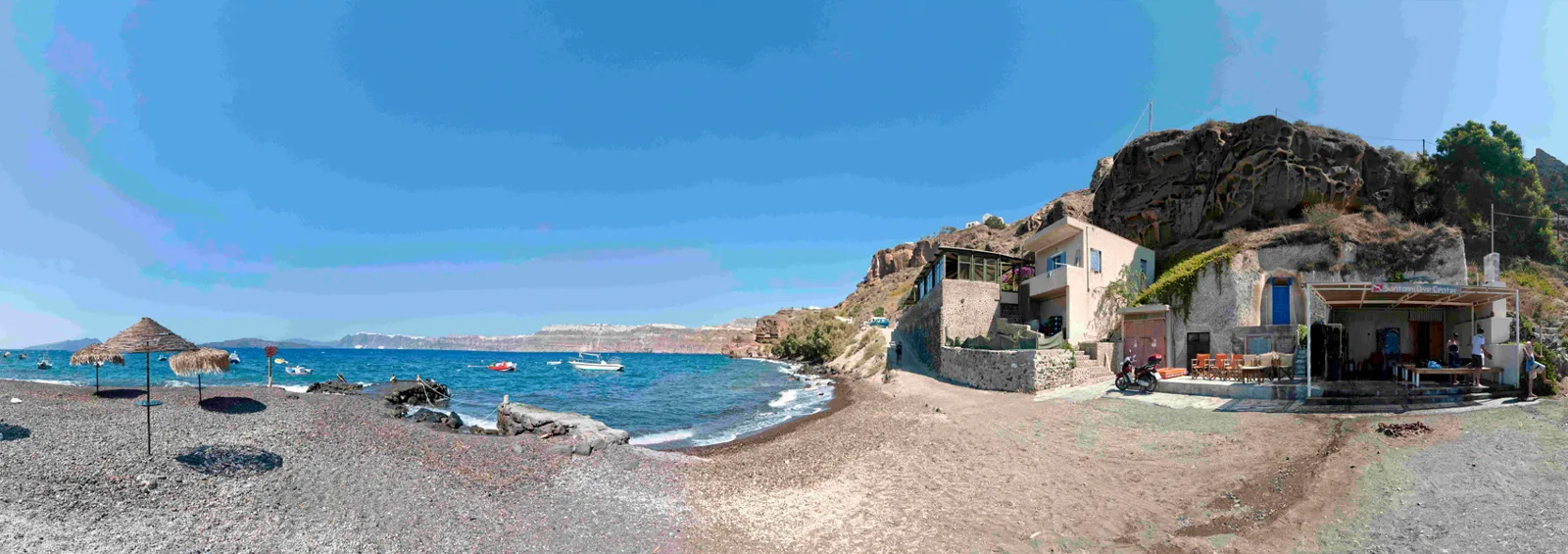
The Caldera Beach dive site is a volcanic house reef situated directly within the Santorini caldera. Located beneath the cliffs of Akrotiri, the topography is defined by steep, rocky volcanic slopes that descend from the shoreline. You will find a rugged terrain shaped by historical volcanic activity, creating a varied landscape of rock formations and crevices. The site is quite shallow, with the bottom reaching a maximum depth of approximately 20 metres, making the entire area highly accessible.
Approaching the site is straightforward, whether you choose a shore entry from Caldera Beach or a boat from the local pier. Because it is a house reef, the descent is direct and the environment remains relatively sheltered compared to the open sea. The terrain provides an immediate sense of the caldera's volcanic history through the dark, textured rocks that characterize the seabed. It serves as an essential entry point for those looking to explore the underwater landscape of the caldera.
Visibility at this site typically ranges between 18 and 20 metres, providing a clear view of the descending slopes. This clarity allows you to observe the geological features and the movement of marine life even at the shallower depths. The light penetrates well through the water column, highlighting the textures of the volcanic substrate. This visibility makes it an excellent location for practicing buoyancy control and navigating uneven terrain.
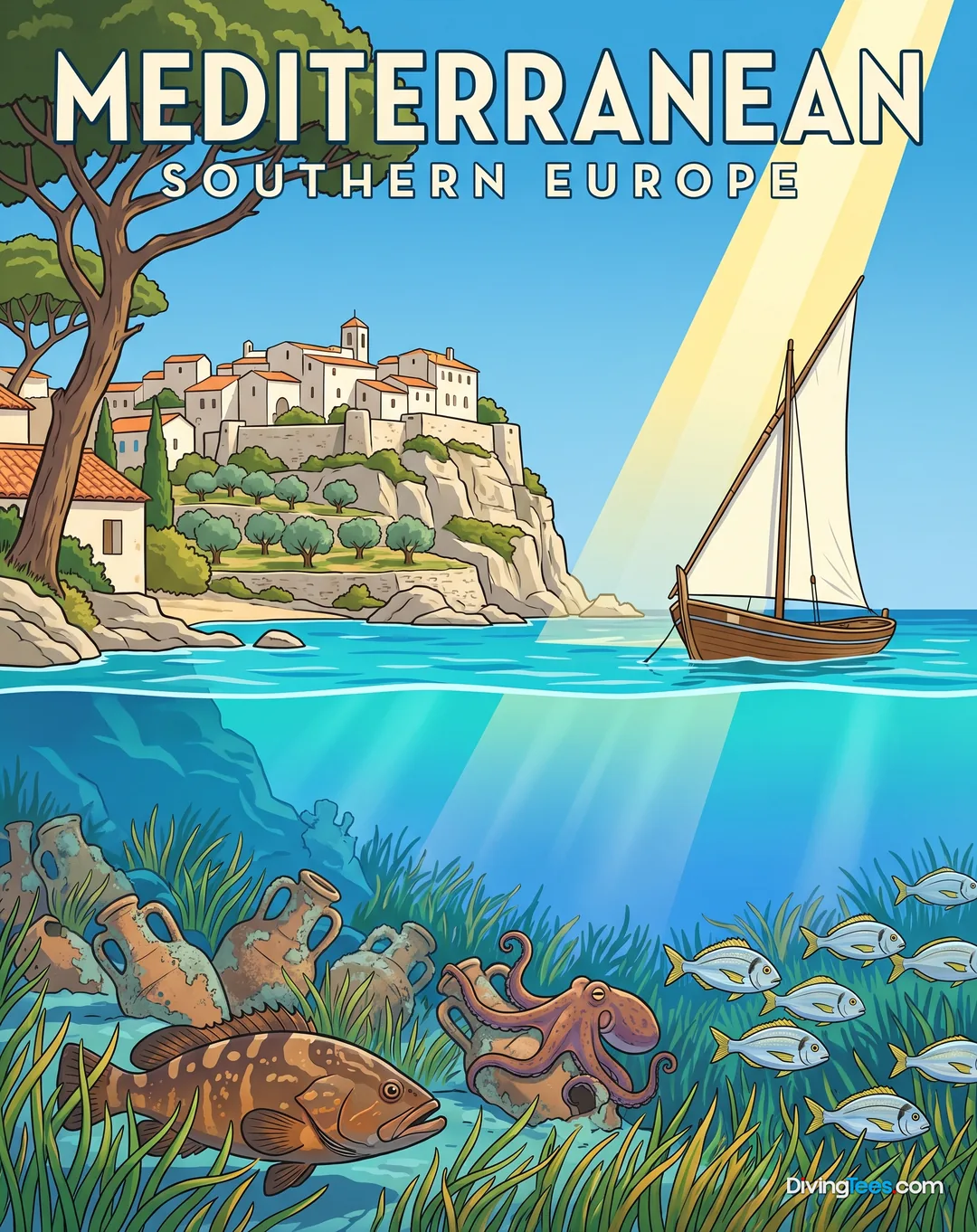
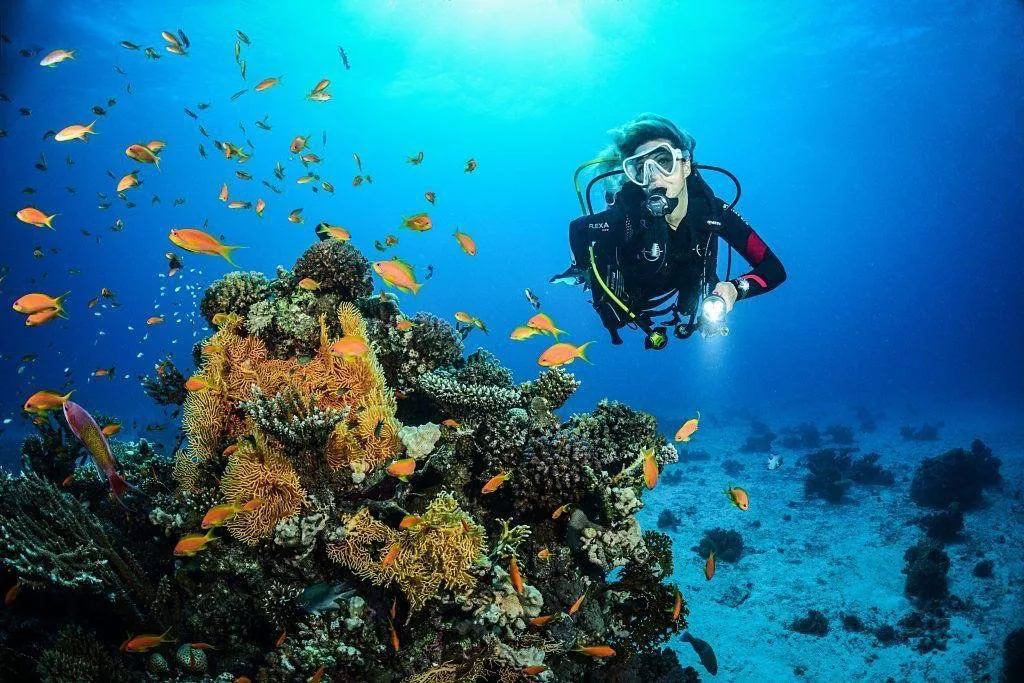
As you descend along the rocky slopes, you will encounter various resident species. Damselfish and wrasse are frequently seen moving amongst the crevices in the volcanic rock. You may also spot sea bream and groupers patrolling the deeper sections of the reef. For those with a keen eye for detail, the reef offers opportunities to find octopus hiding within the complex structure of the rocks.
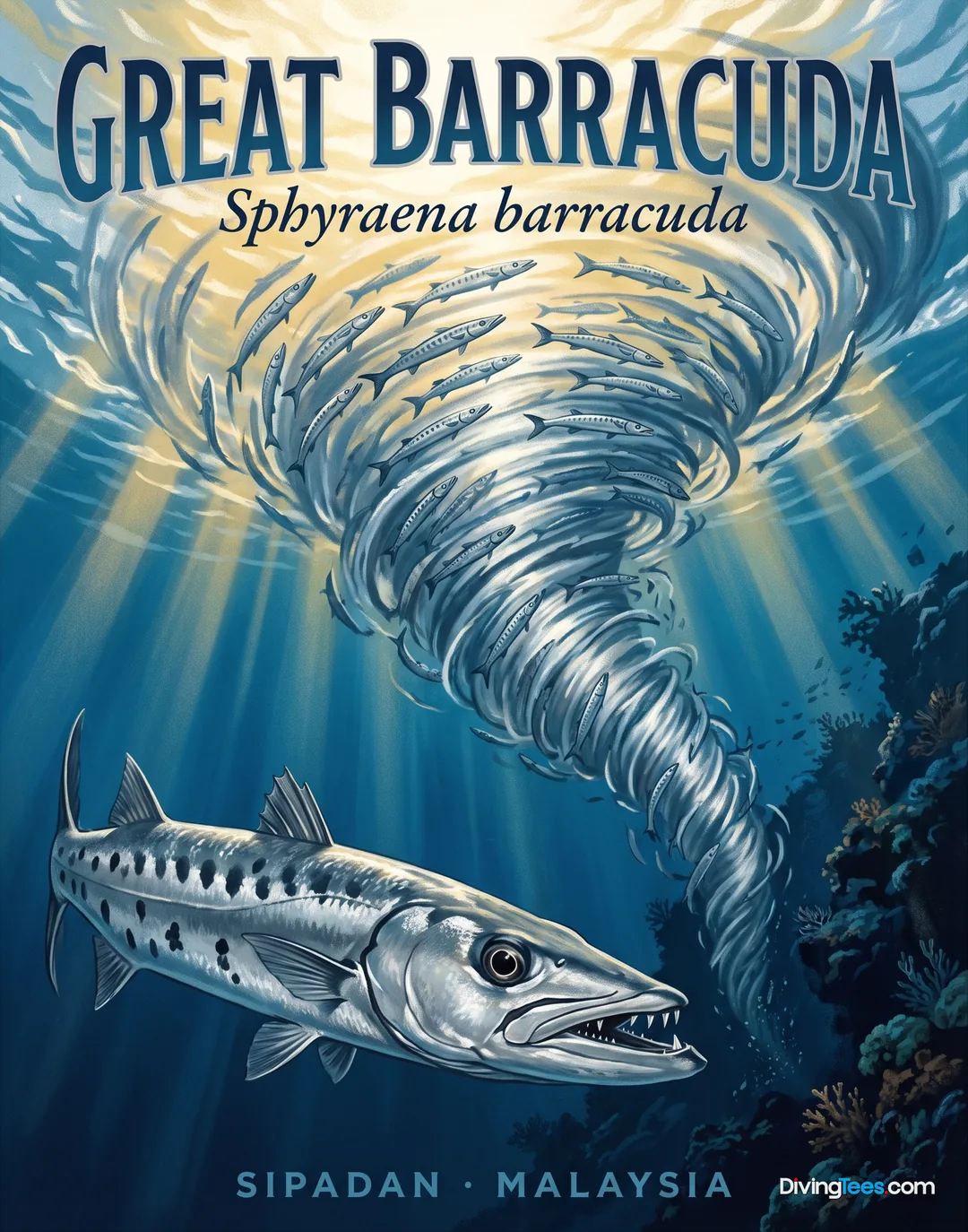
The pelagic presence at this site includes larger predators that move through the caldera. Barracuda are known to cruise through the area, often visible against the backdrop of the deeper water. These sightings occur naturally as part of the local ecosystem, patrolling the edges of the reef structure. Observing these species in their natural habitat provides a direct connection to the marine life of the Aegean.
Conditions at Caldera Beach are generally calm, which is why it is frequently used for training and trial dives. The currents within the caldera are typically light, offering a stable environment for divers of all experience levels. While seasonal weather and wind can influence the water surface and slight swell, the underwater environment remains manageable. This predictability makes it a reliable site for learning and refining essential diving skills.
The seasonality for diving at this location is from April to October. During these months, the water temperature and weather conditions are most favorable for surface access and visibility. Planning your dive within this window ensures the best possible experience for observing the reef and navigating the volcanic topography. Outside of this period, the conditions can become more variable due to regional weather patterns.
Depth: 0 to 20 metres. Required level: Open Water Diver, though good buoyancy control is recommended. Currents are generally light and calm. Expected visibility: 18-20 metres. Best season: April to October.
Plan dives at Caldera Beach from April to October, when water temperature and weather conditions are most favorable for surface access and visibility. Within this season, you can explore the volcanic slopes with visibility typically ranging from 18 to 20 metres, while seasonal weather and wind may still affect the surface.
Caldera Beach suits an Open Water Diver, and good buoyancy control is recommended for navigating its uneven volcanic terrain. Currents are generally light and calm, creating a stable, manageable environment for training, trial dives, and refining essential skills. Seasonal weather and wind can cause slight surface swell.
Caldera Beach is a shallow site, descending from the shoreline along steep, rocky volcanic slopes to a maximum depth of approximately 20 metres. Its depth makes the whole area accessible, whether you enter directly from Caldera Beach or approach by boat from the local pier.
At Caldera Beach, you can explore dark volcanic rock formations, crevices, and descending slopes within the caldera. Damselfish and wrasse move among the rocks, while sea bream and groupers patrol deeper sections. You may also find octopus in the structure or see barracuda cruising through deeper water.