

Blue Waters Dive Cove
Google 4.9/5 (438 reviews)
3.5 km away as the crow flies
Gozo · Malta · Mediterranean
Max. depth · 50 mExplore a vertical L-shaped chimney that leads from a shallow rocky plateau into a series of deep tunnels and caverns.
For subtitles in English: start the video firstthen click the gearat the top right of the video, select “Subtitles/CC”, then “Auto-translate” and choose “English”.
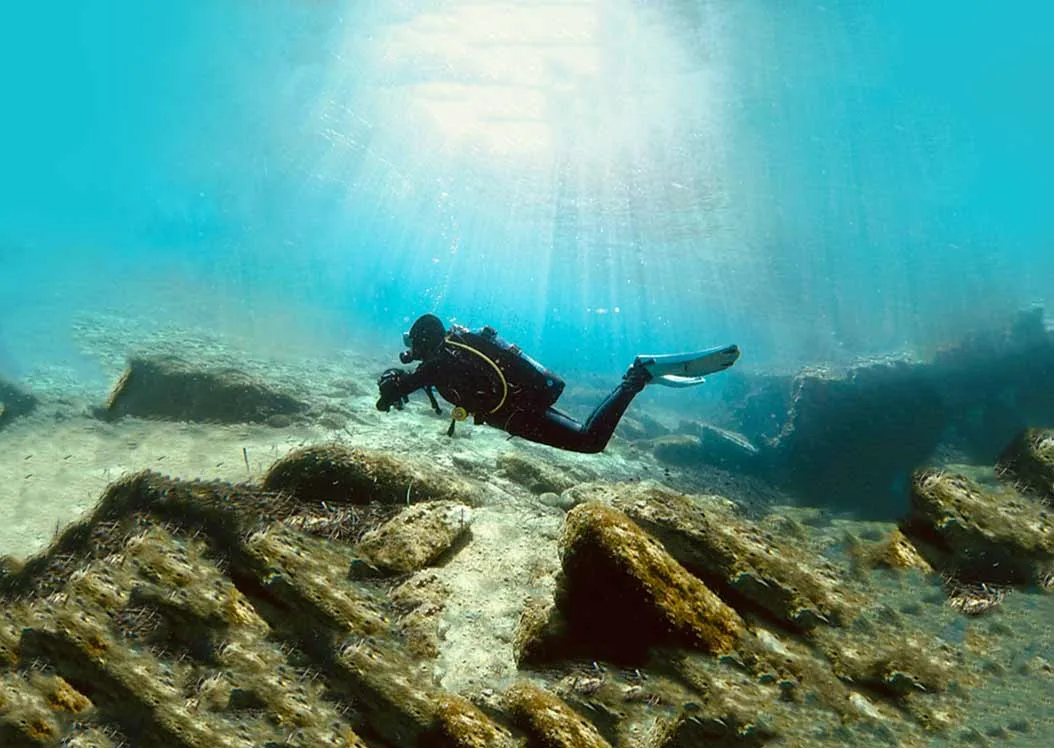
The topography of Lantern Point begins with a shallow rocky plateau situated between 6 and 8 meters. This plateau serves as a natural staging area for the site and provides a stable entry point for divers. From the edge of this plateau, the seabed drops away into a steep vertical wall. This transition is the gateway to the site's most distinctive feature, a large L-shaped vertical chimney. This geological formation descends to depths of approximately 16 to 18 meters before opening into a wider network of tunnels and caverns.
As you descend further into the deeper sections, the environment becomes more complex. The wall is characterized by large limestone blocks and various ledges that create a rugged terrain. These structures provide numerous overhangs and crevices that are essential for the local ecosystem. Beyond the chimney, the drop-off continues to descend significantly, reaching a maximum depth of approximately 50 meters. This verticality makes the site a significant destination for those looking to move beyond simple reef swimming.
Navigating the chimney and the subsequent tunnels requires careful attention to buoyancy and orientation. The L-shaped structure creates unique light and shadow effects that change depending on your position. The passages are wider than the initial chimney, offering more room for movement but also requiring precise depth control. These limestone caverns and under-rock passages are the primary reason divers return to this specific location. The combination of verticality and horizontal passage makes the site profile very dynamic.
The water conditions at Lantern Point are heavily influenced by the location's position between Malta, Comino, and Gozo. This site sits in a high-traffic channel, which means the current can change depending on the tide. While the areas inside the chimney and the deeper caverns remain relatively sheltered, the exposed sections of the wall can experience noticeable currents. You must be prepared for these shifts, especially when transitioning from the calm interior of the caves to the open wall. Managing your position is crucial when navigating the exposed sections of the drop-off.
The marine life at Lantern Point is well-distributed across its different depth zones. Near the rocky plateau and the upper edges of the wall, you are likely to encounter octopus and various species of nudibranch. The presence of moray eels is common among the limestone crevices and under-rock passages. If you look closely at the reef structures, you may also spot seahorses. The biological diversity here is a direct result of the complex topography and the availability of varied habitats.
The deeper sections of the wall host larger, more predatory species. In the deeper water, you can frequently observe dusky grouper and dentex. These fish are often found patrolling the edges of the limestone ledges or hovering near the deeper drop-off. Tuna are also known to move through the area, making the deeper sections a point of interest for those seeking larger pelagics. The site's depth profile ensures that both reef-resident species and larger migratory fish are present.
Visibility at Lantern Point is generally good, typically ranging between 20 and 40 meters. This clarity allows for easy navigation when exploring the L-shaped chimney and the deeper wall sections. During the summer months, the water is warmer and visibility often reaches the upper end of this range. The visibility remains consistent enough to allow for clear viewing of the limestone formations and the fish species that inhabit the crevices. The site is a reliable location for observing the vertical structure from the top down.
Depth ranges from 6 to 50 meters. Open Water Diver level is suitable for the plateau and the upper 18 meters. Advanced level is required for the chimney, tunnels, and the 25-30 meter sections. Deep experience and gas management are necessary for the 40-50 meter depth zones. Currents can be variable, particularly on the exposed wall. Visibility is typically 20-40 meters.
During the summer months, Lantern Point has warmer water, and visibility often reaches the upper end of its typical range. Visibility is generally 20 to 40 meters, allowing you to see the limestone formations, the L-shaped chimney, the deeper wall, and fish inhabiting the crevices with good clarity.
You can explore the plateau and the upper 18 meters at Open Water Diver level. Advanced training is required for the chimney, tunnels, and sections between 25 and 30 meters. The 40 to 50 meter zones require deep experience and gas management, so you should match your plan to your training.
Lantern Point begins on a rocky plateau at 6 to 8 meters, then drops along a steep wall. The L-shaped chimney descends to about 16 to 18 meters before opening into tunnels and caverns. Beyond them, limestone ledges and the vertical drop-off continue to approximately 50 meters.
Currents at Lantern Point can change with the tide and may be noticeable along the exposed wall, while the chimney and deeper caverns are relatively sheltered. You may see octopus, nudibranchs, moray eels, and seahorses, with dusky grouper, dentex, and tuna in the deeper sections.