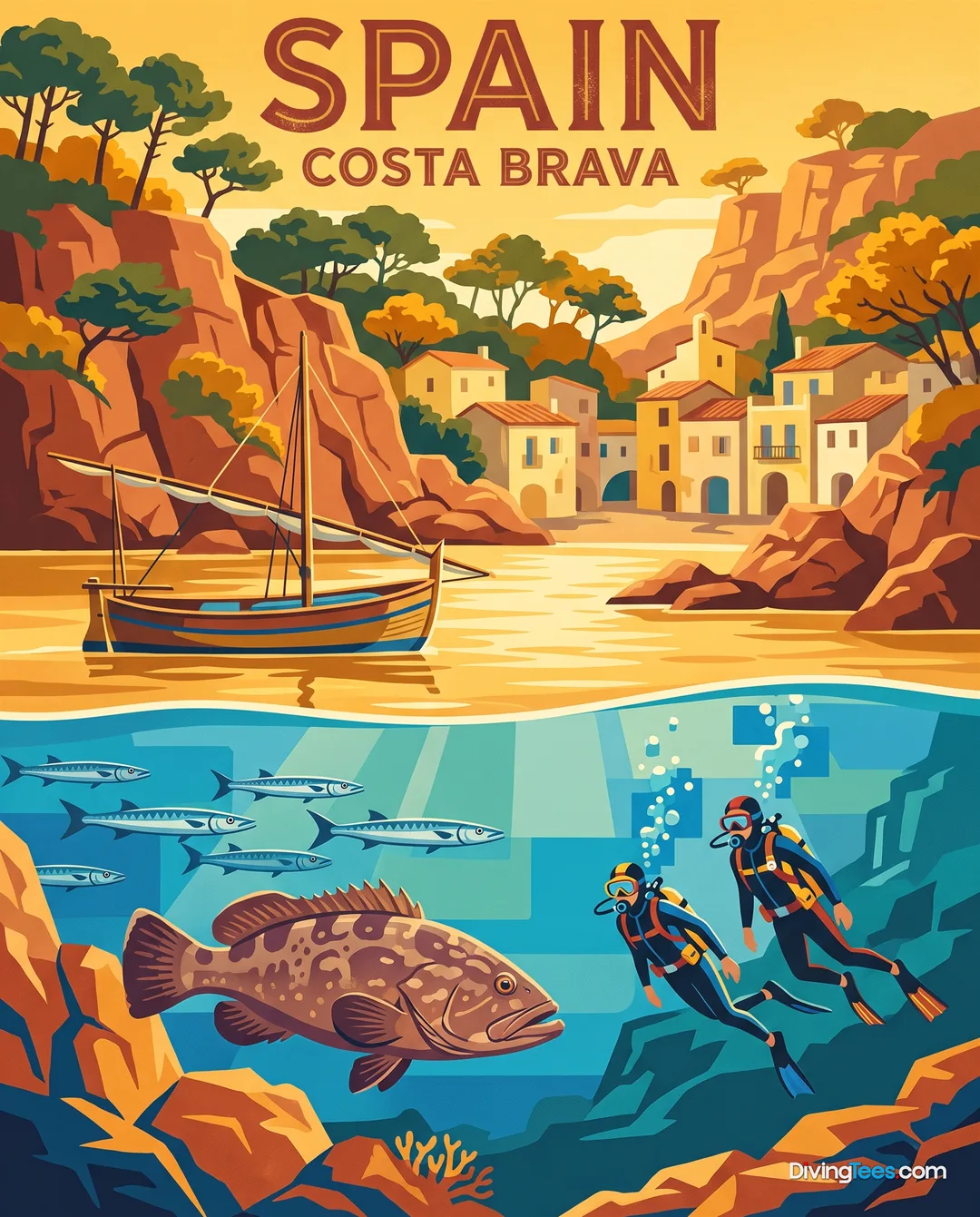
Spain · Mediterranean
Diving Menorca: limestone caves, seagrass and sheltered coves
Limestone walls, seagrass meadows and clear water down to 40 metres meet short boat rides and the regulated Reserva Marina del Nord de Menorca.
What makes this destination special
- Limestone caverns and faults along the island’s rocky coast
- Reserva Marina del Nord de Menorca, created in 1999
- Seagrass meadows over clear Mediterranean shallows
- Dives commonly reaching 18 to 40 metres
- Short boat runs from coastal diving bases
- Occasional tuna passing through open water
- May, June, September and October, with lighter visitor pressure
- North coast diving permits and daily limits
For subtitles in English: once the video has started, click the gearat the top right of the video, select “Subtitles/CC”, then “Auto-translate” and choose “English”.
Overview
Menorca is a shore-based diving island where a day can move between a sheltered entry, a short boat ride and the pale limestone relief of the northern coast. The underwater landscape combines rocky walls, cracks, seagrass and shallow caverns, with deeper sites reaching around 40 metres. It works for a first Mediterranean holiday as well as for a more experienced diver, provided the base is chosen for the coast you actually want to dive. Above water, coves, villages and coastal paths make it easy to share the trip with a non-diver.
Diving here
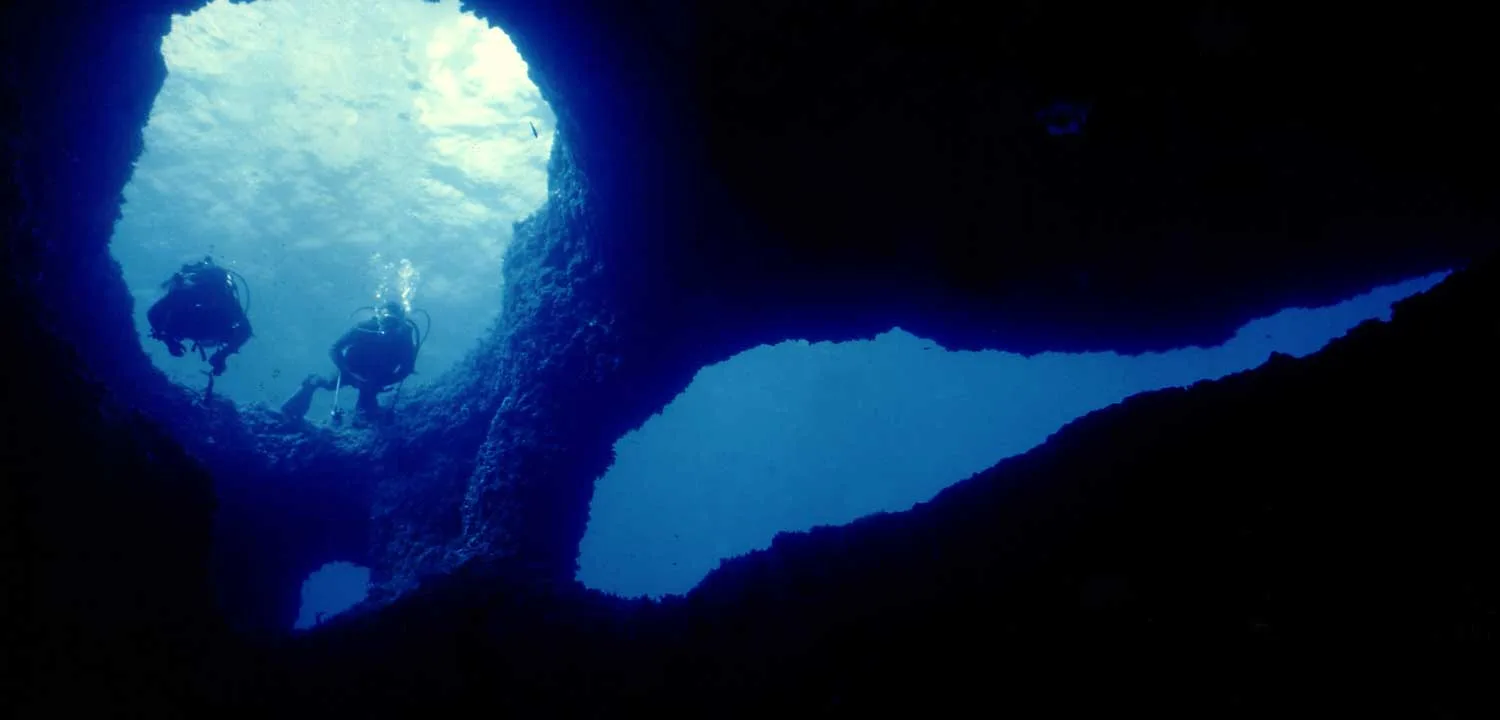
Menorca’s diving is built around limestone rather than dramatic wrecks: expect rocky outcrops, faults, drop-offs, seagrass beds and caverns where the rock folds into shadow. Some sites are reached from shore, while boat outings usually involve only a few minutes to around twenty minutes of navigation. Depths commonly lie between 18 and 40 metres, so the same holiday can include a gentle shallow dive and a more committed deep profile. Currents are variable rather than a defining feature, and the centre may use the coast offering the most shelter from that day’s wind. Visibility is often 20 to 30 metres in clear conditions, though swell, suspended particles and coastal run-off can reduce it. The caves are a visual feature, not an invitation to cave dive: in the northern reserve, entering underwater caves is prohibited.
Three dives not to miss
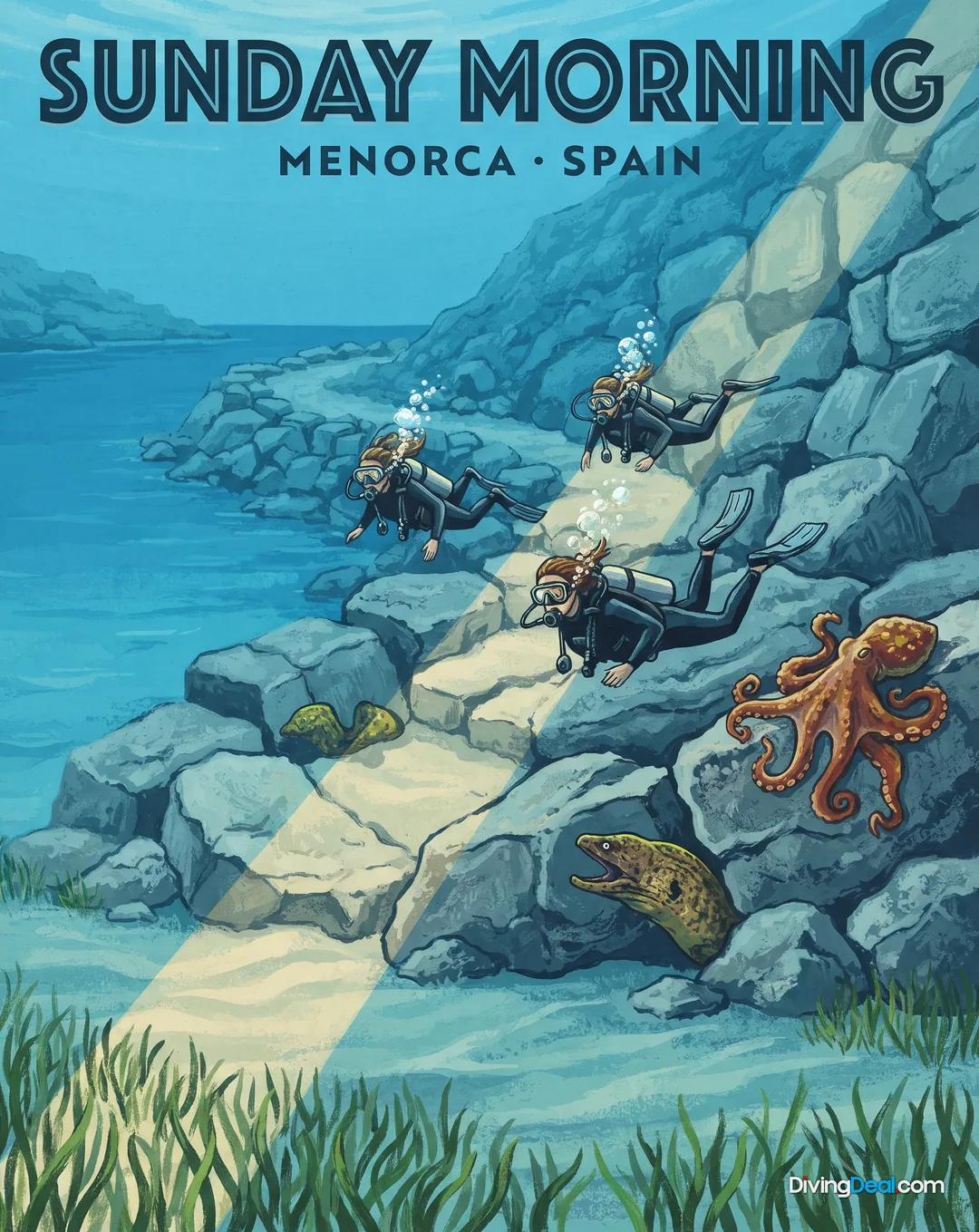
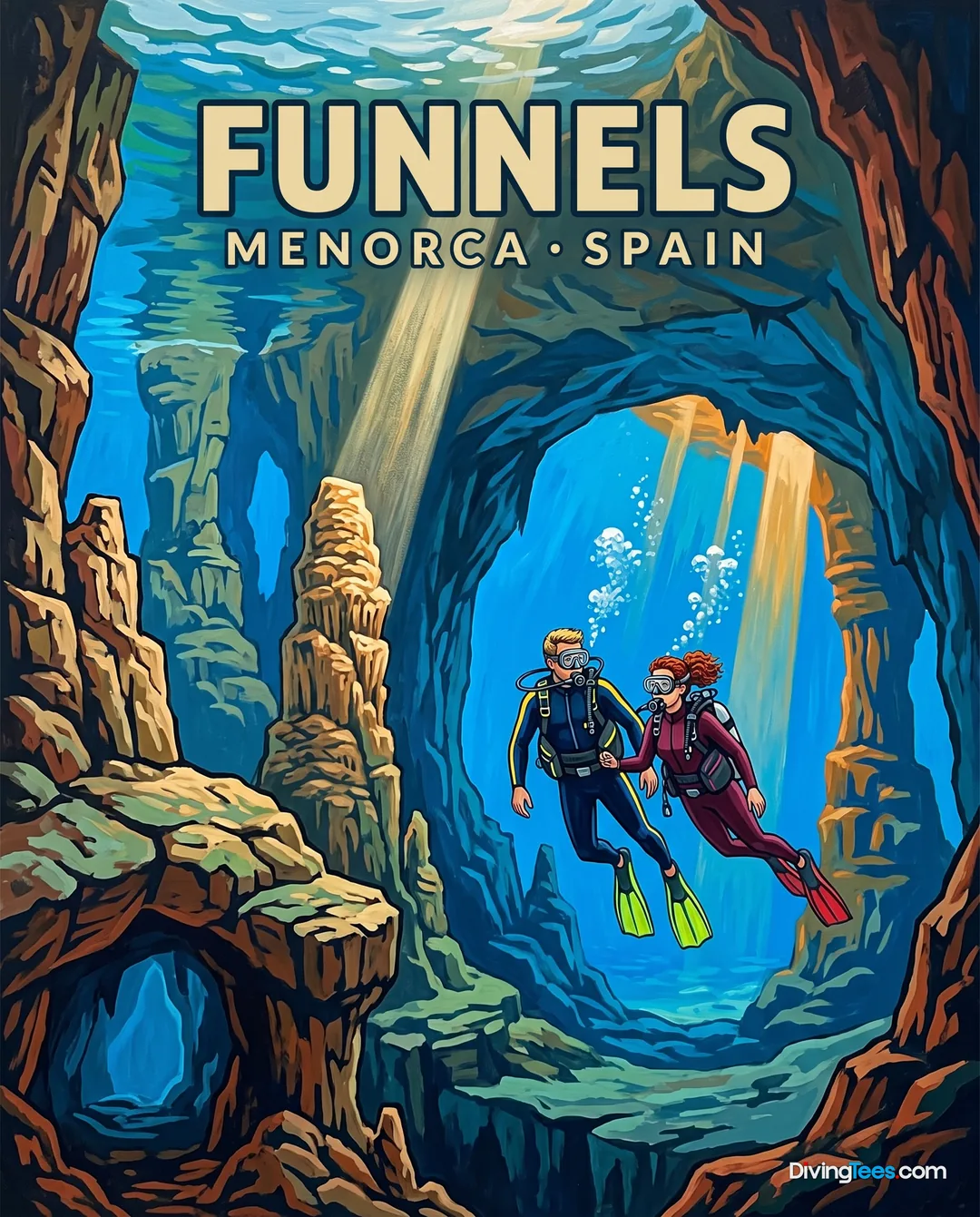
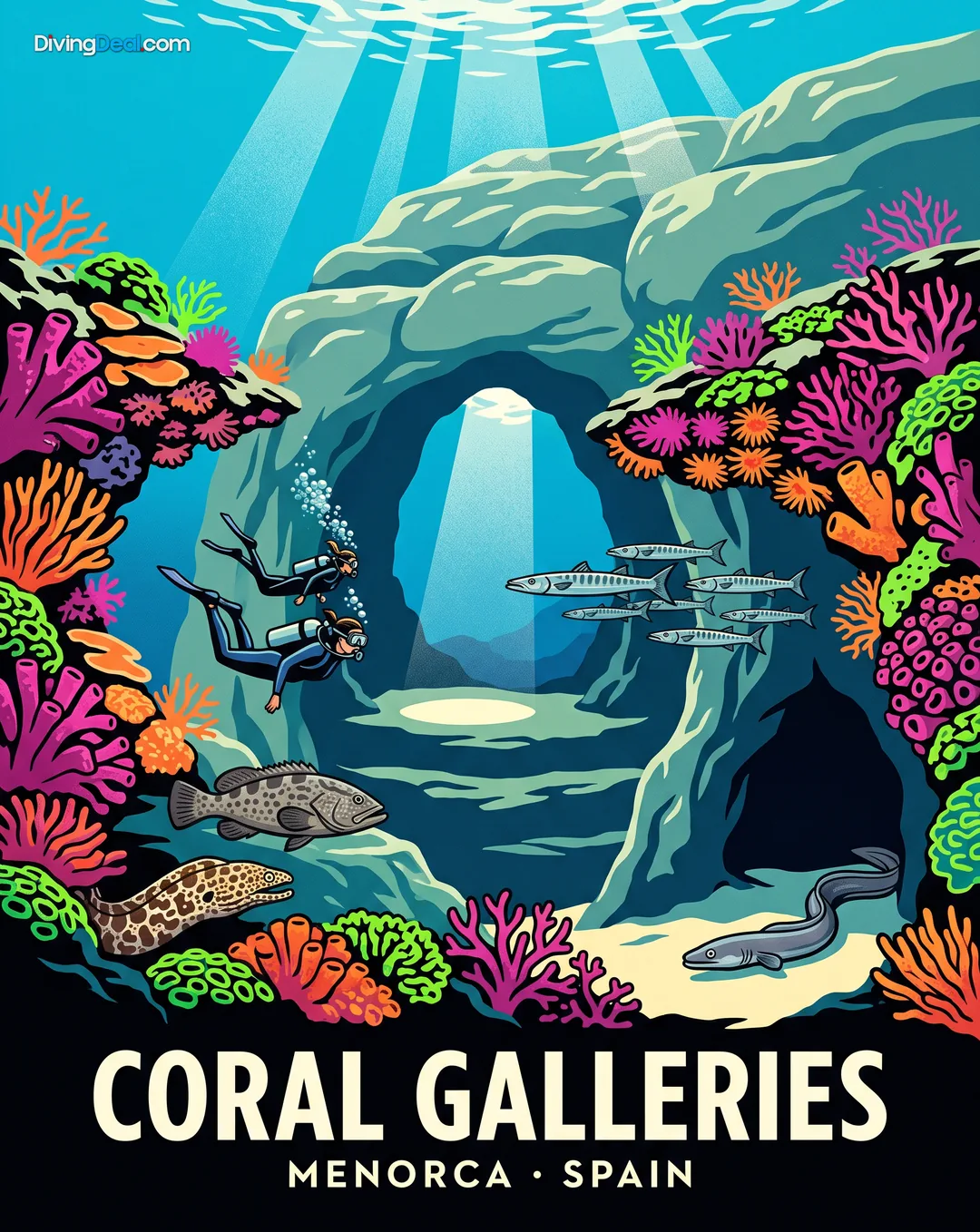
The underwater wildlife
The most dependable encounters come from Menorca’s habitats rather than a fixed seasonal wildlife calendar. Rocky Mediterranean ground, seagrass meadows, cracks and sheltered cavities provide the surfaces and cover where marine life gathers, with the protected northern coast offering richer-looking underwater ground than heavily used areas. Keep an eye into open water as well as under ledges, since tuna are occasionally seen passing through. The reserve’s rules are particularly relevant to wildlife encounters: do not touch or feed animals, and do not carry equipment intended for fishing or collecting. May to October gives the clearest general diving conditions, but it is the structure of the habitat, not a guaranteed seasonal animal spectacle, that makes each site worth examining slowly.
Possible underwater encounters


When to go
The most consistent diving period generally runs from May to October. May, June, September and October are the sensible compromise, with active centres, favourable conditions and less crowding than July and August. They also leave more flexibility when wind makes one coast less comfortable and another more workable. Visibility is usually strongest in this period, although swell and run-off can still change a site quickly. Winter diving remains possible, but the water is colder and fewer centres operate. For spring and early autumn, a 5 mm suit with hood is the practical choice for repeated dives; a 3 mm suit may suit high summer divers who do not feel the cold.
Level required
Menorca suits beginners on sheltered, shallow sites, while experienced divers can move towards deeper walls, exposed relief and more demanding caverns. Advanced Open Water is useful for the deeper sites and some cavities, but certification alone should not be treated as a substitute for relevant experience. The important distinction is between looking into a cavern and making a cave penetration. In the northern marine reserve, underwater cave entry is forbidden, regardless of depth or apparent simplicity.
On the ground
From London Heathrow, London Gatwick or Manchester, the usual route is a flight to Mahón, followed by a road journey to the chosen coastal base. Direct services from Europe generally make this a half-day journey, but connections and seasonal timetables can add considerably more time. Menorca can also be reached by ferry from mainland Spain or Majorca, arriving mainly at Ciutadella or Mahón, with the sea crossing forming an unavoidable part of that option. Once on the island, a hire car is useful if you want to compare northern and southern coasts or reach shore entries. A taxi or centre shuttle may be enough when staying close to one base, and some centres can be reached on foot from nearby accommodation.
Local tips
Match the accommodation to the coast before booking, rather than assuming the island is small enough for every base to serve everywhere conveniently. If the northern reserve is the priority, arrange the required individual or group diving permit in advance, and check whether the Sa Nitja area or a Cavalleria sector has extra authorisation or daily limits. Do not plan a cave penetration there, and leave fishing or collecting equipment behind, as it is prohibited on the boat and during the dive apart from a safety knife. Keep the itinerary flexible enough to follow the wind, since the island’s different coasts can provide alternatives. In May and October, pack for repeated dives rather than one warm-water splash. July and August need earlier planning for popular departures, while morning boats can help avoid the busiest periods. A hire car is worthwhile when several coasts matter, but unnecessary if the holiday is centred on one walkable base.
Planning your stay
A seven- to ten-day land-based stay gives enough room to combine two or three sectors without turning every day into a road trip. Most divers either stay near a base, use its shuttle or drive to the departure point. The practical pattern is to keep the diving coast-led and weather-aware, then use non-diving time for the Camí de Cavalls, Ciutadella, Mahón, beaches, coves, talayotic sites and inland wetlands. Kayaking or a boat trip can fill a calm day, while the island’s history and food give a non-diver plenty to do.
Hello, I'm Marina, DivingDeal.com's AI assistant. I guide you through destinations, areas and countries.
Thinking about the whole trip and the flights? Talk it over with Edith →
Marina is an AI. Some links are affiliate links: DivingDeal may earn a commission, at no extra cost to you. Bookings are made with the partner.
Map of hotels, dive sites and dive centres in Menorca
Dive centres in Menorca

Hotels in Menorca


Things to do in Menorca beyond diving
Your last day stays dry: no diving in the 18-24 hours before a flight, the perfect window to see the destination from another angle.


Ratings and reviews collected by Viator and Tripadvisor.
Frequently asked questions about Menorca
When should you go diving in Menorca?
The most consistent diving period in Menorca runs from May to October. May, June, September and October offer active centres, favourable conditions and less crowding than July and August. Visibility is often strongest then, although swell and coastal run-off can still affect individual sites. Winter diving is possible, with colder water and fewer operating centres.
What diving level suits Menorca?
Menorca suits beginners on sheltered, shallow sites, while experienced divers can explore deeper walls, exposed relief and more demanding caverns. Advanced Open Water is useful for deeper sites and some cavities, but relevant experience still matters. In the northern marine reserve, underwater cave entry is forbidden, so divers must not make cave penetrations.
What can you see while diving in Menorca?
Menorca offers limestone walls, rocky outcrops, faults, drop-offs, cracks, sheltered cavities, shallow caverns and seagrass meadows. Clear Mediterranean water often reveals the relief well, while marine life gathers around the habitat and protected northern coast. Look beneath ledges and into open water, where tuna are occasionally seen passing through.
How should you plan a diving stay in Menorca?
Choose accommodation near the coast you want to dive, especially if the northern reserve is your priority. Arrange the required diving permit in advance and check for local authorisation or daily limits. Keep plans flexible around wind, use a hire car for several coasts, and leave fishing or collecting equipment behind.