



Subfari Dive Center
Google 4.9/5 (152 reviews)
Spain · Mediterranean
Posidonia meadows, rocky drop-offs, sea caves and Mediterranean groupers shape boat dives around Ibiza and across the protected waters towards Formentera.
For subtitles in English: start the video firstthen click the gearat the top right of the video, select “Subtitles/CC”, then “Auto-translate” and choose “English”.
Ibiza is a shore-based Mediterranean diving holiday built around daily boat trips, not a liveaboard. Beneath the cliffs and around the offshore islets, dives move between rocky walls, caves and Posidonia meadows, with more exposed or deeper routes available when conditions allow. The protected waters of Es Freus add a distinct reason to cross towards Formentera, although that excursion brings its own permissions and timetable. Above water, beaches, historic Eivissa, coastal walks and the landscapes of Ses Salines give non-divers a proper holiday too.
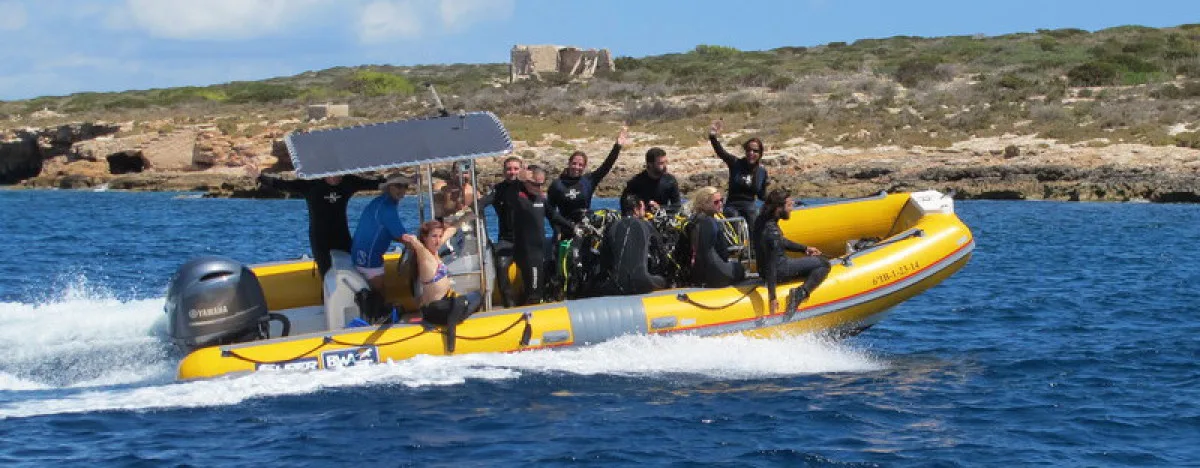
Most diving starts from a harbour and heads by boat towards cliffs, rocky islets, coastal reserves and the channels between Ibiza and Formentera. Expect a mixed Mediterranean landscape: drop-offs, rock relief, caves and broad Posidonia meadows rather than one uniform reef system. Current is variable, so a calm-looking itinerary can still involve a changing descent or a drift dive, particularly on more exposed routes. Visibility commonly falls between fifteen and thirty metres, with the clearest conditions generally from June to September, and good chances in May and October. Swell, stirred sediment, coastal run-off and occasional plankton can quickly reduce that clarity. Centres match sheltered sites to beginners and reserve deeper or more exposed profiles for suitably experienced divers. Advanced Open Water is useful where depth is part of the plan, while Nitrox has practical value on days built around repeated boat dives.
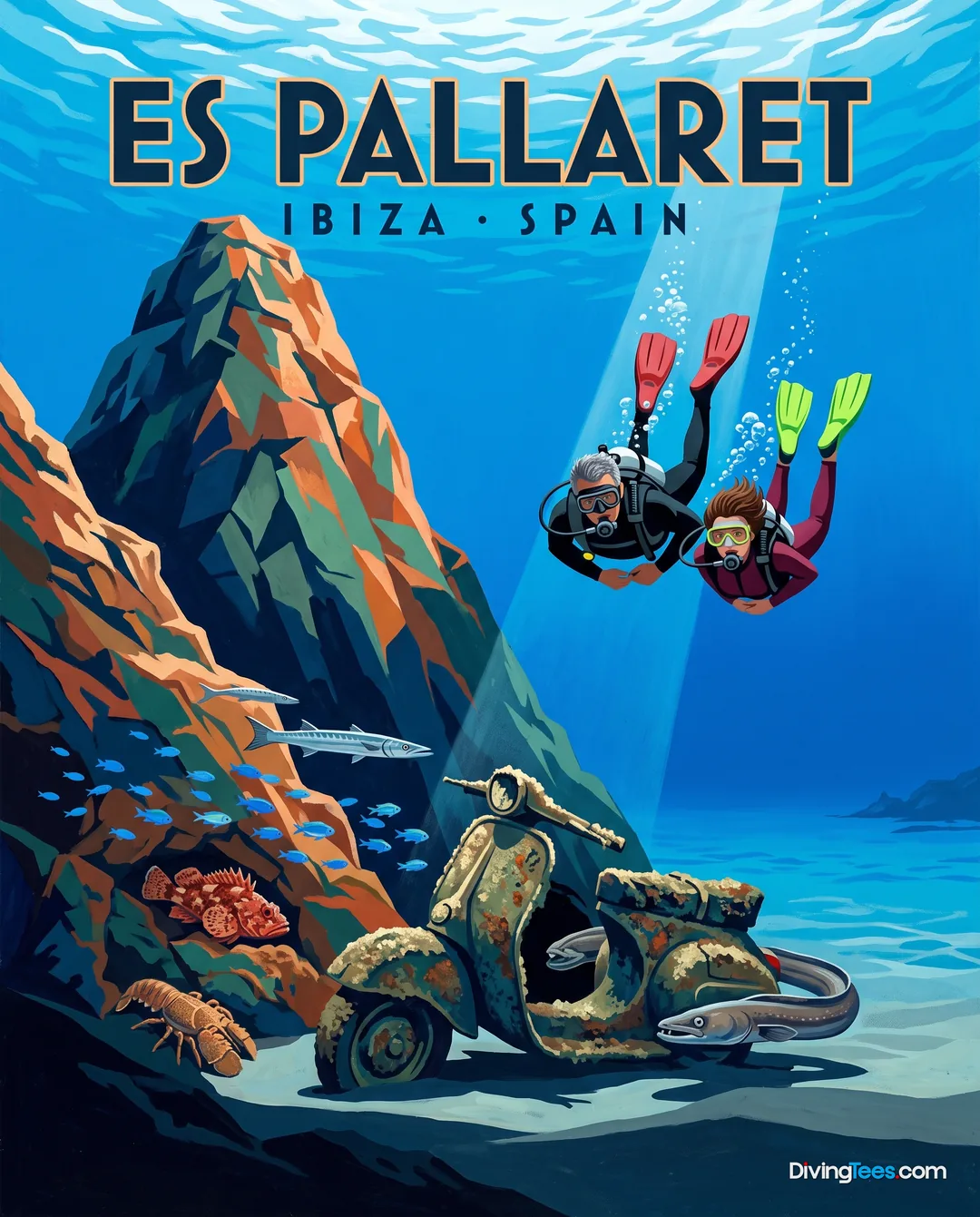
Mediterranean groupers are a regular possibility from May to October, particularly around the rocky structure where a diver can pause and inspect cracks, ledges and cave entrances. Octopus can be encountered throughout the year, with more activity during the milder part of the season, so look carefully rather than swimming past bare-looking rock. Barracudas are occasional visitors from spring through autumn, while marine turtles remain a rare sight in summer and early autumn. Posidonia meadows are not simply empty green ground: they provide habitat for marine life, hold the seabed in place and help maintain clear water. Their condition also tells you something about the pressure on this heavily visited coastline, where protected zones and anchoring rules matter.
May, June, September and October are the sensible months for combining workable sea conditions with less traffic than the height of summer. June to September usually offers the clearest water, although May and October can still produce rewarding visibility and a quieter boat. July and August often bring calm seas, but popular coastal sites and the water around the islets are busiest then, which affects both the journey and the dive itself. Winter is possible, yet weather and sea state have a greater say in whether boats run. A spring or autumn plan also leaves more room to move an excursion towards Formentera if conditions change.
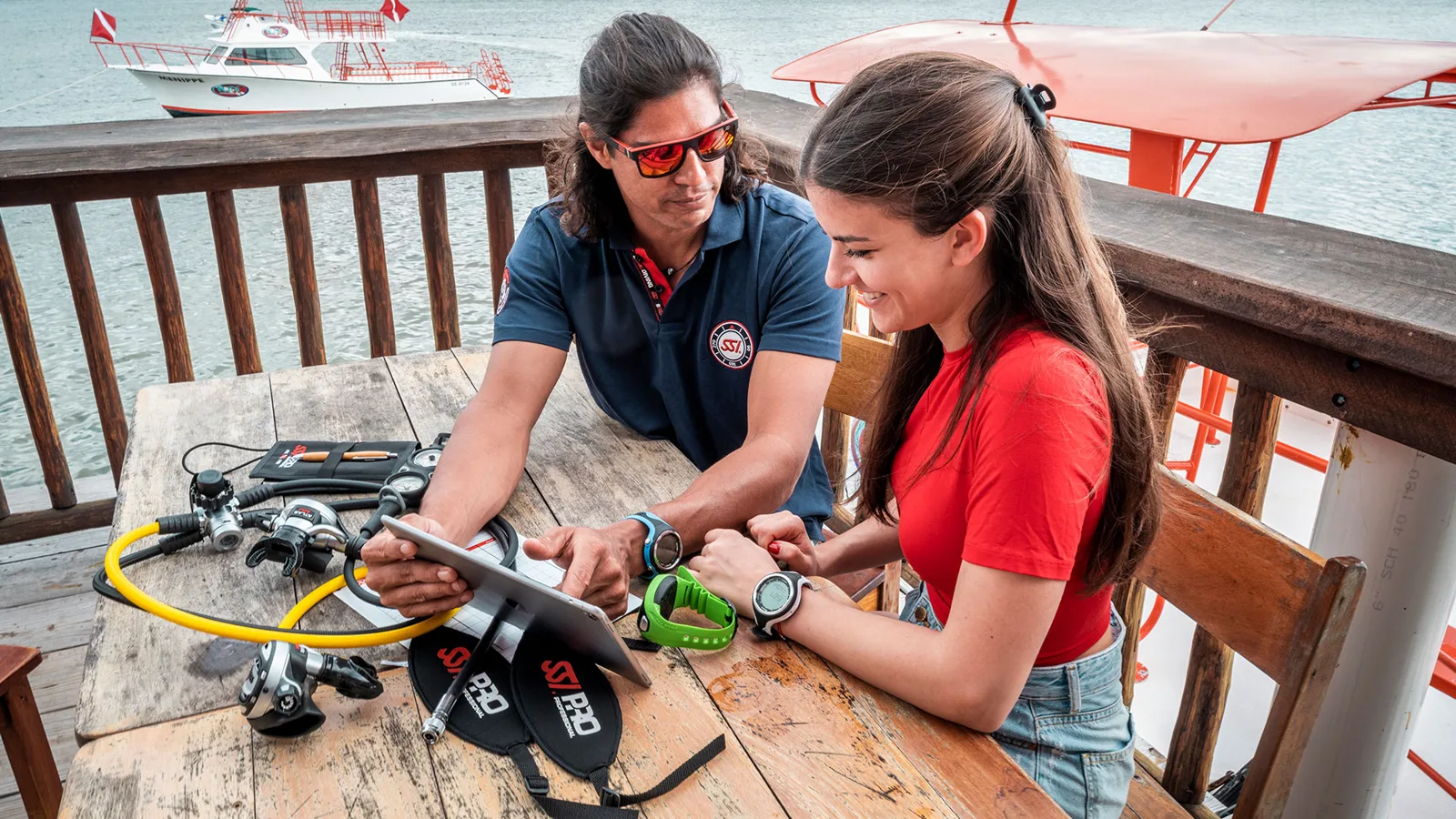
Beginners and divers completing an entry-level course can use the sheltered sites and guided boat outings, provided the day’s conditions suit. Certified divers with more experience can look towards drop-offs, deeper profiles, caves and sites exposed to changing current. Advanced Open Water is useful for the deeper itineraries, rather than essential for the destination as a whole. BSAC divers can approach the trip on the same basis as PADI or SSI divers, with the relevant experience and depth limits matched to the planned route. Current, swell and the boat setting reward calm, self-aware diving more than bravado.
From London Heathrow, London Gatwick or Manchester, Ibiza is reached by air, with direct links available only on some routes and seasons. Allow more time when a connection is involved. The destination’s main gateway is Ibiza Airport, followed by a road transfer to the harbour or diving area chosen. Ibiza can also be reached by ferry from mainland Spain. Reaching the Formentera sectors from Ibiza requires a sea crossing, so a day there depends on ferry timings as well as the dive plan, and should be arranged separately. Once on the island, accommodation near the departure harbour can make the centre walkable. Elsewhere, a hire car or taxi is the practical way to cover the distances between bases.
Treat the Es Freus crossing as a separate piece of planning, not as an interchangeable local boat trip. Ask before booking who is handling the reserve authorisation and which zone the dive enters, because autonomous diving is regulated and some maximum-protection areas prohibit it altogether, including night diving in certain zones. Keep the sailing timetable visible when building the day, and leave weather margin rather than stacking every dive around Formentera. In the reserve, never anchor on Posidonia. It is protected habitat and damaged slowly, so use the permitted arrangements and keep fins, weights and kit clear of the meadow. For popular coastal sites, early morning departures usually mean less boat traffic. Keep a spare day for a cancelled crossing or rough sea, and leave a proper no-diving interval before the flight home, especially after repetitive or deeper days.
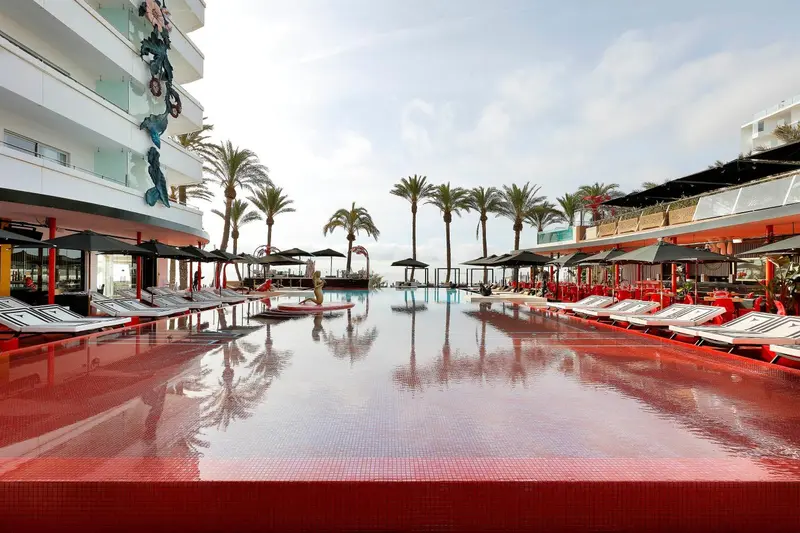
Plan on a week based ashore, using daily boat departures to work through Ibiza’s coastal sectors and keeping a separate day for Formentera. The choice of resort or harbour matters more here than it first appears: staying near the departure point can mean walking with equipment, while a base elsewhere brings taxis or a hire car. Build in a weather reserve rather than treating every day as fixed. Non-divers have beaches, kayaking, coastal walks, Dalt Vila, villages and the Ses Salines wetlands to fill days when the boats stay in.
Hello, I'm Marina, DivingDeal.com's AI assistant. I guide you through destinations, areas and countries.
Thinking about the whole trip and the flights? Talk it over with Edith →
Marina is an AI. Some links are affiliate links: DivingDeal may earn a commission, at no extra cost to you. Bookings are made with the partner.
Your last day stays dry: no diving in the 18-24 hours before a flight, the perfect window to see the destination from another angle.

⏱ 1 day · ★ 5.0 (39 reviews)
from £41$54€49
see on Viator ↗
 Nature
⏱ 3 h · ★ 5.0 (11 reviews)
from £50$67€60
see on Viator ↗
 Nature
⏱ 3 h · ★ 5.0 (8 reviews)
from £86$115€103
see on Viator ↗
 Culture
⏱ 2 h · ★ 5.0 (7 reviews)
from £31$42€38
see on Viator ↗
Ratings and reviews collected by Viator and Tripadvisor.
Visit Ibiza in May, June, September or October to combine workable sea conditions with less traffic than the height of summer. June through September generally brings the clearest water, while May and October can offer rewarding visibility and quieter boats. Winter diving is possible, but weather and sea state influence boat departures more.
Beginners and divers completing an entry-level course can use sheltered sites and guided boat outings when conditions suit. More experienced certified divers can choose drop-offs, deeper profiles, caves and routes affected by changing current. Advanced Open Water is useful for deeper itineraries, while calm, self-aware diving matters on every route.
You can explore rocky drop-offs, sea caves, sheltered formations and protected Posidonia meadows around Ibiza and towards Formentera. Mediterranean groupers are a regular possibility from May through October, while octopus may appear throughout the year. Barracudas visit from spring through autumn, and marine turtles are rare in summer and early autumn.
Plan a week based ashore around daily boat departures, with a separate day for Formentera and a weather reserve. Staying near the departure harbour can make equipment transport easier; elsewhere, use a hire car or taxi. Arrange Es Freus permissions and timings separately, keep a spare day for rough seas, and leave a proper no-diving interval before flying.