
Blue Islands Diving
Google 4.9/5 (728 reviews)
Spain · Mediterranean
Cave entrances, narrow tunnels, Posidonia meadows and moray eels shape a Mediterranean base where boat dives sit beside shore entries and old-town days.
For subtitles in English: start the video firstthen click the gearat the top right of the video, select “Subtitles/CC”, then “Auto-translate” and choose “English”.
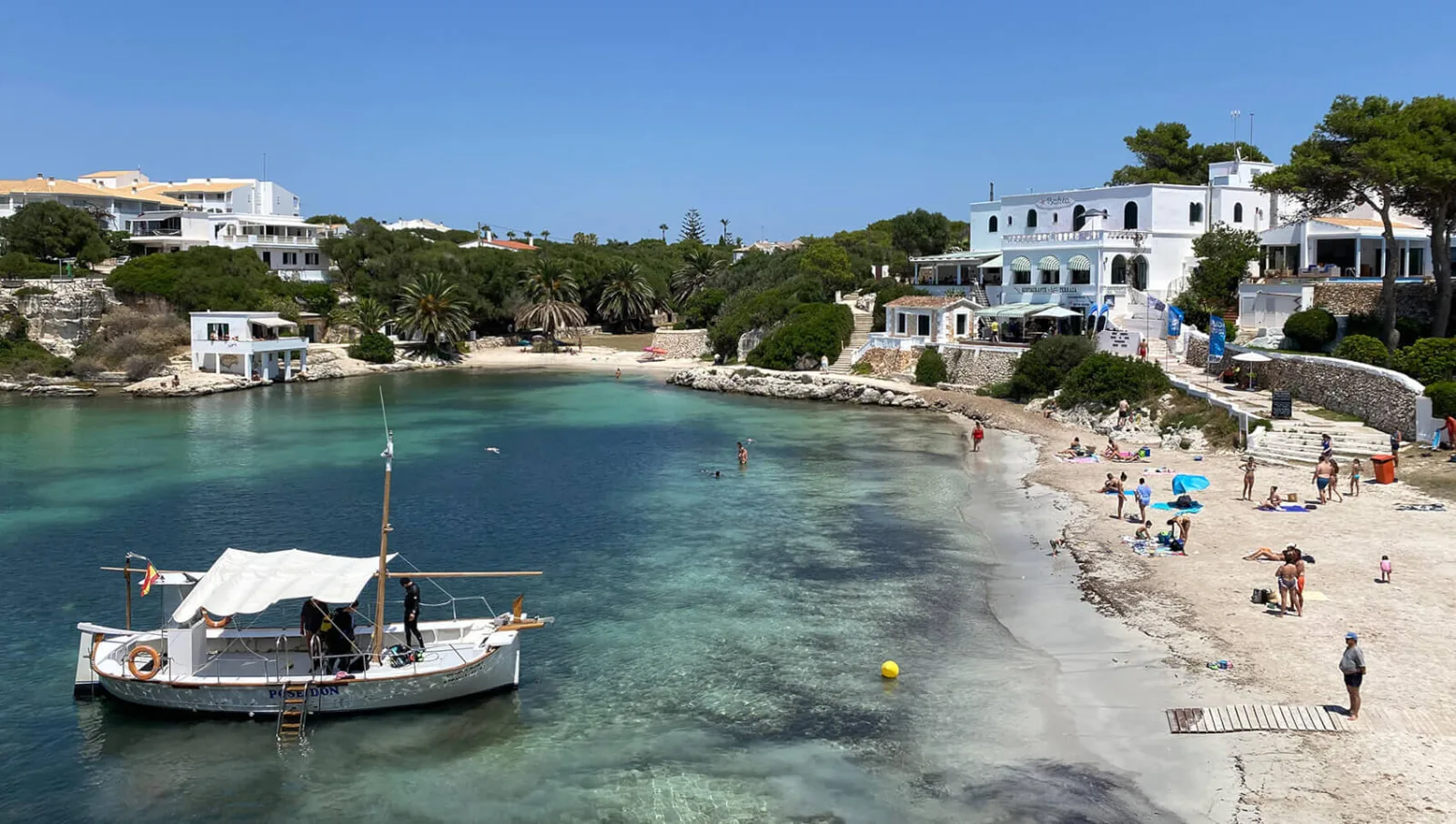
At Ciutadella, the west coast puts rocky coves, arches, chimneys and caves within reach of a comfortable land-based stay. A boat takes you towards the more distinctive coastal formations, while shore entries in nearby coves provide a simpler start or an easy second look at Mediterranean rock and Posidonia seagrass. Above water, Ciutadella gives the trip substance between dives, with its old town, harbour, beaches and coastal paths. It suits divers who want variety without living aboard.
The diving moves between rocky bottoms, walls, arches, canyons, cracks and passages beneath the cliffs. Sites around Cala en Blanes, Cala Blanca, Cala Santandria and Son Xoriguer can be reached from the shore or used as departure points, while the west coast is explored by boat. Depths are often moderate, making the area workable for newer divers, but the character changes quickly once a route enters a chimney or tunnel. Currents are variable rather than a defining constant, and visibility commonly reaches 20 to 30 metres when swell and suspended particles stay under control. Expect Mediterranean profiles rather than coral-reef scenery: careful finning over Posidonia, rocky navigation and pauses at cave mouths. A swim past an entrance is not the same as a penetration, so the briefing matters.
The rocks and seagrass hold the familiar Mediterranean cast throughout the May to October diving season. Look for seabreams and other sparids moving over the bottom, wrasses threading through the rocks, and damselfish in the brighter shallows. Moray eels occupy cracks and holes, while octopuses can be found tucked into shelter or crossing open ground. Groupers appear occasionally, as do barracuda, whereas rays are a rare encounter rather than a dependable reason to book a trip. Posidonia meadows are part of the habitat, not empty ground between the interesting bits, and deserve a neutral hover above them. The marine reserve along part of Minorque’s northern coast adds a protected setting to the wider island picture, but the west-coast dives are not all reserve dives.
May to October is the practical diving season, with centres commonly running their programme through these months. May, June, September and October are the sensible compromise for divers who would rather not share every cove and boat with the July and August rush. Summer usually brings the fullest choice of outings and generally favourable conditions, while spring and autumn leave more room around the popular coastal sites. Visibility is often strongest in this same period, although swell, stirred-up particles and coastal run-off can still change a particular day. Keep the itinerary flexible for exposed caves and anchorages.
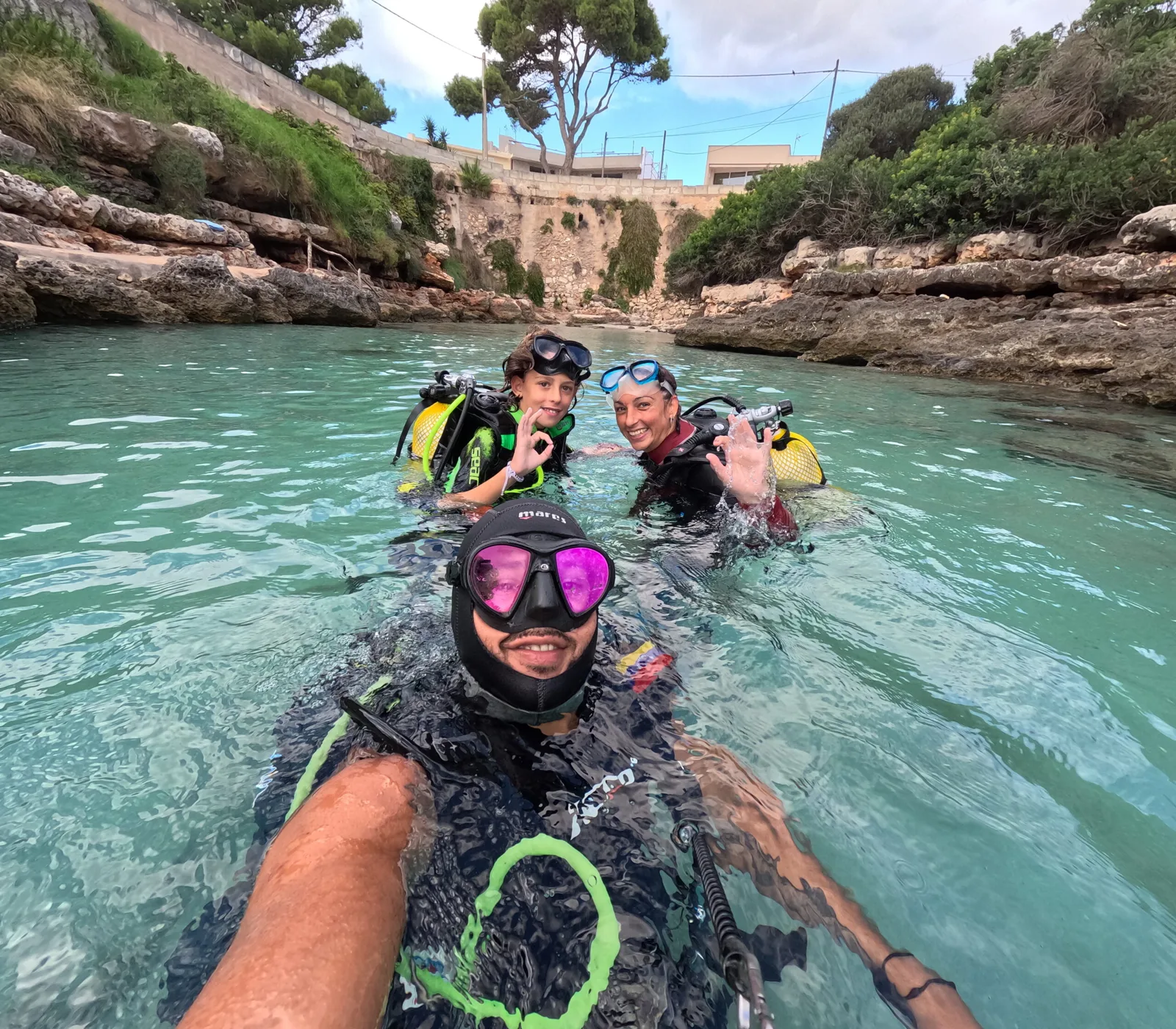
Ciutadella works for all levels when the dive is matched to the site. Beginners can start with a shallow cove or a straightforward shore entry before taking on boat routes and enclosed terrain. Advanced Open Water is useful for deeper profiles and some cavities. Any genuine penetration beneath an overhead environment calls for suitable cave or cavern training and local supervision, whether the entrance looks easy from outside or not. BSAC, PADI and SSI divers should check exactly what the planned route involves.
From London Heathrow, London Gatwick or Manchester, travel by air to Menorca and continue by road to Ciutadella. The airport is near Maó, so the final leg is a road transfer rather than an arrival in the dive town itself. The alternative is a ferry directly into Ciutadella harbour from Alcúdia or Barcelona, with seasonal sailings from Toulon also possible. The Alcúdia crossing takes about 90 minutes, while Barcelona takes about five and a half hours, so connections and sailing days need checking carefully. Once in Ciutadella, walk, use a taxi or hire a car according to where the diving departs. Bases in coastal stations may require a road transfer.
Book the west-coast cave and cavern outings in advance, then ask whether the plan is to swim past the entrance or make a true penetration. Those are different dives, with different overhead risks and training requirements. Take a suitable torch when the centre confirms it is needed, and do not assume that an apparently easy opening makes a tunnel a recreational swim-through. A morning boat is often the calmer choice when several vessels are using the same coves and narrow passages. If you are staying in Ciutadella but diving from Son Xoriguer, Cala Blanca or Cala Santandria, settle the transport before the morning of the dive rather than assuming a shuttle exists. Start with a sheltered shore dive if this is your first Mediterranean outing. Keep a spare day in the plan, because wind and swell can close the exposed cave sites while sheltered coves remain usable. Stay off the Posidonia and check whether the boat is anchoring clear of it.
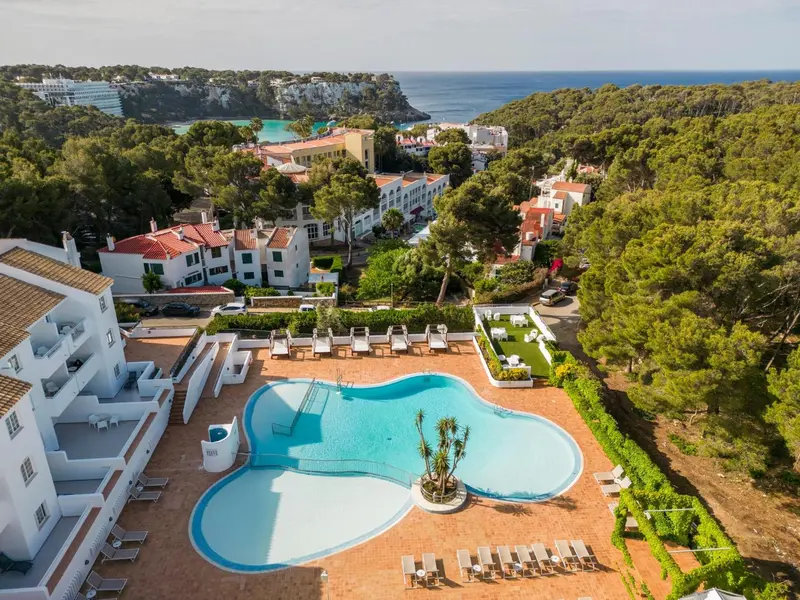
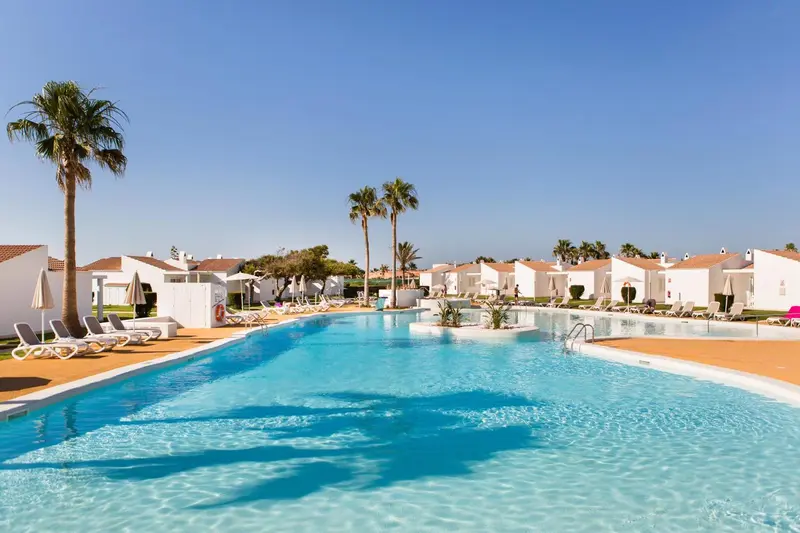
Allow five to seven days to combine boat diving, a shore entry and time above water without filling every day. Ciutadella makes a useful base for that rhythm: old-town streets and the harbour suit a non-diving day, while beaches, coves and the coastal route towards Pont d’en Gil provide alternatives for companions. Accommodation in the centre may be walkable from a base, but coastal departure points can mean taxis, a hire car or an arranged transfer.
Hello, I'm Marina, DivingDeal.com's AI assistant. I guide you through destinations, areas and countries.
Thinking about the whole trip and the flights? Talk it over with Edith →
Marina is an AI. Some links are affiliate links: DivingDeal may earn a commission, at no extra cost to you. Bookings are made with the partner.
Choose Ciutadella de Menorca between May and October, when dive centres commonly run their programmes. May, June, September and October offer more room around popular coves and boats than July and August. Summer usually provides the fullest choice of outings, but wind, swell, suspended particles and coastal run-off can still affect conditions.
Ciutadella de Menorca works for different experience levels when the site matches your training. Beginners can start in a shallow cove or with a straightforward shore entry. Advanced Open Water helps with deeper profiles and some cavities. Genuine penetration beneath an overhead environment requires suitable cave or cavern training and local supervision.
In Ciutadella de Menorca, you can explore rocky bottoms, walls, arches, chimneys, canyons, cracks and passages, with Posidonia meadows beside the rocks. Moray eels, octopuses, wrasses, seabreams, sparids and damselfish are familiar sightings. Groupers and barracuda appear occasionally, while visibility commonly reaches twenty to thirty metres.
Plan a Ciutadella de Menorca stay around boat dives, a shore entry and time above water. Book west-coast cave and cavern outings in advance, confirm the route and arrange transport to coastal departure points. Keep a spare day for wind or swell, and use old-town streets, the harbour, beaches and coastal paths between dives.