
Dive Academy Fiji
Google 4.7/5 (43 reviews)
5 km away as the crow flies
Taveuni · Fiji · Pacific
Max. depth · 24 mDescend into Rainbow's End, where the incoming tide brings Fiji's vibrant soft corals to life amidst schooling fish and cruising pelagics.
For subtitles in English: start the video firstthen click the gearat the top right of the video, select “Subtitles/CC”, then “Auto-translate” and choose “English”.
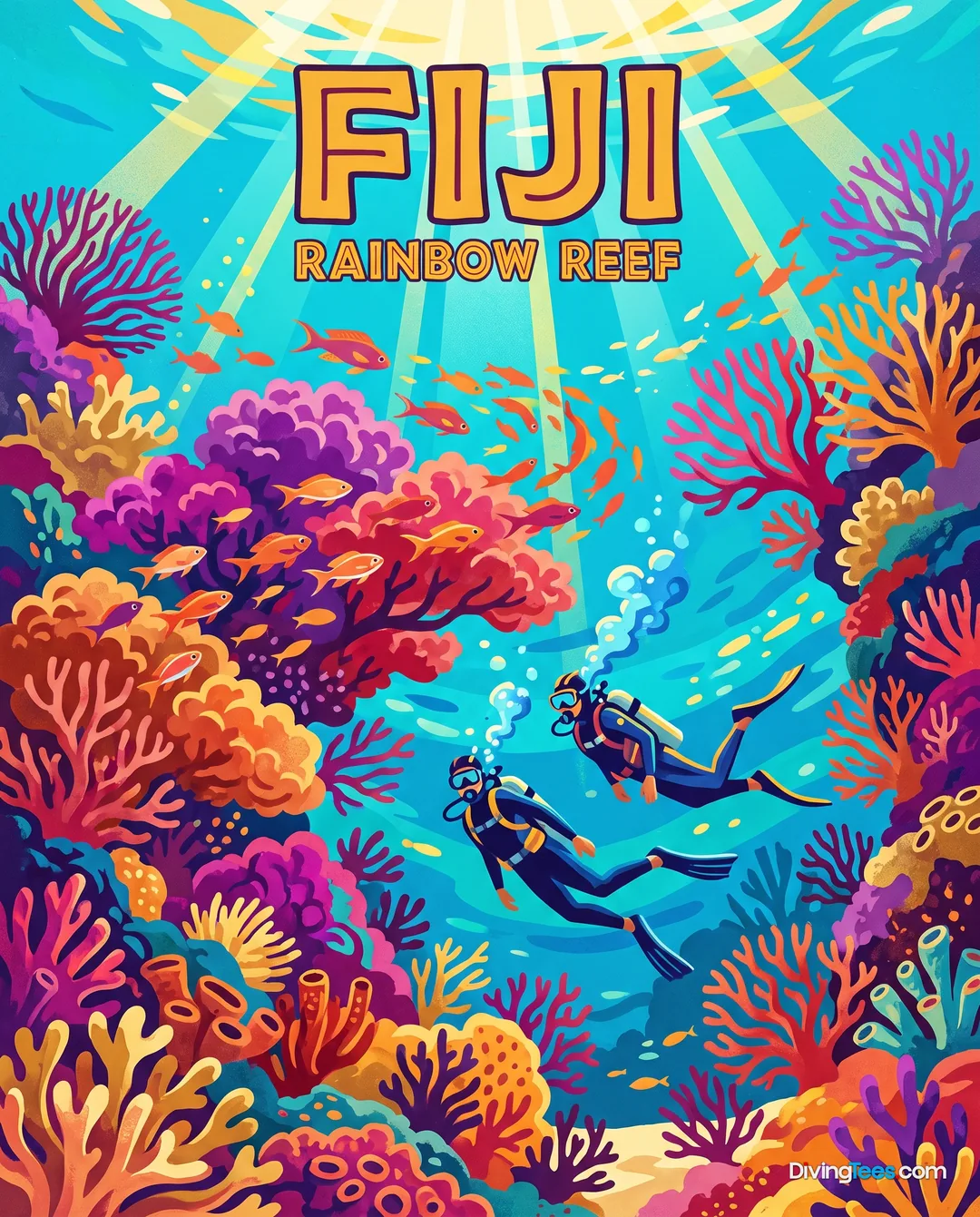
Rainbow's End is a distinct patch reef, or bommie, situated on the western edge of the northern section of the Rainbow Reef within the Somosomo Strait. The site presents a gently sloping profile, rising from a sandy bottom at approximately 18 to 22 metres up to a shallow reef top between 5 and 8 metres. This continuous coral cover from mid-depths forms a vibrant garden, characteristic of the Rainbow Reef, with table corals, various Acropora species, boulder corals, and porites decorating the structure.
The dive at Rainbow's End typically begins with a descent into the open blue, allowing the prevailing current to guide you towards the reef. This initial push sets the stage for a dynamic drift, where the sheer volume of marine life becomes immediately apparent. The healthy hard corals provide a robust foundation for the site's iconic soft corals, which are a primary draw, particularly when the incoming tide activates the reef's ecosystem.
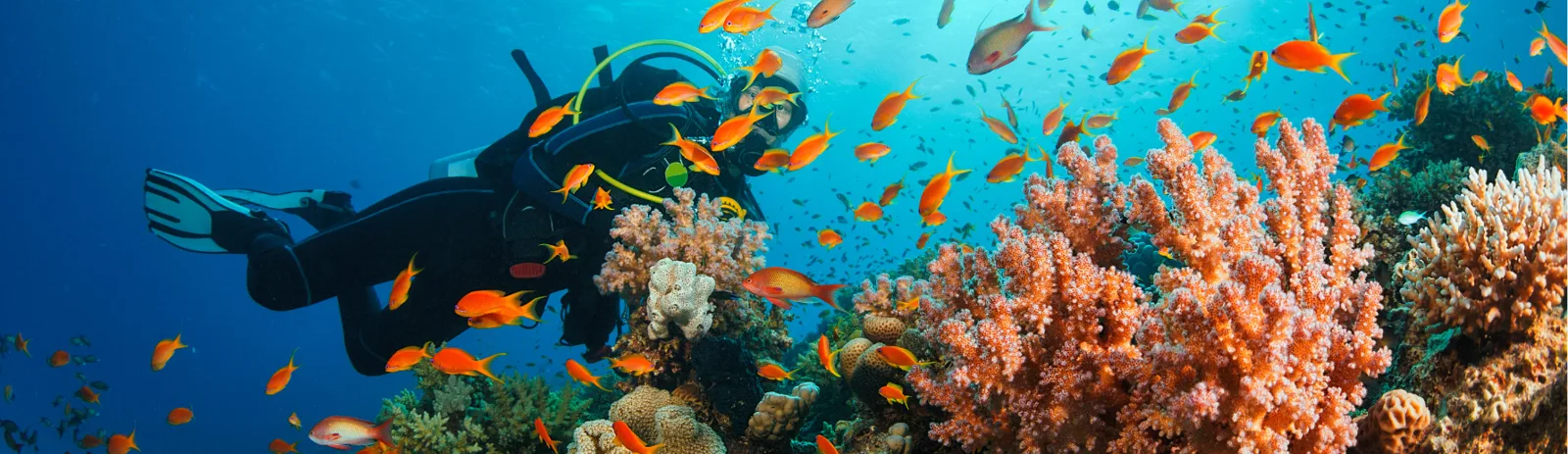
The true character of Rainbow's End emerges with the incoming tide, which acts as a natural lifeblood for the reef. These nutrient-rich waters ignite the ecosystem, transforming the underwater landscape into a bustling metropolis. As you adjust buoyancy and allow the current to carry you, you will find yourself amidst thousands of schooling fish, their movements a living current within the water, a direct result of the continuous flow of nutrients that fuels the prolific coral coverage.
Drifting along the reef, your attention will be drawn to the larger residents that call this vibrant site home. Giant trevally (Caranx ignobilis) are a common sight, often observed actively hunting, their powerful forms slicing through schools of smaller fish. Keep a watchful eye for hawksbill turtles (Eretmochelys imbricata) gracefully navigating the coral gardens, a testament to the health of the ecosystem, while white-tip reef sharks (Triaenodon obesus) cruise the perimeter.
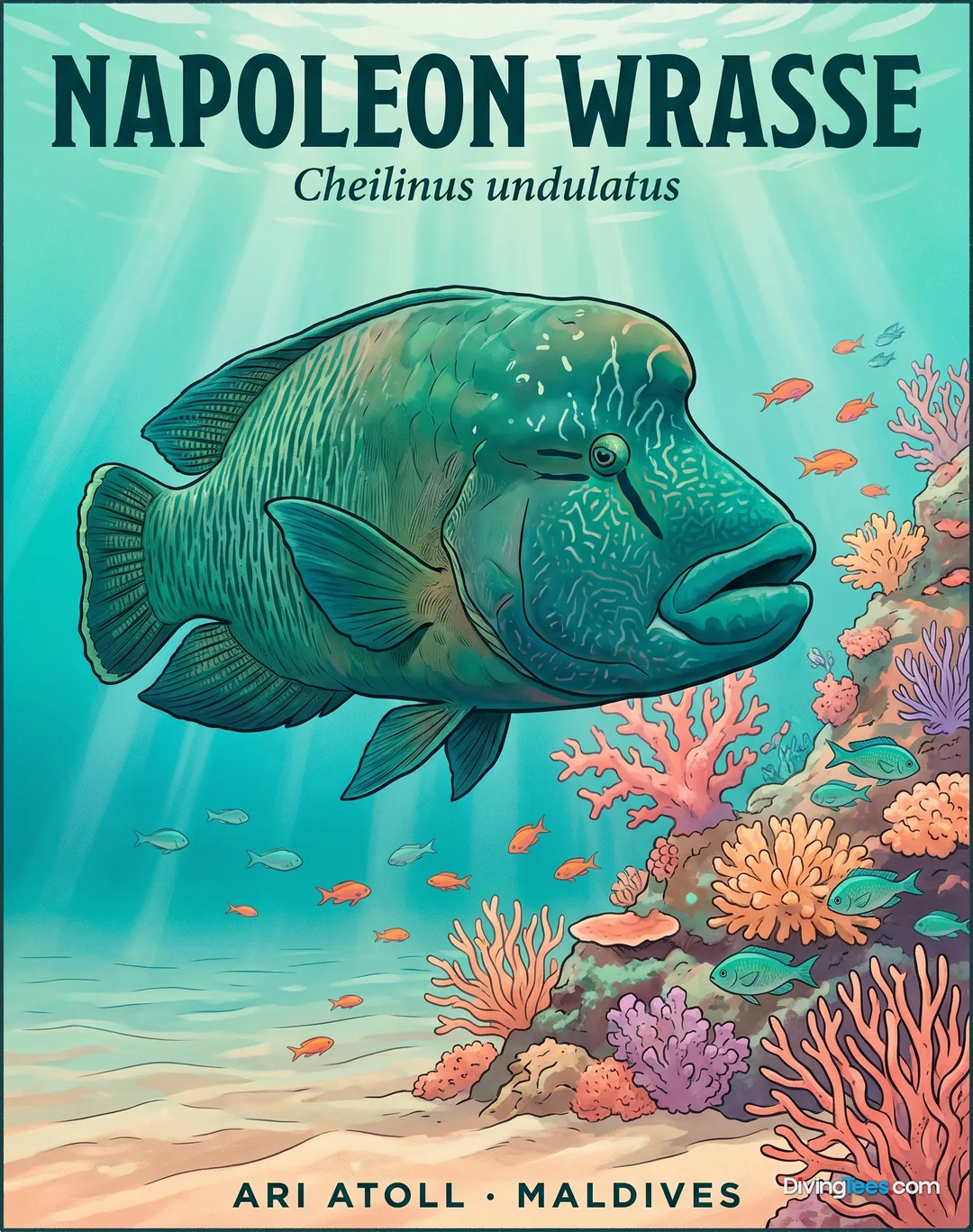
The dive profile at Rainbow's End is dynamic, often starting in deeper water and allowing the current to guide you into the heart of the activity on the reef slope. Depending on the strength and direction of the current, your drift might take you across the reef, culminating on the other side. This variability means each dive offers subtly different perspectives, but consistently delivers rich marine encounters, including the chance to spot the charismatic Napoleon wrasse (Cheilinus undulatus) among the coral formations.
Beyond the larger pelagics, the reef teems with smaller species that contribute to the site's vibrant ecosystem. You will encounter anthias, fusiliers, and redtooth triggerfish, alongside unicornfish and various butterflyfish species such as pyramid, lined, saddled, and teardrop butterflyfish. Bluestripe snapper and Moorish idol are also present, adding to the diversity of reef fish that inhabit the coral structures.
The site is also home to Clark’s anemonefish, garden eels, Christmas tree worms, and boring clams, which can be found by observing the reef's intricate details. Rainbow's End is frequently rated as one of the best individual sites on Rainbow Reef, noted for its dense soft and hard coral cover and the swarms of small reef fish that hang in the current, creating a classic Somosomo Strait drift experience.
Rainbow's End is dived between 5 and 24 metres. The site is suitable for experienced beginners to intermediate divers, with basic drift-diving experience recommended for days with stronger currents. The Somosomo Strait can experience variable currents, ranging from gentle to strong, particularly with the incoming tide. Local dive crews typically establish a descent line to assist divers through any strong surface currents. Visibility generally ranges from 18 to over 30 metres, and water temperatures are between 24°C and 30°C, making it a year-round diving destination.
You can dive Rainbow’s End year-round, with water temperatures between 24°C and 30°C. The incoming tide brings nutrient-rich water that activates the reef ecosystem, supporting abundant soft corals and schooling fish. Visibility generally ranges from 18 to over 30 metres, so conditions can offer clear views of the reef and marine life.
Rainbow’s End suits experienced beginners through intermediate divers. You should be comfortable with a dynamic drift dive, where the current guides you from open water along the reef. Basic drift-diving experience is recommended on days with stronger currents, while a descent line can assist you through strong surface currents.
Rainbow’s End is dived between 5 and 24 metres. The reef slopes from a sandy bottom at approximately 18 to 22 metres up to a shallow reef top between 5 and 8 metres. Currents in the Somosomo Strait vary from gentle to strong, particularly with the incoming tide, creating a moving drift dive.
At Rainbow’s End, you can explore healthy hard corals, colourful soft corals, and thousands of schooling fish. Look for giant trevally hunting, hawksbill turtles, white-tip reef sharks, and Napoleon wrasse. Reef life also includes anthias, fusiliers, butterflyfish, garden eels, Christmas tree worms, boring clams, and Clark’s anemonefish.