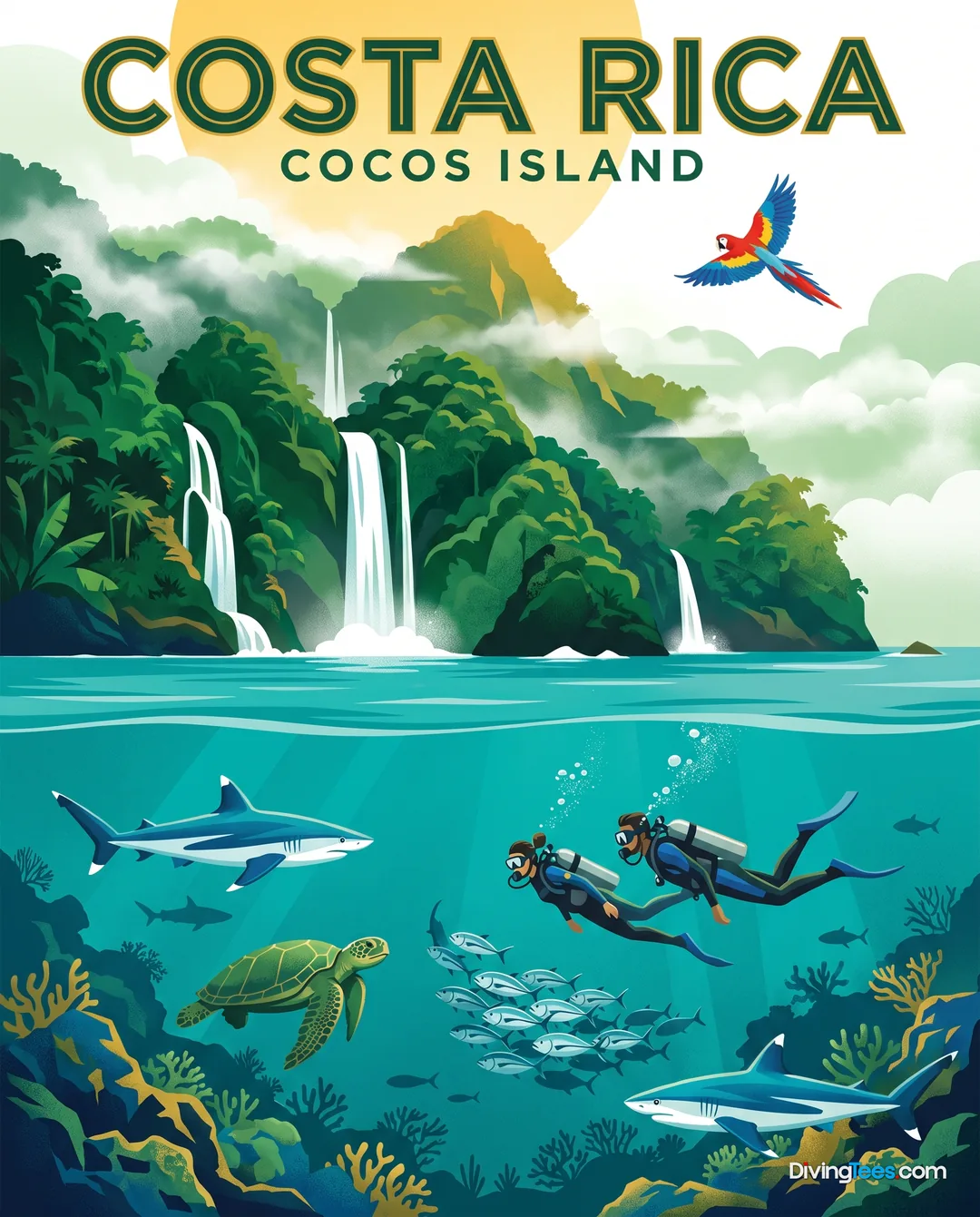
Cocos Island · Costa Rica · Americas
Max. depth · 50 mIsla Manuelita, Cocos Island: Diving the Shark Channel
Isla Manuelita offers a dynamic contrast, from sheltered reefs teeming with whitetip sharks to exposed walls frequented by large pelagics in strong currents.
What makes this site special
- Dense whitetip reef shark aggregations
- Frequent hammerhead shark sightings on the outer wall
- Potential interactions with bottlenose and spinner dolphins
- Strong currents attracting large pelagic species
- Diverse topography from walls to coral gardens
- Visibility up to 30 metres
- Hawksbill turtles present on the reef
Isla Manuelita about the site
Isla Manuelita is a distinct offshore rock offering several dive profiles around its perimeter and in the channel separating it from Cocos Island itself. The site's topology ranges from steep to vertical relief on its exposed side, characterized by ledges, boulders, and coral formations. On the more sheltered side, you'll find gentler slopes with sandy patches, creating varied habitats within a relatively small area. Divers typically access the site by boat and may perform a drift dive along its walls or around the islet depending on conditions and the specific target area.
The dive often begins by descending onto the reef or wall, with maximum depths reaching 50 metres, though much of the action occurs between 10 and 30 metres. The exposed outer sections are where you'll encounter the strong currents, often pushing along the contours of the rock face. This environment is particularly attractive to pelagic species, which use the currents and the pinnacle itself as a navigational marker or a cleaning station. Maintaining proper buoyancy and streamlining is key here, especially when navigating along the exposed sections.
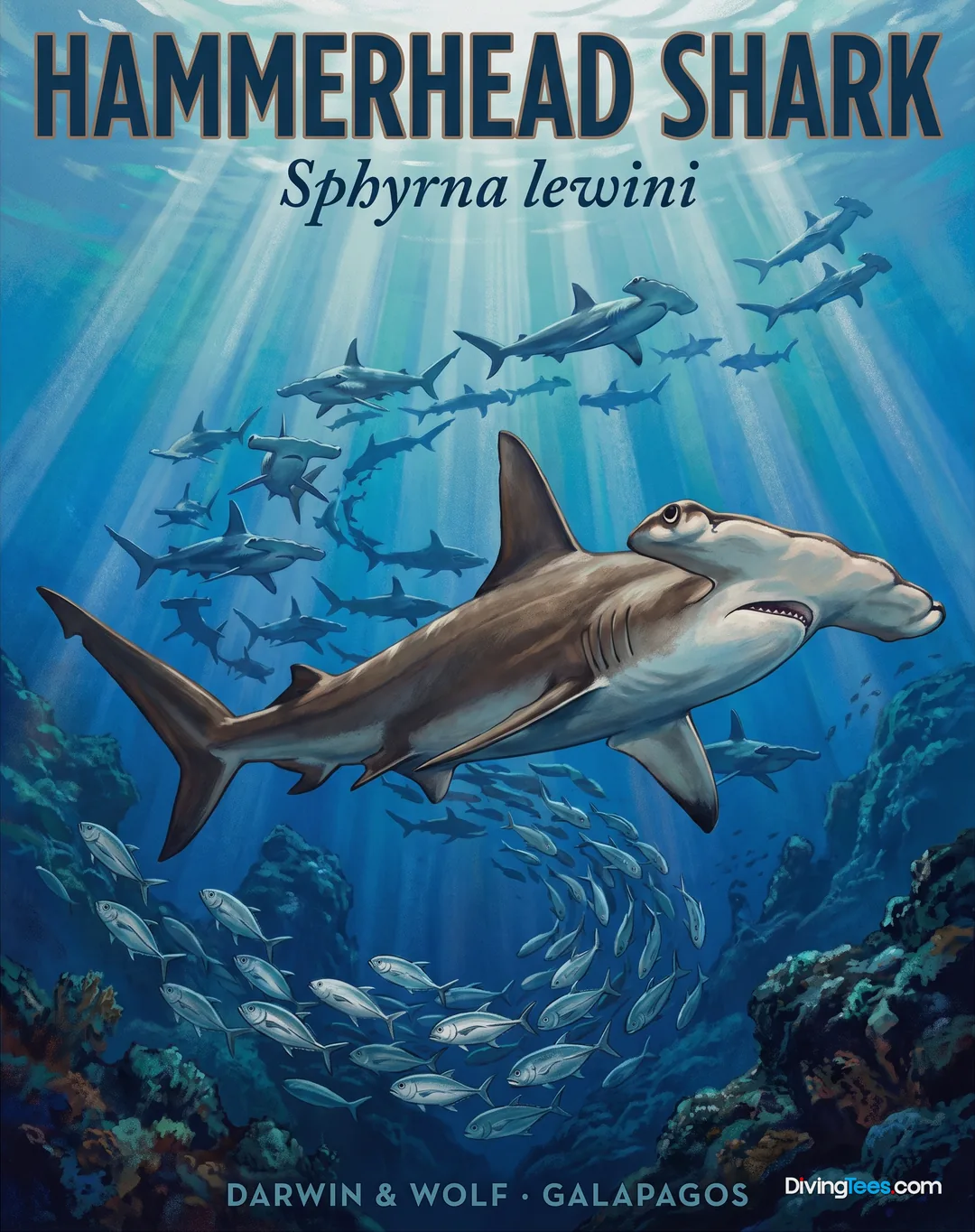
One of Manuelita's defining features is the contrast between its 'inside' and 'outside' environments. The exposed outer wall is the primary hunting ground for pelagic sharks, particularly hammerhead sharks (Sphyrna lewini), which often patrol the deeper sections. You might also encounter Galapagos sharks and blacktip sharks here, moving through the stronger water flow. Divers often position themselves on ledges or behind formations to watch the passing schools.
On the more sheltered inner side of Manuelita, conditions are generally calmer, allowing for the observation of resident reef life. This area is renowned for its dense aggregations of whitetip reef sharks (Triaenodon obesus), especially during dusk and night dives when they are highly active hunters. These sharks frequently rest in crevices and under ledges during the day, making for close observation opportunities. The shallower coral gardens here also host a variety of smaller reef inhabitants.
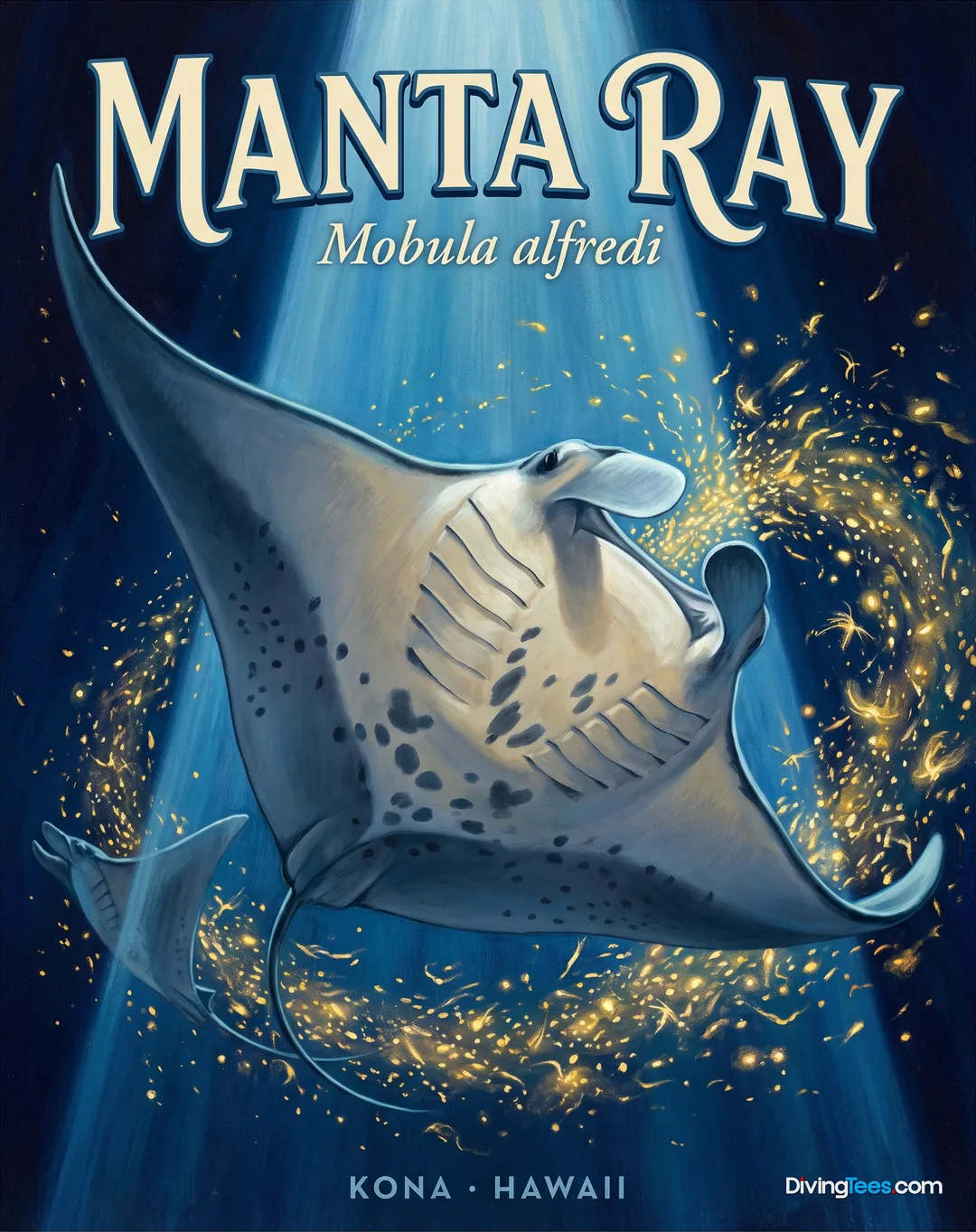
Manuelita also serves as a regular meeting point for other significant marine life. Large rays like marbled rays and eagle rays are often seen gliding along the reef edges or across sandy bottoms. Manta rays occasionally visit, particularly during certain seasons. The presence of these larger animals, attracted by cleaning stations or nutrient-rich currents, adds another dimension to the pelagic encounters at this site.
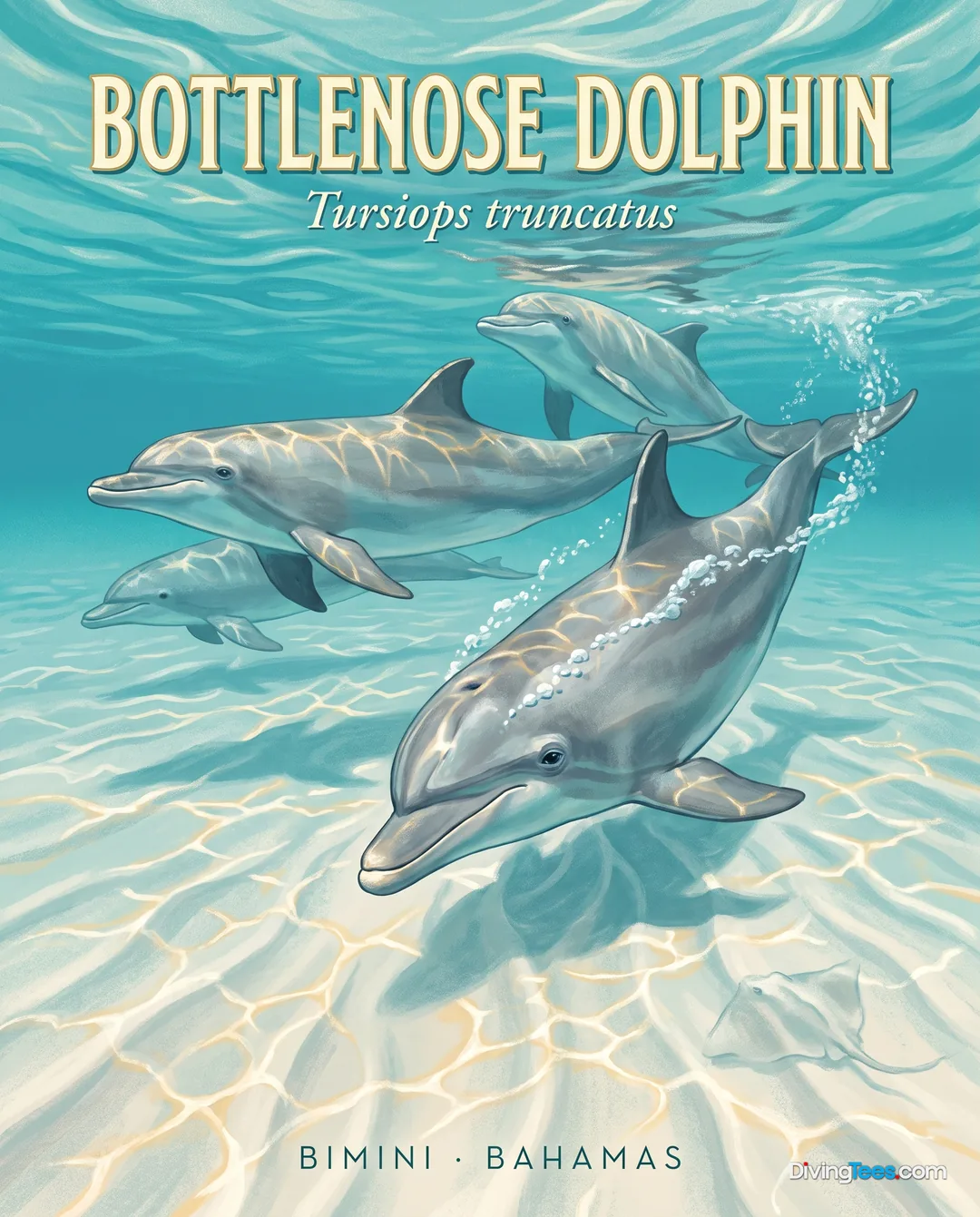
A unique aspect of diving Manuelita, particularly at its inner sections, is the potential for interactions with bottlenose dolphins (Tursiops truncatus) and spinner dolphins (Stenella longirostris). These highly intelligent marine mammals are known to frequent the area, sometimes approaching divers with curiosity. Such encounters are always on their terms, making them a special highlight. Hawksbill turtles are also regular residents, often found feeding on sponges along the coral formations.
Beyond the sharks and dolphins, the site supports a healthy reef ecosystem. Moray eels are common in cracks and under rocks, while lobsters can be spotted in sheltered overhangs. Schools of jacks and tuna move through the water column, adding to the dynamic pelagic scene. The combination of varied topography, strong currents, and both resident and transient large marine life makes Manuelita a complex and rewarding dive, demanding awareness of your surroundings and conditions.
Diving Isla Manuelita: the marine life you’ll meet
Diving conditions
Diving at Isla Manuelita requires an Advanced Diver certification, coupled with demonstrated experience in strong currents. Depths range from a minimum of 10 metres to a maximum of 50 metres, meaning proper dive planning and gas management are essential. Visibility generally ranges from 15 to 30 metres, influenced by oceanic conditions and current. The site frequently experiences strong currents and surge, especially on the exposed outer sections and in the channel. Conditions can vary, with sheltered inner areas offering some respite. The best season for diving is typically from June to November, though January to March can offer clearer water. Whale sharks are more frequently sighted between June and December.