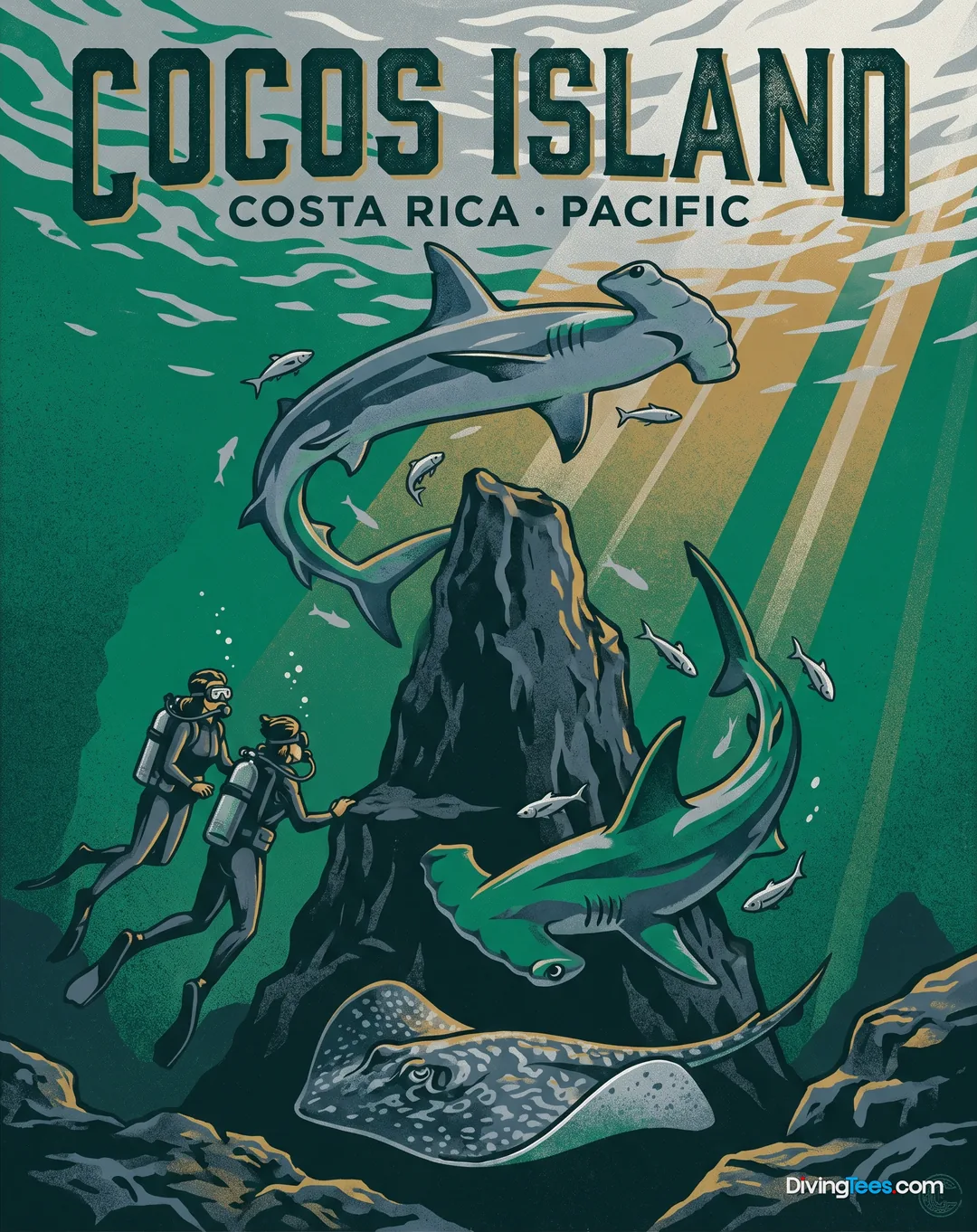
Cocos Island · Costa Rica · Americas
Max. depth · 30 mPunta Maria, Cocos Island: seamount diving with oceanic sharks
Descend onto a submerged pinnacle off Cocos Island, where strong currents bring schools of sharks onto a deep, rugged seamount.
What makes this site special
- Consistent encounters with scalloped hammerhead sharks
- Regular sightings of Galapagos sharks
- Presence of whitetip reef sharks
- Deep seamount topography attracting pelagics
- Strong currents offer a dynamic dive
- Mooring-line descent to manage current
- Visibility typically around 20-21 metres
Punta Maria about the site
Punta Maria is an offshore pinnacle, a submerged seamount rising from the deep on the southwest side of Cocos Island. The main feature has a broad summit around 25 metres, and from there, its rocky walls slope into deeper water. Surrounding this central structure are smaller, adjacent pinnacles, particularly to the north and west, separated by a sand channel or a deeper trough. Unlike many Cocos sites, Punta Maria does not offer a shallow reef section, meaning divers spend the entire bottom time exploring the deeper parts of the seamount, primarily along the summit's edge and its surrounding walls.
Descending onto Punta Maria means dropping onto a mooring line; this is not a drift entry from the tender boat. The current here can be significant, often rushing over the seamount, which dictates how you approach the dive. Once off the line, you'll orient yourself to the current, often working along the wall with the main summit on one shoulder or the other, depending on the flow. The dive profile is largely defined by the seamount's topology and the consistent depth, allowing for extended bottom time within the recreational limits, provided gas management and no-decompression limits are closely monitored.
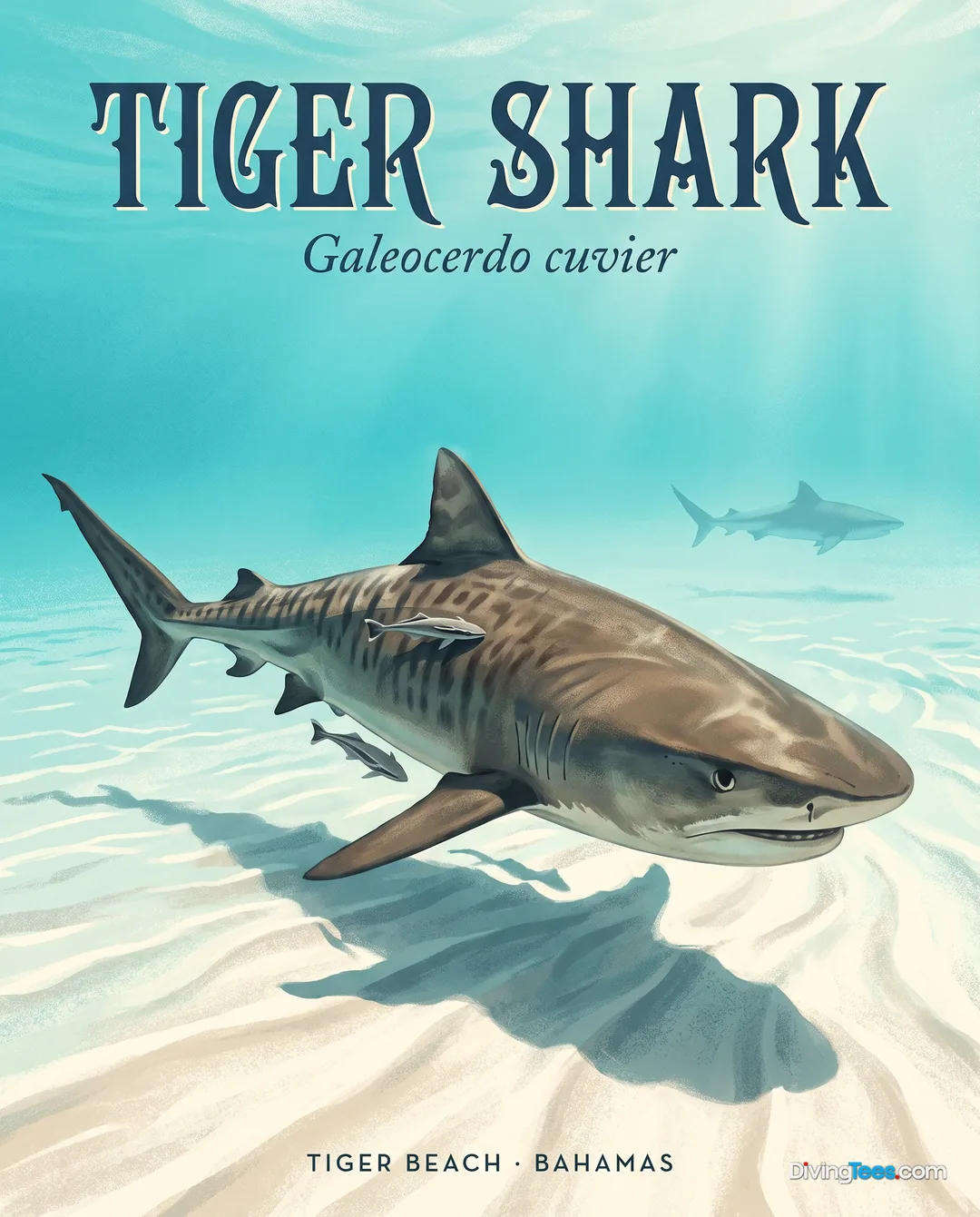
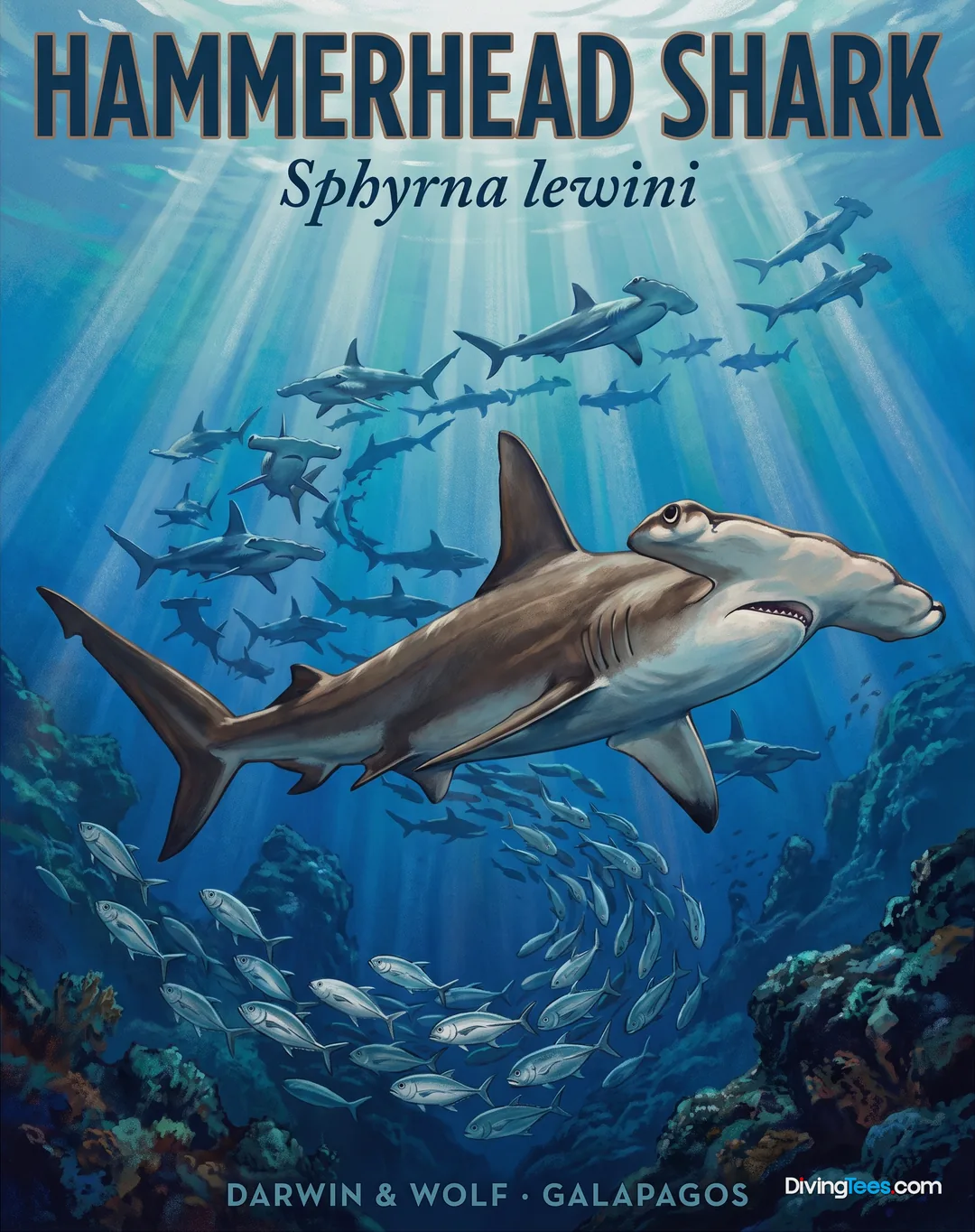
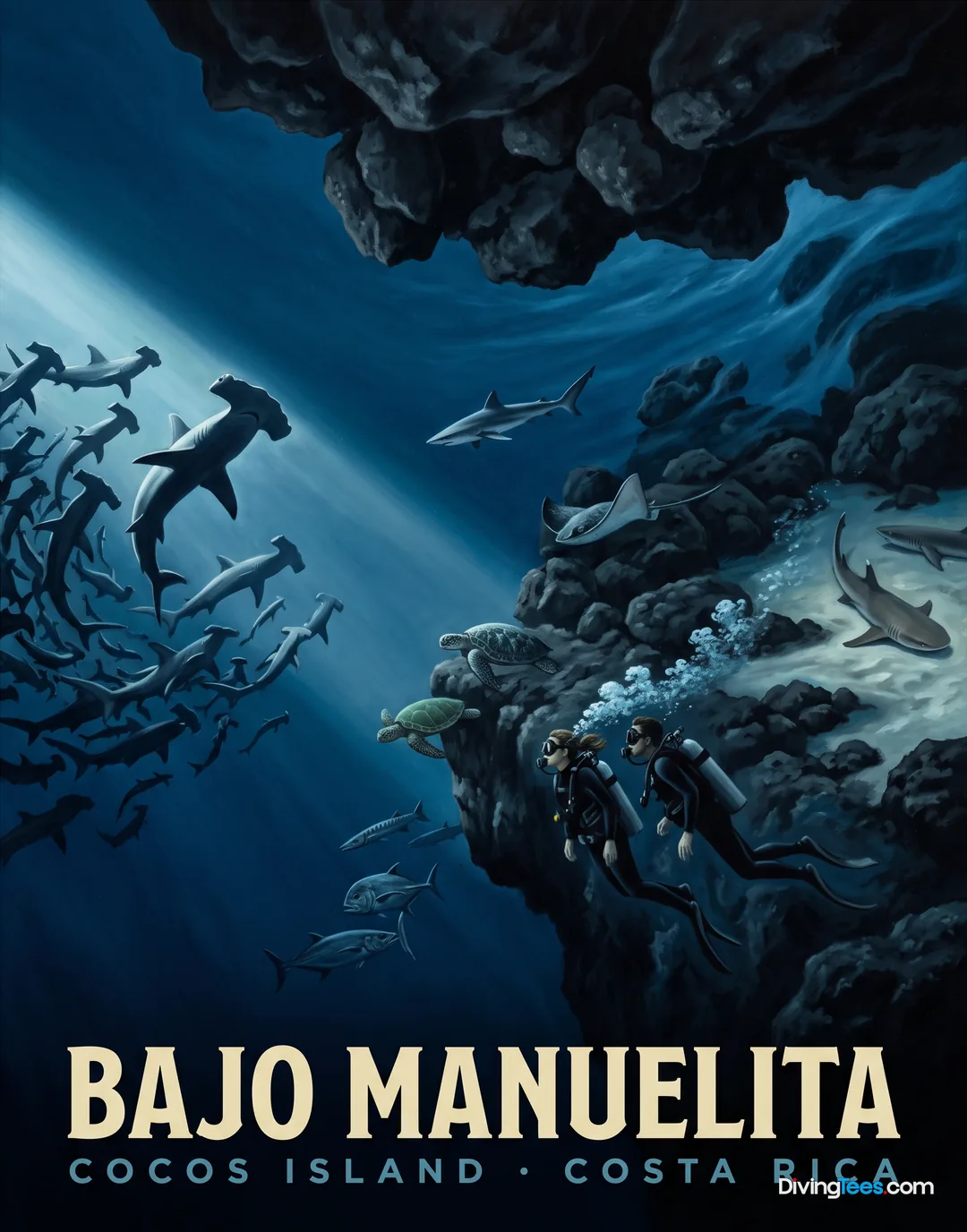
The primary draw at Punta Maria is the pelagic action. Scalloped hammerhead sharks (Sphyrna lewini) are a common sight, often seen circling in the deeper water off the seamount. Galapagos sharks (Carcharhinus galapagensis) are also frequently present, and you may encounter whitetip reef sharks (Triaenodon obesus) patrolling the ledges. Occasionally, tiger sharks (Galeocerdo cuvier) make an appearance, adding another layer to the pelagic encounters possible here. This concentration of larger predators makes Punta Maria a premier shark diving location, standing out even among the rich sites of Cocos Island.
Beyond the sharks, the resident reef life adapts to the strong currents. Look for schools of blue-striped snapper (Lutjanus kasmira) holding close to the rock faces, using the seamount as shelter. Bigeye soldierfish (Myripristis berndti) often hide in crevices and under overhangs, while burrito grunt (Pomadasys peruanus) and Cortez rainbow wrasse (Thalassoma lucasanum) add colour to the immediate reef environment. These species are well-adapted to the dynamic conditions, showcasing the resilience of marine life in high-energy environments.
Visibility at Punta Maria typically ranges between 20 and 21 metres. While not consistently crystal-clear, this visibility is generally more than sufficient to take in the large-scale action of the sharks and the seamount structure. The constant movement of water also means a continuous supply of nutrients, supporting the entire food chain from the smallest reef fish to the largest apex predators. The light penetration at 25-30 metres, combined with the clear water, creates a dramatic backdrop for the pelagic encounters.
What sets Punta Maria apart from other sites around Cocos Island is its specific seamount topology combined with consistent strong currents. Unlike some of the broader, shallower reefs, Punta Maria is a compact, deep pinnacle that demands a particular approach to diving. This configuration funnels marine life and nutrients, making it a reliable spot for encounters with larger pelagic species. The current, while demanding, is the key factor in concentrating these animals, transforming the seamount into a dynamic ecosystem.
Diving Punta Maria requires careful planning and precise execution. The deep profile and strong, often rushing, currents mean that buoyancy control and gas management are critical. You'll spend most of your time at depths between 20 and 30 metres, where no-decompression limits are tighter. The reward for this planning is a direct engagement with an active oceanic environment, where the sheer volume of pelagic life, particularly sharks, is a constant and immersive experience that defines the site.
Diving Punta Maria: the marine life you’ll meet
Diving conditions
Punta Maria is a deep dive, with maximum depths reaching 30 metres and a minimum operational depth of 18 metres. Strong currents are a defining feature of this site, often rushing across the seamount, so you need to be proficient in managing yourself in such conditions. Visibility is typically between 20 and 21 metres. This site requires an Advanced Open Water certification at minimum, along with solid experience in strong current conditions. Hammerhead schooling activity is most pronounced from June through October, but the site is diveable year-round.
Three dives not to miss
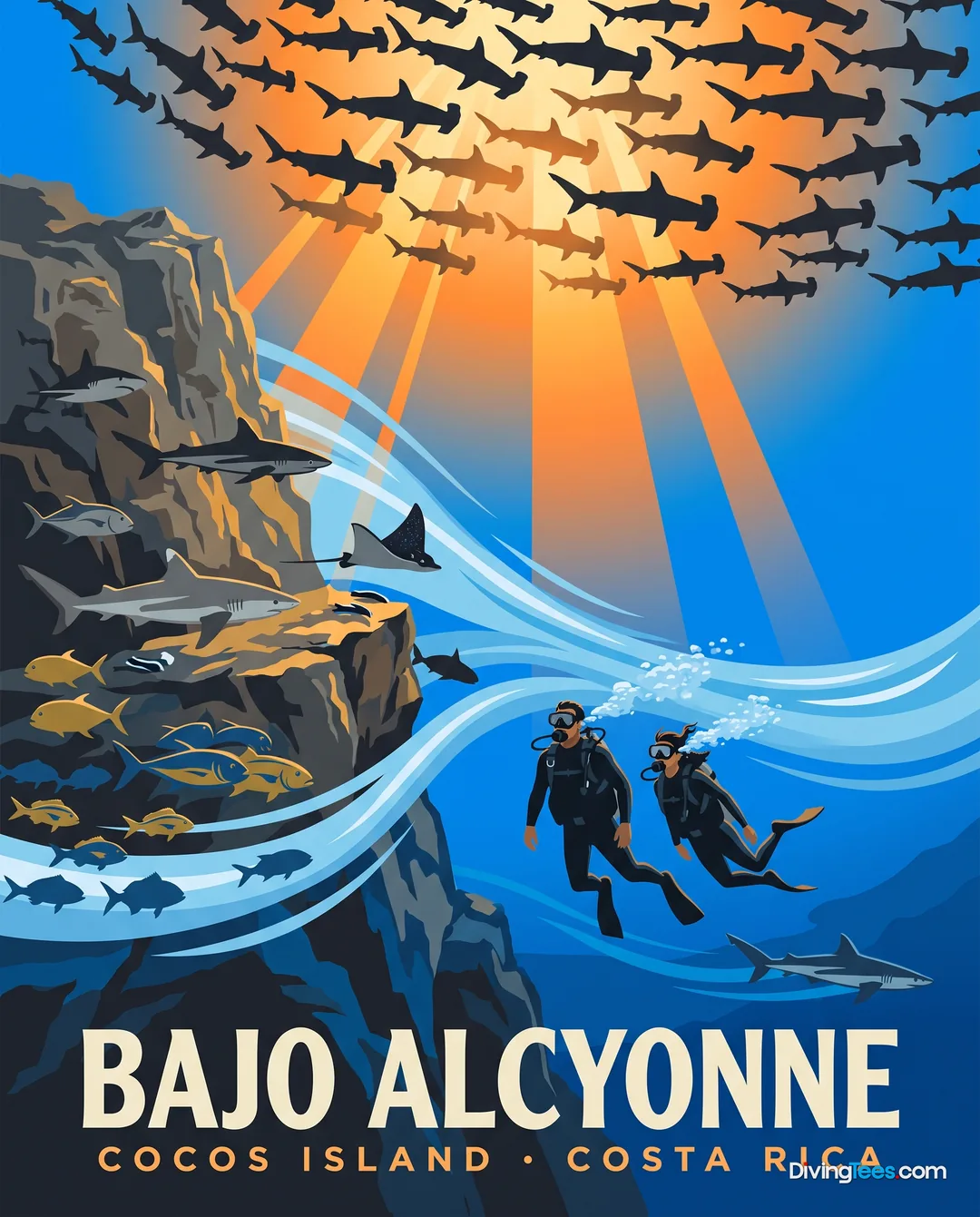
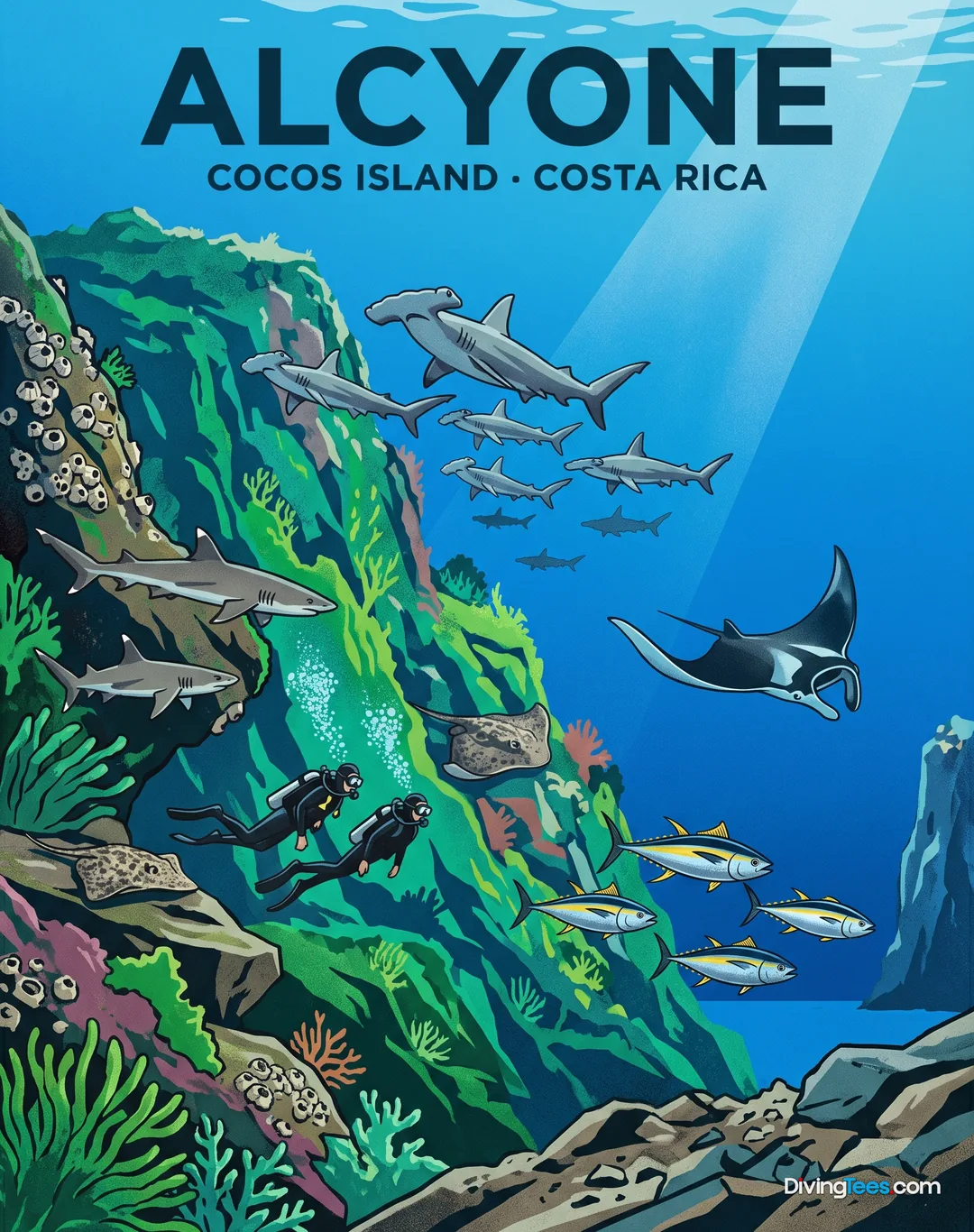
Map of dive sites in Cocos Island
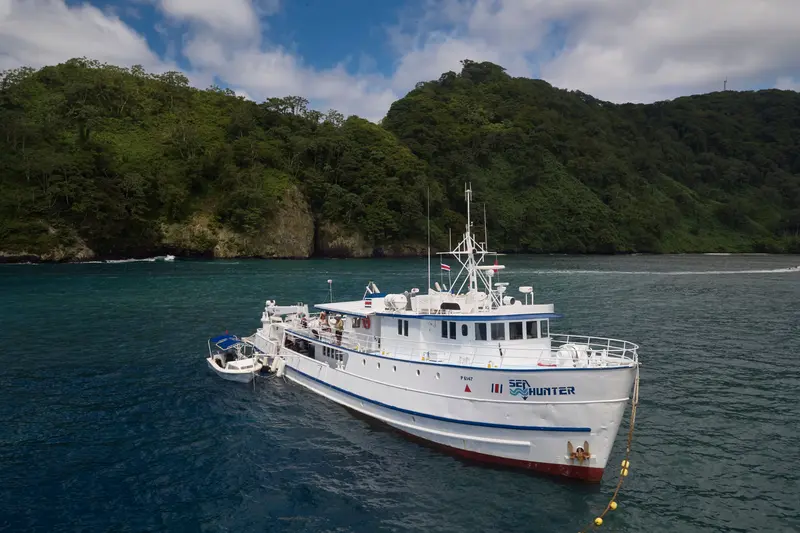
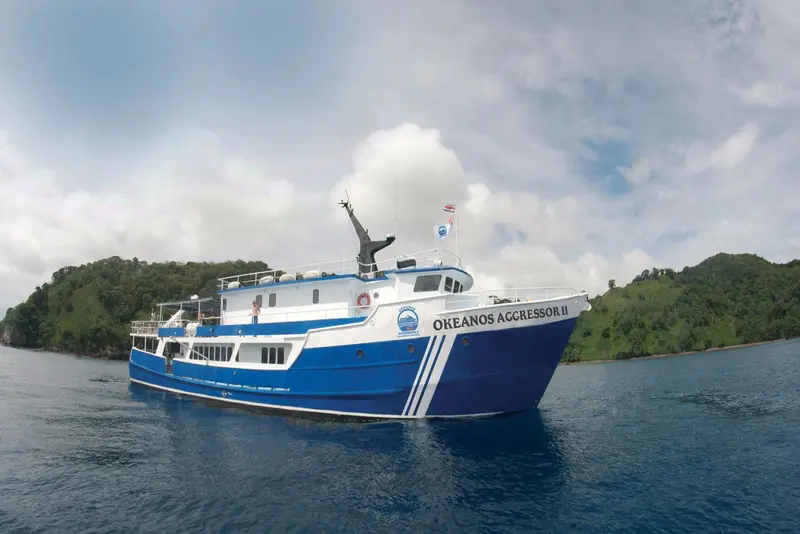
Dive liveaboards Cocos Island
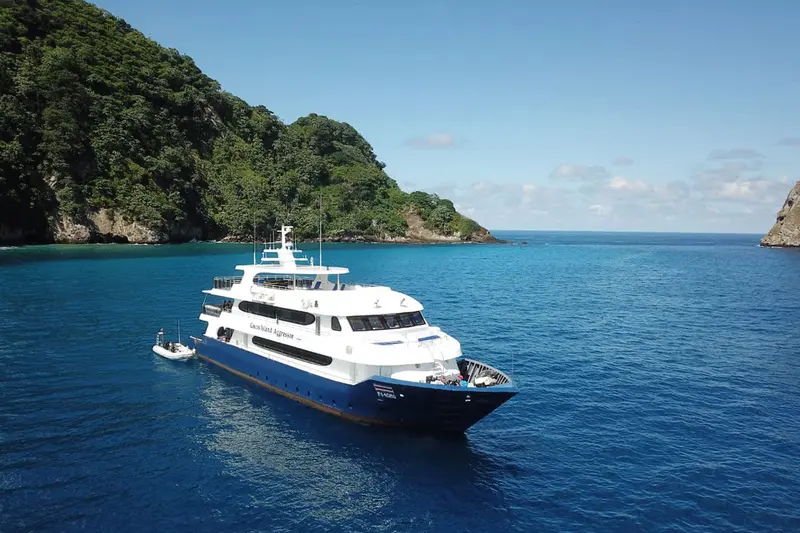
3 liveaboards run trips to Cocos Island.
Frequently asked questions about Punta Maria
When can you dive Punta Maria, and when are hammerhead sightings most pronounced?
Punta Maria is diveable year-round, so you can visit at any time. Scalloped hammerhead schooling activity is most pronounced from June through October. Conditions remain defined by strong currents throughout the year, making careful planning and appropriate experience important whenever you choose to dive this offshore seamount.
What certification and experience do you need for Punta Maria?
You need at least an Advanced Open Water certification to dive Punta Maria. You also need solid experience managing strong currents, which can rush across the seamount. Buoyancy control, careful gas management, and precise execution are important because the dive stays deep and offers no shallow reef section.
How deep is Punta Maria, and what currents should you expect?
Punta Maria has an operational depth from 18 to 30 metres, with a broad summit around 25 metres and walls descending deeper. Strong currents often rush across the seamount. You descend by mooring line, then orient yourself to the flow and usually work along the wall beside the summit.
What can you see while diving Punta Maria?
At Punta Maria, you can encounter scalloped hammerhead sharks, Galapagos sharks, and whitetip reef sharks around the seamount. Tiger sharks appear occasionally. Along the rock faces, you may also see blue-striped snapper, bigeye soldierfish, burrito grunt, and Cortez rainbow wrasse, with visibility typically between 20 and 21 metres.