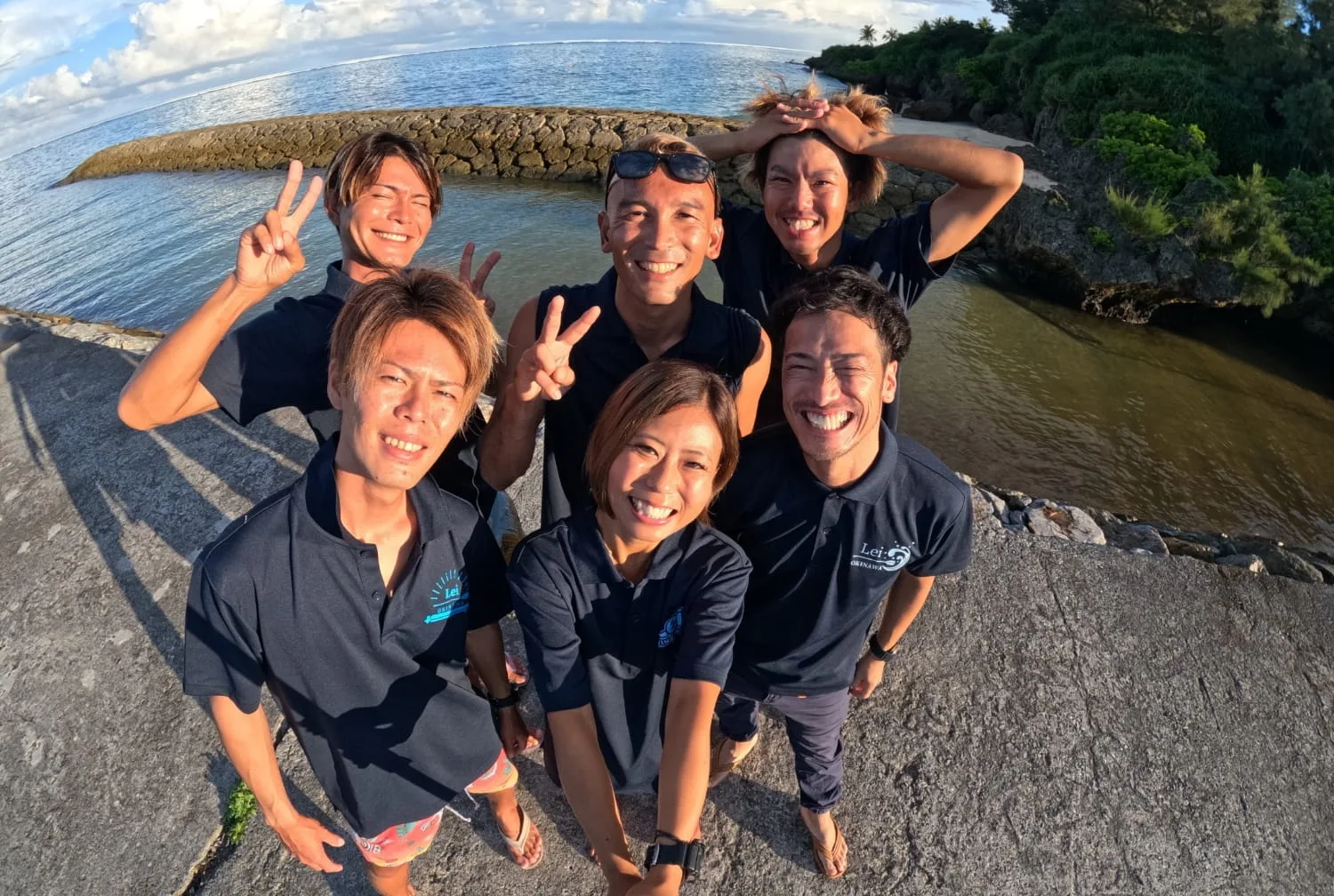

Diving Shop Lei
Google 5/5 (3,134 reviews)
9.8 km away as the crow flies
Okinawa · Japan · Asia
Max. depth · 35 mExplore overlapping rock structures and deep coral walls near the Zanpa Cape Lighthouse.
For subtitles in English: start the video firstthen click the gearat the top right of the video, select “Subtitles/CC”, then “Auto-translate” and choose “English”.
The Light House site is defined by its proximity to the Zanpa Cape Lighthouse, offering a distinct underwater topography compared to the more open reefs in the area. As you descend, you encounter a series of large, overlapping boulders that have settled onto a gentle slope. These massive rocks create a complex, three-dimensional landscape of crevices and small, protected caverns. This structure provides a variety of different micro-habitats, making the site an excellent choice for those who enjoy navigating intricate reef terrain.
The dive profile typically begins on a gradual descent along the slope, where you can observe the transition from shallower reef sections to a more significant drop. This descent leads toward a wall that reaches depths of approximately 35 metres. The topography is not a sheer, vertical wall but rather a rugged, broken relief that encourages careful buoyancy control. Navigating between the large rock formations requires a precise touch to avoid contact with the delicate corals that inhabit the shaded areas.
One of the primary reasons divers visit this specific site is the opportunity to find pygmy seahorses. These tiny creatures are often found camouflaged against large gorgonians that grow within the more stable, sheltered parts of the reef. Finding them requires a slow, methodical approach and a keen eye, as they are specifically adapted to blend into their host organisms. The presence of these gorgonians in the gaps between the boulders makes this a focused site for macro enthusiasts.
The layout of the site also makes it an interesting location for sidemount divers or those looking to explore more confined spaces. The overlapping rock formations create several entry points into small, shallow cavern systems that are not accessible through traditional single-tank configurations. Because the rocks provide natural shelter, these areas can offer a momentary respite from the movement of the open water. However, managing your gas consumption and exit route is essential when moving into these tighter sections.
Currents at Light House are variable and can change depending on the movement of the water around the Zanpa Cape. While you might find calm conditions in the lee of the larger boulders, the open sections of the slope can experience more noticeable movement. This variability means that your position relative to the rock formations will directly affect how much effort you need to exert to maintain your heading. It is a site that rewards divers who can read the water and position themselves effectively within the terrain.
The site can also be part of a larger drift dive, depending on the direction and strength of the local current. Some dive operators utilize the area between the lighthouse and Kōri Zanpa to facilitate a drift, where you move steadily along the underwater features. In these scenarios, the topography acts as a guide, allowing you to cover a significant amount of reef surface while remaining relatively stationary in the water column. Always coordinate with your guide to understand the intended direction of the drift before you begin your descent.
The site reaches a maximum depth of 35 metres. It is recommended for Advanced divers with experience managing currents and maintaining precise buoyancy control. Due to the variable nature of the currents and the complex topography, having a solid foundation of logged dives is highly advised.
Light House is recommended for Advanced divers who have experience managing currents and maintaining precise buoyancy control. Its variable water movement and complex boulder topography reward a solid foundation of logged dives. You should be comfortable navigating intricate reef terrain, controlling your position around rocks, and managing your gas and exit route in confined spaces.
Light House reaches a maximum depth of 35 metres. The dive generally begins with a gradual descent along a slope, moving from shallower reef sections toward a rugged, broken wall. Careful buoyancy control helps you navigate between overlapping boulders and avoid contact with delicate corals in the shaded areas.
Currents at Light House are variable and may change with water movement around Zanpa Cape. Sheltered areas behind larger boulders can be calmer, while open sections of the slope may have more noticeable movement. The site can also form part of a drift dive, so coordinate with your guide on the intended direction before descending.
At Light House, you can explore large overlapping boulders, crevices, and small protected caverns across a rugged slope. Gorgonians in sheltered gaps may host pygmy seahorses, which require a slow approach and careful observation to find. The site also offers shaded coral habitats, natural rock formations, and spaces suited to sidemount exploration.