

Scuba Buddy
Google 4.3/5 (172 reviews)
15 km away as the crow flies
Sipadan · Malaysia · Asia
Max. depth · 40 mA vertical drop-off defined by deep fissures and crevices that shelter a dense population of spiny lobsters and reef residents.
For subtitles in English: start the video firstthen click the gearat the top right of the video, select “Subtitles/CC”, then “Auto-translate” and choose “English”.
Lobster Lairs sits on the western and south-western edge of the Sipadan reef, acting as a direct topographical continuation of the Hanging Gardens site. The geography is defined by a steep, vertical wall that undergoes a sharp break in slope as it descends into the depths. As you approach the wall, the structure reveals itself through a complex series of rock formations, including several prominent overhangs and deep recesses. These geological features create a high-contrast environment where light filters through the upper layers before disappearing into the darker, deeper zones. This specific orientation makes it a primary location for divers looking to transition from reef navigation to open-water observation.
The descent typically begins at the upper edge of the wall, where the structure provides immediate shelter for various species. As you move down the vertical plane, the topography becomes increasingly intricate with the presence of narrow fissures and wide crevasses. These gaps are essential to the site's character, providing the physical niches required by the resident macrofauna. Navigating this terrain requires careful buoyancy control, especially when moving close to the wall to inspect the darker recesses. Unlike more open reef sites, the experience here is dictated by the physical relief of the rock and the shadows cast by the many overhangs.
The site's name is derived from the abundance of spiny lobsters that inhabit these specific geological cracks. These crustaceans use the deep crevices for protection, making them a primary target for divers focusing on the wall's structure. Alongside the lobsters, the cracks and ledges host a variety of smaller, cryptic life. You will find scorpionfish and various species of pipefish positioned within the sheltered areas of the reef. The density of these hiding spots ensures that even a slow, methodical swim along the wall provides constant points of interest for those interested in reef ecology.
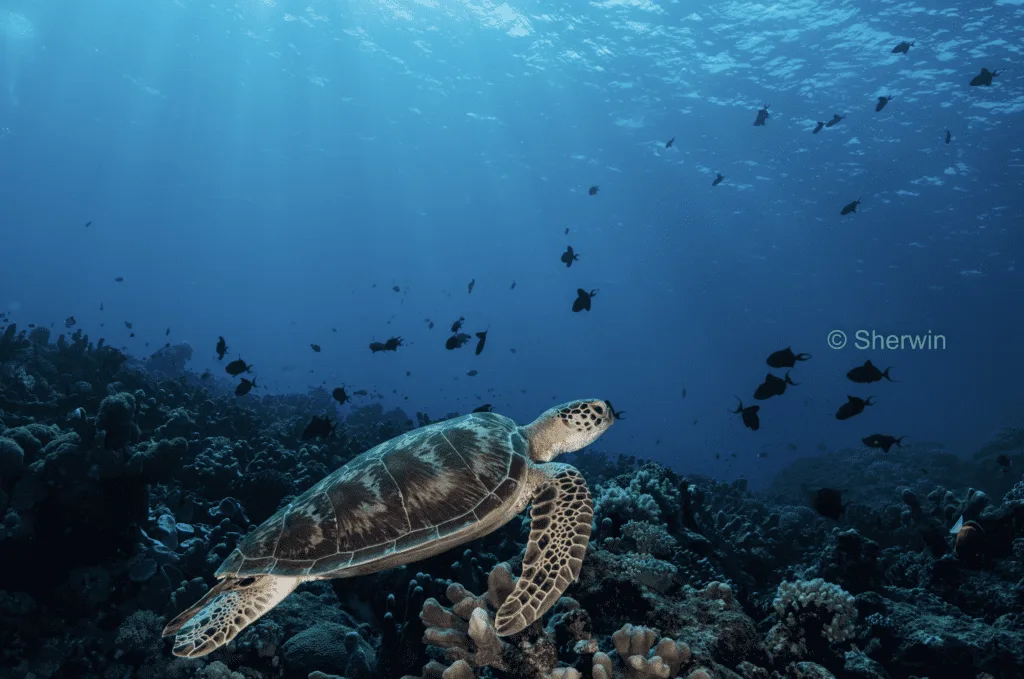
Beyond the macro-life tucked into the rocks, the site is heavily influenced by the surrounding oceanic environment. The proximity to the open drop-off allows for regular sightings of larger, more mobile species. Reef sharks are frequently encountered patrolling the edges of the wall or passing through the mid-water column. You can also observe turtles navigating the currents near the reef face, often utilizing the edges of the structure for stability. The combination of a complex, sheltered reef interface and an open, deep-water boundary creates a highly productive zone for both resident and visiting species.
For those watching the blue, the site offers opportunities to see larger pelagic animals that frequent the Sipadan area. Manta rays are known to pass through the vicinity, often moving through the water column above the reef slope. The visibility here remains high, typically between 20 and 30 metres, which allows you to see these large silhouettes clearly against the light. This clarity is essential for spotting movement in the distance before the animals arrive closer to the wall. The depth profile ensures that you are positioned in a prime zone for observing these interactions between the reef and the open sea.
Current conditions at Lobster Lairs are generally described as moderate, though they can fluctuate depending on local conditions. The flow often influences how you navigate the wall, as it can make staying close to the crevices more demanding. It is important to be mindful of how the current interacts with the various overhangs, which can create subtle changes in water movement. Maintaining a steady position while observing the fauna requires a disciplined approach to trim and propulsion. While the site is not known for extreme or dangerous surges, the variability means you should always be prepared for a change in flow intensity.
The light at the site changes significantly as you follow the wall through its 25 to 40-metre depth range. In the upper sections, the illumination is sufficient to reveal the colours of the lionfish and other reef inhabitants clearly. As you descend deeper, the environment shifts toward a more monochromatic, high-contrast setting where the focus moves to the textures of the rock and the shapes of the shadows. This transition is part of the site's appeal, offering two distinct types of diving in a single profile. Managing your gas consumption and decompression limits is key when exploring these deeper, darker sections of the wall.
The dive depth ranges from 25 to 40 metres, requiring an Advanced Open Water certification or equivalent experience. Currents are typically moderate but can vary, necessitating good buoyancy control and experience navigating vertical walls. Expected visibility is between 20 and 30 metres, with the most favourable conditions occurring between March and October.
You can find the most favourable conditions at Lobster Lairs between March and October. Visibility is typically between 20 and 30 metres, making it easier to inspect the vertical wall, deep crevices and overhangs, while also watching the blue for reef sharks, turtles and passing manta rays.
Lobster Lairs descends along a vertical wall from 25 to 40 metres. You need Advanced Open Water certification or equivalent experience for this profile. Good buoyancy control is important as you move near overhangs, fissures and crevices, while careful gas management and attention to decompression limits support deeper exploration.
Currents at Lobster Lairs are typically moderate but can vary with local conditions. The flow may make it harder to remain close to the wall and can change around overhangs and crevices. You should be comfortable navigating vertical walls, maintaining trim and buoyancy, and adjusting your position as the water movement changes.
At Lobster Lairs, you can explore a vertical wall with deep crevices, overhangs and rock fissures containing spiny lobsters, scorpionfish and pipefish. Reef sharks frequently patrol the wall, while turtles may move near the reef face. In the blue, you may see manta rays passing through the water column.