

Scuba Buddy
Google 4.3/5 (172 reviews)
14 km away as the crow flies
Sipadan · Malaysia · Asia
Max. depth · 40 mA long, west-facing wall where massive gorgonians and black corals meet passing sharks and resident turtles.
For subtitles in English: start the video firstthen click the gearat the top right of the video, select “Subtitles/CC”, then “Auto-translate” and choose “English”.
The West Ridge follows the western face of Sipadan, defined by a distinct topographical shift. It begins with a relatively shallow reef plateau that provides a platform before the seabed drops away into a steep, vertical wall. This drop-off starts around 4 to 5 metres and descends continuously to a maximum depth of 40 metres. Because the wall faces west, it is exposed to the open ocean, which dictates the site's ecology and water movement.
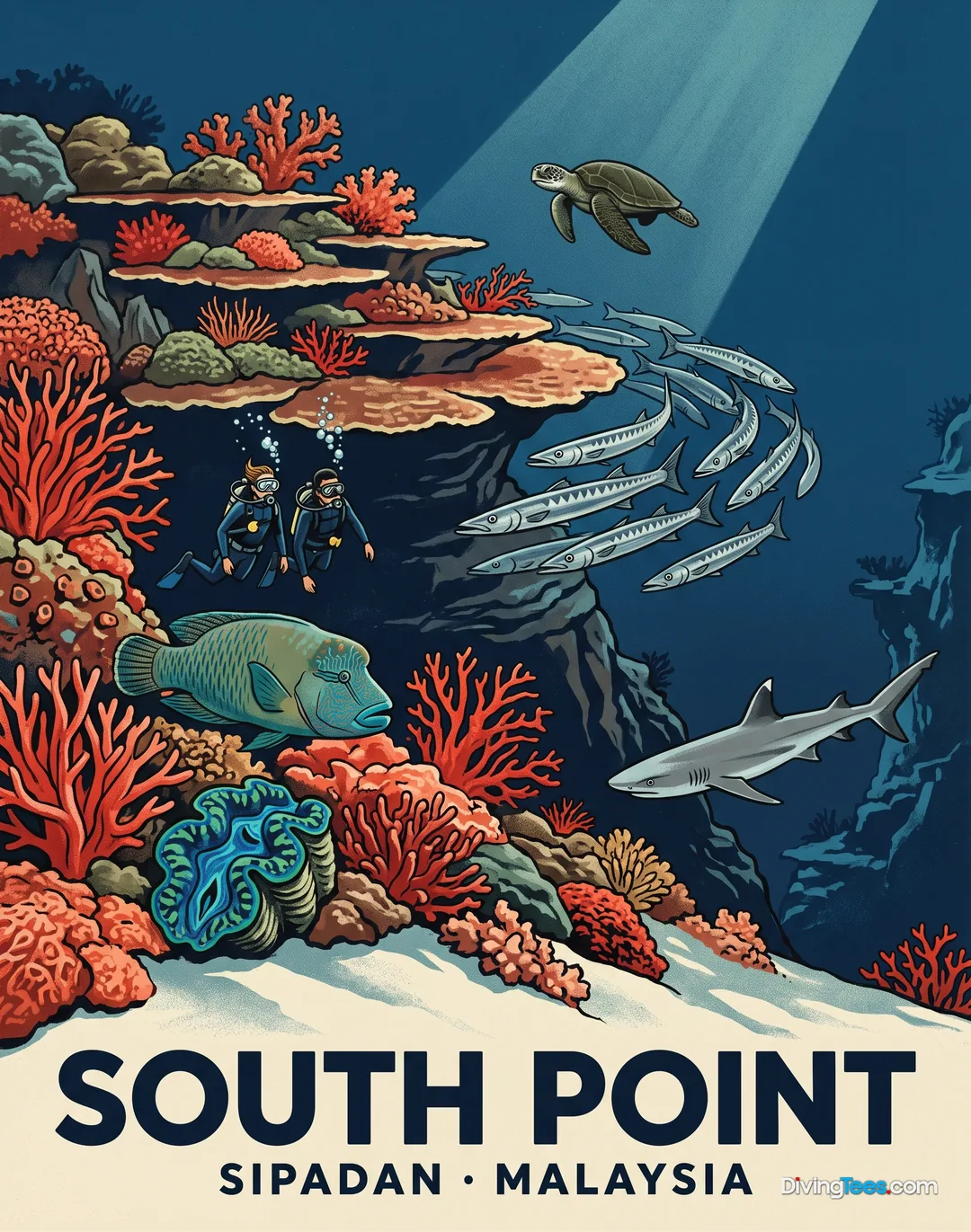
As you descend along the vertical face, the terrain is defined by dense colonies of black coral and large gorgonians. The wall is not a smooth surface; it is interrupted by various overhangs and crevices that provide shelter for diverse marine life. These formations create a complex structure along the descent, transitioning from shallower reef structures to deep-water wall characteristics. The architecture of the ridge makes it a varied dive for those following the slope.
Current conditions at West Ridge are typically moderate and are often experienced as a drift dive. The water movement is influenced by the westward exposure and tidal shifts, which can make the site more active than the sheltered sides of the island. For many divers, the most efficient way to experience the ridge is by drifting along the wall, following the natural flow of the water. This movement allows for a continuous view of the descending reef face.
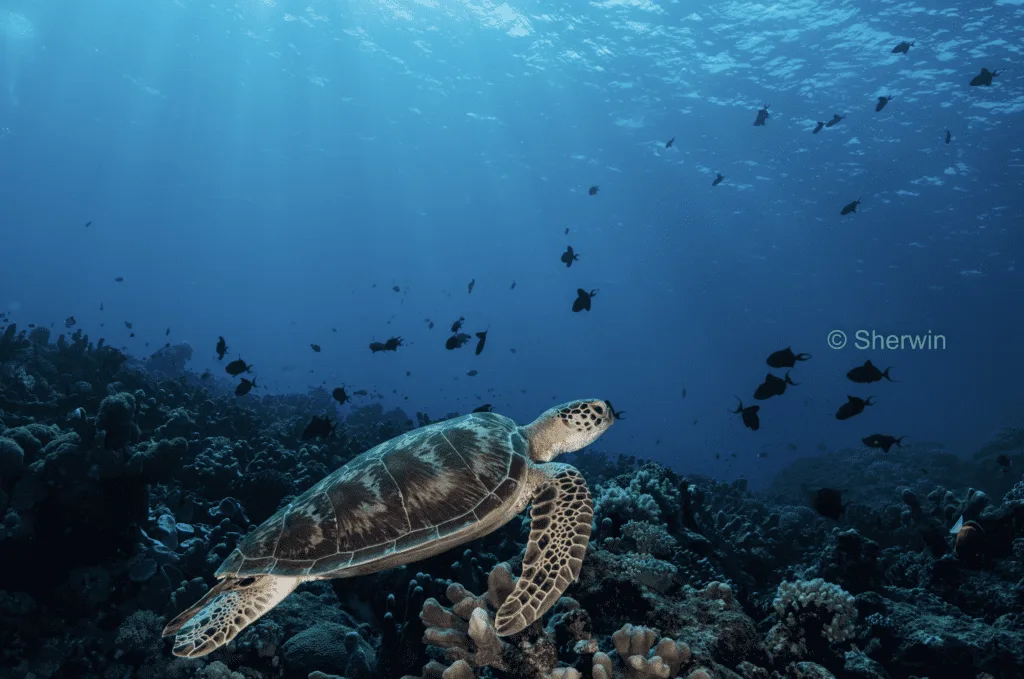
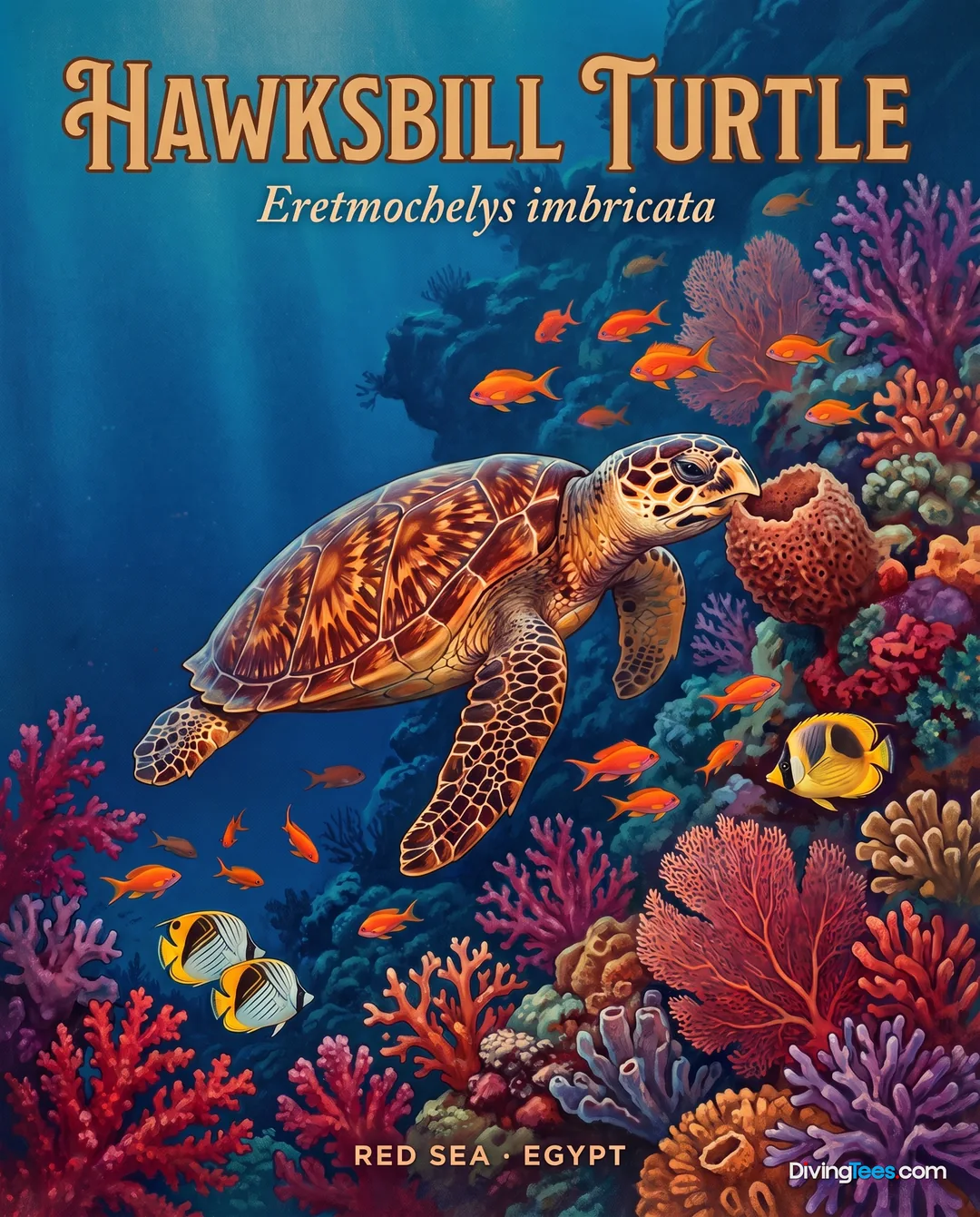
The site is highly productive for both resident and visiting species. You will frequently encounter Green Sea Turtles (Chelonia mydas) and Hawksbill Sea Turtles (Eretmochelys imbricata) grazing or navigating the reef edge. Large schools of Jacks and Barracuda move through the water column, often staying mid-water where the current is most consistent. The biodiversity here is a hallmark of the Sipadan ecosystem, combining small reef inhabitants with larger predators.
Pelagic activity is a significant draw, with several species of sharks regularly patrolling the drop-off. You can expect to see White-tip reef sharks (Carcharhinus melanopterus) and Grey reef sharks (Carcharhinus glaucus) cruising the edge of the wall. These encounters are common as the sharks utilize the currents to hunt or patrol their territory. The presence of these apex predators adds a layer of scale to the experience as they move against the blue.
Lighting conditions at the site are highly dependent on the time of day. To see the wall in the best possible light, afternoon dives are often recommended, as the sun's position provides direct illumination of the vertical face. This avoids the shadows that can sometimes obscure the intricate details of the coral structures. Proper lighting brings out the textures of the gorgonians and the subtle colors of the reef organisms.
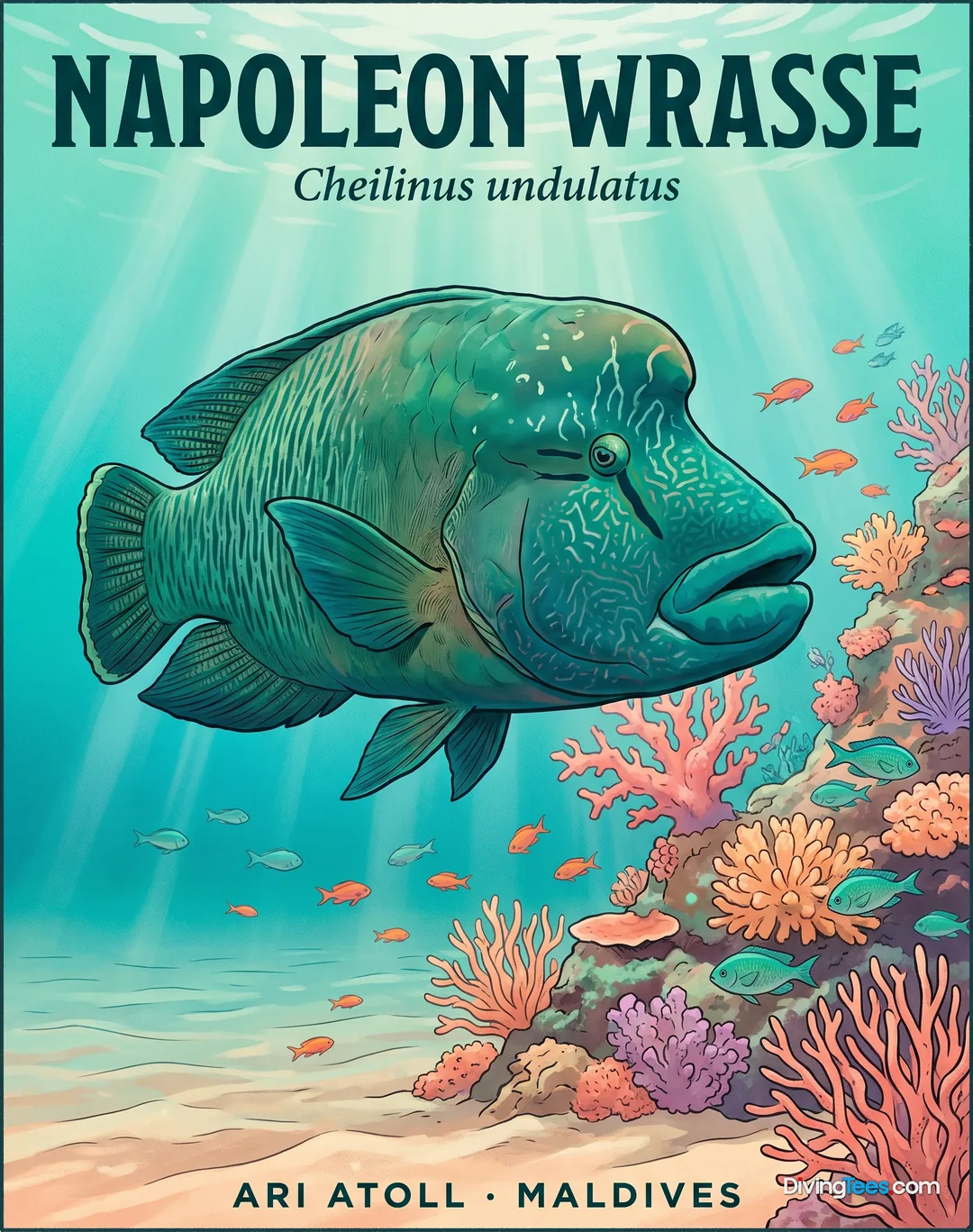
The interaction between macro and megafauna makes the ridge unique. While you might find a Napoleon Wrasse (Cheilinus undulatus) or various Grouper species tucked into the reef structure, larger visitors like Eagle Rays move through the open water nearby. Even Sweetlips and various Anemonefish inhabit the shallower sections of the reef. This combination of small reef details and large open-water movement defines the typical West Ridge dive profile.
The site features a depth range from 4 to 40 metres. It requires an Advanced certification and significant experience with currents and deep profiles. Visibility typically ranges from 20 to 30 metres. Currents are generally moderate but can vary based on tides and western exposure. The best season to dive here is from February to December.
West Ridge is suitable for diving from February to December. Afternoon dives are recommended because the western face receives direct sunlight then, illuminating the vertical wall, black coral, and gorgonian formations. This timing helps reveal the textures and details of the reef structure that can be obscured by shadows.
West Ridge requires Advanced certification and significant experience with currents and deep profiles. The site combines a shallow reef plateau with a vertical wall that descends continuously into deeper water. You should be comfortable managing your dive while following the wall and dealing with movement from tides and open-ocean exposure.
West Ridge ranges from four to forty metres. The dive begins on a relatively shallow reef plateau, with the drop-off starting around four to five metres before descending along a steep vertical wall. Black coral, gorgonians, overhangs, and crevices continue along the wall as the profile transitions toward deeper water.
West Ridge generally has moderate currents and is often experienced as a drift dive. Tides and western exposure can make the water movement more active. You may see Green and Hawksbill Sea Turtles, Grey reef sharks, White-tip reef sharks, Barracuda, Jacks, Eagle Rays, Groupers, Napoleon Wrasse, Sweetlips, and Anemonefish.