
Ko Lipe Diving School
Google 4.8/5 (531 reviews)
Thailand · Asia
Stonehenge’s rock pinnacles, Jabang’s coral formations and the open-water drop of 8 Mile Rock frame boat diving from Koh Lipe.
For subtitles in English: start the video firstthen click the gearat the top right of the video, select “Subtitles/CC”, then “Auto-translate” and choose “English”.
Stonehenge’s rock pinnacles are the signature image of diving from Koh Lipe, but they are only part of the attraction. Boat trips reach coral reefs, rocky formations and the more exposed 8 Mile Rock around the Adang-Rawi archipelago. This is a Thai island stay rather than a liveaboard-only destination, with daily diving combined with beaches, island excursions and time ashore. The setting suits divers who want several boat days without giving up a straightforward holiday base.
Most dives leave by boat for reefs, pinnacles and rock formations around Koh Lipe and neighbouring islands. Stonehenge and Jabang provide the most recognisable underwater scenery, while 8 Mile Rock is a deeper, more exposed outing where current deserves proper respect. Conditions are variable rather than uniformly gentle. Some nearby sites suit beginners, but an exposed site may involve a drift dive, a downcurrent section or a more deliberate return to the boat, depending on the day. February to April commonly brings the clearest water, with visibility often reaching twenty to thirty metres, although wind, rain and runoff can reduce it. Expect a conventional boat day, with equipment carried out to the site and a safety stop before returning to the surface, rather than a shore-diving routine from the island.
Coral reefs and pinnacles are the main living scenery, with reef life spread across the formations and rocky surfaces. The larger encounters are possible rather than dependable appointments. Whale sharks are reported particularly around March and April, while manta rays and mobula rays may appear during the broader November to April season. Leopard sharks are also an occasional sight in that period. Their presence can never sensibly be built into every itinerary, so the stronger reason to come is the combination of coral terrain and the chance of a pelagic visit. A boat rotation that includes different parts of the Adang-Rawi archipelago gives more scope than repeating one familiar site, especially when weather or current changes the plan.
The reliable diving season runs from November to April, when the sea is usually calmer, boats operate more regularly and more sites are practical. February to April is the clearest window, often bringing twenty to thirty metres of visibility. From May into October, the southwest monsoon brings rougher water, more rain and less predictable access. June to October is therefore a poor fit for a tightly planned diving holiday, particularly when the journey already depends on a boat crossing. December to March is busier, so the quieter period outside peak holidays comes with fewer people but also less reliable transport and a smaller operating season.
Koh Lipe works for all levels, provided the day’s site matches the diver’s experience. Nearby, more sheltered reefs can suit newly qualified divers, introductory dives and those returning to the water. The deeper, exposed character of 8 Mile Rock is better reserved for divers with stronger open-water skills and sound current management. Advanced Open Water is useful for the deeper and more exposed outings. PADI, SSI and BSAC divers should pay more attention to the planned site than to the island’s relaxed beach setting.
From London Heathrow, London Gatwick or Manchester, the usual route is via Bangkok or Kuala Lumpur, then onward by air to Hat Yai. From Hat Yai, allow roughly two to two and a half hours by road to Pak Bara, followed by a fast boat of about one and a half hours to Koh Lipe. That final crossing is a structural part of the journey, not a minor hotel transfer. Langkawi offers an alternative international ferry route of about one and a half hours when the seasonal service is running. Once on Koh Lipe, many hotels and dive centres are within walking distance, while longer moves are generally made on foot or by local taxi. Keep connections generous, especially between the road journey, ferry and any flight.
Book the important diving early in the stay, leaving later days available if rough water cancels a boat rotation. Ask which days are planned for nearby reefs and which for exposed sites, rather than assuming 8 Mile Rock will run on demand. Start with a sheltered dive before committing to the deeper outing, particularly after the long journey. Early departures are worth requesting for popular sites, as they usually reduce overlap with later boats. If dates are flexible, local operators often regard the period around half moon as easier for current on some sites, though it is not a guarantee. Do not make the last dive and the island departure part of one tight chain: keep a spare day before travelling towards Hat Yai. Small personal equipment or comfort items are sensible because rental choice can be narrower than at a large mainland centre. Include the Tarutao park fee and required arrangements in the boat booking, and follow its no-touch, no-litter and no-contact rules.
Allow seven to ten days, giving the crossing its proper space and leaving several possible boat days in reserve. Koh Lipe is small, so many accommodation areas connect to the dive centres on foot, with local taxis useful when they do not. Non-divers can spend time on the beaches, snorkel nearby reefs, take boats into the Adang-Rawi archipelago or walk on Koh Adang. Keep a final day free of diving before leaving the island.
Hello, I'm Marina, DivingDeal.com's AI assistant. I guide you through destinations, areas and countries.
Thinking about the whole trip and the flights? Talk it over with Edith →
Marina is an AI. Some links are affiliate links: DivingDeal may earn a commission, at no extra cost to you. Bookings are made with the partner.
The reliable diving season runs from November to April, when seas are usually calmer, boats operate more regularly and more sites are practical. February to April commonly brings twenty to thirty metres of visibility. Whale sharks are reported particularly around March and April, while manta and mobula rays may appear from November to April.
Koh Lipe suits all levels when the site matches your experience. Sheltered nearby reefs can suit newly qualified divers, introductory dives and those returning to the water. The deeper, exposed 8 Mile Rock is better for divers with stronger open-water skills and current management. Advanced Open Water is useful for exposed outings.
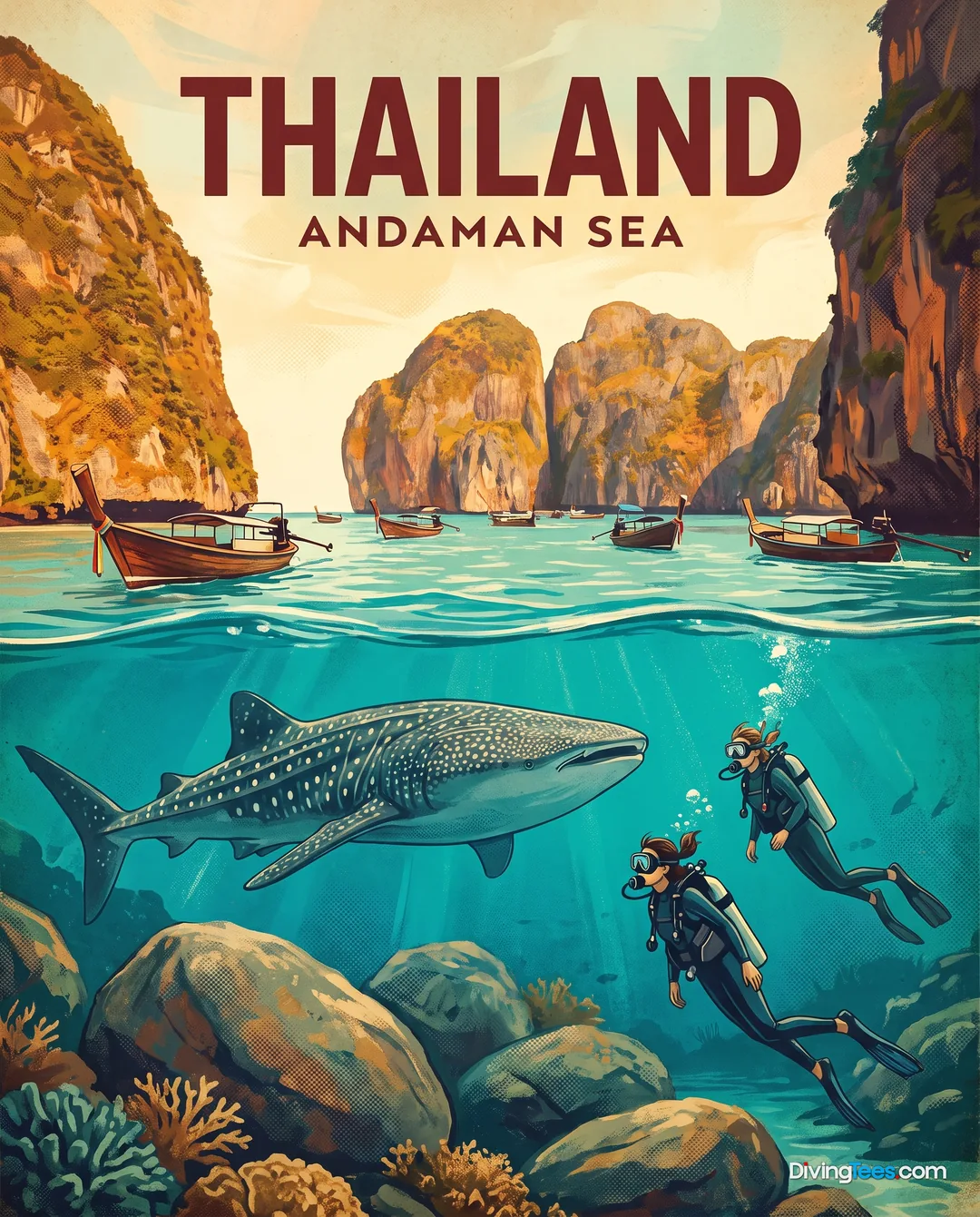
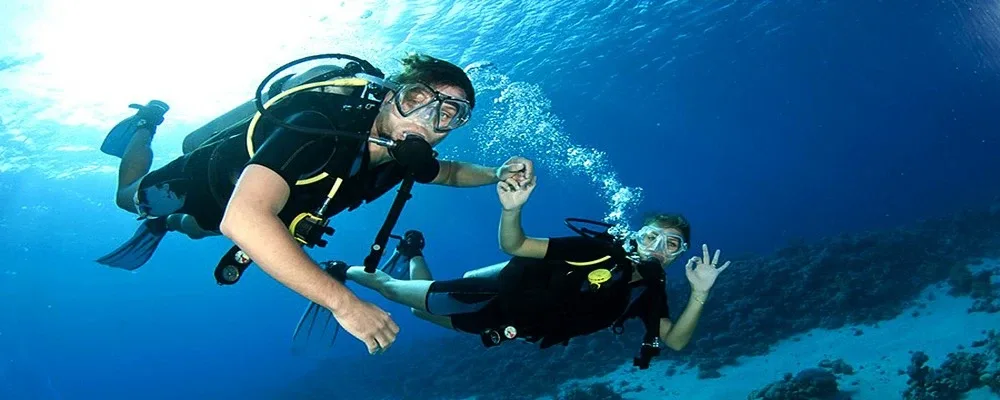
Diving around Koh Lipe features coral reefs, rocky formations and Stonehenge’s pinnacles rising through clear blue water. Jabang has coral-covered formations and changing current, while 8 Mile Rock offers a deeper, more exposed setting. Whale sharks, manta rays, mobula rays and leopard sharks are possible seasonal encounters, not guaranteed sightings.
Plan a Thai island stay with daily boat diving, beaches and time ashore. Book important dives early, begin with a sheltered site and leave later days flexible for weather cancellations. Allow generous connections through Hat Yai, Pak Bara and the boat crossing, include the Tarutao park fee, and keep a final day free of diving.