Asia
Thailand: two coasts, changing seasons, distinct journeys
Thailand puts the Andaman coast, Koh Tao and Bangkok within one country, pairing shifting dive seasons with Ayutthaya ruins and a sharply regional cuisine.
What makes this country unique
- Andaman coast sites from Phuket to Khao Lak
- April overlap across the southern island groups
- Whale sharks, manta rays and hawksbill turtles
- Richelieu Rock near Khao Lak
- Sail Rock around Koh Tao
- Gaeng som from Krabi and Phuket
- Ayutthaya ruins beyond Bangkok
- Songkran water battles in April
For subtitles in English: start the video firstthen click the gearat the top right of the video, select “Subtitles/CC”, then “Auto-translate” and choose “English”.
This country for a diver
Thailand offers two very different diving theatres: the Andaman coast around Phuket, Krabi and Khao Lak, and the Gulf islands around Koh Samui, Koh Phangan and Koh Tao. Pattaya forms a separate, practical base near Bangkok. Across the country, diving suits all levels, although reef health is mixed and currents can be variable. The appeal lies in contrast rather than uniformity: a trip can connect manta rays and whale sharks with temples, markets and intensely regional food. Even the familiar sites, from Sail Rock at Koh Tao to Richelieu Rock near Khao Lak, belong to different seasonal worlds.
How the country divides
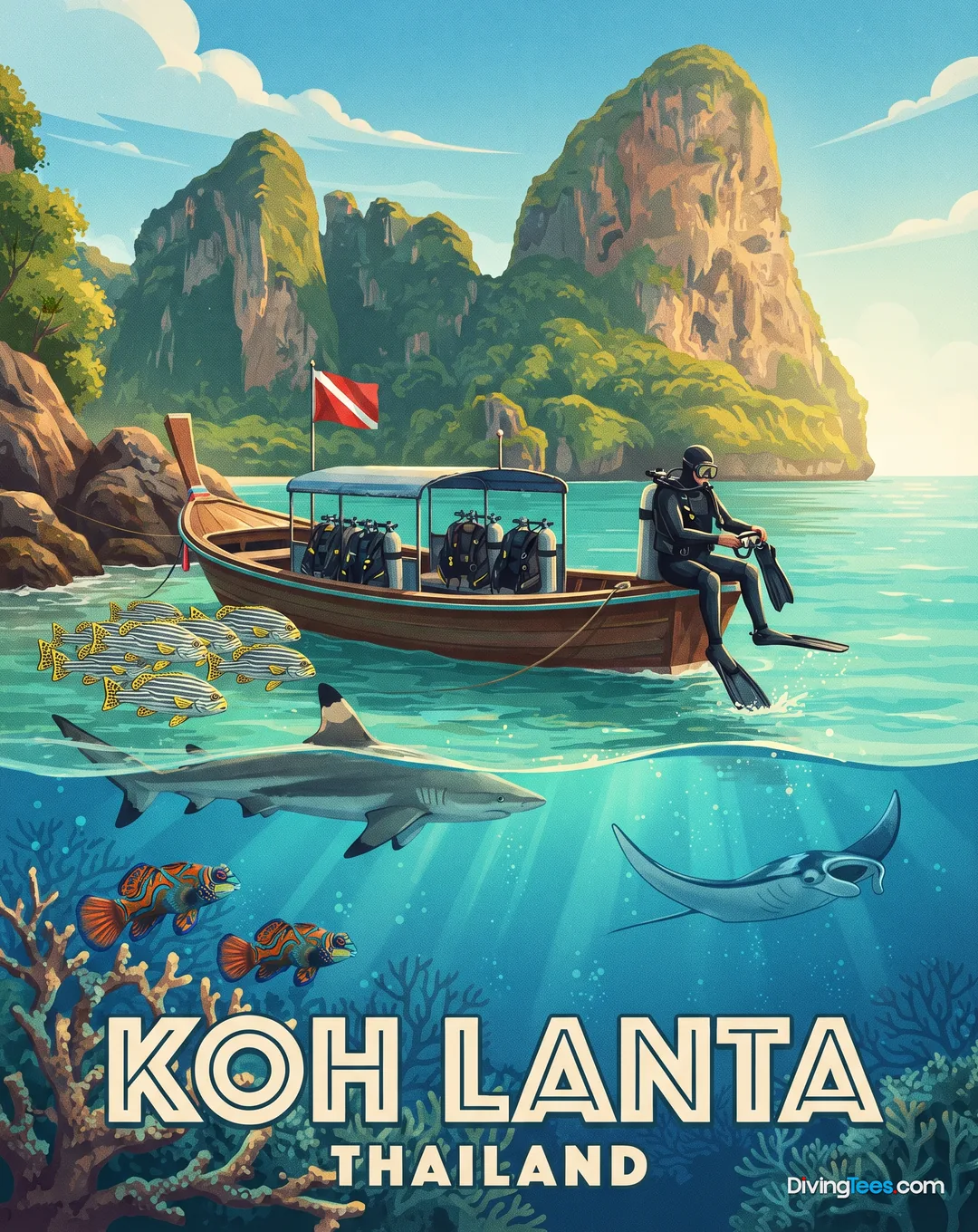
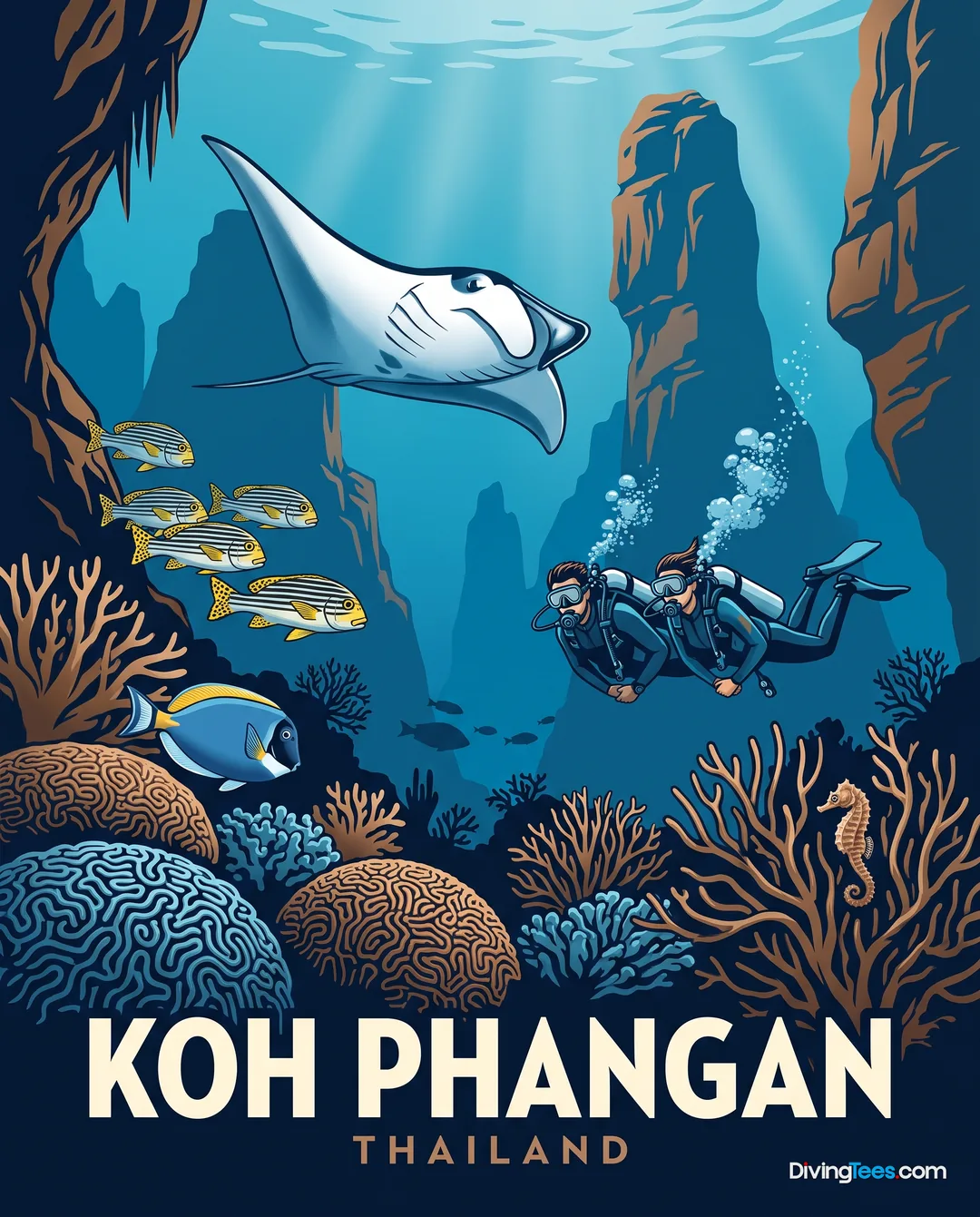
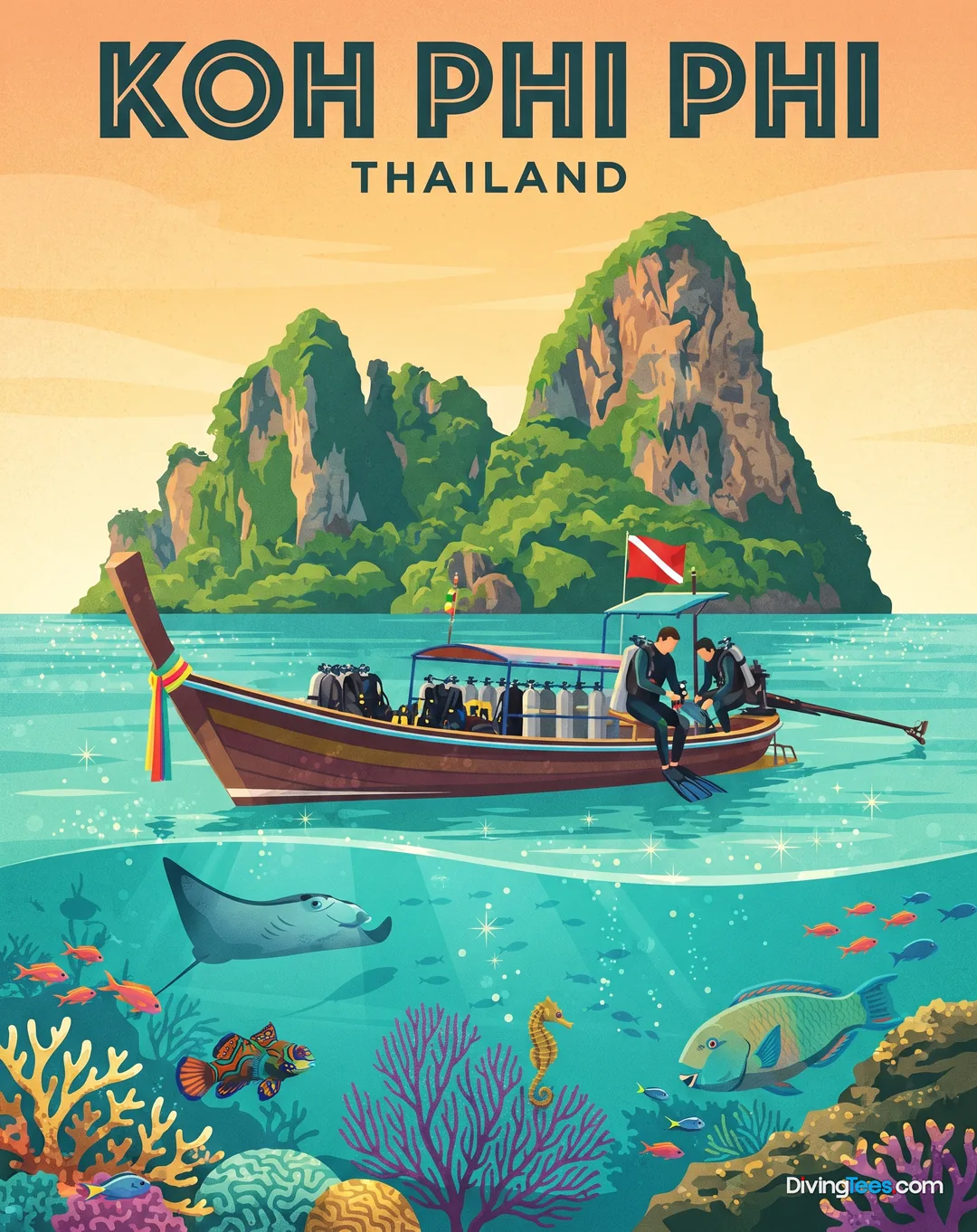
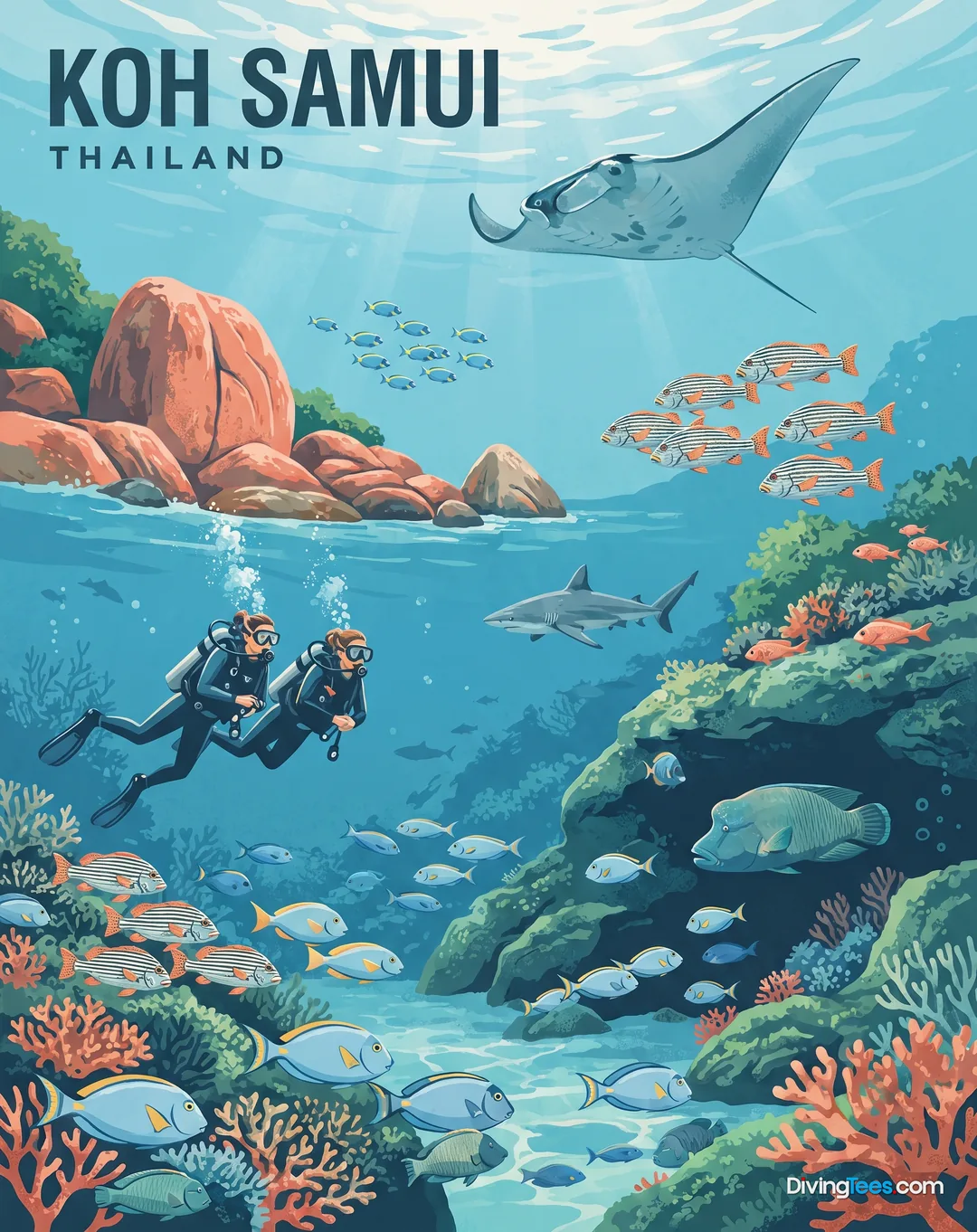
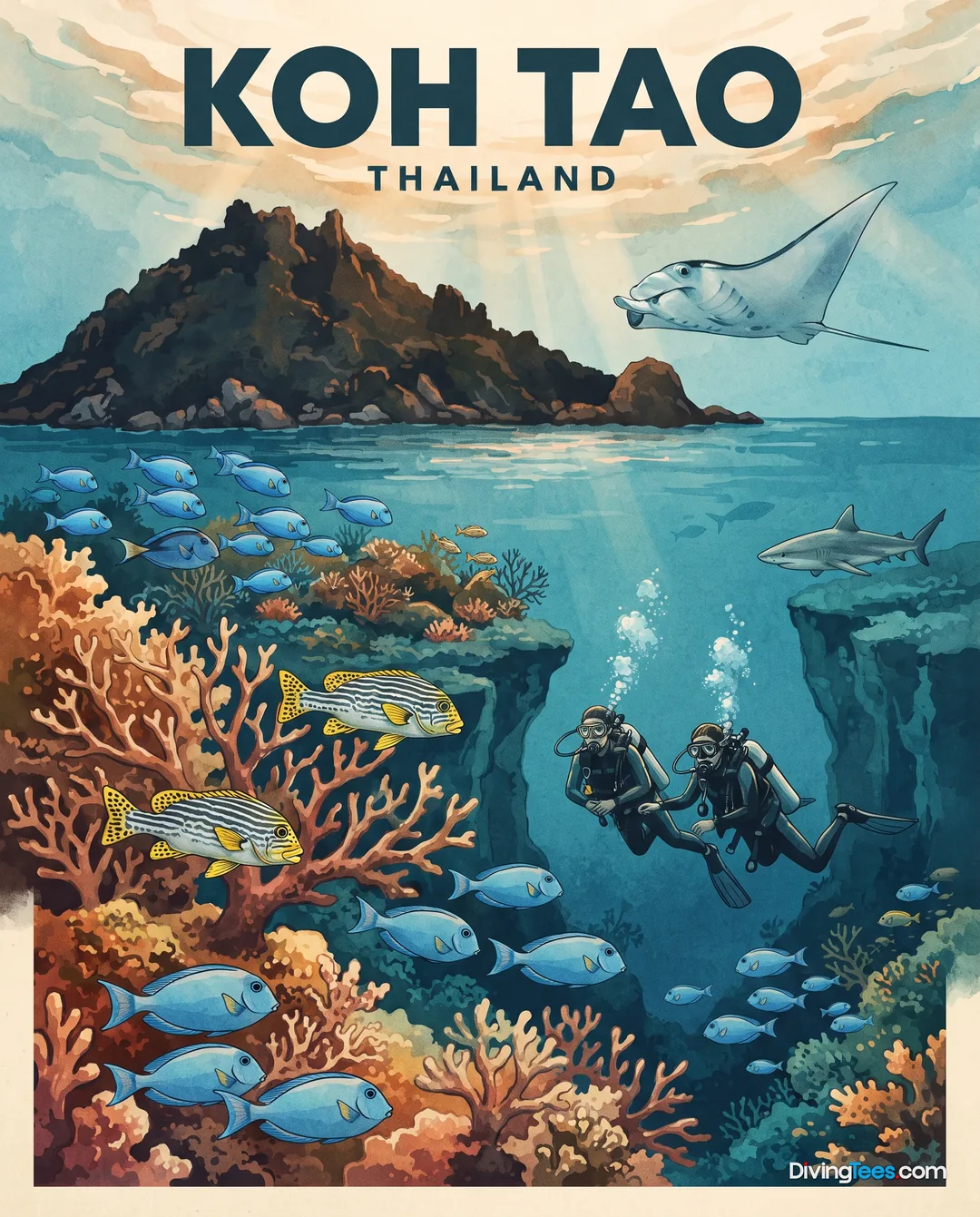
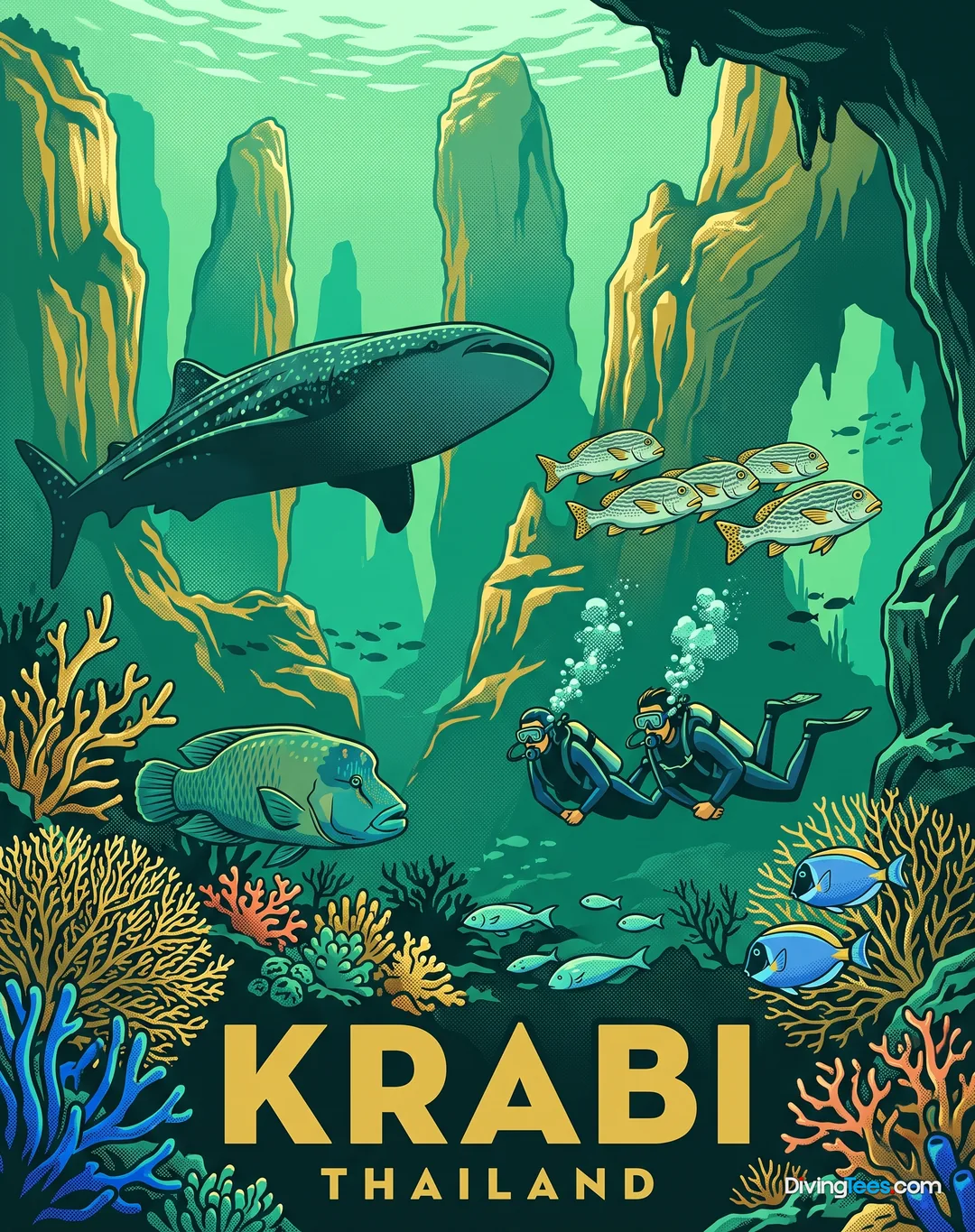
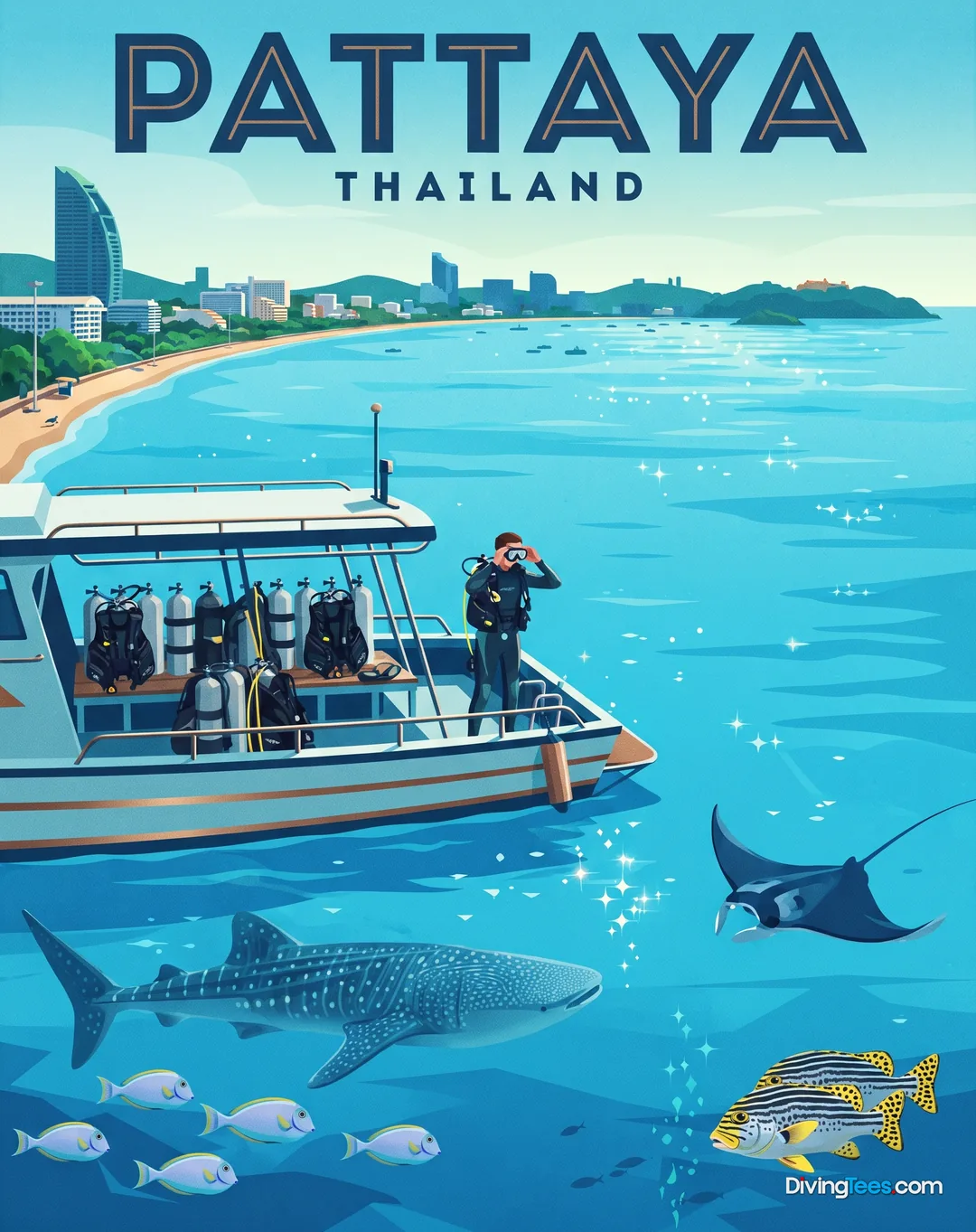
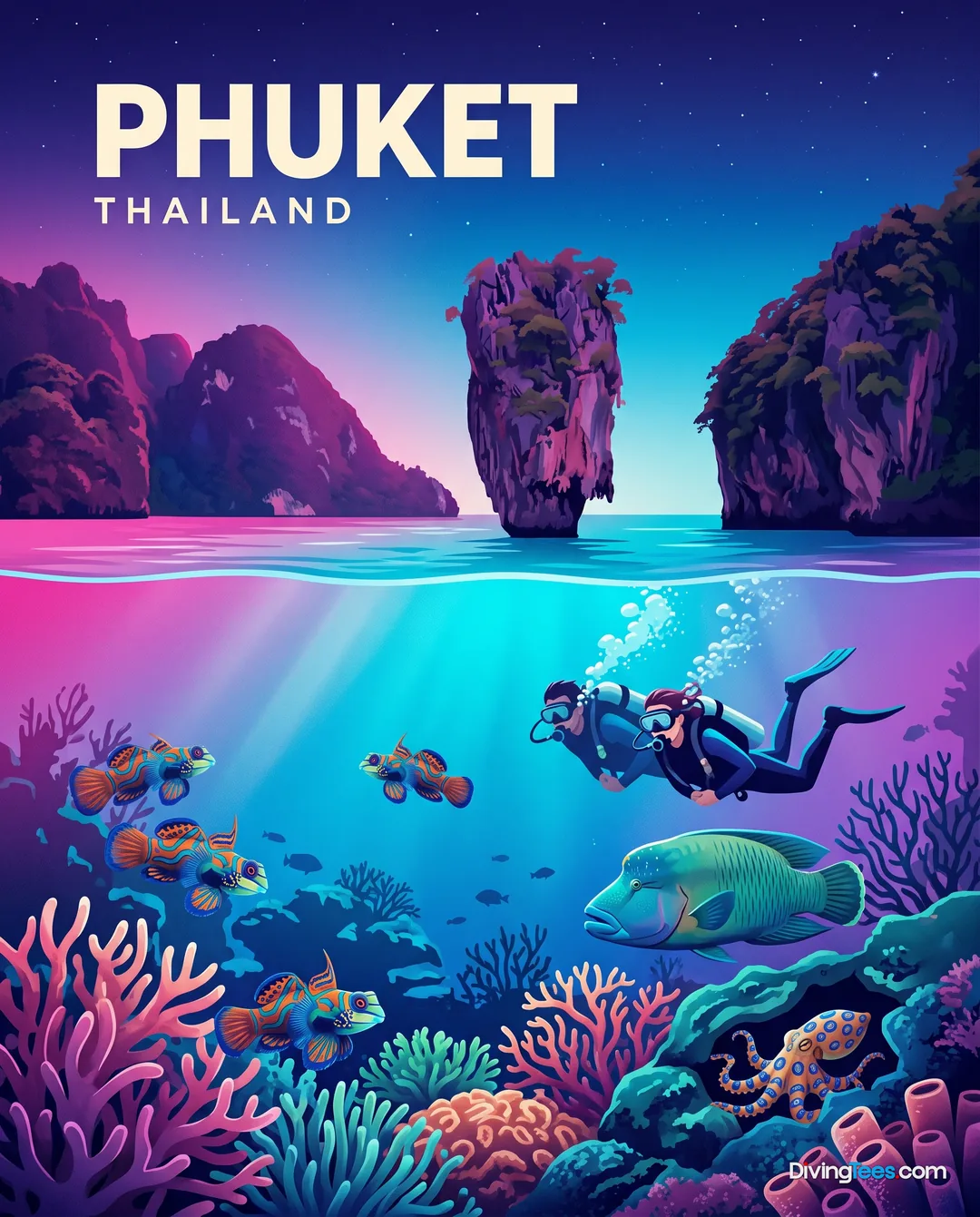
The Andaman grouping is the broadest choice, running from Ao Nang and Koh Lanta through Koh Phi Phi to Phuket, Rawai, Kata Beach and Khao Lak. Its season runs from October to April, making it the natural choice for winter travel from Britain. Khao Lak points towards longer offshore programmes, while Phuket, Rawai and Kata Beach provide a more urban island base; Ao Nang and Koh Lanta suit travellers who prefer a smaller coastal setting. The Gulf grouping is more finely divided. Koh Tao runs from February to June, Koh Phangan from March to June, and Koh Samui from April to October. April to June is the useful overlap if island-hopping is the priority, with Koh Tao tending towards a diving-focused stay and Koh Samui offering the more established resort setting. Pattaya, in the Gulf-facing east, runs from October to March and works well for a Bangkok-linked trip.
Diving destinations
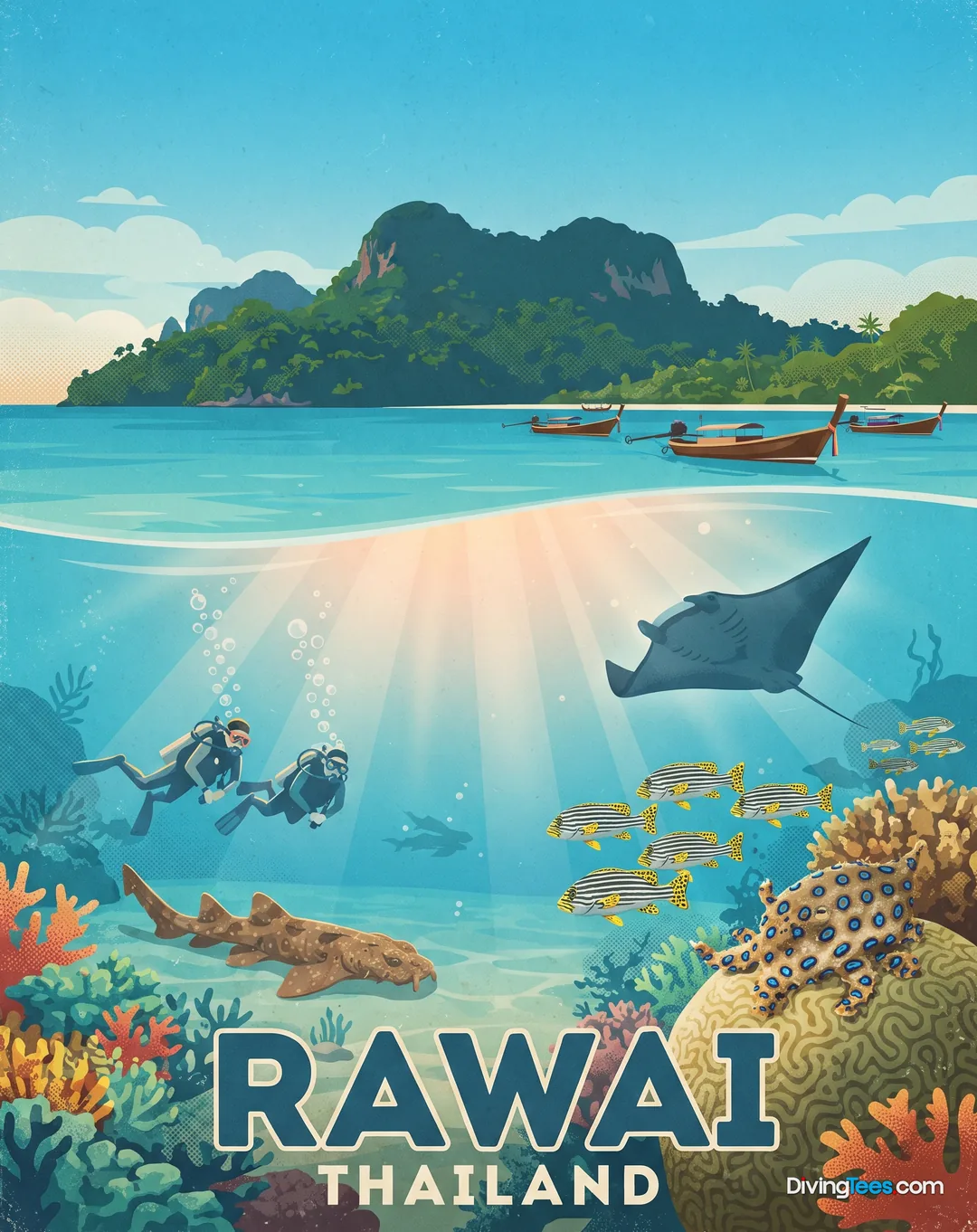
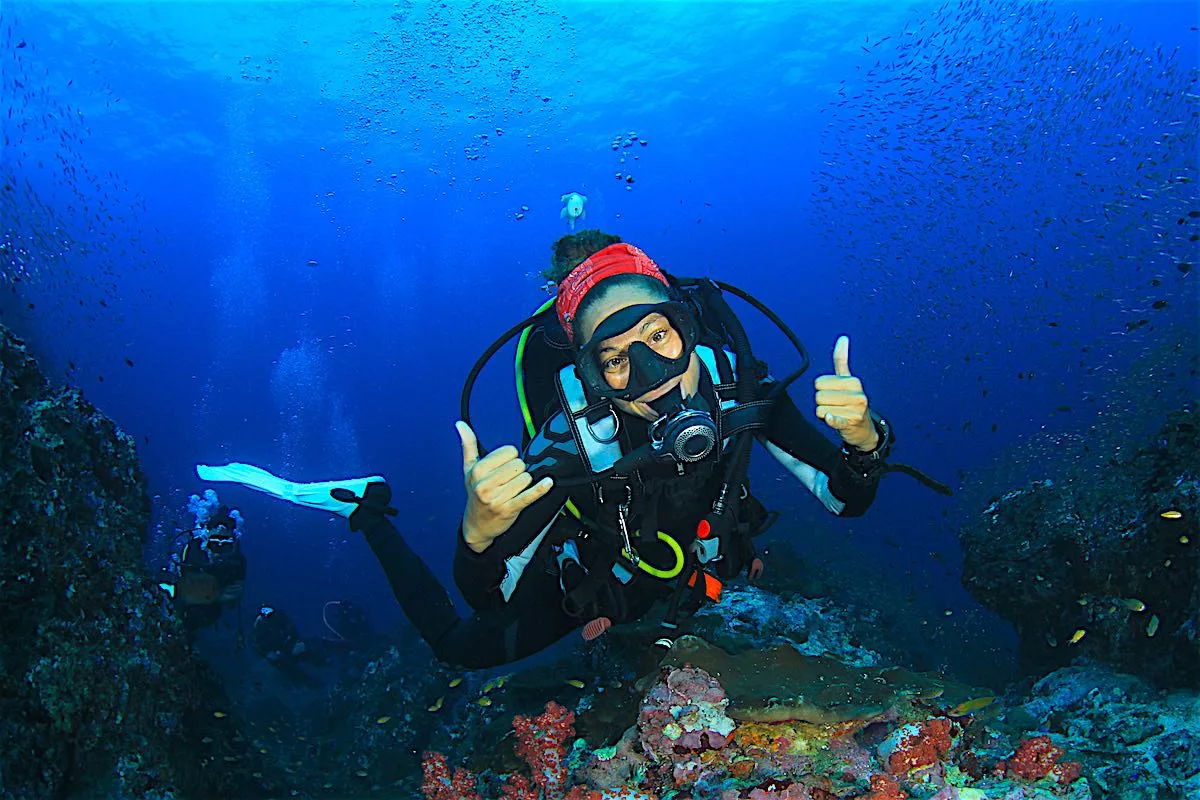
Dive centres
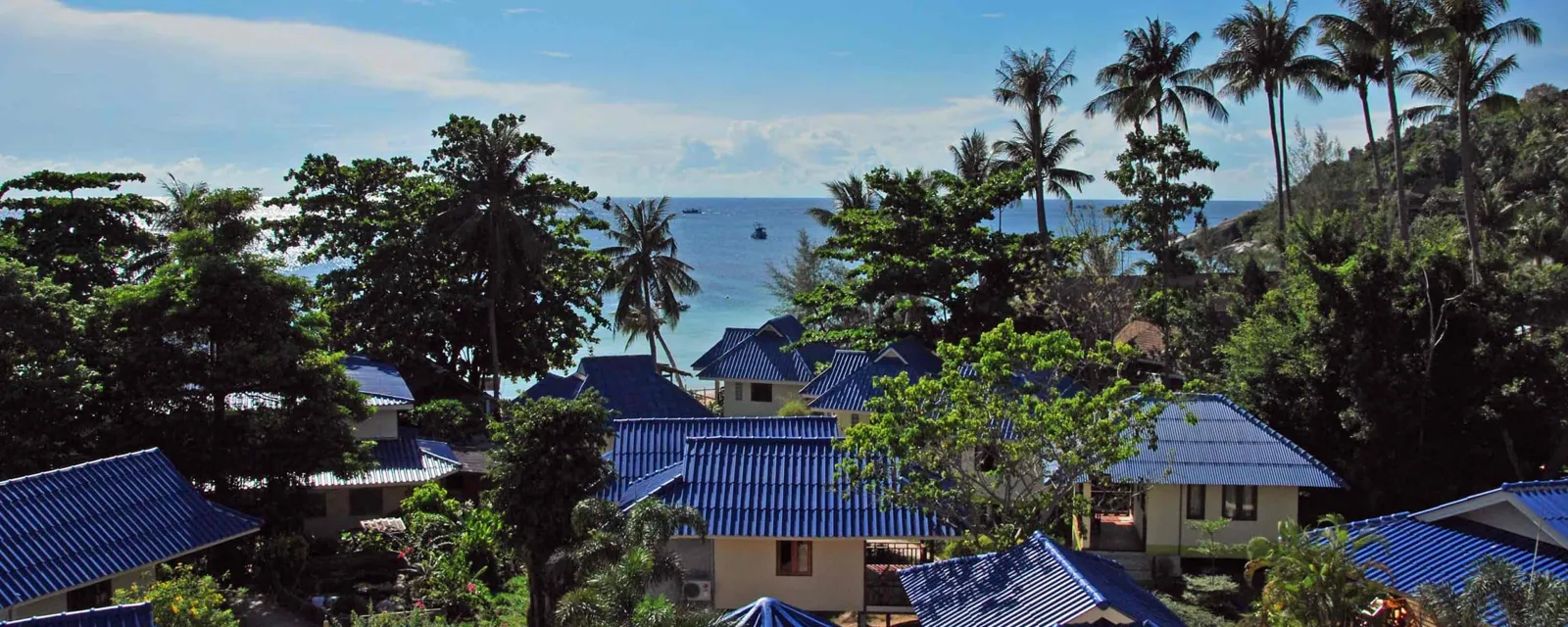




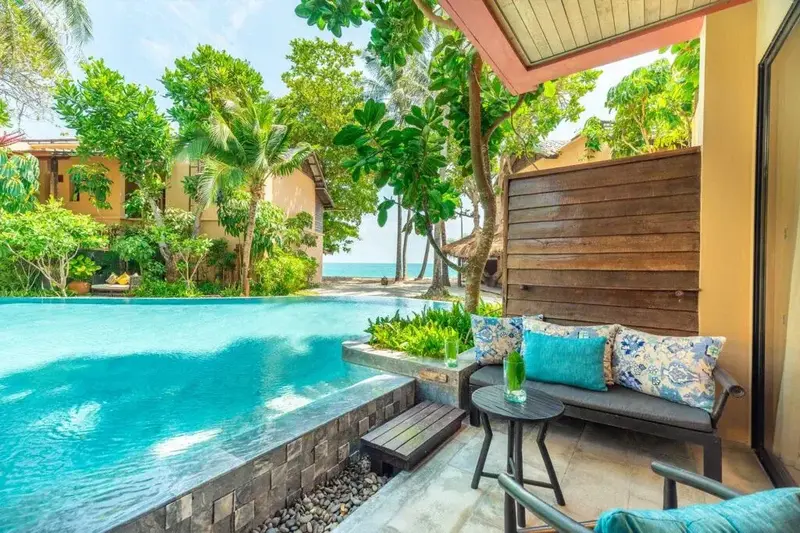
Hotels
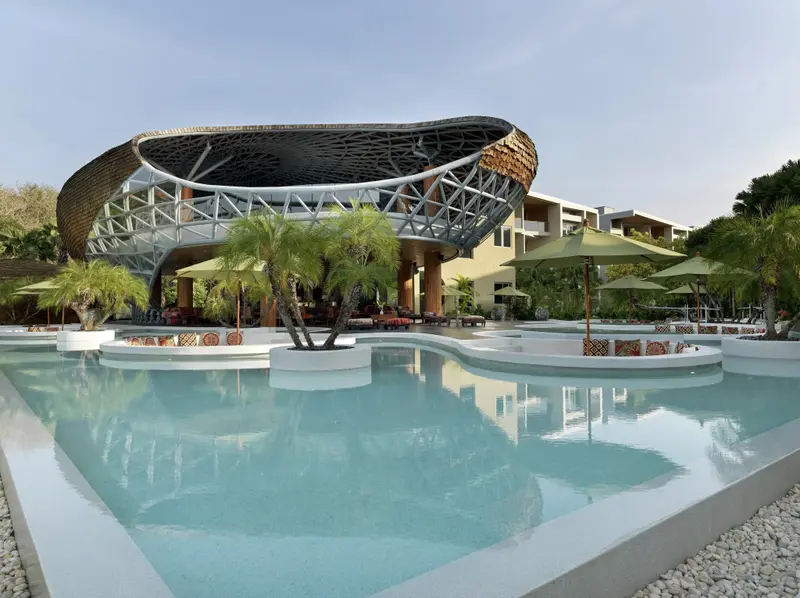


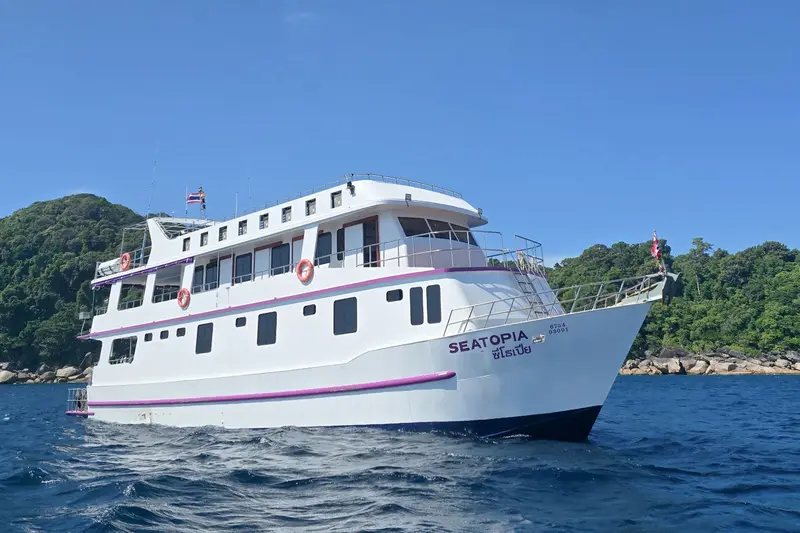
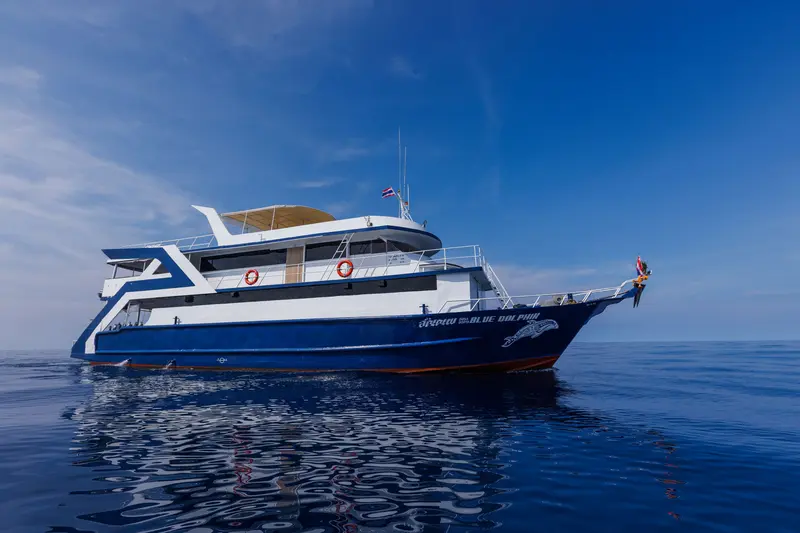
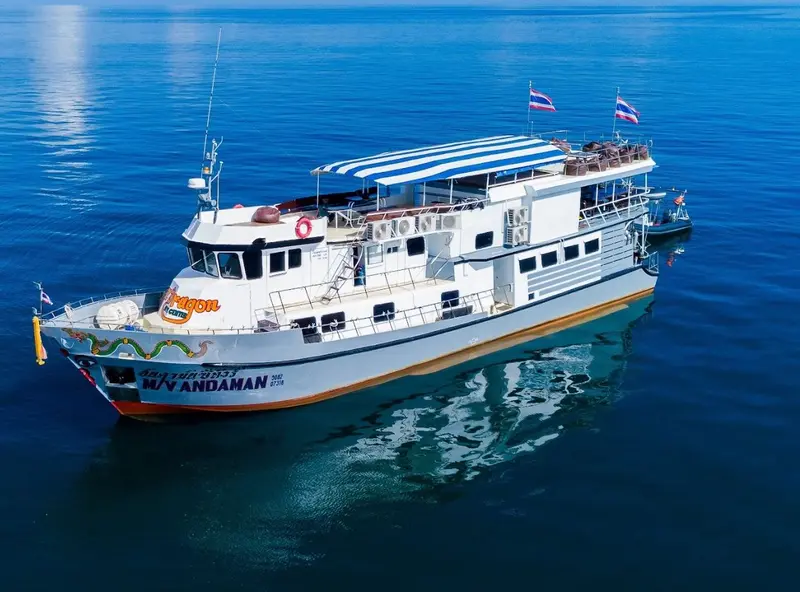
Liveaboards
When to go, and where by month
January is firmly an Andaman month, with the same winter window extending through Ao Nang, Khao Lak, Koh Lanta, Koh Phi Phi, Phuket, Rawai and Kata Beach; Pattaya is also open. February adds Koh Tao, while March brings Koh Phangan into the picture. April is the broadest crossover: the Andaman coast remains in season, Koh Tao and Koh Phangan are still operating, and Koh Samui joins them. From May through June, the practical choice shifts decisively to the Gulf, where all three island bases overlap. July, August and September narrow the map to Koh Samui. October changes the balance again: Andaman destinations and Pattaya reopen as Koh Samui reaches the end of its season. November and December favour the Andaman coast and Pattaya. The reason for this split is geographical: the Andaman monsoon and the Gulf weather pattern do not close the same coast at the same time. Koh Phangan and Pattaya share only March, while Koh Samui and Pattaya share only October.
Marine life, coast by coast
Whale sharks, sea turtles, hawksbill turtles, barracuda, trevally, moray eels, seahorses, nudibranchs and octopus form the country-wide thread. That common wildlife makes Thailand recognisable, but it should not flatten the itinerary. The Andaman side, from Ao Nang through Khao Lak and the islands off Phuket, is where divers may meet manta rays, giant trevally, leopard sharks, white-tip reef sharks and the occasional oceanic shark. The Gulf grouping around Koh Phangan, Koh Samui and Koh Tao brings giant grouper, titan triggerfish, schools of chevron barracuda, yellowtail barracuda and bull sharks into the picture, alongside coral gardens and bioluminescence. Pattaya has its own emphasis, with bamboo sharks, reef sharks, blue-spotted rays and a strong macro interest. A diver choosing between coasts is therefore choosing more than water and travel time: the wildlife emphasis changes with the side of the peninsula.
Getting between the areas
The easy combinations are local ones. Phuket and Rawai are only five kilometres apart, while Kata Beach and Rawai are seven kilometres apart, so the southern Phuket bases can be treated as one land-based travel area. Koh Phangan and Koh Samui are twenty-nine kilometres apart, and Koh Phangan to Koh Tao is thirty-eight kilometres, making a Gulf island pairing realistic when ferry connections fit the plan. On the Andaman side, Koh Lanta and Koh Phi Phi are thirty-one kilometres apart, while Ao Nang and Koh Phi Phi are thirty-five kilometres apart. The coasts themselves are another matter. Ao Nang to Koh Samui is 214 kilometres, and the links from Khao Lak or Koh Lanta to the Gulf are longer still; bus, ferry and flight combinations can consume most of a day. A two-coast itinerary therefore needs a deliberate land or air transfer, not an optimistic assumption that nearby-looking islands belong to one circuit.
Take off your mask
Thailand rewards time away from the waterfront with places that have a clear identity. Bangkok's Grand Palace and Wat Phra Kaew bring royal architecture and Ramakien murals, while Wat Pho and Wat Arun sit around the Chao Phraya in a compact temple district. Ayutthaya Historical Park makes a strong day away from the capital, whereas Sukhothai Historical Park deserves two days among lotus-shaped stupas and monumental Buddhas. Phuket Old Town adds sino-Portuguese shop houses and the island's trading past. In the evening, food is found at street stalls, night markets and small restaurants where the wok faces the pavement. Pad Thai and tom yum kung are familiar starting points; southern gaeng som in Krabi or Phuket is sharper and more acidic, while khao soi belongs to Chiang Mai. Som tam brings Isan's fermented, chilli-heavy character to markets nationwide. Cha yen, Singha and Chang are everyday accompaniments, and asking for less sugar is sensible when ordering sweet drinks.
What holds true everywhere here
Several practical habits recur across Thailand's diving areas. Reef contact is a serious issue: standing on shallow house reefs to rest damages coral, so buoyancy matters even on an easy-looking outing. Boat schedules commonly involve repetitive profiles and several immersions, which makes Nitrox worth discussing rather than treating it as an automatic extra. Currents are variable, including around accessible sites near Koh Phi Phi, and a briefing should cover tide, drift-dive procedures, downcurrent risk and the safety stop. During the rainy season, calm morning windows can leave a beach dive possible while offshore plans change. Leave a weather buffer, especially when the best sites require a long crossing. Ask whether a trip enters a national marine park, since the rules and logistics may differ from an ordinary day at sea.
Frequently asked questions about Thailand
When should you plan a diving trip to Thailand?
Thailand has shifting dive seasons, and April is notable because Andaman coast sites from Phuket to Khao Lak overlap across the southern island groups. That timing also coincides with Songkran water battles. If you want diving and this cultural event together, April is a suitable period for planning that combination.
What can you see while diving in Thailand?
In Thailand, you may see whale sharks, sea turtles, hawksbill turtles, barracuda, trevally, moray eels, seahorses, nudibranchs and octopus. The Andaman side can add manta rays, giant trevally and leopard sharks, while the Gulf includes giant grouper, titan triggerfish, bull sharks, coral gardens and bioluminescence.
How does the diving change between Thailand’s regions?
Choosing Thailand’s Andaman coast, Gulf grouping or Pattaya changes the wildlife emphasis. Andaman sites around Phuket and Khao Lak feature manta rays and reef sharks. Koh Tao and nearby islands bring barracuda, giant grouper and titan triggerfish. Pattaya combines bamboo sharks, rays and macro interest.
How should you plan a stay in Thailand around diving and sightseeing?
Plan your Thailand stay around the coast and experiences you want to combine. Phuket, Ao Nang and Khao Lak suit Andaman diving, while Koh Tao, Koh Phangan and Koh Samui serve the Gulf grouping. You can also include Bangkok, Ayutthaya ruins, regional cuisine and Songkran water battles.