
Buceo Isla Bonita
Google 5/5 (521 reviews)
Canary Islands · Atlantic
Lava reefs, the crosses of Las Cruces de Malpique, dark volcanic arches and the Faro de Fuencaliente shape diving at La Palma’s southern tip.
For subtitles in English: start the video firstthen click the gearat the top right of the video, select “Subtitles/CC”, then “Auto-translate” and choose “English”.
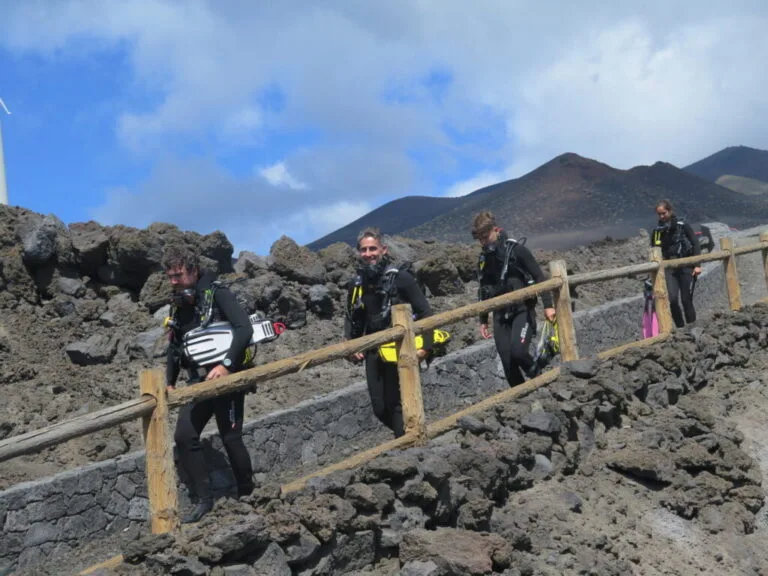
Black volcanic lava forms the starting point for diving around Fuencaliente. From shore or a local boat, you follow reefs, walls, arches, drop-offs and cavities shaped by the island’s eruptions, with Las Cruces de Malpique and Las Cabras providing the most recognisable underwater landmarks. The area suits a land-based holiday rather than a liveaboard, and its southern sites can be combined with the landscapes, volcanoes, lighthouse and salt pans above the water.
The underwater scenery is entirely volcanic: uneven lava ground, vertical faces, arches, overhangs, cavities and drop-offs, with the Faro de Fuencaliente providing a striking reference point on land. Shore diving is a genuine part of the appeal, but local boat outings extend the choice when conditions or the group make that preferable. Currents are variable. Las Cruces de Malpique can occasionally produce a strong current, so the dive may become a drift dive rather than a leisurely circuit. Water is often clear and visibility can be excellent, but a generous published maximum is not a daily promise. Swell and surface conditions can reduce visibility and, more importantly, change whether a shore entry or exit is sensible. That is why local planning matters here: the day’s site is selected around the sea, not simply around a pre-booked name.
Fuencaliente is a place to read the volcanic habitat rather than chase a seasonal animal sighting. The protected waters associated with La Palma’s marine reserve preserve lava seabeds and their biodiversity, while the arches, cavities and broken rock provide the visual structure for the dive. Look closely into the volcanic relief and along the edges of the drop-offs, where the character of the seabed becomes clearer than it does from the surface. There is no particular wildlife season around which to build the trip. Marine life is part of the year-round setting, while the more dependable change from one day to the next is the condition of the sea and the site chosen by the local team.
Diving is possible throughout the year at Fuencaliente. There is no monsoon or seasonal closure dictating the calendar, so the useful question is whether the swell and surface conditions suit the intended entry, exit and profile. A week or more gives the trip room to move between southern sites and, when the sea turns awkward, the east or west coast. That flexibility matters more than chasing a particular month. Clear water can be part of the experience, but passing swell may reduce visibility, so a flexible itinerary is more valuable than a rigid promise of perfect conditions.
The area can work for beginners on suitable shore sites, as well as for experienced divers wanting volcanic walls, cavities and current-affected profiles. Divers qualified through BSAC, PADI or SSI should find the range familiar, but certification alone does not make every site a sensible first dive. Las Cruces de Malpique deserves an honest local assessment because the current can occasionally be strong. Experience with moving water, good surface awareness and comfort adapting the plan are more relevant there than chasing a particular qualification.
From London Heathrow, Gatwick or Manchester, reach La Palma by air, or use an inter-island ferry after arriving in the Canaries. The final approach to Fuencaliente is by road from Santa Cruz de La Palma or Los Llanos de Aridane, with bus links from Santa Cruz also available. Allow for connections rather than treating the southern tip as an immediate arrival point. Once on the island, a car is the most practical way to follow changing dive plans and reach different departures. Taxis or an organised transfer can cover the same problem, while relying on a single walkable shore site is less useful because centres may switch between the south, east and west coasts according to the sea.
Do not lock the holiday around Las Cruces de Malpique. Its occasional strong current and the day’s surface conditions can remove it from the plan, so keep enough days to move to another southern site or switch coast. Before any shore dive, check the actual entry and exit with the local team, because lava access changes with the swell even when the underwater forecast looks attractive. Treat visibility figures as possibilities, not guarantees. If the sea is unsettled, the practical loss may be the entry rather than the view underwater. Use local guidance for dives connected with the Reserva Marina de la Isla de La Palma: its integral area has very limited access and recreational diving is regulated in other sectors. Plan transport around the next day’s conditions, not around sleeping beside one named site, and leave time for the lighthouse and marine reserve interpretation centre, which put the underwater lava in context.
Organise Fuencaliente as a land-based stay of seven days or more, using Los Canarios or the southern part of the municipality as a practical base. Accommodation may still need a car, taxi or arranged transfer for changing departures. Keep non-diving days for the Faro de Fuencaliente, salt pans, San Antonio and Teneguía volcanoes, or the Ruta de los Volcanes across Cumbre Vieja. That mix makes a weather-delayed dive day worthwhile rather than wasted.
Hello, I'm Marina, DivingDeal.com's AI assistant. I guide you through destinations, areas and countries.
Thinking about the whole trip and the flights? Talk it over with Edith →
Marina is an AI. Some links are affiliate links: DivingDeal may earn a commission, at no extra cost to you. Bookings are made with the partner.
You can dive in Fuencaliente de La Palma throughout the year, since there is no monsoon or seasonal closure. Choose dates with flexibility, because swell and surface conditions affect visibility, shore entries, exits and site selection. A longer stay allows local teams to move between southern, eastern and western sites when the sea changes.
Fuencaliente de La Palma can suit beginners on appropriate shore sites, while experienced divers can explore volcanic walls, cavities and current-affected profiles. Las Cruces de Malpique needs careful local assessment because its current can occasionally be strong. Comfort in moving water, surface awareness and willingness to adapt the plan matter more than a particular qualification.
Diving in Fuencaliente de La Palma reveals black volcanic lava, uneven seabeds, vertical faces, arches, overhangs, cavities and drop-offs. Las Cruces de Malpique and Las Cabras are recognisable underwater landmarks, while the Faro de Fuencaliente stands beside the lava coast and salt pans. Marine life forms part of the year-round protected volcanic setting.
Plan Fuencaliente de La Palma as a land-based stay, using Los Canarios or the municipality’s southern area as a base. Keep your itinerary flexible rather than committing to Las Cruces de Malpique, and arrange transport for changing departures. A car is practical, while taxis or organised transfers can also help. Leave time for volcanoes, salt pans and the lighthouse.