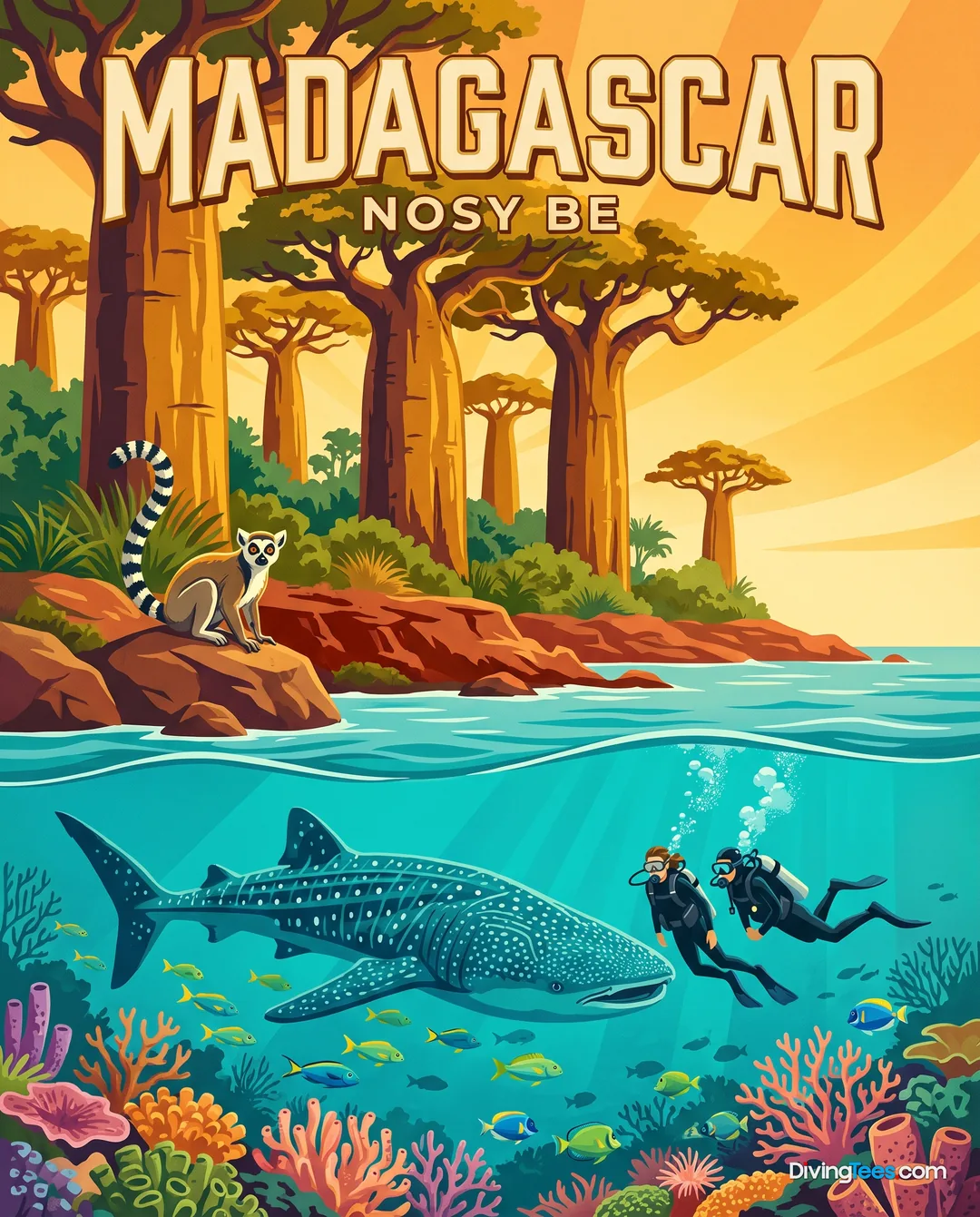

Scuba Nosy Be
Google 4.8/5 (195 reviews)
Nosy Be · Madagascar · Indian Ocean
Max. depth · 40 mDescend into a unique underwater landscape where three immense coral blocks form intricate canyons adorned with dense forests of giant gorgonians.
Diving Canyon means entering a geological formation unlike any other in Nosy Be. Here, three immense coral blocks have sculpted the seabed, creating deep canyons that open directly into the Mozambique Channel. The dive begins with a vertical descent along the wall, where the light shifts as you go deeper, revealing the intricate formations below and setting the stage for the unique topography you are about to explore.
As you follow the contours of these colossal structures, you navigate through the canyons themselves. The sheer scale of these coral giants creates an immersive experience, giving you the feeling of being enveloped by the ocean's architecture. The vertical walls of these canyons are not barren; they serve as a canvas for the site's most striking feature: dense populations of giant gorgonians.
These majestic giant gorgonians, likely Muricella plectana or similar species common in the region, are not merely scattered; they form groves and forests, their intricate branches creating a vibrant, living tapestry. Drifting slowly along these walls, you observe how the gorgonians orient themselves to the currents, filtering nutrients from the rich waters flowing in from the channel. Their presence is a clear indicator of the site's healthy ecosystem and its exposure to nutrient-rich pelagic waters.
The environment within Canyon is one of constant discovery, with new details revealing themselves as you penetrate deeper into the coral formations. The interplay of light and shadow within the narrow passages and the grand scale of the coral blocks define a specific dive profile, requiring careful buoyancy control to navigate this unique landscape. This particular arrangement of topography and marine life establishes Canyon as a distinct site, setting it apart from other wall dives in the region due to its almost geological coral architecture.
Beyond the canyons, the site extends to deeper zones where two large coral bommies lie on the sandy bottom below the reef edge, offering further exploration for those with the experience. The site's position, facing the vastness of the Mozambique Channel, provides an additional layer of intrigue. This exposure means the potential for dynamic encounters with pelagic species, adding another dimension to the dive.
While the primary focus remains on the awe-inspiring structure of the Canyon itself, the site's location on the drop-off means you can encounter various pelagic fishes such as barracuda, trevally, and tuna. Reef fishes are abundant within the coral formations, and you might also spot grey reef sharks, whitetip reef sharks, leopard sharks, manta rays, sea turtles, and moray eels, especially in the deeper sections or along the outer wall.
The unique topography of Canyon creates micro-habitats that support a diverse array of reef life, even as the site remains exposed to the open ocean. This blend of sheltered canyon walls and open-water exposure contributes to the variety of marine life present. The site's distinctive canyon-like relief, carved around three huge coral blocks and densely covered in large gorgonians, gives it a spectacular, cathedral-like feel that is unique in Nosy Be.
Canyon is a site best suited for experienced divers, demanding comfort and proficiency in managing depth and currents associated with wall diving. While shallow sections starting at 4 metres can be dived by guided beginners when conditions are calm, exploring the canyons and deeper parts along the drop-off to 40 metres requires at least an Advanced Open Water certification with deep diving experience. Current at Canyon is variable and can be strong, especially deeper along the wall and with tidal changes, so planning for potentially changing conditions is essential. Visibility typically ranges from 9 to 30 metres. The best time to experience Canyon is generally from March through April and again from November through December, periods known for favourable diving conditions in the Nosy Be region.
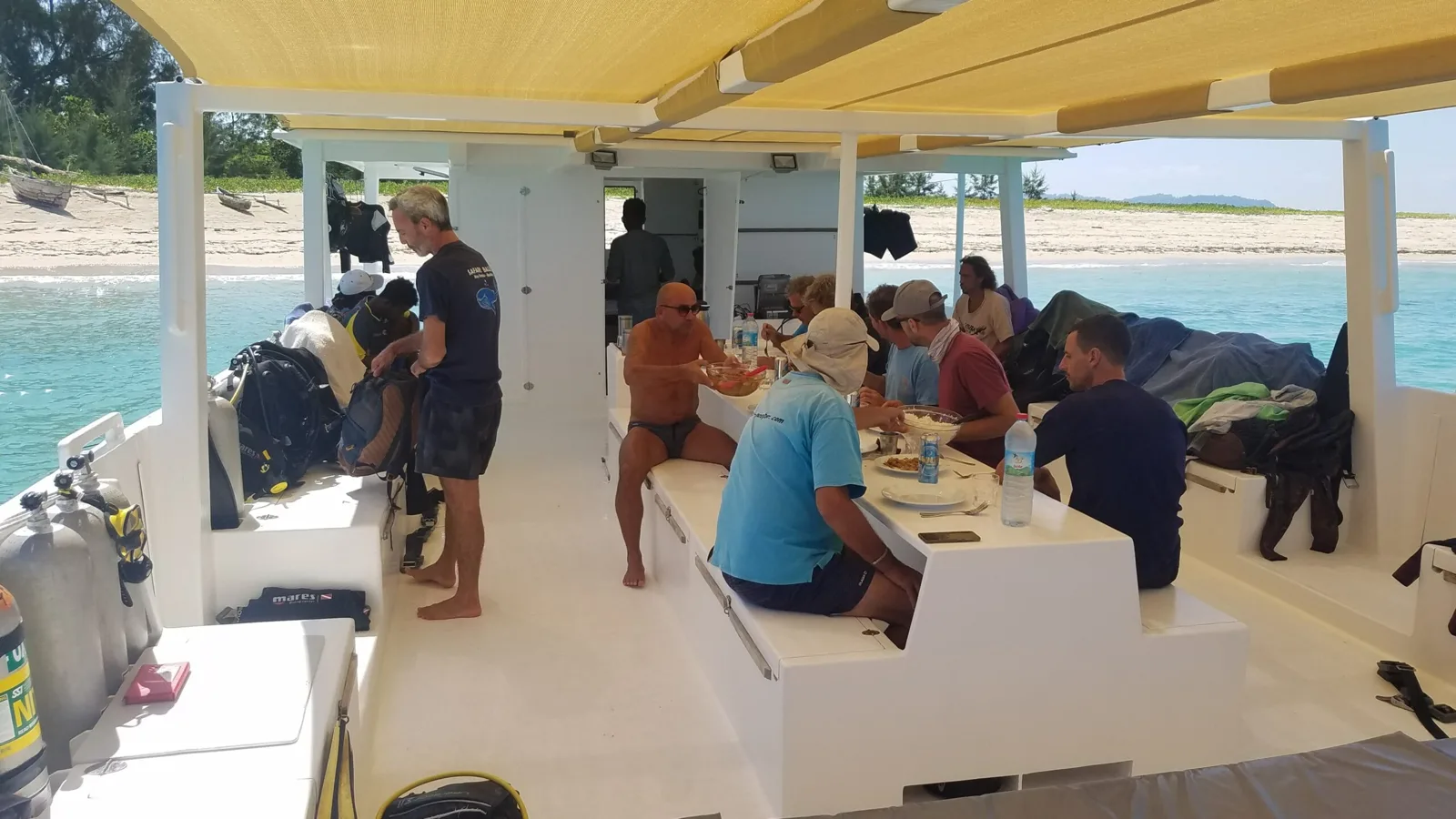
1 liveaboard departs from Nosy Be another way to explore the region, over several days at sea.
Canyon is generally best experienced from March through April and again from November through December, periods associated with favourable diving conditions in the Nosy Be region. Conditions can still vary, so your planning should account for the site's variable current, particularly with tidal changes and deeper wall sections.
Canyon is best suited to experienced divers who are comfortable managing depth and currents during wall diving. Guided beginners may dive the shallow sections from 4 metres when conditions are calm. Exploring the canyons and deeper drop-off to 40 metres requires at least Advanced Open Water certification and deep diving experience.
Canyon ranges from 4 to 40 metres, with shallow areas and deeper sections along the wall and drop-off. Currents are variable and can be strong, especially deeper along the wall and during tidal changes. You should be prepared for changing conditions and use careful buoyancy control within the canyons.
At Canyon, you can see three immense coral blocks forming deep canyons, with dense forests of giant gorgonians on the walls. Deeper zones contain two large coral bommies, while reef and pelagic life may include barracuda, trevally, tuna, sharks, manta rays, sea turtles, moray eels, and abundant reef fish.