
Salty Descents
Google 5/5 (457 reviews)
7.3 km away as the crow flies
Chania · Greece · Mediterranean
Max. depth · 18 mDescend into the Elephant Cave to witness ancient geological formations and fossilized remains of an extinct dwarf elephant species, a dive unlike any other in the Mediterranean.
For subtitles in English: start the video firstthen click the gearat the top right of the video, select “Subtitles/CC”, then “Auto-translate” and choose “English”.
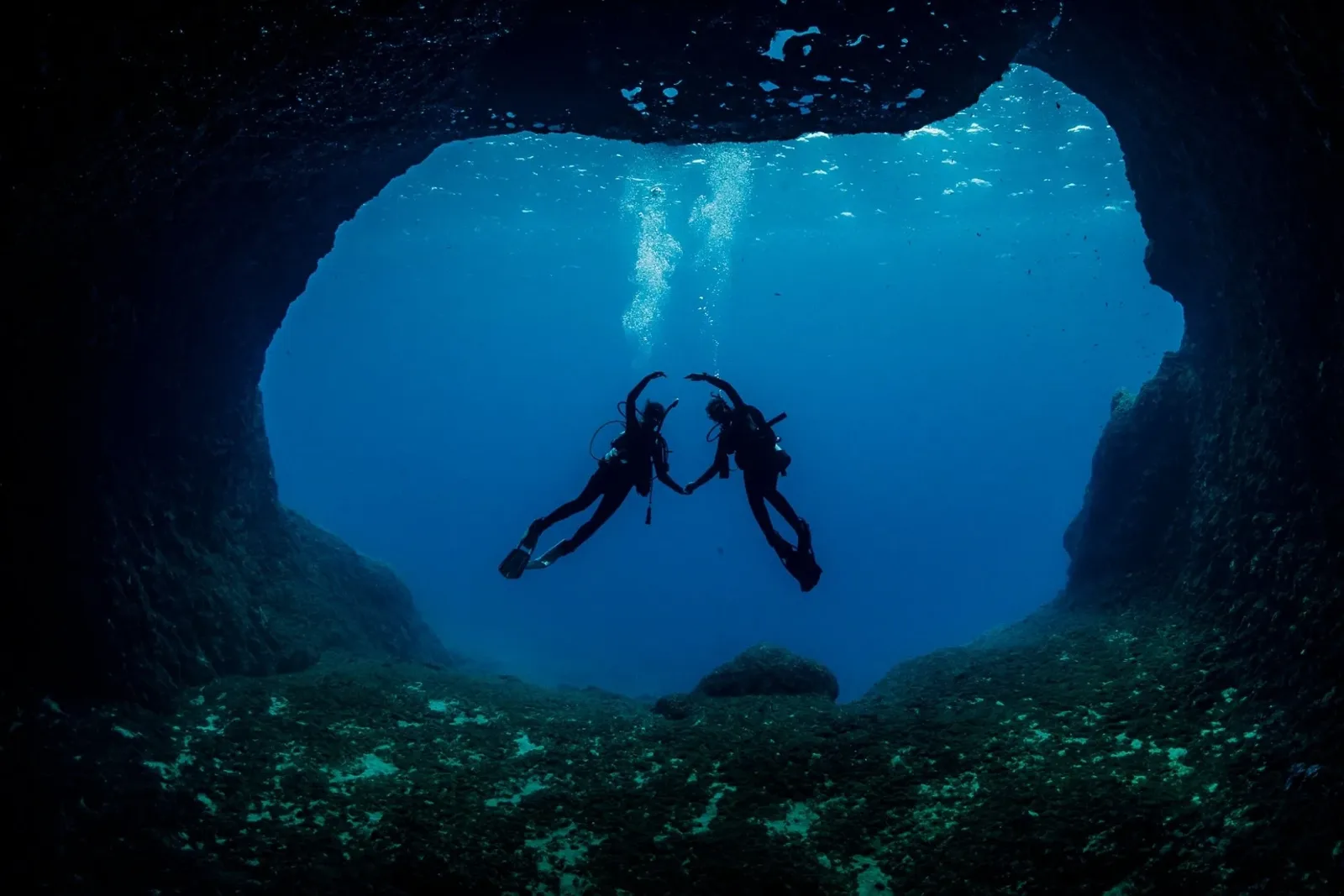
Elephant Cave is nestled along the Akrotiri Peninsula, close to Chania, and offers a unique freshwater and saltwater cavern dive. The entrance, approximately 9 metres wide and 6.5 metres high, is found at a depth of 3.5 to 10 metres, depending on precise entry point within the larger cavern system. Once you pass through the initial opening, you enter a tunnel that stretches for about 25 to 40 metres, leading into the main chamber. The initial approach by boat to the entry point allows for a clear appreciation of the coastline before descending into this geological feature.
The main chamber of Elephant Cave is a vast space, approximately 120 metres long and 25 metres wide, with an overall cave length reaching 160 metres. Depths within this primary chamber range from just a few centimetres to a maximum of 4 metres, making it a largely shallow exploration. This allows ample bottom time to observe the intricate details of the cave environment. The ceiling of the cave rises up to 13 metres above the water surface within the air pockets, creating large breathable air chambers that add a distinct dimension to the dive, offering a unique opportunity to surface within the subterranean space.
What sets Elephant Cave apart are its striking geological formations and the paleontological discoveries within. The cave is adorned with a combination of white and red stalactites and stalagmites. The reddish hue of some formations is due to the presence of aluminium and iron oxide in the cave's stratum. These formations, once developed when the cave was entirely above sea level, now create a submerged landscape that combines natural sculptural beauty with a sense of ancient history.
The cave gained international attention due to the fossilized remains of an extinct dwarf elephant species, *Elephas chaniensis*, and dwarf deer bones found embedded in the rocks. These fossils date back 50,000 to 60,000 years, offering a direct link to a period when the sea levels were considerably lower. A diver can observe specific fossilized elephant molars still affixed to the cave floor, approximately 3 metres below the water surface, a tangible connection to prehistoric life.
Conditions within the Elephant Cave typically remain calm and current-free. Visibility is consistently high, often exceeding 30 metres, which allows the natural light filtering through the entrance to illuminate the cave's interior, creating blue and turquoise reflections on the water. This light play dynamically changes the atmosphere as you progress deeper into the cavern, highlighting geological details and the unique coloration of the formations. The dive provides a quiet, introspective experience, free from strong currents often encountered in open water.
While the primary draw is the cave's geological and paleontological features, the marine life encountered includes species common to the region. You may observe octopus, moray eels, sea bream, wrasse, nudibranchs, and starfish within the entrance and shallower sections of the cave. These species utilize the cave's rocky crevices and wall structures for shelter and foraging, adding a living element to the ancient surroundings without dominating the experience.
The cave's formation history, with its series of coincidences leading to its discovery by a local fisher in 2000, adds to its allure. It represents a geochronological archive, with different layers containing remains of dwarf deer and micromammals in upper strata, and *Elephas chaniensis* and normal deer bones in the underlying layers. This stratified preservation provides a clear narrative of the past inhabitants and environmental changes over millennia, serving as a submerged natural museum.
This site is accessible from Open Water Diver certification, though good buoyancy control is essential for navigating the shallow cave and preserving its delicate formations. The maximum depth reached during the dive is 18 metres, with much of the interior remaining shallower. Current is typically minimal to non-existent within the cave system. Visibility consistently exceeds 20 metres, often reaching upwards of 30 metres. The best period for diving Elephant Cave is between May and June, or September and October, when surface conditions are typically optimal.
Plan your dive at Elephant Cave between May and June, or between September and October, when surface conditions are typically optimal. The entrance is reached by boat along the Akrotiri Peninsula near Chania, allowing you to appreciate the coastline before descending into the cavern system.
You can dive Elephant Cave with Open Water Diver certification. Good buoyancy control is essential as you navigate the shallow cave and protect its delicate formations. Much of the main chamber is shallow, with depths ranging from a few centimetres to four metres, while the dive reaches a maximum of 18 metres.
Elephant Cave ranges from one to 18 metres, although much of the interior is shallower. The entrance lies between 3.5 and 10 metres, depending on the entry point, and the main chamber reaches four metres. Current is typically minimal to non-existent inside the cave, with visibility often exceeding 30 metres.
At Elephant Cave, you can see fossilized remains of Elephas chaniensis, including elephant molars fixed to the cave floor, along with red and white stalactites and stalagmites. Breathable air chambers add another feature, while octopus, moray eels, sea bream, wrasse, nudibranchs, and starfish may appear near the entrance and shallower sections.