
Nextgen Diving Travel S.L.
Google 5/5 (589 reviews)
Spain · Mediterranean
Rocky bottoms, sandy patches and seagrass meet boat trips towards the Costa Brava, with Barcelona’s harbour and waterfront keeping the city close between dives.
For subtitles in English: start the video firstthen click the gearat the top right of the video, select “Subtitles/CC”, then “Auto-translate” and choose “English”.
Barcelona is a city base for Mediterranean diving rather than a single offshore attraction. You can enter the water near Barceloneta or Port Olímpic, then use the city as a launch point for the Maresme, Garraf and Costa Brava. That distinction matters: the most rewarding underwater terrain usually requires a road transfer and a boat departure outside the centre. In return, non-diving days come with architecture, museums, food and a proper waterfront.
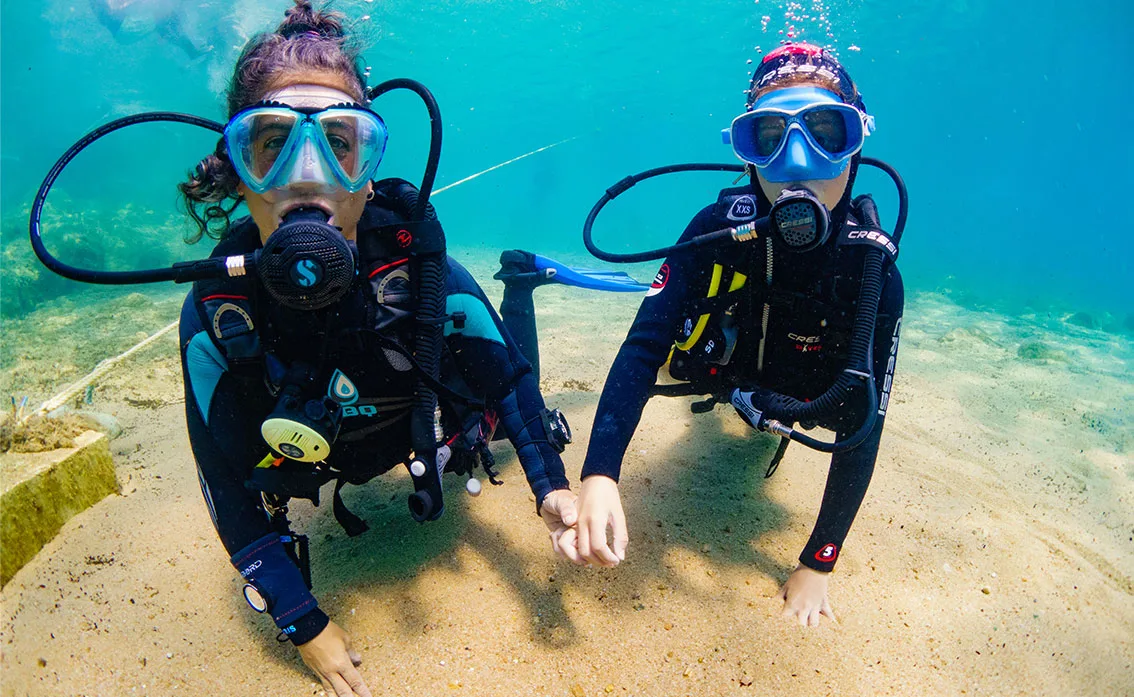
Underwater, Barcelona’s wider coast shifts between rocky ground, sand, seagrass and occasional wrecks. Shore dives near the city are straightforward to reach, but visibility is less dependable than farther from the urban coastline. Particles in suspension, coastal runoff and swell can soften the view, while the rocky sectors of the Maresme and Costa Brava generally offer clearer water. Currents are variable rather than a defining constant, so a planned boat dive may become a different coastal site when conditions change. Outings range from beach entries and harbour-side diving to half-day boat trips and full-day excursions. A Costa Brava day can involve a substantial road journey before the boat even leaves harbour, whereas a local dive fits more easily around sightseeing. The result is Mediterranean diving shaped as much by geography and transport as by the underwater terrain.
The wildlife experience here is tied closely to habitat. On rocky ground, sandy patches and seagrass, the interest lies in moving between contrasting Mediterranean environments rather than following a fixed list of seasonal animals. Wrecks add another type of structure, while protected coastal sectors benefit from stronger conservation than heavily used urban water. Near Barcelona, visibility can limit the detail you notice, particularly after swell or coastal runoff. Farther along the Maresme and Costa Brava, clearer conditions make the rock, sand and seagrass easier to read. There is no particular seasonal animal encounter around which to build the trip. The practical wildlife choice is therefore geographical: select a less urban site when the underwater environment matters more than the convenience of stepping straight into the water.
May, June, September and October are the most sensible months for a diving stay. From late spring through early autumn, Mediterranean conditions generally support more regular outings, and visibility is often better away from the city. July and August bring the busiest harbours and boat trips, so the quieter shoulders of the season suit divers who would rather spend less time sharing coastal access. January and February are the least attractive choice for a boat-led itinerary: the sea is more changeable and some clubs reduce or suspend operations. Keep a spare day if your plans depend on the Costa Brava, especially outside high summer, because swell can alter which sites are reachable.
The area suits all levels, provided the chosen outing matches the diver rather than the destination label. Barceloneta, Port Olímpic and some Garraf options can work for a shallow introduction or a straightforward local dive. Boat trips farther north add travel, variable conditions and a greater need to be comfortable with open-water procedures, navigation and a safety stop. PADI, SSI and BSAC divers should find the broad level range familiar, but should check the actual site and departure port before booking. No specialist brevet is singled out for the area.
From London Heathrow, London Gatwick or Manchester, Barcelona is reached by air, with services listed from carriers including Vueling, Iberia, Ryanair, easyJet, Eurowings, Lufthansa, Air France, KLM and British Airways. Allow roughly half a day from a major western European departure once the flight and ground connections are combined. Local dives can be reached from central Barcelona or the waterfront by public transport or on foot, depending on the departure point. The Maresme, Garraf and Costa Brava require a separate road journey by hire car, taxi or coach. Check whether the advertised trip actually leaves Barcelona or starts in another harbour, since the transfer can become a substantial part of a Costa Brava diving day.
Treat “Barcelona” as a geographical question before treating it as a booking name. Ask for the exact meeting point and launch harbour: an activity sold under the city name may actually run from Lloret de Mar, Tossa de Mar, Palamós or elsewhere on the Costa Brava. Compare the departure point, not just the excursion title, and do not schedule a fixed central Barcelona appointment on the same day as a distant boat trip. If visibility matters, favour the Maresme or Costa Brava over Barceloneta or Port Olímpic, where urban water is less consistent. Keep a spare day for weather-related changes, particularly outside summer. For a first or shallow dive, confirm whether the plan is genuinely local or in the Garraf, rather than assuming a Costa Brava reserve-style outing. If several dives are planned away from the city, staying nearer the relevant harbour can save repeated road transfers.
A three- to five-day stay allows one or two diving outings alongside Barcelona itself, with time for a Costa Brava excursion if transport is planned carefully. Use the city for architecture, museums, historic quarters, markets and the waterfront, then consider the Garraf or Sitges for a change of scene. Kayaking, sailing and paddleboarding work when the sea allows. For several consecutive dives outside Barcelona, split the stay or move closer to the departure coast rather than commuting from the centre every morning.
Hello, I'm Marina, DivingDeal.com's AI assistant. I guide you through destinations, areas and countries.
Thinking about the whole trip and the flights? Talk it over with Edith →
Marina is an AI. Some links are affiliate links: DivingDeal may earn a commission, at no extra cost to you. Bookings are made with the partner.
May, June, September and October suit a diving stay, with calmer conditions and generally more regular outings. July and August bring busier harbours and boat trips. January and February are less suitable for boat-led plans because the sea is more changeable and some clubs reduce or suspend operations. Keep a spare day for weather changes.
Barcelona suits different experience levels when you match the outing to your abilities. Barceloneta, Port Olímpic and some Garraf options can suit a shallow introduction or straightforward local dive. Farther-north boat trips require comfort with open-water procedures, navigation and a safety stop. Check the specific site and departure port before booking.
Diving around Barcelona includes rocky ground, sandy patches, seagrass and occasional wrecks. Urban sites near Barceloneta and Port Olímpic are convenient, while Maresme and Costa Brava areas generally offer clearer views of the underwater terrain. Protected coastal sectors benefit from stronger conservation, and wildlife varies with the habitat and location you choose.
Use Barcelona as a city base for local shore dives or arrange road transfers to the Maresme, Garraf or Costa Brava. Confirm the exact meeting point and launch harbour, since trips may start outside the city. A three- to five-day stay can combine diving with sightseeing, but several dives away from Barcelona may justify staying nearer the departure coast.