
Blanes~sub - Diving Center
Google 4.9/5 (280 reviews)
Spain · Mediterranean
Santa Anna's clear starting waters lead to rocky walls, posidonia meadows, morays, octopuses and nudibranchs on coastal boat dives.
For subtitles in English: start the video firstthen click the gearat the top right of the video, select “Subtitles/CC”, then “Auto-translate” and choose “English”.
Blanes is a Costa Brava base where a dive can start from a town cove rather than a boat. Santa Anna is used for first immersions and training, while Sant Francesc gives shore divers another coastal entry point. Beyond the coves, boat trips reach rocky walls, posidonia meadows and sites lying between 18 and 30 metres. That makes Blanes useful for a mixed party, with straightforward shallow diving for some and more substantial Mediterranean relief for others.
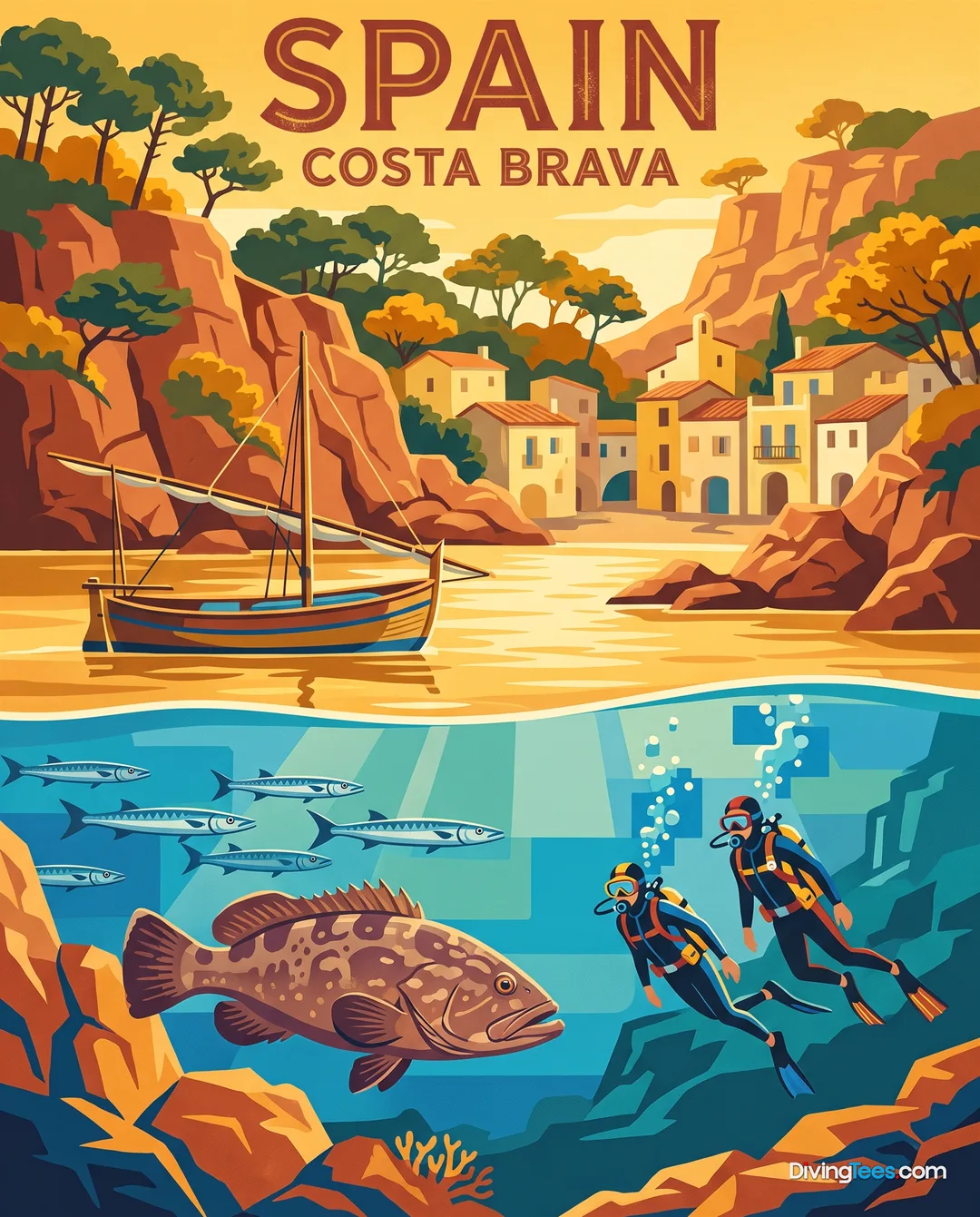
The underwater landscape is built from rock, walls and posidonia, with the coves providing simple shore dives and the boat opening up more exposed coastal terrain. Santa Anna suits a measured first outing, but it is not the whole Blanes experience. Ask about Seca, Nacra, Niell de Sant Francesc or S'Esquinça when you want a change of profile. Several local sites reach 18 to 30 metres, so depth planning matters more than the easy entry might suggest. Currents are not a defining feature of the published local descriptions, and these are not presented as specialist drift dives. Visibility can be influenced by coastal conditions, so treat it as something to assess on the day rather than a fixed promise. Shore and boat dives make the format flexible, but they do not provide the same terrain.
Look closely in the cracks and along the rocky edges for morays, while octopuses can make the same broken ground worth a slow search. Nudibranchs add the small-scale interest, particularly where rock meets the posidonia meadows. The plants themselves are part of the scene, not empty green background, and they give the coastal sites a distinct Mediterranean character. These animals are regular features of Blanes diving rather than a seasonal spectacle with a guaranteed date. A patient pace and good observation suit the coves and walls better than rushing between landmarks. Boat sites allow the same mixture of rock, wall and seagrass habitats, with depth adding another reason to spend time looking rather than simply covering ground.
July to September is the favoured period for diving in Blanes because the sea is at its warmest and the town is fully geared towards swimming and coastal activities. Santa Anna is also used for baptisms and club training, so summer can bring more learners into the cove. That does not rule it out, but it makes timing worth discussing if you want a quieter entry or a more relaxed photographic dive. There is no clearly defined month to avoid, and the choice is mainly between warmer water and a busier shoreline.
Blanes works for newly qualified divers, returners and experienced leisure divers who want Mediterranean rock and walls without committing every dive to a boat. Santa Anna is specifically suited to first immersions and training. For the sites between 18 and 30 metres, use a qualification and dive plan appropriate to that depth, whether your background is BSAC, PADI or SSI. The important distinction is not the town entry, which is easy, but the profile you choose once beyond the shallow coves.
From London or Manchester, plan to reach Barcelona first, then continue to Blanes by train or road. Blanes is around 65 kilometres from Barcelona and has its own railway station, so no ferry or domestic flight is needed for the final approach. The train provides the straightforward public-transport link; by road, follow-on travel is equally practical. If travelling without a car, arrange the station-to-dive-base connection before arrival. A local pick-up from Blanes station may be available, but it should be confirmed when booking rather than assumed. The harbour and Santa Anna are close together, and the waterfront area is manageable on foot once you are settled.
Treat Santa Anna as the useful starting point, not the automatic answer for every dive. If you want a first immersion or a refresher, it is the obvious cove. If you want space for photography or less training traffic, ask for a time outside the main baptism and club-training periods. Tell the centre clearly whether you want a shore dive or a boat trip, because the two formats lead to different ground. Check that your qualification and plan match the 18 to 30 metre sites rather than assuming the easy entry means every local profile is easy. For a broader stay, pair Santa Anna with Seca, Nacra, Niell de Sant Francesc or S'Esquinça. Watch the surface on ascent and descent: boats displaying the Alfa flag mark divers, and other vessels must remain more than 100 metres away. Never accept anchoring on posidonia. The boat should use sand or rock, and you should avoid damaging the meadows yourself.
Blanes is best organised as a shore-based stay of roughly three to seven days. Use one day or session for Santa Anna or Sant Francesc, then leave room for boat trips to vary the walls, rocks and posidonia. The harbour and waterfront are close enough to keep dive logistics simple, while non-divers have beaches, coves, a seafront promenade and gardens. Between dives, the coastal paths, Marimurtra, Sant Joan Castle and the old town give the stay substance beyond the water.
Hello, I'm Marina, DivingDeal.com's AI assistant. I guide you through destinations, areas and countries.
Thinking about the whole trip and the flights? Talk it over with Edith →
Marina is an AI. Some links are affiliate links: DivingDeal may earn a commission, at no extra cost to you. Bookings are made with the partner.
Plan to dive Blanes from July to September if warm water is your priority. The town is geared towards swimming and coastal activities then, although Santa Anna may be busier with baptisms and club training. Discuss timing with the centre if you want a quieter entry or more relaxed photography.
Blanes suits newly qualified divers, returners and experienced leisure divers. Santa Anna is used for first immersions, baptisms and training, while Sant Francesc offers another shore entry. Boat sites and deeper local profiles require a qualification and dive plan appropriate to the depth and terrain you choose.
Diving in Blanes brings rocky walls, coastal rock and posidonia meadows, with boat trips reaching more exposed terrain. Look among cracks and rocky edges for morays, octopuses and nudibranchs. A patient pace suits the coves and walls, where the seagrass forms an important part of the Mediterranean underwater scenery.
Plan Blanes as a shore-based stay, combining Santa Anna or Sant Francesc with boat trips to Seca, Nacra, Niell de Sant Francesc or S'Esquinça. Reach Blanes from Barcelona by train or road, and arrange station-to-dive-base transport in advance if needed. The harbour and waterfront are manageable on foot.