
Buceo Calahonda
Google 4.8/5 (235 reviews)
Spain · Mediterranean
Calahonda puts rocky Mediterranean reefs, coastal cliffs and deeper boat-accessed ground within a shore-and-boat diving stay on Spain’s Costa Tropical.
For subtitles in English: start the video firstthen click the gearat the top right of the video, select “Subtitles/CC”, then “Auto-translate” and choose “English”.
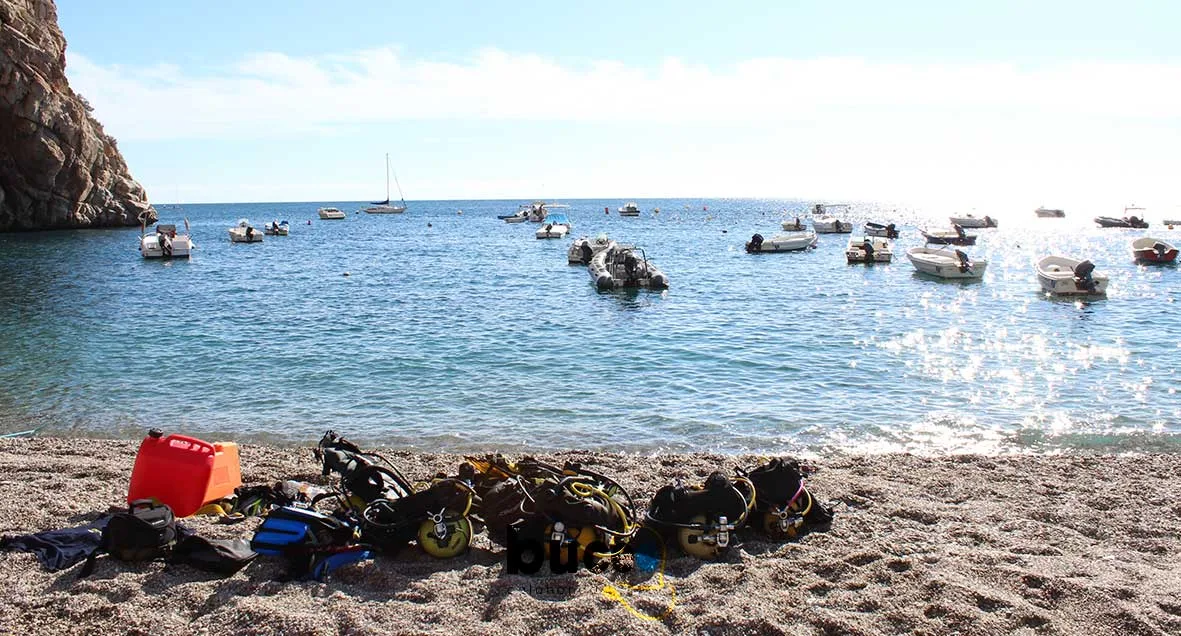
Calahonda is a practical base for exploring the rocky coast from two different angles. From the beach, dives reach nearby reefs without committing to a boat schedule. Boat outings extend the picture towards more distant and deeper coastal ground, with cliffs and underwater rock replacing the flat, featureless seabed found in some easy-access resorts. It suits a land-based diving holiday, with local instruction, guided dives and equipment support available in the village.
The underwater setting is coastal rock: reefs close to shore, rocky Mediterranean habitats and the cliff-lined edge of Calahonda. Shore diving keeps the outing simple and lets divers work around the conditions and their own pace. A boat adds range, taking divers towards ground that is farther from the beach and deeper than the easily reached reefs. That distinction matters when booking, because a shore dive and a boat dive are separate experiences rather than interchangeable versions of the same trip. Currents, visibility and exact depths should be confirmed for the planned launch and site, not borrowed from a general description of the Costa Tropical. There is no reason to arrive expecting a drift dive, a downcurrent or a particular visibility figure as standard. The attraction is the change from beach entry to open-water coastal exploration.
Calahonda’s marine interest lies in its rocky Mediterranean habitat rather than in a promised encounter with one headline species. Underwater, the terrain provides the setting: reefs near the shore, rock faces associated with the coastal cliffs and more distant ground reached by boat. That makes the dive a close look at the structure of the seabed and the life attached to it, rather than a wildlife checklist. No particular seasonal animal encounter defines the destination, so expectations are better set around rock, relief and the changing angle of the coast. Divers who want to examine small details can use the shore dives for a slower look, while boat outings open a broader section of the rocky coastline.
Calahonda is best approached with a flexible season rather than a fixed wildlife calendar. It is not a destination built around a rainy season, monsoon, cold-water upwelling or a short migration window. Keep several days available so shore diving and boat diving can be swapped according to the conditions and the centre’s programme. That flexibility is the useful reason to choose a longer land-based stay: the beach reefs remain an option while boat-accessed ground depends on a suitable departure. Check the planned launch, sea state and equipment requirements before committing each day.
Beginners can start with a baptism or training dive on the local shore reefs, where the format avoids making a boat trip the first hurdle. Certified divers can book guided outings and choose between beach access and boat access according to their experience. PADI, SSI and BSAC qualifications should be matched to the actual plan, especially where a boat outing reaches deeper or more remote ground. Bring an honest logbook view of recent experience rather than assuming every coastal dive is equivalent.
From London Heathrow, Gatwick or Manchester, the practical arrival pattern is a journey to Spain followed by a road transfer. Calahonda lies on the A-7, with a dedicated exit on the Granada–Almería route, so the final approach is by road rather than by ferry or a domestic flight. Allow time for the connection between your arrival point and the coast, particularly if you are hiring a car or arranging a road transfer. Once in Calahonda, the diving businesses are within the village, around Avenida de los Geraneos and Calle Fragata Cervantes. Check the exact meeting point before travelling, as the day’s launch may be from the beach or from a boat departure point.
Treat Calahonda as a base with two operating patterns, not as one standard dive package. Before booking, ask whether each planned dive leaves directly from the shore or uses a boat, and which coastal area the launch reaches. That prevents the common mistake of assuming a shore booking includes a boat outing. Ask for the meeting point as well, because “Calahonda” covers the village base, the beach entry and the boat operation. Reserve ahead if your dates are busy, particularly when you want both formats rather than whichever place remains. Certified divers should also check the depth and setting against their recent experience. If you are travelling independently without kit, confirm whether rental equipment or cylinder filling is available for the specific day. Do not build the trip around a liveaboard expectation: the workable arrangement here is a stay ashore with separate beach and boat dives.
A stay in Calahonda works best with accommodation in or near the village, keeping the daily journey to the diving businesses short. Plan a mixture of shore days and boat days rather than filling every morning with the same format. The local centres organise both, and equipment rental or cylinder filling can support divers travelling without a full set of kit. Keep some room in the schedule for the exact launch and coastal area to be confirmed.
Hello, I'm Marina, DivingDeal.com's AI assistant. I guide you through destinations, areas and countries.
Thinking about the whole trip and the flights? Talk it over with Edith →
Marina is an AI. Some links are affiliate links: DivingDeal may earn a commission, at no extra cost to you. Bookings are made with the partner.
Calahonda (GRANADA) suits a flexible diving schedule rather than a fixed wildlife season. Keep several days available so you can switch between shore reefs and boat outings according to sea conditions and the centre’s programme. Check the planned launch, sea state and equipment requirements before committing to each day’s diving.
Calahonda (GRANADA) can suit beginners through a baptism or training dive on local shore reefs, avoiding a boat trip as a first hurdle. Certified divers can book guided outings from the beach or by boat. Match your PADI, SSI or BSAC qualification and recent experience to the planned depth and setting.
Diving in Calahonda (GRANADA) focuses on rocky Mediterranean habitats, with reefs near shore, rock faces linked to coastal cliffs and more distant ground reached by boat. Expect a close look at seabed structure and life attached to it rather than a particular wildlife checklist. Shore dives allow a slower examination of smaller details.
Plan Calahonda (GRANADA) as a village-based stay combining shore and boat diving. Choose accommodation in or near the village, ask whether each dive leaves from the beach or a boat, and confirm the meeting point. Reserve ahead if you want both formats, and check rental equipment or cylinder filling if travelling without kit.