
Buceo Ostende
Google 5/5 (48 reviews)
Spain · Mediterranean
Rock walls, shallow caves, harbour relics and a wreck at around 40 metres make Castro Urdiales a shore-based Cantabrian trip with real depth.
For subtitles in English: start the video firstthen click the gearat the top right of the video, select “Subtitles/CC”, then “Auto-translate” and choose “English”.
Castro Urdiales puts a distinctly Cantabrian mix beneath the mask, snorkel and fins: rocky drop-offs, shallow cavities, harbour structures, archaeological remains and wrecks reached from the town’s own harbour. The arrangement suits a short stay rather than a liveaboard, with coastal dives and boat trips fitting around the weather. Close-in sites can keep the depth modest, while the wrecks add a more serious edge, including a profile around 40 metres for experienced divers.
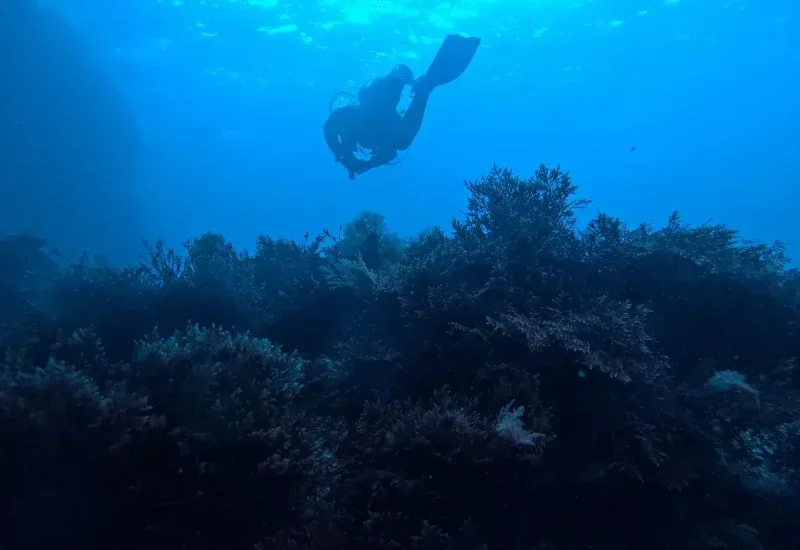
The underwater character changes with the site rather than following one standard route. Near Castro Urdiales, expect rocky ground, drop-offs and shallow cavities, with some dives close to the coast and others reached by boat from the harbour. Ostende, Mioño and Saltacaballo bring the area’s maritime history into the dive through wrecks and remains, while older harbour works and archaeological features add interest at shallower depth. Currents are variable, so a planned descent can become a more demanding swim or a drift dive depending on conditions. Visibility is not something to build a rigid itinerary around. Ask for the day’s depth, current and exit plan before boarding, particularly if a downcurrent could affect the return route. A safety stop still needs to be planned into the profile, especially on the deeper wreck.
At Castro Urdiales, the most dependable underwater encounters are with the landscape and the traces of people who used this coast. Rocky walls lead into shallow caves, while harbour works, archaeological remains and wreckage give the dive a distinctly maritime feel. Around Ostende, Mioño and Saltacaballo, the interest lies in following the shape of the wreck or structure rather than simply crossing an open seabed. Close-to-shore dives allow more time to examine details at moderate depth, whereas the wreck around 40 metres changes the experience into a focused technical challenge for suitably experienced divers. July and August bring more frequent outings, but the principal seasonal difference is operational: sea conditions determine which sites can be reached and how long you can spend looking.
July and August are the most straightforward months for arranging regular diving at Castro Urdiales. Local clubs run more frequent outings then, and a shore-based holiday is easier to organise around boat trips to the wrecks and coastal sites. The town is also busier in summer, so flexibility matters when planning harbour departures. Winter diving remains possible, but the Cantabrian sea state has more influence over the programme, particularly where a boat is required. Keep a replacement day in the plan rather than fixing every dive in advance. There is no absolute closed season, but summer offers the clearest practical advantage for a first visit.
Castro Urdiales works for mixed groups because some coastal sites are described as suitable for all levels and stay below roughly 20 metres. That makes the town workable for newer divers, provided they follow the site briefing and do not assume every wreck has the same profile. Advanced Open Water is useful for deeper wreck outings, while the wreck around 40 metres belongs to very experienced divers with the appropriate training, recent depth practice and configuration. BSAC, PADI and SSI divers should check the individual requirements before booking.
From London or Manchester, plan the journey around reaching Bilbao or Santander, then continue by road to Castro Urdiales. The town is connected to the Cantabrian and Basque road network, and no regular ferry or domestic flight is needed to reach the harbour. Once there, dive departures leave from Castro Urdiales harbour, with the exact quay depending on the outing. Accommodation in or near the town centre may put the club and harbour within walking distance, although this depends on where you stay. There is no shared transfer system to rely on, so confirm the meeting point before the first boat trip and allow for the drive from Bilbao or Santander.
Do not build the trip around one named wreck, especially outside July and August. Ask the club to confirm the day’s depth and profile, then keep a spare day for a boat trip that is postponed by the Cantabrian sea. Check the exact harbour quay rather than assuming every departure uses the same place. Treat the sites around the coast as separate outings, not as one compact area that can be covered independently from a single base. If a wreck is advertised at around 40 metres, confirm the qualification, recent experience and equipment requirements before committing, rather than treating it as an ordinary recreational dive. Conversely, do not let that deep profile put off less experienced divers, since the coastal sites and shallower structures offer a different level of diving. Night diving is available through some local centres, so establish its meeting point and site before relying on it as an evening plan.
Allow three to five days for Castro Urdiales. Use the harbour area and nearby coastal sites as the dependable part of the programme, then fit in boat trips to wrecks when the sea permits. Keeping one day uncommitted gives the schedule room to absorb a cancelled outing without losing the whole diving plan. Non-divers have beaches at Brazomar and Ostende, the seafront, the old town, Santa María de la Asunción and the castle-lighthouse to explore, so the stay does not depend entirely on getting every dive away.
Hello, I'm Marina, DivingDeal.com's AI assistant. I guide you through destinations, areas and countries.
Thinking about the whole trip and the flights? Talk it over with Edith →
Marina is an AI. Some links are affiliate links: DivingDeal may earn a commission, at no extra cost to you. Bookings are made with the partner.
Choose Castro Urdiales in July or August if you want more regular club outings and easier arrangements for boat trips from the harbour. Diving remains possible in winter, but Cantabrian sea conditions have greater influence on the programme. Keep a spare day available, since weather can postpone coastal or wreck outings.
Castro Urdiales suits mixed groups because some coastal sites remain below roughly twenty metres and are described as suitable for all levels. Deeper wreck trips require greater experience, while the wreck around forty metres is intended for very experienced divers with appropriate training, recent depth practice and suitable equipment.
At Castro Urdiales, you can explore rocky drop-offs, shallow caves and coastal walls, then find harbour structures, archaeological remains and wreckage. Sites around Ostende, Mioño and Saltacaballo add maritime history, while a deeper wreck changes the dive into a focused challenge rather than a relaxed examination of shallow details.
Plan a shore-based stay around the harbour and nearby coastal sites, then add boat trips when the sea permits. Allow several days and leave one uncommitted for weather changes. Reach Bilbao or Santander before continuing by road, confirm the exact harbour quay and meeting point, and check depth, current, exit and equipment requirements.