
Burbujas
Google 4.8/5 (98 reviews)
Spain · Mediterranean
Rock formations, caves, gorgonians, a wreck and two contrasting bays give Ceuta its distinctive diving character, with shore and boat outings from the city.
Ceuta is a city-based diving destination where the underwater map is divided between a north bay and a south bay. From shore or by boat, dives lead over rock formations, into cave country, past gorgonians and towards a wreck, with Mediterranean marine life filling the spaces between. It suits divers who prefer a proper town around their diving rather than an isolated resort, and who like having different types of outing available when conditions change.
The diving is built around rocky scenery rather than a single signature formation. Expect cave entrances, submerged rock shapes, gorgonians, a wreck and areas where marine life gathers densely. Some outings begin directly from the beach, while others leave the harbour by boat, so the day can involve a straightforward shore dive or a more mobile trip between sites. Currents are variable, and the choice of bay and site is made with the day's current, visibility, season and diver level in mind. That makes Ceuta less suited to a rigid, pre-booked sequence of dives. A current-led outing may become a drift dive, but it should not be assumed that every boat trip will run the same way. The practical attraction is the range of underwater terrain within a city stay, not a promise of identical conditions from one day to the next.
Gorgonians are among the clearest visual signatures underwater, rising from the rock formations and adding structure to the caves, walls and broken ground. Around them, divers meet varied Mediterranean fauna and sections where life is noticeably concentrated. The wreck adds another kind of habitat, with hard surfaces and shadowed spaces contrasting with open rock. The local diving guide also presents sites for their marine-life interest as well as their scenery, so the emphasis is not simply on passing through a cave or dropping beside a wall. Some species pass through seasonally, but there is no single wildlife calendar that should dictate the whole trip. In practice, the most rewarding encounters depend on the bay, the selected site and the conditions on the day.
May, June, September and October are the most useful months for planning a Ceuta diving break. They offer a sensible balance between the main diving season and the need to keep options open when currents, visibility and sea conditions vary between the two bays. Ceuta does not have a firmly established rainy season or monsoon pattern that rules out a long part of the year. Instead, the local approach is to match the site to the season, the day's conditions and the diver's level. These months are therefore a planning preference, not a guarantee that every site will be suitable on every day.
Ceuta can work for beginners as well as experienced divers. Baptisms and shore dives provide an entry point, while certified divers can look for more involved boat outings, caves, rock formations and the wreck. The local guide groups dives by difficulty, which is useful for matching a programme to a mixed group. BSAC, PADI and SSI divers should bring their normal certification details and be clear about their recent experience, particularly if variable currents or a boat-launched site are involved.
From London Heathrow, Gatwick or Manchester, the journey is built around reaching Algeciras and taking the ferry to Ceuta. The crossing is the structural constraint: fast services take about an hour, operate daily and cannot be replaced by a direct road journey from mainland Europe. Allow roughly half a day to a full day for the overall journey, depending on the route to Algeciras, time at the port and the sailing. Book and check the ferry separately from the diving arrangements, and leave room for a changed sailing time. Once in Ceuta, local logistics depend on the accommodation and the diving arrangements. Shore entries and boat departures are both used, and there is no single standard shuttle linking every accommodation option with every departure point.
Do not build the trip around one named site before you arrive. Ask which bay and which site fit the current, visibility, season and the group's level on that particular day. Also ask plainly whether the outing leaves from the beach or by boat, because the two formats involve different timings and equipment arrangements. Spread the diving between the north and south bays rather than treating one side as the whole destination. Ceuta's official underwater guide is useful for comparing the terrain and difficulty before booking. Keep a generous margin around the Algeciras ferry, especially if a sailing is followed by a road connection or a planned dive. For a short stay, arrange accommodation with the centre or embarkation point in mind, since a common transfer service cannot be assumed. Finally, do not assume that a certified trip automatically means a boat dive, as certified shore dives are part of the local offer too.
A three- to five-day stay gives enough room to use both bays and keep a day flexible when conditions change. The natural base is the city, with diving organised from the shore or harbour rather than from a liveaboard. A non-diving day can take in the historic centre and fortifications, the seafront and viewpoints around Mount Hacho. That combination makes Ceuta workable for a diver travelling with someone who wants urban and cultural time as well as the water.
Hello, I'm Marina, DivingDeal.com's AI assistant. I guide you through destinations, areas and countries.
Thinking about the whole trip and the flights? Talk it over with Edith →
Marina is an AI. Some links are affiliate links: DivingDeal may earn a commission, at no extra cost to you. Bookings are made with the partner.
May, June, September and October are useful months for planning Ceuta diving. They offer a balance between the main diving season and flexibility when currents, visibility and sea conditions differ between the north and south bays. These months are a planning preference, not a guarantee that every site will suit every day.
Ceuta can suit beginners and experienced divers. Baptisms and shore dives offer an entry point, while certified divers can choose more involved boat outings, caves, rock formations and the wreck. Dive difficulty is grouped locally, helping mixed groups choose suitable activities. Bring your certification details and explain your recent experience.
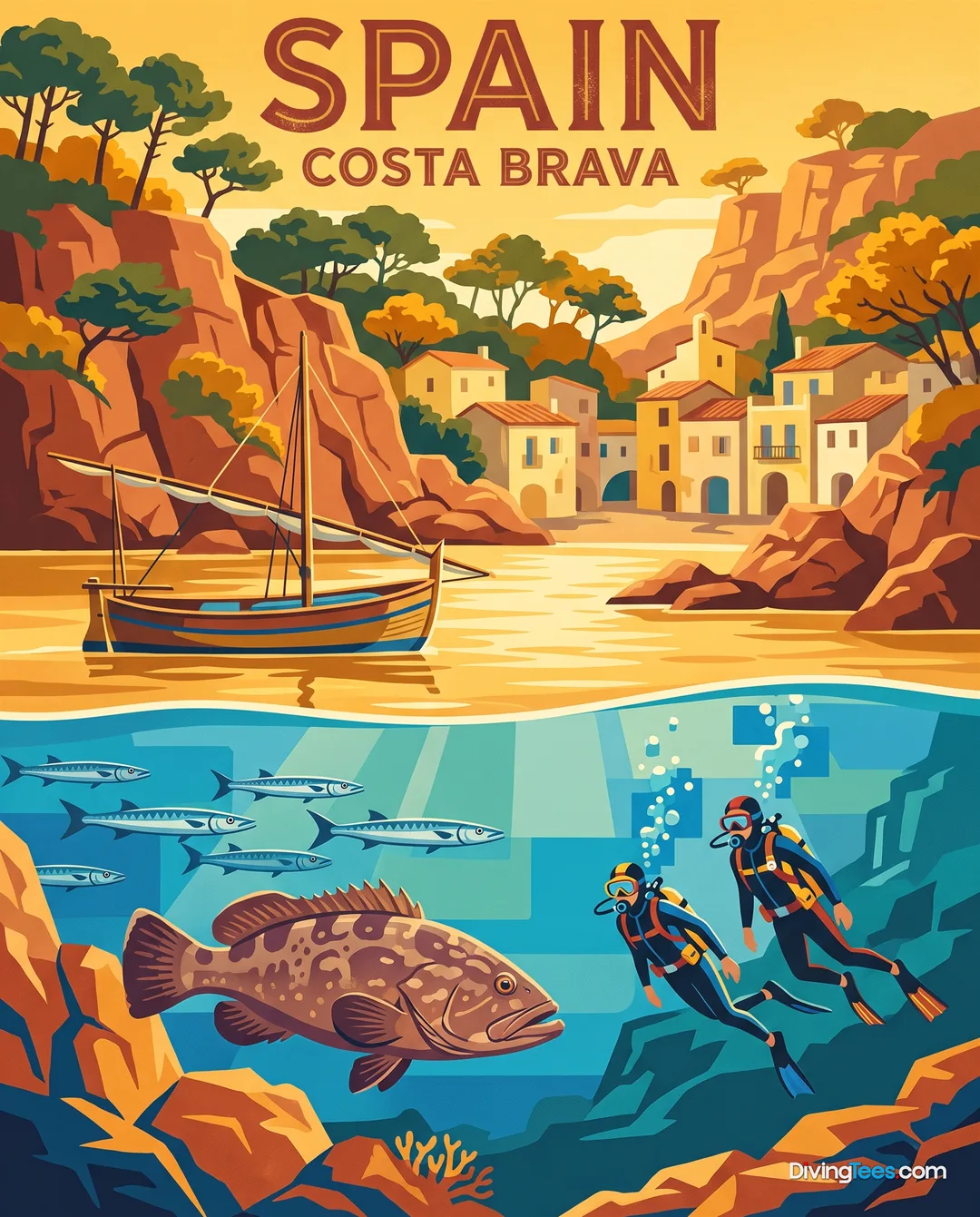
Diving in Ceuta features rocky scenery across two contrasting bays, with cave entrances, submerged rock formations, gorgonians, a wreck and Mediterranean marine life. Gorgonians rise from underwater rocks, while the wreck provides hard surfaces and shadowed spaces. The selected bay, site and day's conditions influence the scenery and encounters.
Base yourself in the city and allow flexibility rather than arranging a fixed sequence of sites. Ask which bay and site match the current, visibility, season and your group's level, and whether the outing leaves from the beach or harbour. Keep margin around the Algeciras ferry and consider accommodation near your departure point.