
Lassdive
Google 4.9/5 (86 reviews)
Spain · Mediterranean
Boat trips from the Gulf of Roses lead to Cap de Creus walls, caves, coralligenous rock, gorgonians, sponges and a wreck.
For subtitles in English: start the video firstthen click the gearat the top right of the video, select “Subtitles/CC”, then “Auto-translate” and choose “English”.
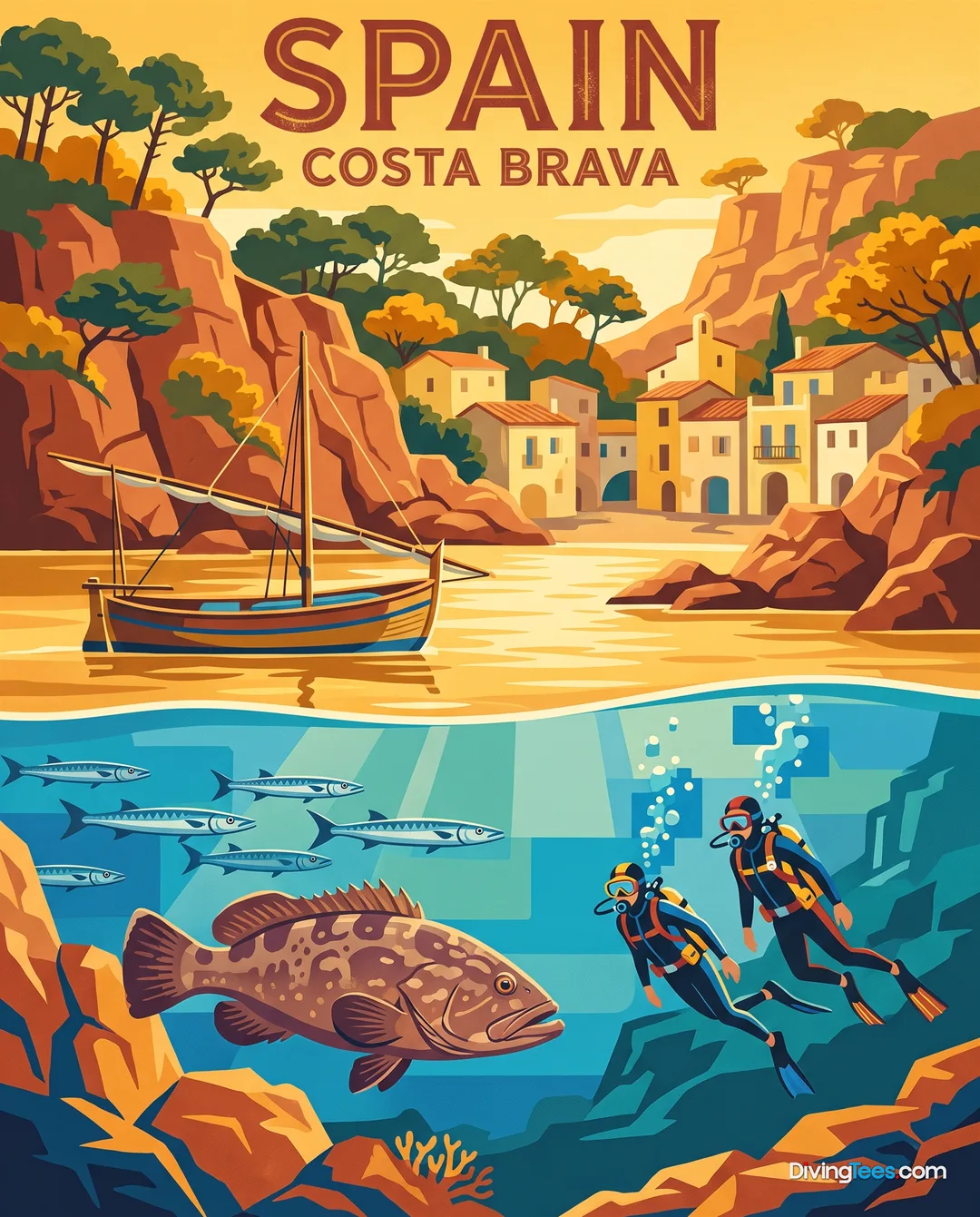
Empuriabrava is a base on the Gulf of Roses rather than a single shore dive. From nearby ports, particularly Roses, boats run towards the southern Cap de Creus, where rocky walls, cavities, caves, coralligenous outcrops and an underwater wreck shape the day. It suits divers who want a land-based holiday with several possible sectors, not a week tied to one reef. The marina, beaches, villages and walking country also give non-diving companions plenty to do.
The diving is built around boat outings to Mediterranean rock rather than a concentration of sites immediately off Empuriabrava beach. Expect walls and drop-offs, caves and overhangs, coralligenous rock, gorgonians and sponges, with a wreck adding a different profile to the programme. Currents are variable, so a calm-looking surface does not guarantee a straightforward descent or return. Depending on the day, the boat may head for the southern Cap de Creus, the Roses area or the Montgrí coast, and those choices affect both the underwater shape and the time spent travelling. Visibility is often good to excellent, but it is not sensibly promised as a fixed number. These are guided boat dives for divers who are comfortable with changing conditions, and some walls, caves and deeper profiles call for more than recent holiday-diving experience.
The scenery is as much about attached life as passing fish. Gorgonians, sponges and other coralligenous organisms cover the rocky ground, while groupers are a regular feature throughout the diving season. Large shoals can move across the walls and open rock, giving the dive a sense of scale even when the route is slow and close to the reef. Ocean sunfish are an occasional spring and early-summer possibility rather than a dependable appointment. Dolphins are rare. The sensible expectation is therefore a solid Mediterranean reef community, with groupers, shoaling fish and colourful sessile growth as the dependable cast, and larger passing animals as luck. Careful buoyancy matters around the gorgonians and the fragile surfaces of the coralligenous rock.
The main diving season runs from May to October, with May, June, September and October the most attractive compromise for many visitors. Diving remains organised then, while the harbours, boats and accessible sites are generally less crowded than in July and August. Spring and early summer also give the occasional chance of seeing an ocean sunfish. July and August suit those who want the full summer atmosphere, but they bring the greatest concentration of visitors and boat traffic around the Gulf of Roses. A five to seven-day stay leaves room to move between sectors if wind or sea conditions change the plan.
There are sites for all levels, but the label needs interpreting. Easy rocky profiles may suit newer divers, while deeper walls, caves, variable current and the wreck require suitable experience and honest assessment of recent diving. Advanced Open Water is useful for deeper sites and some drop-offs. A Wreck certification is appropriate if the wreck is to be explored rather than simply viewed from outside. Bring your logbook and certification evidence, particularly if you intend to arrange independent diving within the park framework.
From London Heathrow, London Gatwick or Manchester, reach a regional airport and continue by road to Empuriabrava or the Gulf of Roses. The area is also accessible by road from France. There is no regular sea link to arrange, because the diving boats leave from nearby ports rather than from Empuriabrava itself. Confirm the departure harbour before booking accommodation: Roses is a common starting point, but other ports around the gulf may be used. Once there, allow for a road journey between an extended residential marina, the dive centre and the harbour. A hire car or arranged local transfer is more practical than assuming that the boat will leave within walking distance of your accommodation.
Treat Empuriabrava as a base for choosing the right sector, not as a guarantee of one particular Cap de Creus itinerary. Ask before each trip whether the plan is the southern Cap de Creus, Roses or the Montgrí coast, because the profiles and time on the water differ. Check the departure harbour as well as the dive plan, since staying in Empuriabrava can mean an extra road transfer to Roses. The park regulates diving, anchoring and navigation, and rules vary between protected areas, so confirm that the planned activity is covered by the required authorisation and an accredited operation. Do not plan a dive in the strict marine reserve at S'Encalladora, where diving is prohibited. Keep a spare day in the programme rather than building the whole holiday around one Cap de Creus site. Bring certification records, and check the depth and cave or wreck profile against your current experience before accepting the booking.
A five to seven-day land stay works well. Accommodation in Empuriabrava makes sense when diving is only part of the holiday, with marina activities, beaches, walking and coastal excursions close at hand. Staying nearer Roses reduces the daily road transfer when boats leave from its harbour. Plan several boat days, but leave enough flexibility to change sector with the weather, park rules or the operator’s schedule. Cadaqués, Cap de Creus and the Roses coast provide straightforward alternatives between dives.
Hello, I'm Marina, DivingDeal.com's AI assistant. I guide you through destinations, areas and countries.
Thinking about the whole trip and the flights? Talk it over with Edith →
Marina is an AI. Some links are affiliate links: DivingDeal may earn a commission, at no extra cost to you. Bookings are made with the partner.
The diving season runs from May to October. May, June, September and October offer organised diving with quieter harbours, boats and accessible sites than the busiest summer period. Spring and early summer may bring an ocean sunfish, although sightings are occasional. July and August suit visitors seeking a livelier summer atmosphere.
Empuriabrava-Girona has rocky profiles for newer divers, but deeper walls, caves, variable currents and the wreck require suitable experience and an honest review of your recent diving. Advanced Open Water is useful for deeper sites and drop-offs. A Wreck certification is appropriate if you plan to explore the wreck rather than view it outside.
Boat dives from Empuriabrava-Girona reach Mediterranean walls, caves, overhangs, rocky drop-offs, coralligenous rock and a wreck. Gorgonians, sponges and other attached life cover the reef, while groupers and large shoals are regular features. Ocean sunfish are an occasional spring and early-summer possibility, whereas dolphins remain rare offshore encounters.
Treat Empuriabrava-Girona as a flexible base rather than a single dive site. Confirm whether boats leave from Roses or another nearby port, and allow for road transfers. Plan several boat days with spare time for changing conditions, sector choices and schedules. Check park authorisation, bring certification records, and match caves, depth and wreck plans to your experience.