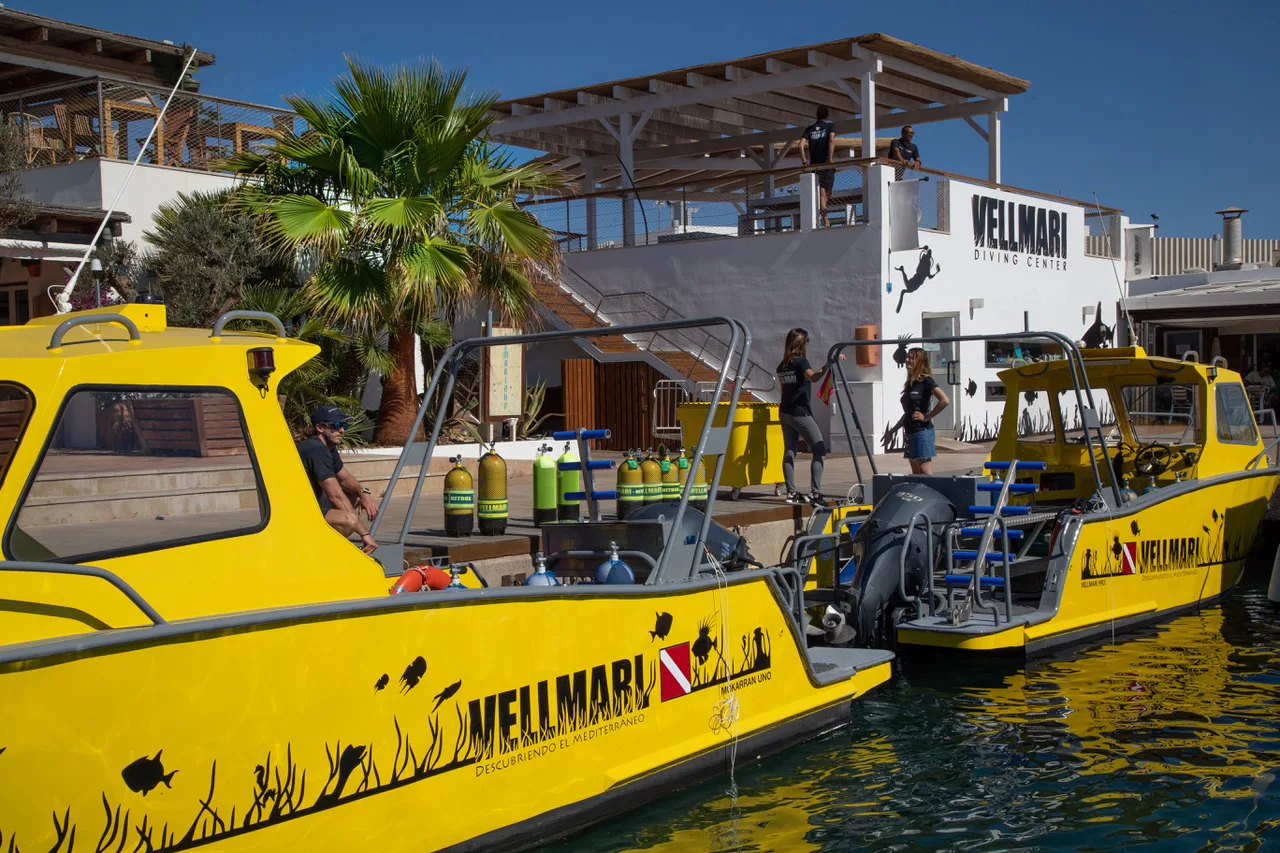

Vellmari Diving Center, Pitiusub SL
Google 4.8/5 (235 reviews)
Spain · Mediterranean
Posidonia meadows, rocky drop-offs, caverns and scattered wreck fragments shape clear-water dives around Formentera and the Es Freus Marine Reserve.
For subtitles in English: start the video firstthen click the gearat the top right of the video, select “Subtitles/CC”, then “Auto-translate” and choose “English”.
Posidonia meadows are the defining underwater view around Formentera, spreading across protected seabed between rocky outcrops, caverns and drop-offs. The island suits divers who want several sorts of outing without committing to a liveaboard or an expedition built around depth. Shallow rock and meadow dives leave room for beginners, while deeper walls and enclosed terrain give experienced divers more to work with. Above water, the same stay can include beaches, villages, cycle routes and coastal walks.
Diving here moves between rocky seabed, walls, caverns, shallow posidonia and the occasional wreck fragment. Some sections are reached from shore, while boat trips open up different parts of Formentera and the surrounding Es Freus Marine Reserve. Currents are generally light, so the emphasis is on looking closely and moving at a comfortable pace rather than managing a drift dive or a downcurrent. Visibility is often good, commonly around 25 to 30 metres, although swell, suspended particles and plankton can reduce it. Shallow meadows provide straightforward water for newer divers and relaxed photography, while walls, cavities and deeper sites call for better control and experience. This is Mediterranean day-boat diving with enough variation to keep a week interesting, not a destination built around repeated deep profiles or a liveaboard routine.
The main living landscape is the posidonia meadow, a protected habitat that structures the seabed and supports diverse Mediterranean fauna. Its value is not just scenic: the grass extends across broad areas, then gives way to rock, cavities and drop-offs where the underwater landscape changes abruptly. Around wreck fragments, the interest comes from the contrast between broken artificial structure and the surrounding natural seabed. Marine life is encountered as part of these habitats rather than through a dependable seasonal spectacle. May to October normally offers the clearest conditions for seeing the meadow edges, rock relief and cavity interiors, though plankton and particles can alter the view on any particular day.
May, June, September and October are the sensible months for most visiting divers. The centres and boats are usually less stretched than in July and August, while the normal diving season is well under way in spring and continues into autumn. Visibility is generally strongest from May to October, but good figures are not guaranteed when swell or particles move in. Summer brings more ferry traffic, busier harbours and heavier pressure on coastal moorings. Winter can still allow diving, yet seasonal operations and boat departures are more limited, making the shoulder months a better compromise between underwater conditions and workable logistics.
Formentera works for beginners as well as experienced divers. Shallow, more sheltered ground suits introductory and early qualifying dives, whether the certification is through BSAC, PADI, SSI or another recognised system accepted by the operator. Divers heading for walls, cavities or deeper terrain should be comfortable with buoyancy, ascent discipline and overhead-looking environments. No specialist certification is presented as essential for the destination as a whole, but the right experience matters at individual sites. Ask what depth and terrain are planned before booking rather than judging the trip from the island’s gentler shallows.
From London or Manchester, reach Ibiza by air or by boat, then make the compulsory sea crossing to La Savina, Formentera’s only maritime gateway. The Ibiza to La Savina ferry takes about 35 minutes, with schedules and frequency changing by season. Direct maritime services from Dénia, Valencia and Barcelona operate at some times of year, but the final stage to Formentera is still by sea. Allow a generous margin between arrival in Ibiza, the ferry and any booked boat dive, particularly in the busiest months. On the island, getting between accommodation and a dive departure depends on location: walking works in built-up areas, while bicycles, scooters, hire cars or an arranged transfer cover longer distances.
Build the diving around the ferry, not the other way round. A late crossing can cost a boat departure, so leave proper space between landing at La Savina and the first dive, and do not schedule a rushed return connection. Ask which sector is planned before paying for a trip: a shallow posidonia outing, a cavity, a wall and a wreck-fragment site are very different days in the water. Compare departures from Formentera and Ibiza, since the same wider area is not equally convenient from both. Keep a non-diving day before flying or making a long onward connection, because every return journey includes the sea crossing to Ibiza. Outside high summer, pack your own thermal protection if you have a preferred configuration. Expect visibility to vary, even when forecasts sound exceptional. Never anchor on posidonia, and do not treat the meadow as something to hover over closely or touch.
A five-to-seven-day stay gives the ferry, weather and boat schedule some breathing room. Most divers base themselves ashore and combine boat trips with shore dives, rather than joining a liveaboard. Daily transport depends on where you stay, with walking, cycling, scooters, hire cars or arranged transfers all relevant. Leave time for a day above water: beaches, coastal scenery, villages, phares and island viewpoints make Formentera suitable for a mixed diving and holiday group.
Hello, I'm Marina, DivingDeal.com's AI assistant. I guide you through destinations, areas and countries.
Thinking about the whole trip and the flights? Talk it over with Edith →
Marina is an AI. Some links are affiliate links: DivingDeal may earn a commission, at no extra cost to you. Bookings are made with the partner.
May, June, September and October offer a practical balance for diving in Formentera. The normal diving season is under way, visibility is generally strongest from May to October, and centres and boats are usually less stretched than during July and August. Summer also brings more ferry traffic, busier harbours and greater pressure on coastal moorings.
Formentera suits beginners and experienced divers. Shallow, more sheltered areas work for introductory and early qualifying dives, while walls, cavities and deeper terrain require comfortable buoyancy, ascent discipline and experience around overhead-looking environments. No specialist certification is essential for the destination as a whole, but ask the operator about each site’s depth and terrain.
You can explore protected posidonia meadows, rocky seabed, drop-offs, walls, caverns and overhangs around Formentera and the Es Freus Marine Reserve. Scattered wreck fragments add another setting among the rocks. Visibility commonly reaches 25 to 30 metres, though swell, suspended particles and plankton can reduce the view on a particular day.
Plan around the sea crossing to Formentera rather than around a dive departure. Reach Ibiza by air or boat, then allow generous time for the ferry to La Savina and your booked trip. Compare shore and boat dives, ask which sector is planned, arrange local transport, and leave a non-diving day before flying or making a long onward connection.