
Mundo Activo Sub
Google 4.8/5 (74 reviews)
Spain · Mediterranean
Drop-offs, protected reefs, shoals of fish and wrecks around Cabo de Palos, with the Mar Menor and Isla Grosa beyond.
For subtitles in English: start the video firstthen click the gearat the top right of the video, select “Subtitles/CC”, then “Auto-translate” and choose “English”.
La Manga is a practical shore base for diving the Costa Cálida, but its real focus lies around Cabo de Palos. From here, a stay can combine local shore dives with boat trips into the Cabo de Palos-Islas Hormigas marine reserve, wreck diving near Cartagena and outings to Isla Grosa. That gives a week a useful rhythm: straightforward diving close to land, more committed reserve trips, and non-diving days beside the Mar Menor. It also works for mixed groups, with plenty to do above water.
The diving ranges from shore sites around Cabo de Palos to boat-dived reefs, drop-offs, wrecks and island sites. Cabo de Palos-Islas Hormigas is the defining area, with protected underwater terrain and concentrations of fish, while Isla Grosa and the Farallón add a different boat-diving day. Currents are variable, so a calm-looking plan can still involve a moving-water dive rather than a gentle circuit. Visibility also changes with local conditions and should be treated as part of the day's briefing, not a fixed promise. The wrecks are a separate proposition from the easy coastal sites, with depth and overhead surroundings that may require suitable training. Expect a mixture of shore entries, boat departures and repetitive diving days, with a safety stop built into the normal profile.
Around Cabo de Palos and the reserve, the attraction is the combination of structured reef terrain and concentrations of fish. Shoals are part of the picture, particularly on the protected reefs and drop-offs, while the wrecks add dark metal surfaces and a different setting from the open rock. Isla Grosa brings another boat-diving environment, rather than simply extending the Cabo de Palos sites. The area supports marine life throughout the year, and local centres operate diving in every season, so this is not a destination that depends on one short wildlife window. Summer brings more people to the coast and greater pressure on the popular reserve trips, making quieter planning useful even when the underwater life remains the main reason to go.
La Manga can be dived throughout the year, with the most important seasonal difference being pressure on the coast rather than a guaranteed wildlife spectacle. Summer is busier, especially around the reserve, and quotas make popular boat trips harder to arrange at short notice. Outside the main holiday period, the same base is easier to use for a mixture of Cabo de Palos shore diving, reserve outings and days around the Mar Menor. Since local visibility and currents vary, the sensible approach is to leave room in the itinerary rather than build the whole week around one supposedly perfect month. The reserve should be arranged before arrival in any season.
Beginners have options in La Manga and around Cabo de Palos, including shore diving and instruction, but the destination should not be treated as uniformly easy. Certified divers can mix coastal sites with boat trips, while wrecks and deeper outings call for appropriate experience. An Advanced qualification, or equivalent, is useful for the more demanding profiles, and a Wreck qualification is sensible where the site and penetration plan require it. Nitrox can help on repetitive days, although it is not essential for access. BSAC, PADI and SSI divers should check the precise requirements of each trip.
From London Heathrow, Gatwick or Manchester, the journey needs to be planned as a road-based arrival into the Murcia region, followed by travel along the coast to La Manga or Cabo de Palos. There is no structurally necessary ferry crossing for reaching the La Manga area. Do not assume that staying anywhere on the strip puts you beside the day's departure point: centres operate between La Manga, Cabo de Palos, the Mar Menor and Cartagena. A car is the most useful solution for changing sectors, although taxis can cover individual transfers. Allow extra time when a boat trip leaves from Cabo de Palos but your accommodation is elsewhere.
Book Cabo de Palos-Islas Hormigas trips before travelling. Recreational diving there requires authorisation, and boat and diver numbers are capped, so turning up in summer and expecting a spare place is a poor plan. Check exactly which sector a booking covers: the reserve, Cartagena wrecks, Isla Grosa and coastal sites are not interchangeable outings. If the reserve is the priority, stay near the Cabo de Palos harbour; choosing La Manga or the Mar Menor gives better access to non-diving activities but adds road time. Do not mistake La Manga for Cabo de Palos, and do not assume the reserve can be reached from the beach. In its regulated sectors, shore and night diving are prohibited, as are underwater scooters. For wrecks, confirm depth and qualification requirements rather than relying on a basic certification. Keep one day flexible for a shore dive or Mar Menor activity if wind or boat logistics change.
A five- to seven-day stay allows the area to unfold without turning every day into a transfer. Base near Cabo de Palos for the reserve, or use La Manga or the Mar Menor for easier access to bathing, paddleboarding, kayaking and shore-based days. Add a reserve boat trip, a coastal dive, a wreck outing and, conditions permitting, Isla Grosa. Cartagena provides a useful cultural day, while the Mar Menor gives non-divers something substantial to do between departures.
Hello, I'm Marina, DivingDeal.com's AI assistant. I guide you through destinations, areas and countries.
Thinking about the whole trip and the flights? Talk it over with Edith →
Marina is an AI. Some links are affiliate links: DivingDeal may earn a commission, at no extra cost to you. Bookings are made with the partner.
La Manga can be dived throughout the year, with summer bringing more people and greater pressure on popular Cabo de Palos-Islas Hormigas reserve trips. Outside the main holiday period, planning is easier. In any season, leave room for changing visibility, currents, wind and boat logistics rather than relying on one ideal month.
La Manga offers beginners shore diving and instruction around Cabo de Palos, while certified divers can combine coastal sites with boat trips. Wrecks and deeper outings require suitable experience, and an Advanced qualification is useful for demanding profiles. A Wreck qualification may be appropriate when depth or penetration is involved.
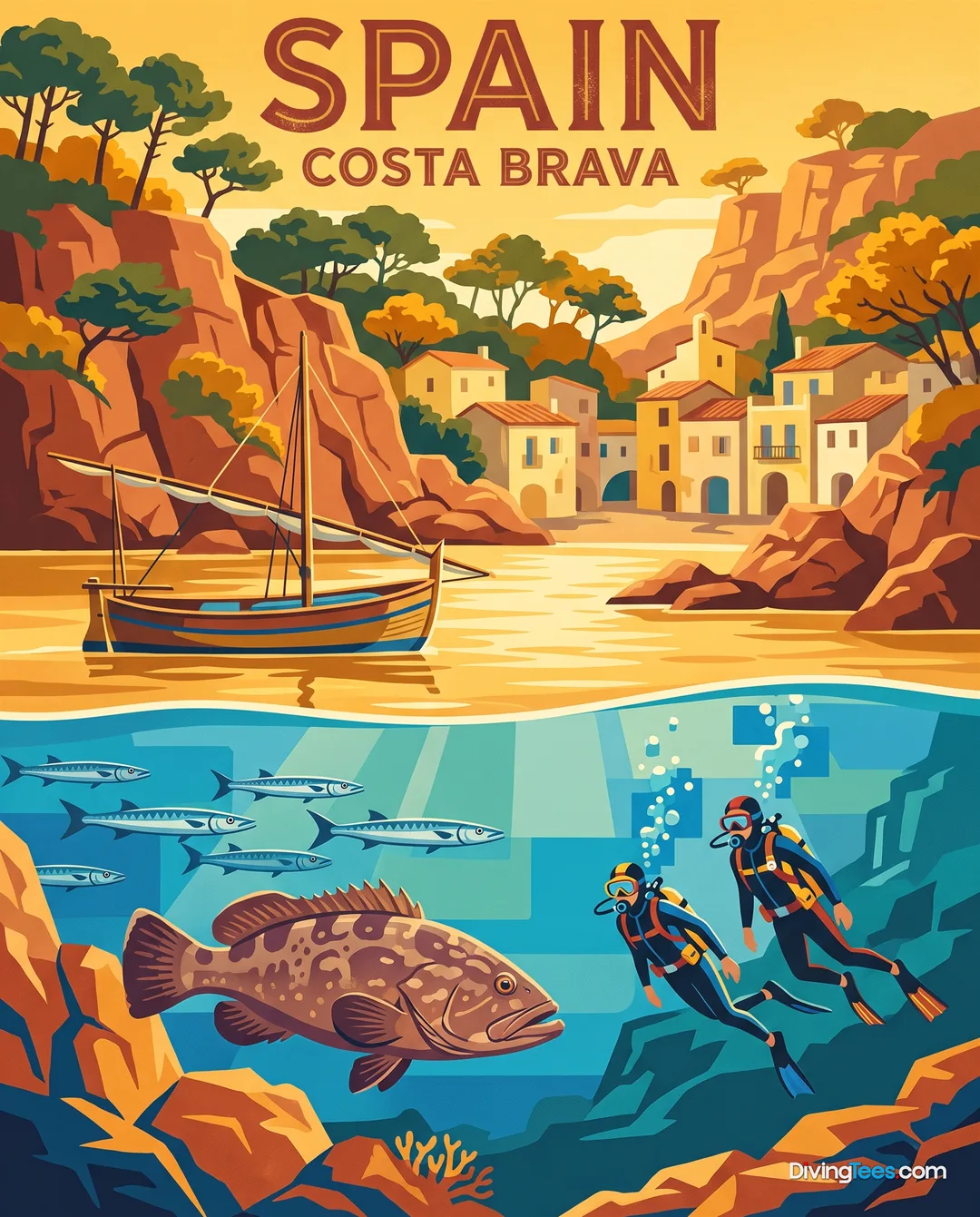
Diving around La Manga includes Cabo de Palos shore sites, protected reefs, drop-offs, shoals of fish, wrecks and island sites. The Cabo de Palos-Islas Hormigas reserve combines structured underwater terrain with concentrated marine life. Isla Grosa offers a separate boat-diving environment, while the Farallón wrecks provide dark metal surfaces and overhead surroundings.
Book Cabo de Palos-Islas Hormigas trips before travelling because authorisation, boat space and diver numbers are regulated. Choose accommodation near Cabo de Palos for reserve access, or La Manga and the Mar Menor for bathing and paddling. Check each trip’s sector and requirements, arrange road transfers, and keep a flexible day.