
Merak Diving Mahón
Google 4.9/5 (338 reviews)
Spain · Mediterranean
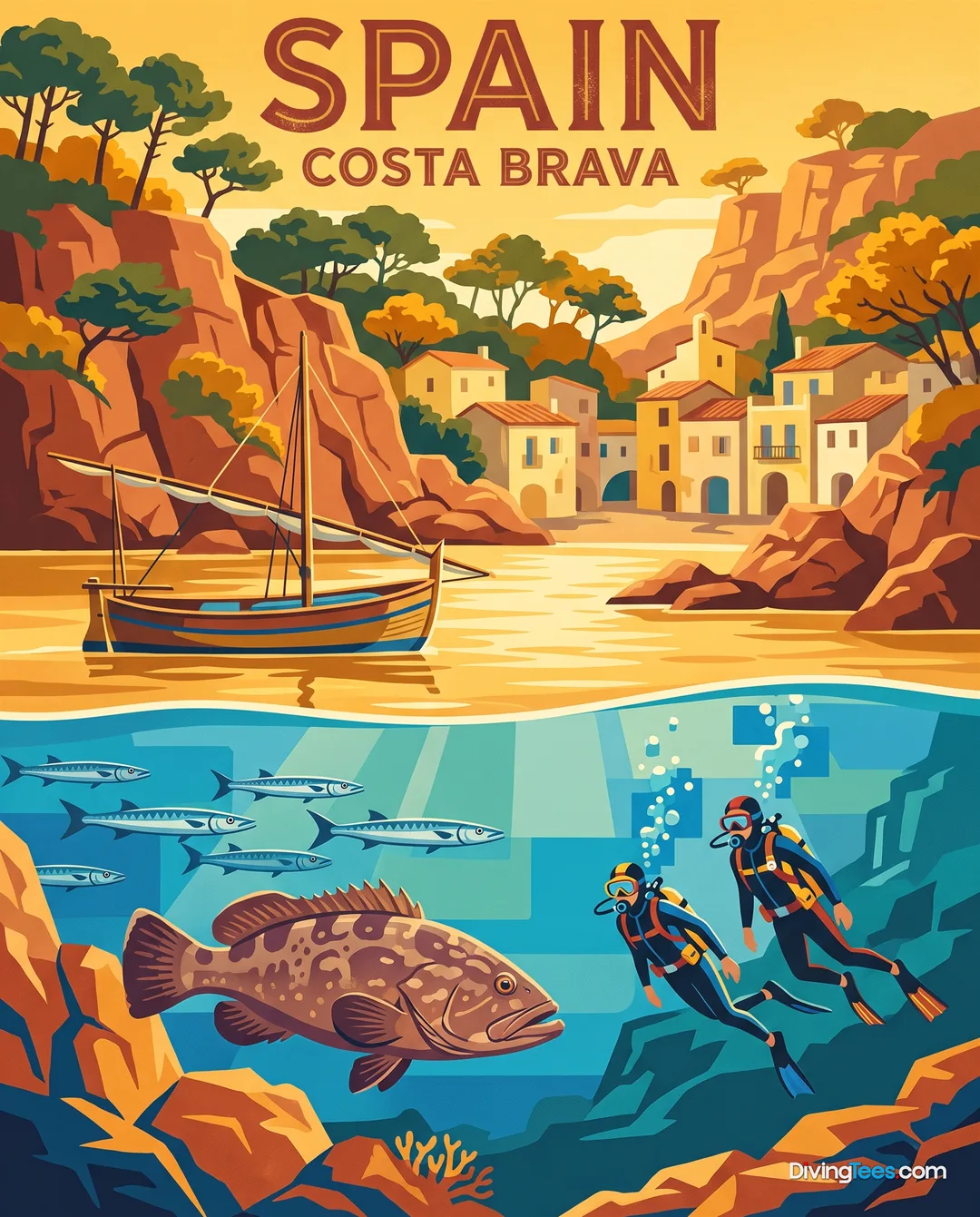
Limestone arches, short tunnels and 20 to 30-metre walls meet brown groupers, octopuses and occasional barracuda around the Island of the Air.
For subtitles in English: start the video firstthen click the gearat the top right of the video, select “Subtitles/CC”, then “Auto-translate” and choose “English”.
From Mahon harbour, boats head towards the rocky coastline of S’Algar and the marine reserve around the Island of the Air. Underwater, the scenery is limestone rather than coral: walls drop away beside arches, canyons, tunnels and small caverns, with open-water routes alongside genuine penetrations. Brown groupers sit among the rocks, common octopuses occupy cracks and shoals of smaller fish move over the relief. Mahon works particularly well as a land-based base, combining several diving days with a historic town, beaches and walks across Minorque.
The diving is mainly by boat, with sites selected around the wind rather than treated as fixed appointments. Expect rocky Mediterranean terrain, from shallow passages suitable for newer divers to walls and deeper profiles around 20 to 30 metres. Arches, short tunnels and light-filled caverns can be enjoyed without going far under the rock, while proper penetrations demand suitable training and equipment. Currents are variable, so the outing may be calm and sheltered or more involved around exposed reliefs. Visibility can be clear, but wind, swell and suspended particles change the view from one day to the next. The reserve around the Island of the Air gives the diving its character, while nearby sites provide alternatives when the open side is affected by the tramontana.
Brown groupers and common octopuses are the dependable encounters here, and neither is restricted to a narrow season. Look into cracks and beneath ledges for octopuses, while groupers hold their ground around the rocky relief. Mediterranean barracuda are possible throughout the year, depending on the site, usually seen as open-water fish rather than a guaranteed encounter. Rays are occasional, with the better chance over sandy ground, and spiny lobster can turn up among the rocks. The reserve’s walls, arches and channels also carry shoals of smaller fish. In practical terms, the attraction is the combination of animal life with places to search: a grouper beside a limestone wall or an octopus tucked into a cavern is more typical than a single headline species.
May, June, September and October offer the most comfortable balance between diving and the rest of Minorque. July and August bring heavier activity on land and at sea, more boats around the sites and greater pressure on available departures. Spring and autumn are generally quieter, although the tramontana can make exposed sites unsuitable and shift the programme towards sheltered water on the southern side of the Island of the Air. A full-length wetsuit is the sensible starting point, with thickness matched to the season and personal tolerance. An early departure also helps avoid sharing the more accessible sites with several boats.
Mahon suits beginners as well as experienced divers, provided the site is matched to the diver rather than the other way round. Shallow, open-water routes can be straightforward, while deeper walls and profiles around 20 to 30 metres are better suited to an Advanced Open Water diver or equivalent. A cavern qualification, or comparable experience, is appropriate for real penetrations. Do not assume that a site described as a cave is automatically a cave dive: arches and short tunnels may remain entirely within open water.
From London Heathrow or Gatwick, and from Manchester, air services to Minorque are strongly seasonal and may require a connection, so a half-day journey can become a full travel day when the timings do not line up. Vueling, Ryanair, easyJet, British Airways, Iberia and TUI Airways are among the carriers serving the island on changing schedules. A ferry from Barcelona, Valencia or Majorca is the practical alternative when taking a car or substantial equipment, with crossings lasting several hours depending on the port and service. Once on Minorque, Mahon harbour is manageable on foot from nearby accommodation, while a taxi or car is generally needed from coastal resorts and villages.
Build the programme around the wind. Ask which side of the Island of the Air is being used each day, because the exposed caverns and walls are not interchangeable with the sheltered southern sites when the tramontana arrives. Keep one day free as a buffer rather than booking every morning back to back. July and August need earlier reservations if regular boat trips towards the island matter to you, and early departures are worthwhile even outside high season. If you want caverns, ask for a day focused on them, not simply a general reserve trip. Check whether the route involves an actual penetration, and match that to your qualification and configuration. Finally, confirm the journey to the harbour before booking a distant resort: not every centre provides a regular shuttle, and a morning taxi can become the weak link in an otherwise simple diving day.
Five to seven days gives enough time to work around the wind, dive from both Mahon and S’Algar, and keep a non-diving day for the island. Staying in Mahon or near the harbour simplifies early boat departures and may leave the car unnecessary for some mornings. Further along the south-east coast, allow for a car or taxi to reach the centre. Use the spare day for Mahon’s historic centre and harbour, a coastal walk, a beach or cove, or the natural park of s’Albufera des Grau.
Hello, I'm Marina, DivingDeal.com's AI assistant. I guide you through destinations, areas and countries.
Thinking about the whole trip and the flights? Talk it over with Edith →
Marina is an AI. Some links are affiliate links: DivingDeal may earn a commission, at no extra cost to you. Bookings are made with the partner.
May, June, September and October offer a comfortable balance between diving and exploring Minorque, with quieter conditions than July and August. Spring and autumn can still bring the tramontana, which may move plans toward sheltered southern sites. A full-length wetsuit is a sensible starting point, adjusted for season and personal tolerance.
Mahon Menorca suits beginners and experienced divers when sites match your ability. Shallow open-water routes can be straightforward, while walls and profiles around 20 to 30 metres suit an Advanced Open Water diver or equivalent. Real penetrations require suitable training and equipment, while arches and short tunnels may remain completely within open water.
Mahon Menorca offers limestone walls, arches, canyons, tunnels, small caverns and rocky reliefs around the Island of the Air. Brown groupers and common octopuses are encountered throughout the year, while Mediterranean barracuda may appear in open water. Rays are occasional over sandy ground, and smaller fish move through the reserve’s channels.
Plan around the wind and ask which side of the Island of the Air is being used each day. Keep a free day as a buffer, especially when exposed sites may become unsuitable. Staying in Mahon or near the harbour simplifies boat departures, while S’Algar or other coastal bases may require a car or taxi.