CMAS
Dive Center Blaumar
Google 4.9/5 (457 reviews)
Spain · Mediterranean
Rocky ledges, porous cavities, moray eels and groupers meet boat dives from Mataró harbour, with shallow profiles and deeper ground towards 40 metres.
For subtitles in English: start the video firstthen click the gearat the top right of the video, select “Subtitles/CC”, then “Auto-translate” and choose “English”.
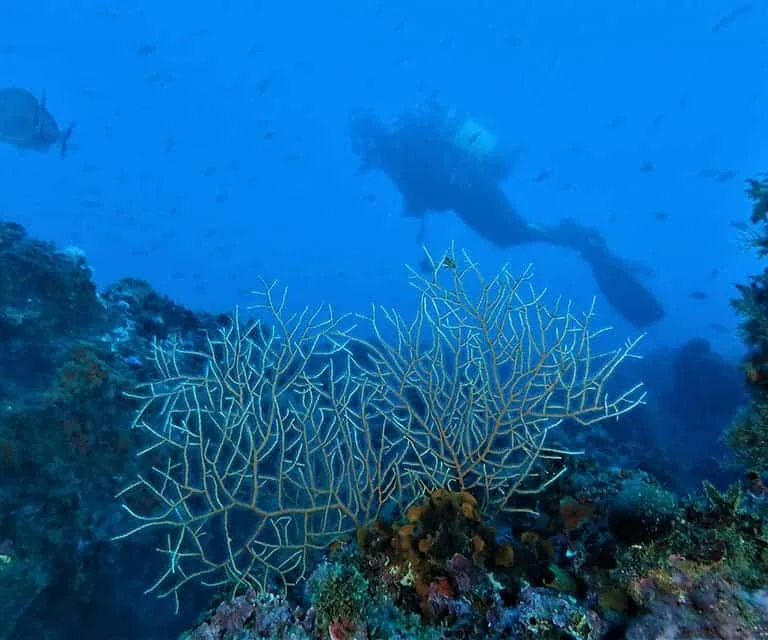
Rocky bars are the substance of diving around Mataró. From the harbour, boats head towards submerged reliefs shaped by ledges, slabs, holes and porous rock, where Mediterranean marine life gathers. La Matella offers shallower ground, while places such as El Negre, La Trencada and El Triangle lead towards deeper profiles, with some sectors reaching about 40 metres. It is a practical base for a few days of diving, with Barcelona close enough to add city time without moving the diving operation.
The diving is boat-based, with the Mataró harbour as the working centre. Underwater, the Barres de Mataró are rocky formations corresponding to older reef reliefs, not a beach-entry playground. Expect slabs, cavities and broken, porous surfaces rather than one uniform wall. La Matella keeps the profile shallow; other named bars pass 20 metres and some reach roughly 40 metres, so the boat briefing matters. Currents are variable, and the profile may suit anything from a straightforward shallow tour to a more committing deep dive. Visibility has no dependable figure to plan around, so ask about the day’s conditions rather than importing expectations from another Mediterranean coast. Night outings are part of the local programme, changing the same cavities and overhangs into a more focused torch-lit dive.
The rock is where the life is. Look into holes and porous surfaces for congers, moray eels, octopuses and crustaceans, then scan the ledges and open rock for groupers and rays. Cuttlefish and nudibranchs add smaller, slower subjects, particularly when the dive is kept at the rock rather than hurried across it. These are Mediterranean encounters rather than a single signature animal or seasonal spectacle, so patience and a good torch are more useful than a checklist. The available descriptions do not attach particular species to particular months, which makes Mataró easy to approach as a short-break destination. A night dive is worth considering if the programme fits, because cavities and crevices become the natural focus of the outing.
Mataró is best treated as a flexible, year-round short-break choice rather than a destination built around one narrow wildlife season. The permanent attraction is the rocky terrain, from shallow ledges to bars approaching 40 metres, and the marine life associated with its holes and cavities. Plan around the boat schedule and sea conditions on the day, with weekends and public holidays likely to be busier. Night dives are separate outings, so they also reward advance planning. For a quieter visit, a weekday gives more room around the harbour operation and leaves Barcelona or the Maresme coast for the non-diving day.
The area can suit beginners on appropriate shallow outings, including introductory dives, but it is not sensible to assume that every boat trip is entry-level. La Matella and similar shallow rocky ground are the logical starting point; deeper bars pass 20 metres and reach about 40 metres. PADI, SSI and BSAC divers should match their certification and recent experience to the planned profile, with suitable experience for deeper or more current-affected dives.
From London Heathrow, Gatwick or Manchester, travel to Barcelona, then continue to Mataró by the coastal road or on the Rodalies R1 train. The train is the useful structural detail: it reaches Mataró and makes a car unnecessary for a stay centred on the harbour. Allow time for the onward connection after arriving in Barcelona, then walk from the station towards the port and nearby waterfront accommodation, checking the exact distance for your booking. There is no ferry or domestic flight to add to the journey. If staying inland or away from the waterfront, confirm how diving equipment will reach the harbour, as a general transfer service is not part of the local arrangement.
Book the boat, not a beach dive: the named rocky bars are reached from Mataró harbour. Before committing to a trip, ask which bar matches your certification, depth comfort and recent experience. La Matella or another shallow relief makes more sense for a first look than selecting a 20 to 40-metre profile by name alone. Do not mistake Barcelona’s proximity for urban diving, because the interesting ground lies offshore on the rocky bars. Staying near the station or waterfront makes carrying equipment to the harbour simpler, and travelling by train is realistic without a car. If you are coming for a weekend or public holiday, arrange boat places and any night dive ahead of time. Check the return connection before taking heavy kit away from the coast, and avoid lodging where the final transfer to the port depends on an assumed shuttle.
Two to four days gives enough time to try different rocky profiles from the harbour without turning the trip into a dedicated liveaboard-style expedition. Keep one day or half-day for Barcelona, reached by train, and use another surface interval for Mataró’s waterfront, marina or the wider Maresme coast. A base near the station or seafront keeps the daily walk to the boat manageable and makes a car optional.
Hello, I'm Marina, DivingDeal.com's AI assistant. I guide you through destinations, areas and countries.
Thinking about the whole trip and the flights? Talk it over with Edith →
Marina is an AI. Some links are affiliate links: DivingDeal may earn a commission, at no extra cost to you. Bookings are made with the partner.
Mataro works as a flexible, year-round short-break destination because its appeal is the rocky terrain and marine life in cavities, rather than a particular seasonal spectacle. Plan around the boat timetable and conditions on the day. Weekdays may be quieter, while weekends and public holidays can be busier.
Mataro can suit beginners on suitable shallow outings, including introductory dives, but not every boat trip is entry-level. La Matella and similar shallow ground are sensible starting points. Deeper bars pass beyond twenty metres and approach forty metres, so match your certification and recent experience to the planned profile and conditions.
In Mataro, rocky ledges, slabs, cavities and porous surfaces provide the main focus. Look for congers, moray eels, octopuses and crustaceans in holes, then scan open rock for groupers and rays. Cuttlefish and nudibranchs add smaller subjects, while a torch helps reveal life during daytime or night dives.
Plan boat dives from Mataro harbour rather than beach entries, and ask which rocky bar suits your experience. Staying near the station or waterfront simplifies carrying equipment to the port. The Rodalies R1 train makes a car unnecessary, while Barcelona can provide a city day. Arrange weekend, holiday and night dives ahead.