
Blue Brothers Diving
Google 5/5 (293 reviews)
32 km away as the crow flies
El Gouna · Egypt · Red Sea
Max. depth · 27 mDescend into history and explore the beautifully preserved hull of the SS Carnatic, a 19th-century steamship that has become one of the Red Sea's most captivating wrecks.
For subtitles in English: start the video firstthen click the gearat the top right of the video, select “Subtitles/CC”, then “Auto-translate” and choose “English”.
Diving the SS Carnatic is a journey back to 1869, to the night this steam-powered sailing ship struck the reef. You'll descend onto a vessel that has settled on its side, its hull a canvas painted with time and marine growth. The Carnatic was a significant find for its era, carrying cotton bales, copper ingots, and a substantial sum of 40,000 pounds sterling in gold coins destined for Bombay. Today, it presents a cohesive structure that invites divers to engage with its history, offering a distinct profile from many other Red Sea wrecks.
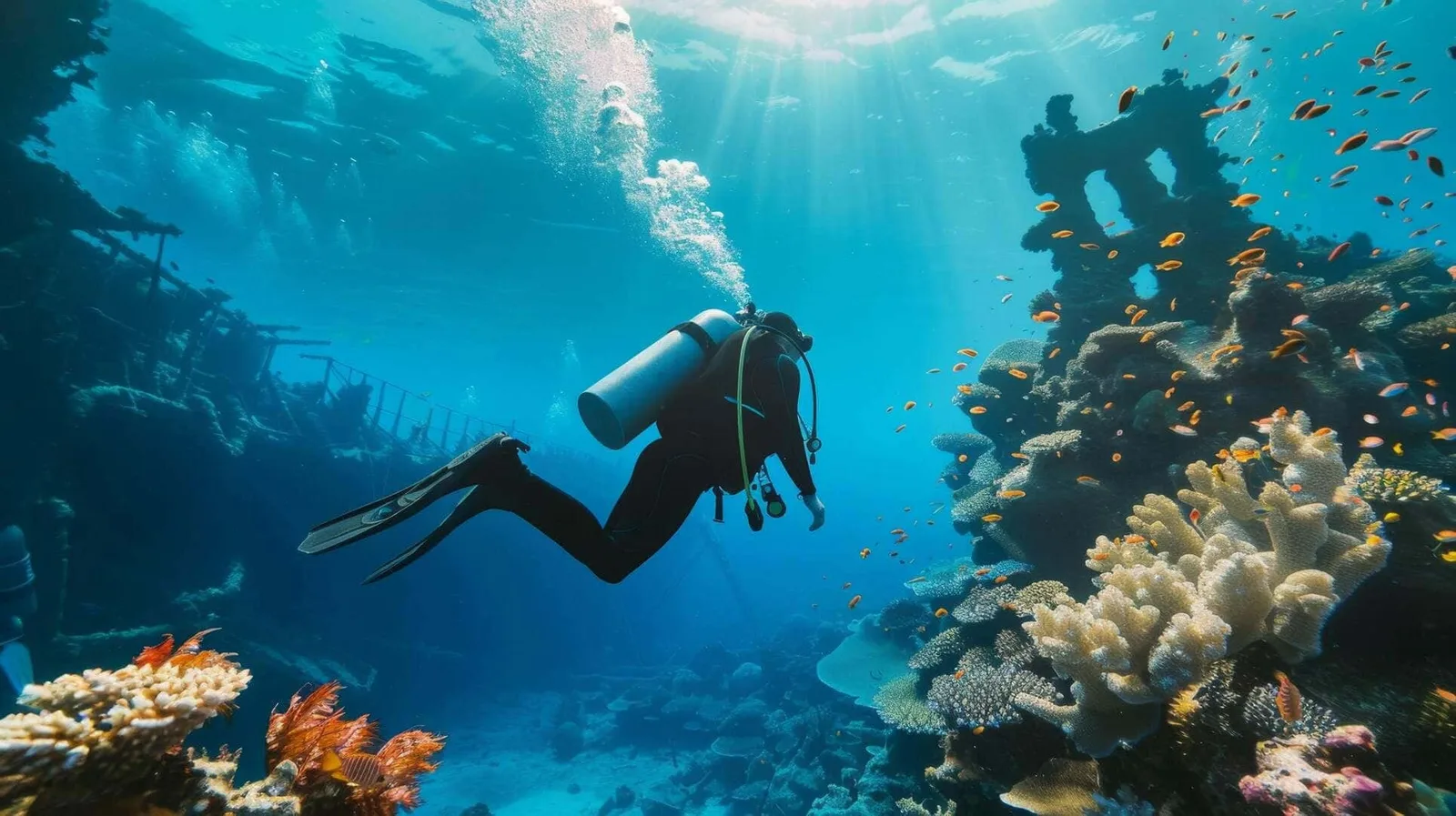
As you approach the wreck, the sheer size of the Carnatic becomes apparent. The ship's structure, though ancient, is remarkably well-preserved, particularly its hour-glass shaped stern and the coral-encrusted davits. The overall integrity of the hull, despite lying on its side, provides numerous vantage points for observers and photographers to capture the interplay of light and shadow filtering through the water. This careful preservation contrasts with other historical wrecks, making the Carnatic a unique visual spectacle.
The interior of the Carnatic, while offering easy penetration into its holds, is where the ship's cargo history truly comes alive. Although the gold was reputedly salvaged, the sense of an active cargo vessel is palpable. The holds, now open to the sea, allow for straightforward exploration, revealing the skeletal remains of what was once a bustling commercial space. This accessibility makes it a versatile dive, accommodating different levels of wreck penetration experience.
The legend of the Carnatic extends beyond its cargo; it's said to have made a cameo in Jules Verne’s classic novel "Around the World in Eighty Days." This literary connection adds another layer of intrigue to the dive, allowing you to immerse yourself not just in the physical remains of the ship, but also in the rich narratives it inspired. The partially disintegrated planking of the hull creates bizarre, almost surreal patterns, offering striking compositions for underwater photographers aiming to capture its artistic decay.
While the specific marine life on the Carnatic isn't explicitly detailed, the Red Sea's vibrant ecosystem ensures that the wreck serves as an artificial reef, attracting a variety of species. Expect to find resident reef fish taking shelter within its structure and corals beginning to reclaim its surfaces. The absence of specific fauna direct from the source implies a general Red Sea experience where the wreck itself is the primary draw, a monumental structure now home to various opportunistic marine inhabitants.
The Carnatic's unique history as a steam-sailer and its association with a literary masterpiece sets it apart from many other Red Sea wrecks. It’s not just a sunken vessel; it's a floating piece of history and a testament to 19th-century maritime engineering. The careful preservation of its hull, combined with the accessible holds and its photogenic qualities, ensures a dive that is both engaging and deeply atmospheric. It's a site that rewards repeat visits, each descent revealing new details within its ancient structure.
The Carnatic offers a dive profile with a maximum depth of 27 metres. It is accessible for divers at DIVER LEVEL 2. The main part of the dive is conducted alongside the wreck, with easy penetration into the cargo holds available for those with appropriate experience. The site is generally calm, making for a relaxed exploration.
Carnatic is accessible to divers at Diver Level 2. The main dive takes place alongside the wreck, while easy penetration into the cargo holds is available if you have appropriate experience. This gives you the option to focus on the exterior structure or explore the open holds within your wreck-diving experience.
Carnatic reaches a maximum depth of 27 metres. You can spend the main part of the dive alongside the wreck, examining its hull and preserved structures at depth. The profile also allows you to explore the cargo holds, provided you have the appropriate experience for penetration.
Carnatic is generally calm, creating conditions for a relaxed exploration of the wreck. You can examine the ship alongside its structure without the site being described as demanding because of current. The calm setting supports careful observation of details such as coral-encrusted davits, disintegrated planking, and the hour-glass shaped stern.
At Carnatic, you can explore a Victorian-era steam-sailing ship built in 1862, lying on its side with a well-preserved hull. Highlights include the hour-glass shaped stern, coral-encrusted davits, open cargo holds, disintegrated planking patterns, and structures connected with the ship’s history and literary association with Jules Verne.