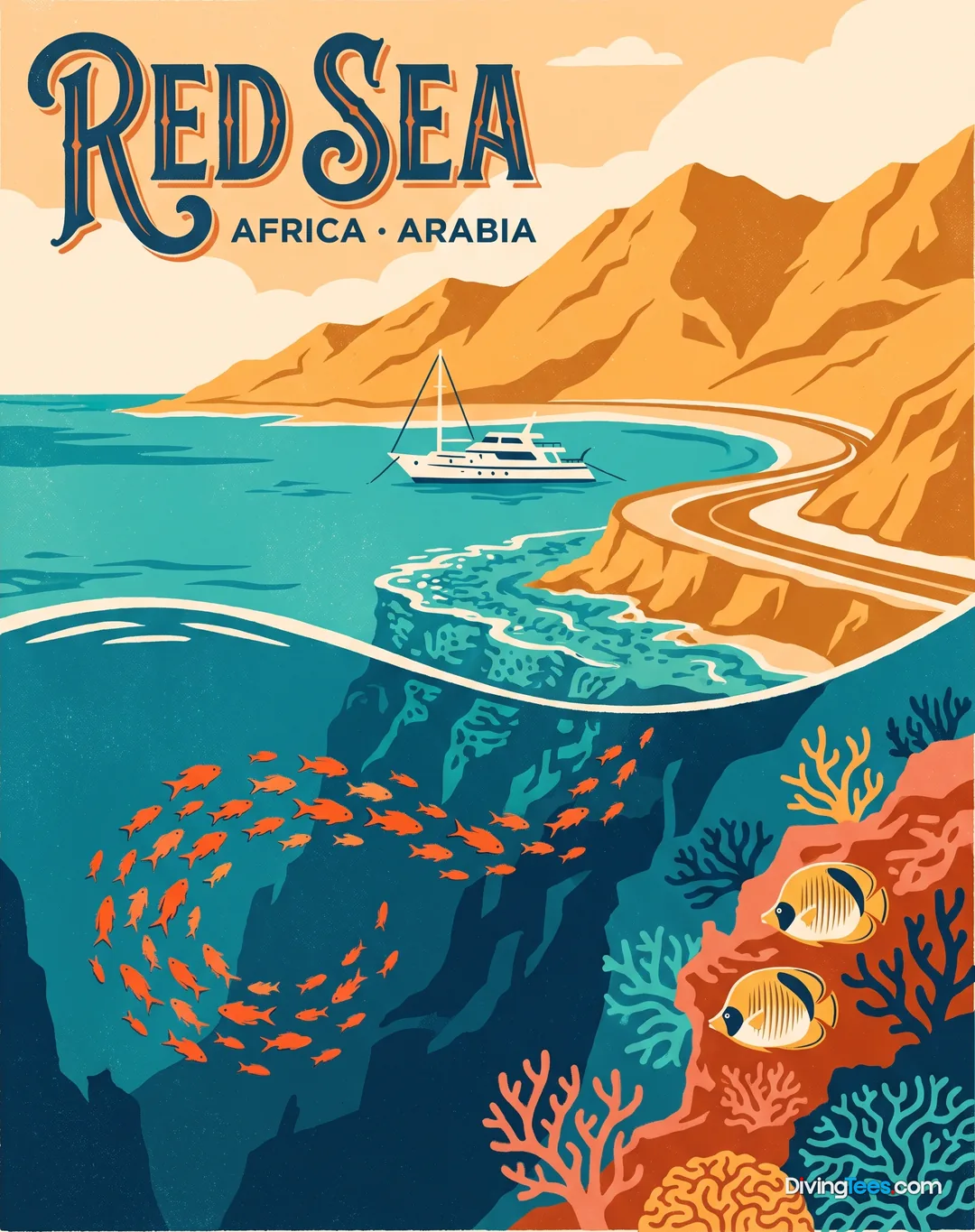
Egypt · Red Sea
Diving Brothers Islands: exposed walls and pelagic encounters
Big Brother’s coral walls, the Numidia and Aida wrecks, changing currents and oceanic whitetip sharks define this remote liveaboard destination.
What makes this destination special
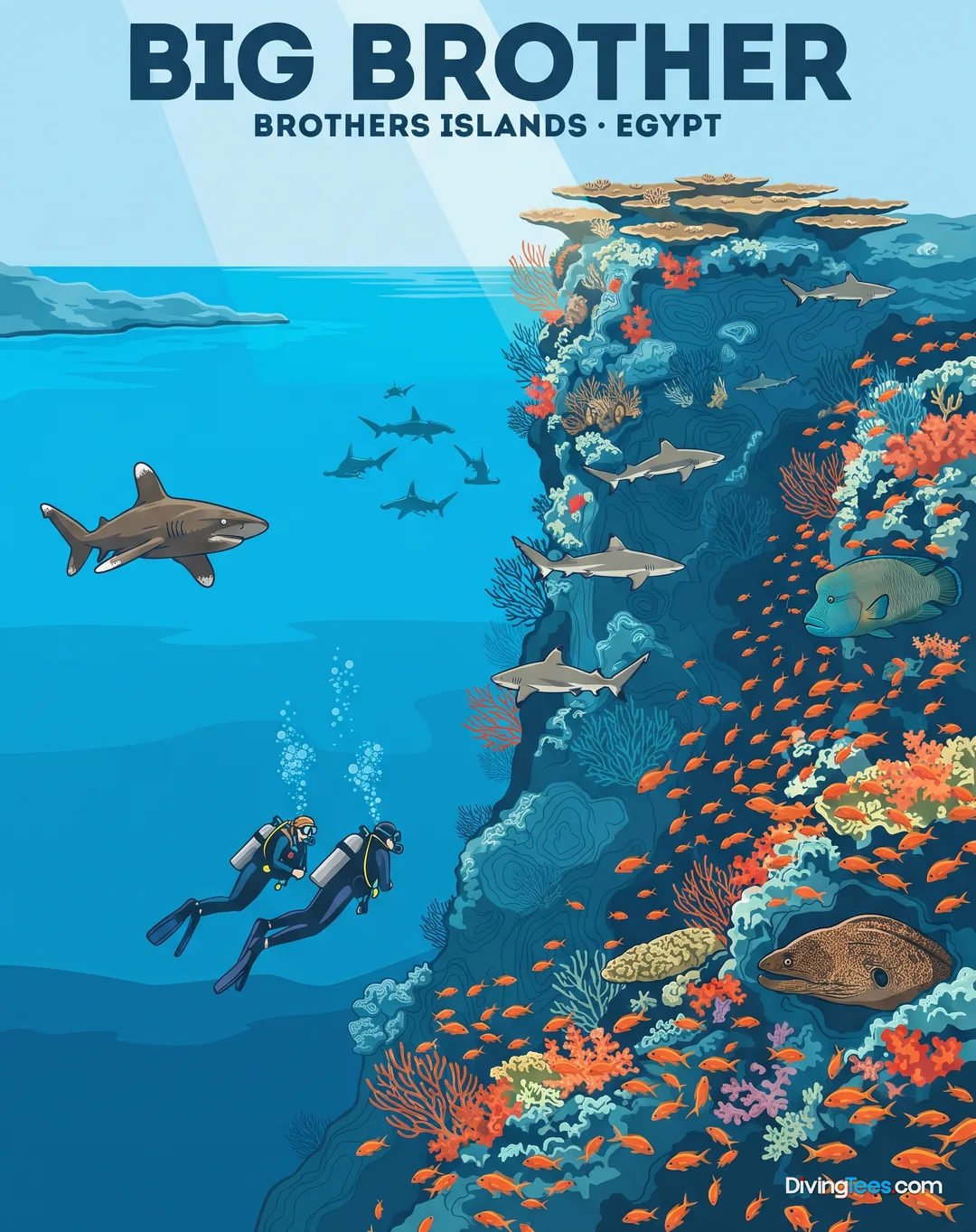
- Big Brother’s coral walls dropping from five to forty metres
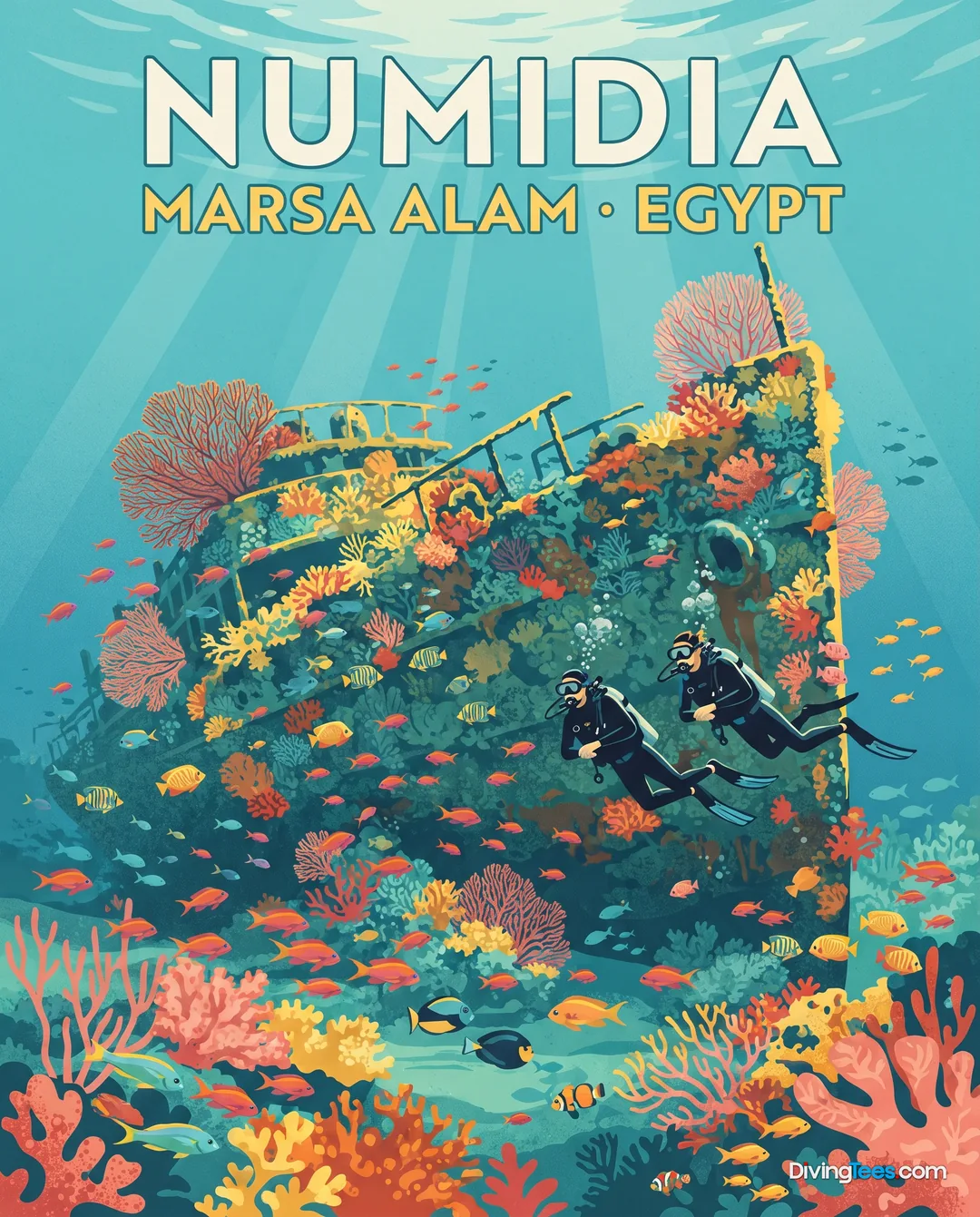
- Numidia and Aida wrecks on an exposed offshore reef
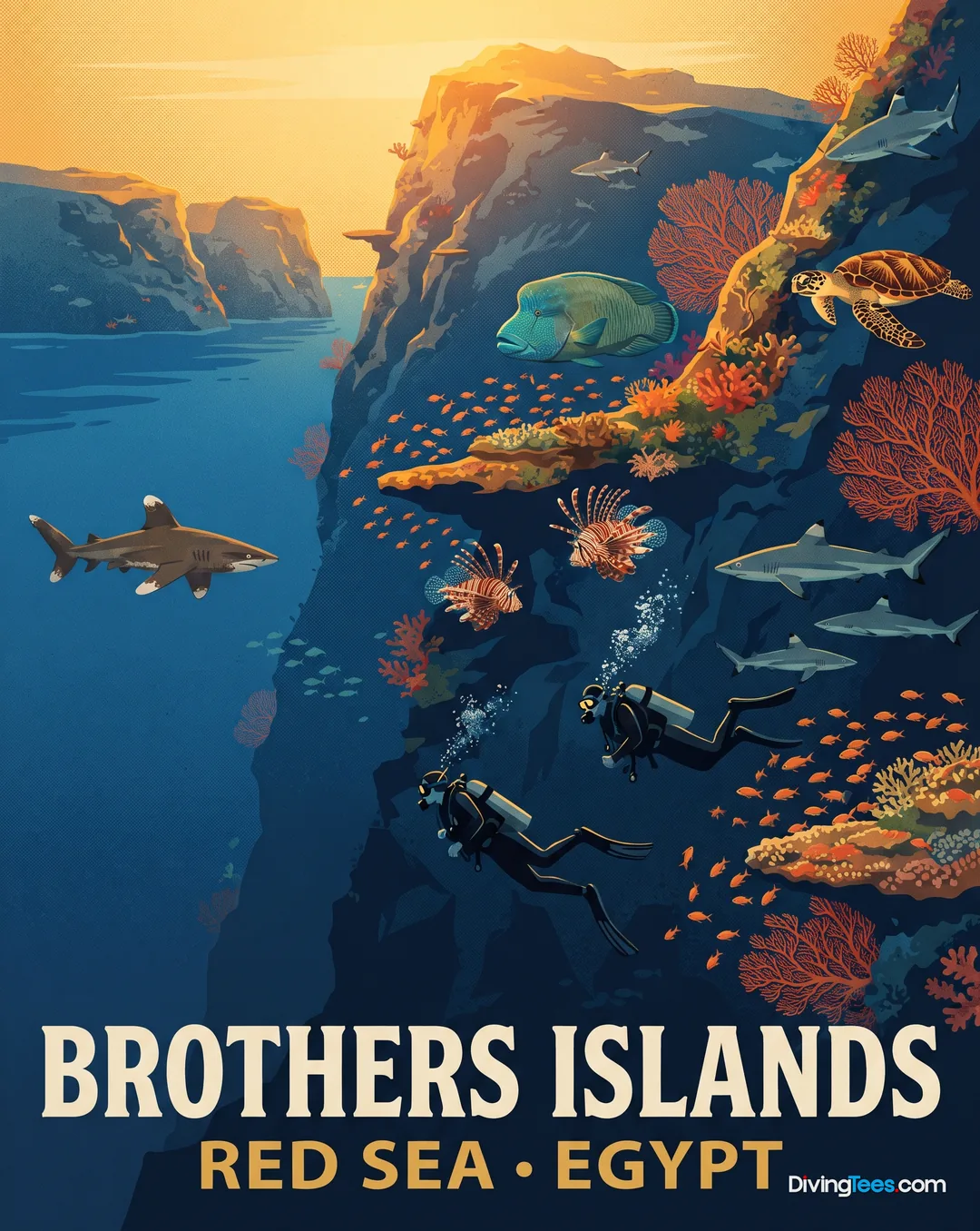
- Oceanic whitetip sharks in open blue water
- Grey reef sharks around protected offshore pinnacles
- Occasional hammerheads among the pelagic encounters
- Variable currents on steep walls and exposed points
- Liveaboard days built around repeated Brothers dives
- Elba National Park protection and controlled anchoring
For subtitles in English: start the video firstthen click the gearat the top right of the video, select “Subtitles/CC”, then “Auto-translate” and choose “English”.
Overview
Big Brother and Little Brother are isolated Egyptian Red Sea islets visited primarily on diving liveaboards. The focus is not a sheltered holiday reef but steep walls, exposed points and open-water descents, with Big Brother adding the Numidia and Aida wrecks to the underwater scenery. The Brothers suit experienced divers who are comfortable with changing current, blue-water conditions and repetitive days at sea. The reward is a concentrated offshore experience, where reef structure and pelagic encounters share equal billing.
Diving here
Big Brother combines coral-covered walls with two substantial wrecks, the Numidia and Aida, and offers profiles from shallow water down to about forty metres. Divers may follow the wall, move around an exposed point or enter a drift as the current changes, rather than settle into a fixed route. Conditions are commonly moderate to strong and may vary with wind and season, so the descent, separation from the reef and return to the boat all require attention. The setting is open and the terrain drops away quickly, making good buoyancy and a controlled ascent particularly useful. Liveaboard schedules allow several attempts on the Brothers, which matters here: one dive may be current-led, while the next offers a better line along the wall or a more productive look into the blue. Nitrox is useful across repeated diving days, provided profiles remain conservative.
Three dives not to miss
The underwater wildlife
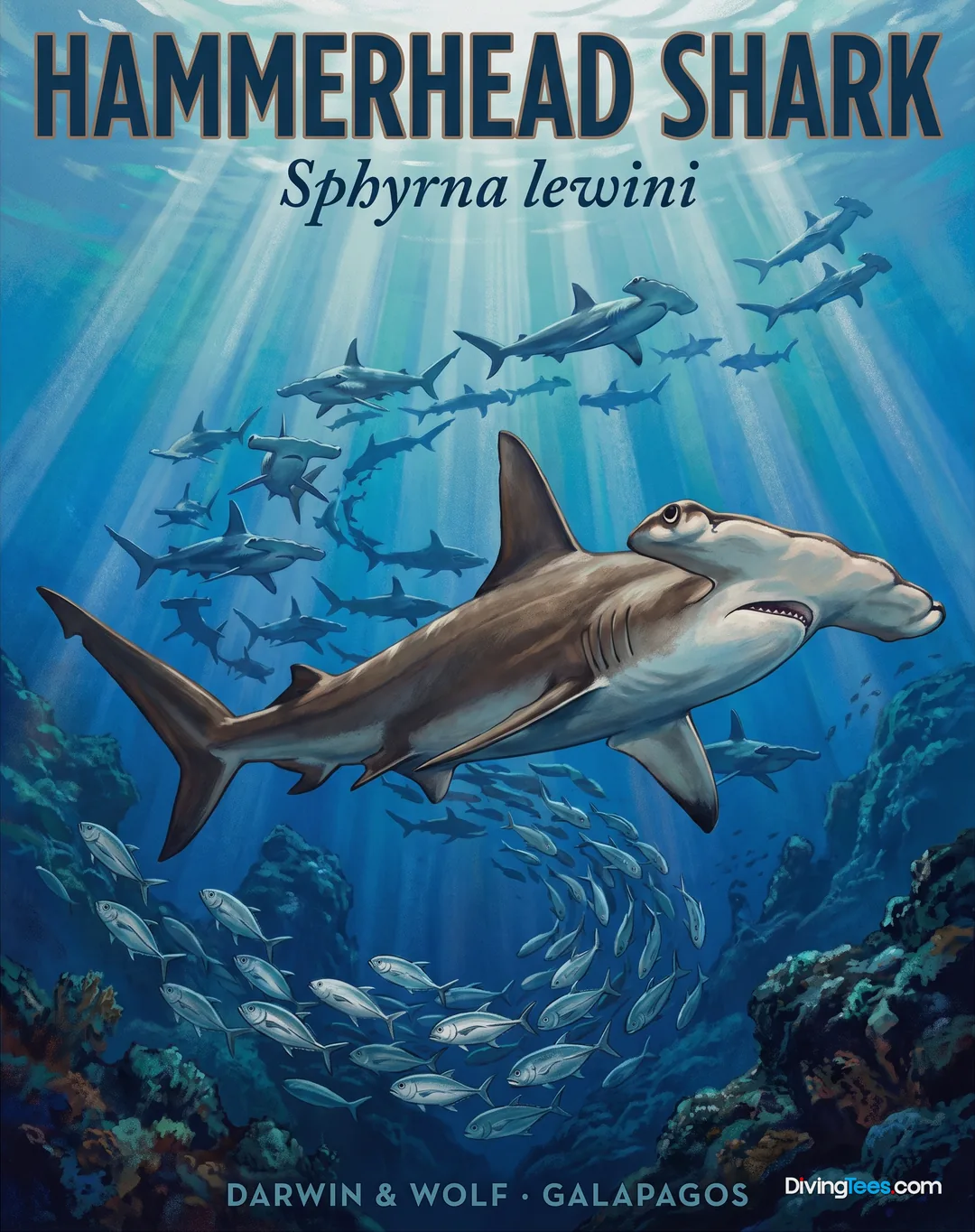
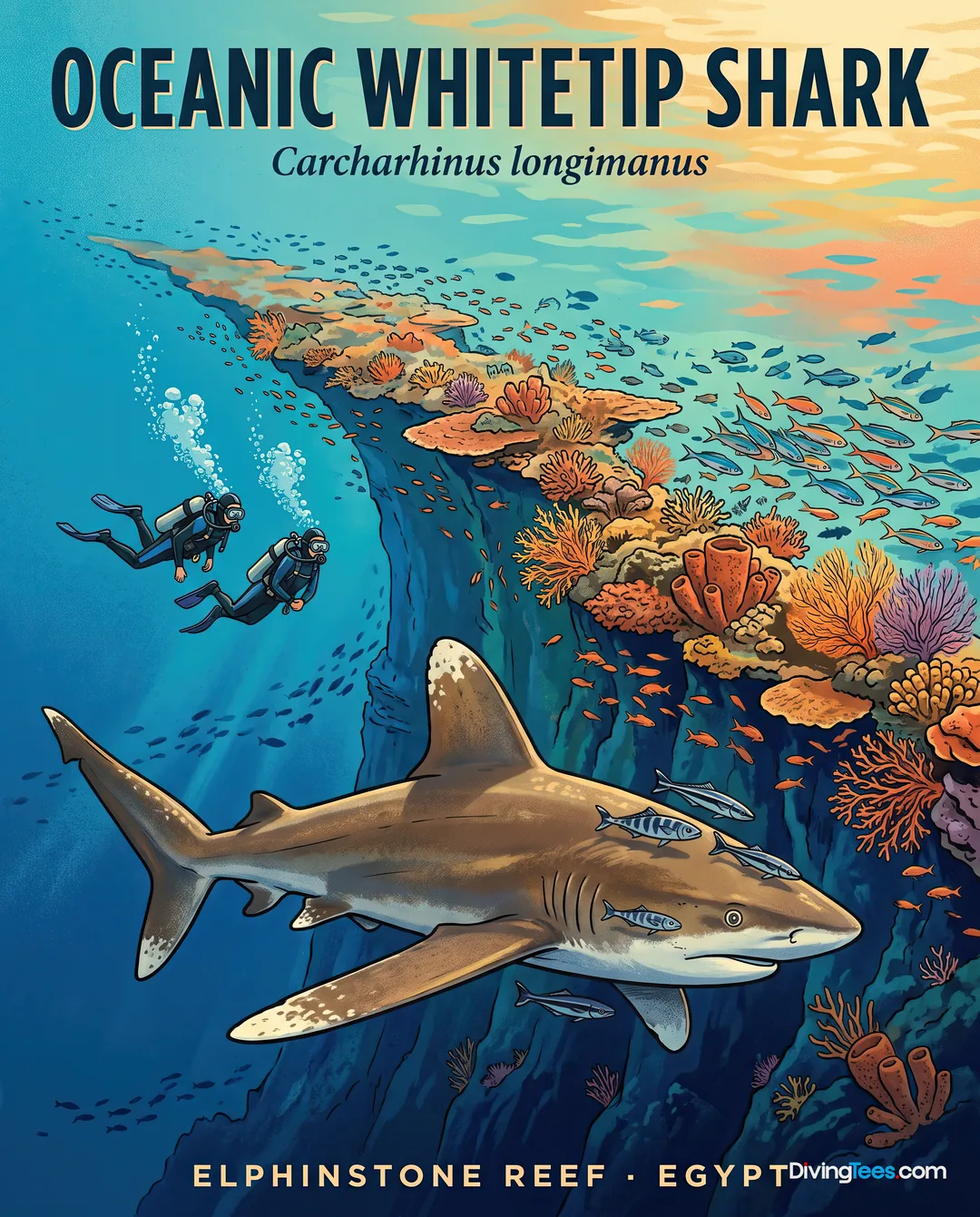
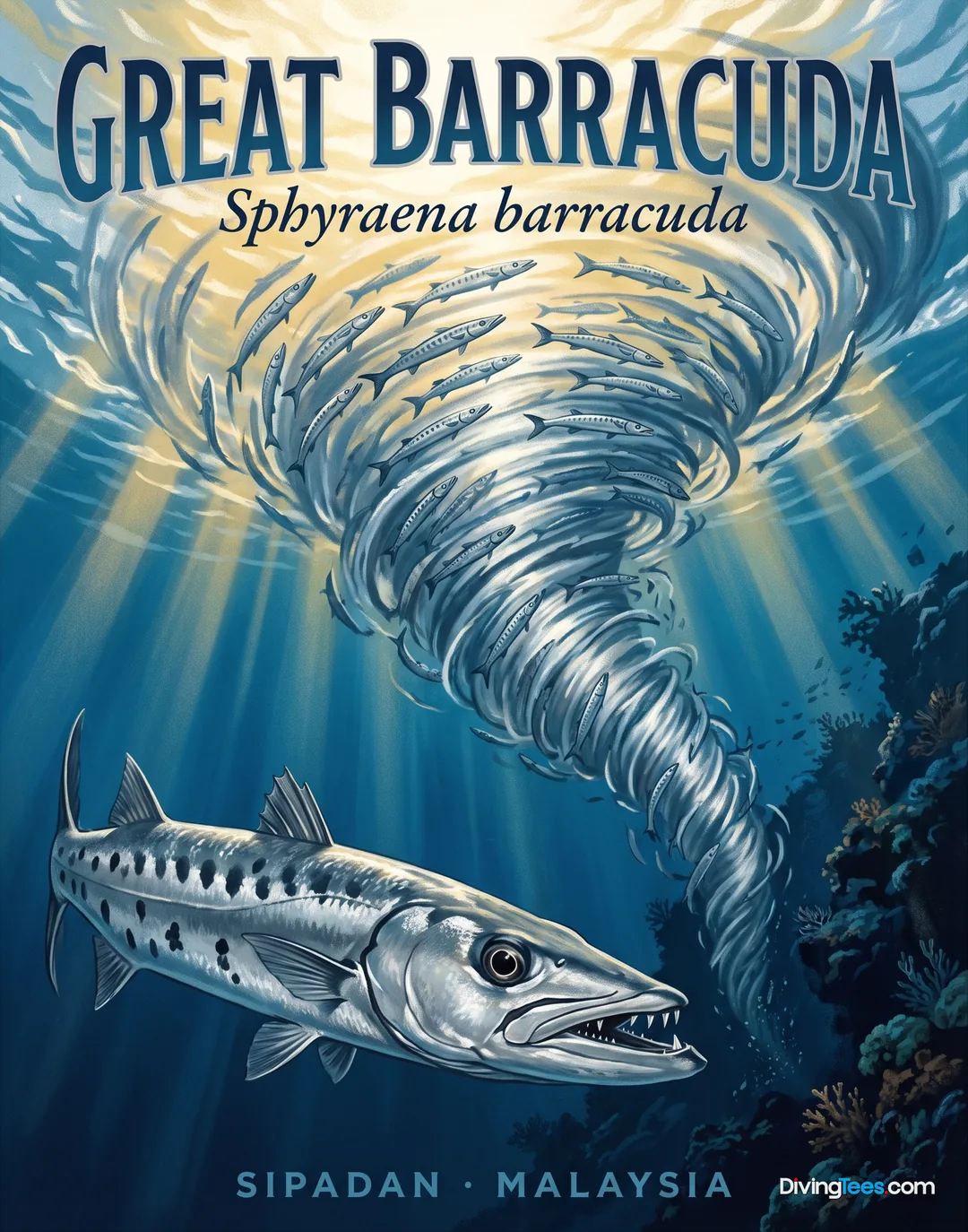
The Brothers are known for sharks as much as for walls and wrecks. Oceanic whitetip sharks are a regular attraction around Big Brother, particularly in the open water beside the reef, where divers may hold position and watch the blue rather than search the coral. Grey reef sharks are also regular visitors, while hammerheads are occasional rather than something to build an entire itinerary around. Oceanic and other pelagic encounters are the defining possibility, but they remain wildlife encounters, not a timetable. The practical advantage of repeated dives is that activity can change with the current and the movement of animals. Big Brother’s wrecks add a second focus when the blue is quiet: the Numidia and Aida give the dive a clear physical route through steep reef scenery.
Possible underwater encounters

When to go
The Brothers do not have one fixed season that makes every other period irrelevant. Travel is best planned around a southern or central Red Sea liveaboard itinerary that leaves the dive director room to respond to wind, sea state and changing currents. That flexibility matters more here than a simple calendar promise, because the islands are exposed and the quality of a dive depends on whether the boat can use the wall and points safely. Pelagic sightings, including oceanic whitetips, grey reef sharks and occasional hammerheads, are reasons to accept that variability rather than expect a guaranteed date-specific encounter.
Level required
This is an experienced-diver destination. Divers should be comfortable in open water, with variable current, drift procedures, blue-water descents and exposed walls. Advanced certification is useful, whether held through PADI, SSI or BSAC, while Nitrox and drift-diving training are practical advantages rather than decoration. A solid personal dive history matters more than collecting another card; the site material points to roughly fifty logged dives and good current experience. Anyone seeking calm, shallow reef diving should choose a different part of Egypt.
On the ground
The Brothers are reached by liveaboard from an Egyptian Red Sea port. From London Heathrow, London Gatwick or Manchester, the journey therefore has to be planned around the boat’s embarkation arrangements rather than around a hotel near the islands. There is no passenger ferry to the islets and no realistic day-trip pattern from land. Once the liveaboard leaves port, the vessel provides the only practical access, accommodation and diving platform; there is no shore base, taxi transfer or local accommodation at the Brothers themselves. Allowing sensible margin around the international journey and the boat’s departure is important, because a missed embarkation cannot be repaired with a short local transfer.
Local tips
Treat the Brothers as a sequence of dives, not a single tick-box stop. Repeated immersions give the group more opportunity to see how the current changes and to spend time around the walls, wrecks and blue water. A personal surface marker buoy is worth carrying here, along with equipment that keeps the diver clearly visible during an open-water drift. Keep the camera compact and firmly secured: long handles and loose accessories are awkward on exposed walls. Check that the itinerary includes Nitrox and enough flexibility for the dive director to move with the weather, rather than relying on a tightly packed schedule. Do not reserve the Brothers for a group expecting a quiet reef holiday, or for non-divers wanting a shore programme. In the Elba National Park, anchoring directly on the reef, touching coral and collecting wildlife or souvenirs are not acceptable; the protection exists to keep the walls and marine life intact.
Planning your stay
A practical stay is a five- to seven-day liveaboard, with the Brothers forming the central part of a wider Red Sea route. Days are structured around repeated dives, surface intervals, meals and boat movements rather than shore excursions. The boat may combine the islands with other central or southern Red Sea sites, which gives the itinerary resilience when wind or sea conditions make an exposed point unsuitable. Non-divers have little independent activity beyond the vessel, the desert coastline and the crossings between sites.
Hello, I'm Marina, DivingDeal.com's AI assistant. I guide you through destinations, areas and countries.
Thinking about the whole trip and the flights? Talk it over with Edith →
Marina is an AI. Some links are affiliate links: DivingDeal may earn a commission, at no extra cost to you. Bookings are made with the partner.
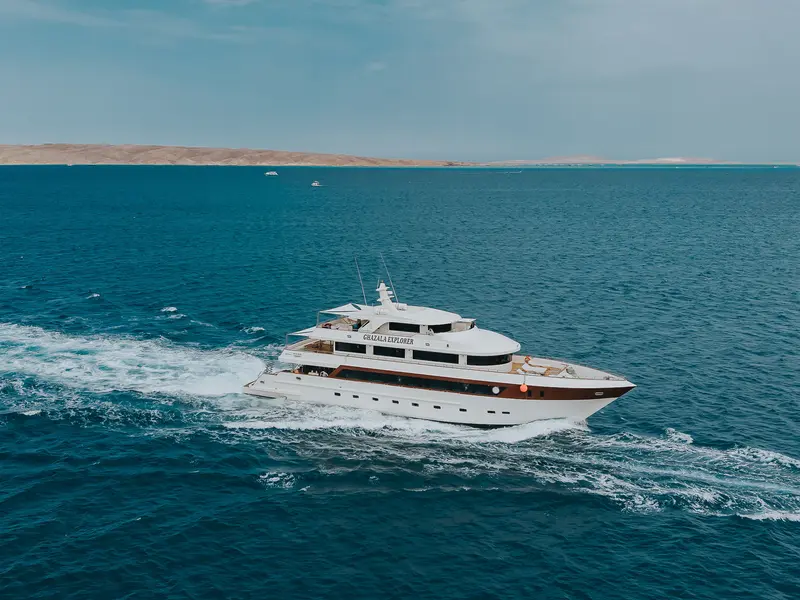
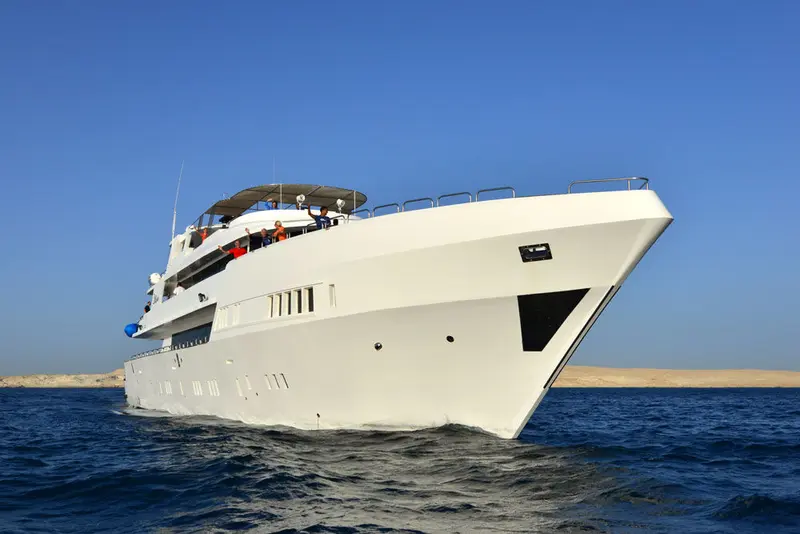
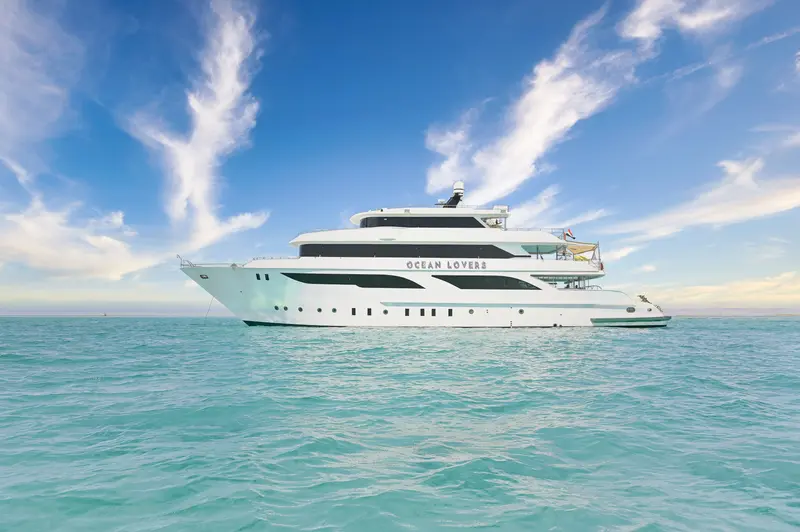
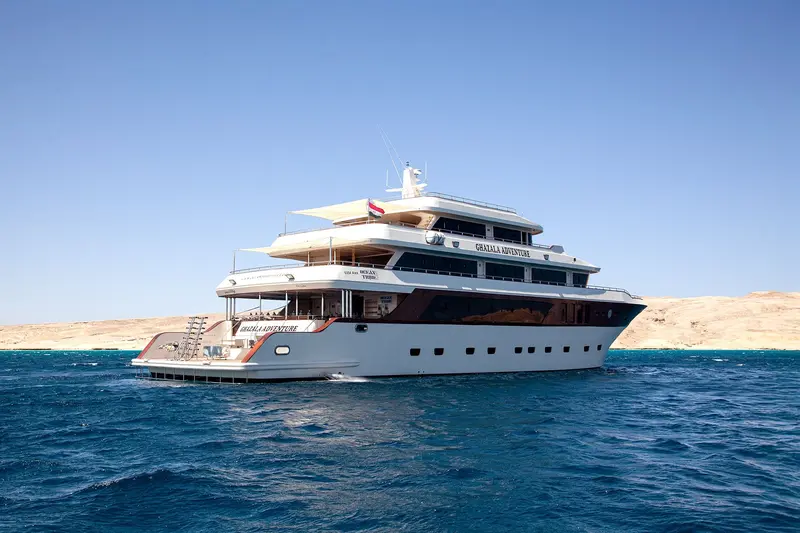
Dive liveaboards Brothers Islands
52 liveaboards run trips to Brothers Islands.
Frequently asked questions about Brothers Islands
When should you go to the Brothers Islands?
Plan the Brothers Islands as part of a southern or central Red Sea liveaboard itinerary that allows flexibility around wind, sea state and changing currents. The islands are exposed, so dive quality depends on whether the boat can use walls and points safely. Shark sightings remain wildlife encounters rather than date-specific guarantees.
What diving experience do you need for the Brothers Islands?
The Brothers Islands suit experienced divers who are comfortable with open water, variable currents, drift procedures, blue-water descents and exposed walls. Advanced certification is useful, while Nitrox and drift-diving training are practical advantages. Good current experience, controlled ascents, strong buoyancy and a solid personal dive history are important here.
What can you see while diving the Brothers Islands?
At the Brothers Islands, Big Brother offers coral-covered walls descending from shallow water to about forty metres, along with the Numidia and Aida wrecks. Oceanic whitetip sharks are a regular attraction in open water, grey reef sharks visit the pinnacles, and hammerheads appear occasionally among other pelagic encounters.
How should you plan a stay at the Brothers Islands?
Plan the Brothers Islands as a liveaboard stay, since the vessel provides access, accommodation and diving, with no ferry, shore base or local lodging at the islets. Allow margin around your international journey and embarkation. Expect repeated dives, surface intervals, meals and boat movements, with routes adapting to weather and sea conditions.