
Red Sea Diving Safari - Wadi Lahami
Google 4.7/5 (205 reviews)
18 km away as the crow flies
Hamata · Egypt · Red Sea
Max. depth · 18 mDescend into the Red Sea at Abu Galawa Kebir to explore the resting place of the Tien Hsing barge, now a vibrant artificial reef.
For subtitles in English: start the video firstthen click the gearat the top right of the video, select “Subtitles/CC”, then “Auto-translate” and choose “English”.
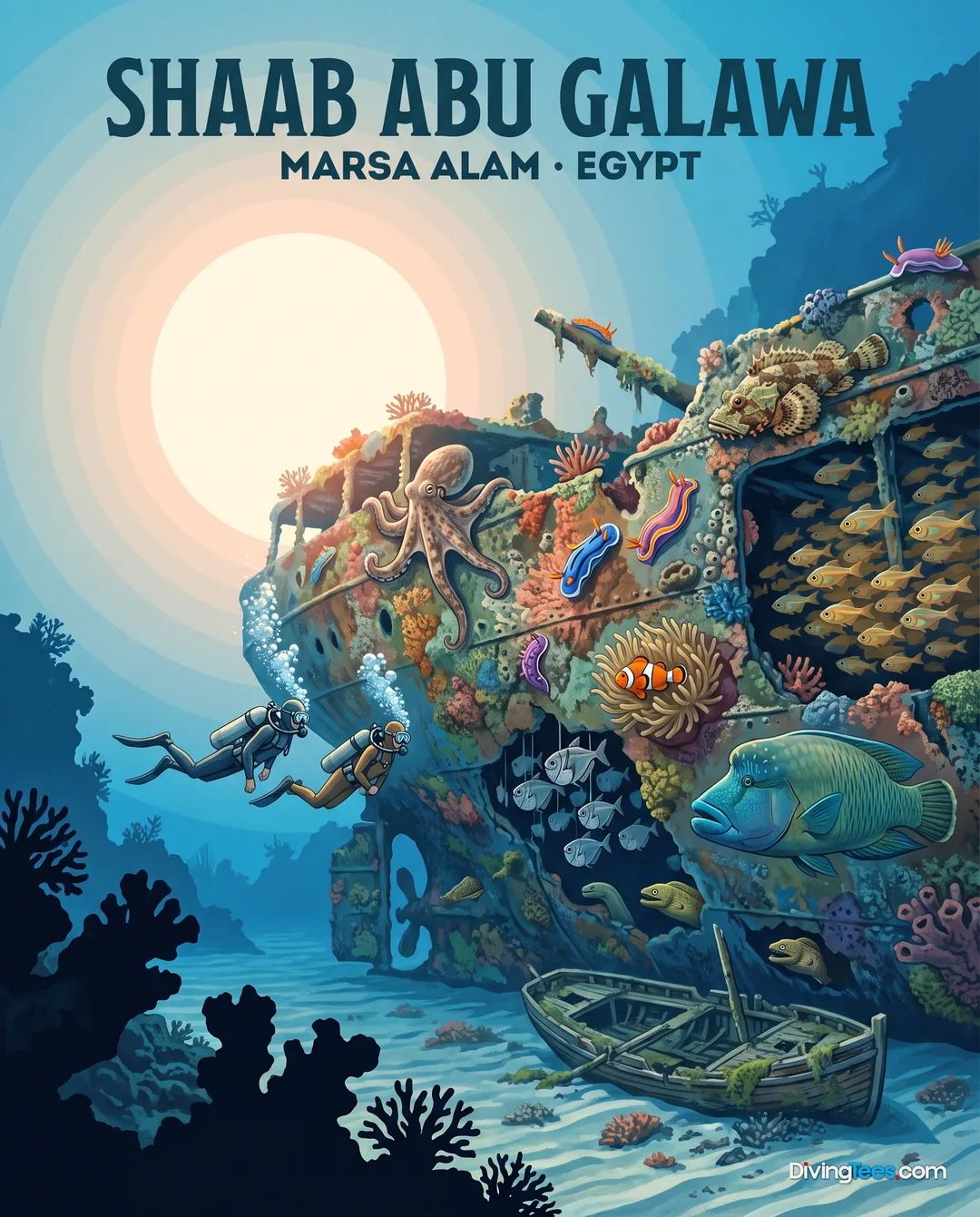
Diving Abu Galawa Kebir, you're immediately introduced to the historical narrative of the Red Sea. The site's primary feature is the Tien Hsing, a Chinese barge that found its final resting place here in 1943. Unlike many wrecks that stand distinct from their environment, the Tien Hsing has, over the decades, completely assimilated into the natural reef structure, creating a fascinating blend of man-made history and natural ecosystem.
As you descend, you'll find the wreck spread across the reef, providing an intricate landscape for exploration. The shallowest parts of the wreck begin at just 5 meters, making it immediately accessible and allowing plenty of light to penetrate the structure. This creates a vibrant, well-lit environment where soft corals and hard corals have colonised every surface, transforming the steel hulk into a living, breathing part of the Red Sea.
The wreck extends down to a maximum depth of 18 meters, offering a gentle slope that accommodates divers of various experience levels. Throughout the descent along the Tien Hsing, you'll notice how the original form of the barge has been softened and sculpted by years of biological growth. This gradual transition from intact vessel to living reef fosters a unique biodiversity, providing shelter and hunting grounds for resident species.
Observing the Tien Hsing, you’ll see how the wreck has effectively become an extension of the reef itself. Fish move seamlessly between the coral-encrusted frame of the barge and the surrounding natural reef formations. The integration is so complete that it often takes a moment to distinguish between the artificial and the natural, highlighting the resilience and adaptability of marine life in establishing new habitats.
Abu Galawa Kebir is a relatively shallow dive site, with depths ranging between 5 and 18 meters. The site welcomes divers of all experience levels.
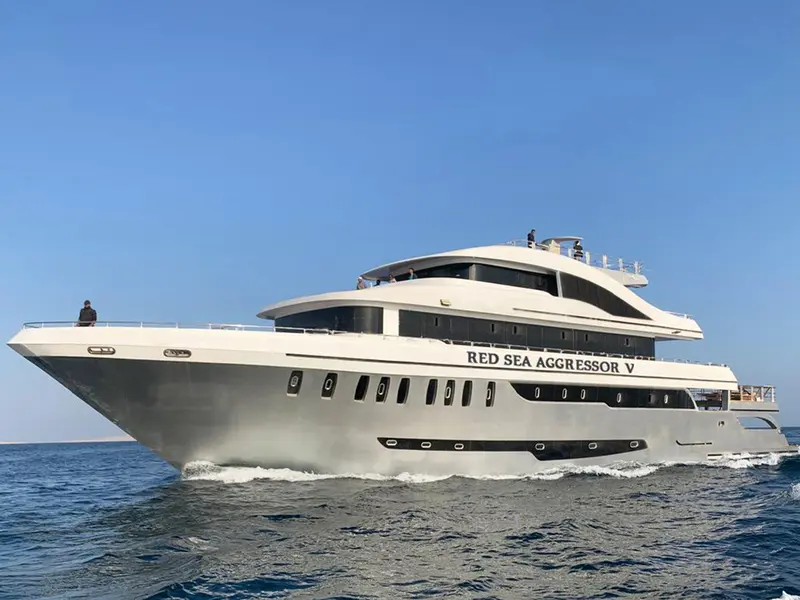
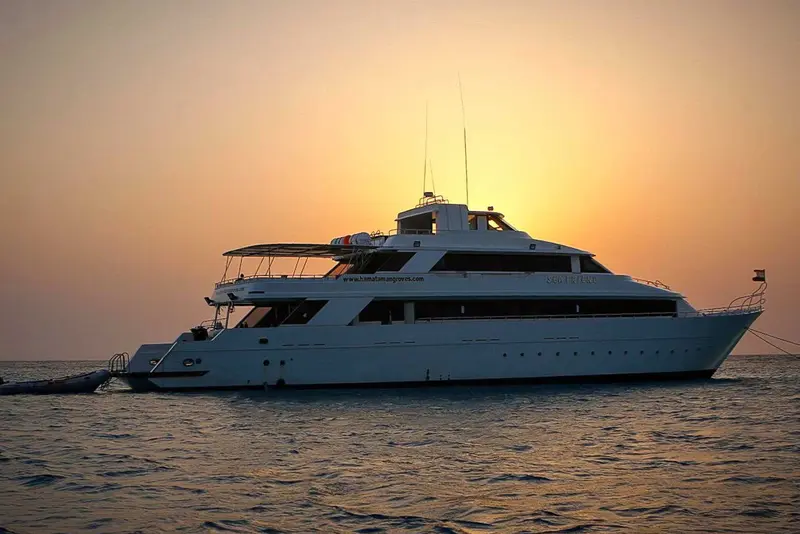
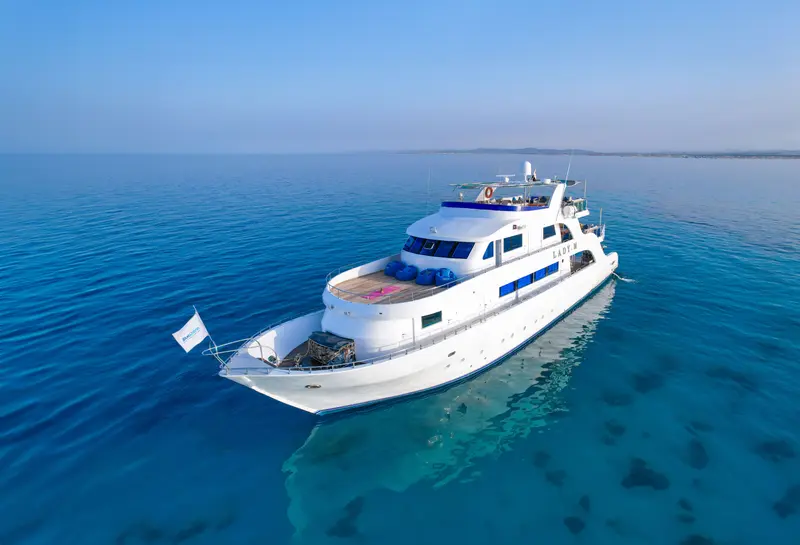
3 liveaboards depart from Hamata another way to explore the region, over several days at sea.
Abu Galawa Kebir welcomes divers of all experience levels. Its relatively shallow profile and gradual slope along the Tien Hsing barge make the site accessible to a wide range of divers, while the wreck and surrounding reef provide an intricate landscape to explore at different depths.
Abu Galawa Kebir ranges from 5 to 18 meters deep. The shallowest parts of the Tien Hsing barge begin at 5 meters, and the wreck extends down to 18 meters along a gentle slope. This depth range allows divers to explore the wreck and reef at accessible levels.
At Abu Galawa Kebir, you can explore the Tien Hsing, a Chinese barge that came to rest here in 1943. Soft and hard corals cover its structure, while fish move between the coral-encrusted wreck and the surrounding natural reef, creating a blend of history and marine habitat.
The Tien Hsing at Abu Galawa Kebir is integrated into the natural reef rather than standing apart from it. Its original barge form has been softened by years of biological growth, and the wreck is spread across the reef, forming an intricate, well-lit landscape for exploration.