

Red Sea Diving Safari - Wadi Lahami
Google 4.7/5 (205 reviews)
58 km away as the crow flies
Hamata · Egypt · Red Sea
Descend into the heart of Gota Soraya, where the reef wall teems with glassfish and sweepers, often visited by a thrilling array of reef sharks.
For subtitles in English: start the video firstthen click the gearat the top right of the video, select “Subtitles/CC”, then “Auto-translate” and choose “English”.
Gota Soraya presents itself as a true highlight for wall diving enthusiasts in the southern Red Sea. From the moment you begin your descent, the sheer face of the reef reveals a topography rich in detail. You'll trace the contours of the wall, where countless crags and crevices offer endless exploration, each turn promising new discoveries.
The character of Gota Soraya truly shines in its structural complexity. The reef wall is not a uniform plane but a dynamic landscape of deep overhangs and intricate fissures. These architectural marvels of nature create perfect sheltered havens, and as you approach, you'll find them densely packed with shimmering schools of glassfish. Swarms of sweepers also inhabit these recesses, creating a living tapestry that pulsates with every surge of the water.
Beyond the smaller reef inhabitants, Gota Soraya holds a deeper allure for those seeking encounters with larger marine life. The site is a known gathering point for several shark species. Swimming along the wall, you stand a good chance of encountering grey reef sharks (Carcharhinus amblyrhynchos), their sleek forms patrolling the blue. Their presence adds an undeniable thrill to the dive, reminding you of the vibrant ecosystem at play.
The open water beyond the wall is where Gota Soraya truly rewards the patient diver. Silver-tip sharks (Carcharhinus albimarginatus) are also regular visitors, their distinctive white-tipped fins easily spotted against the deep blue. For those with a keen eye and a bit of luck, the distinctive silhouettes of hammerhead sharks (Sphyrna lewini) can emerge from the currents, making for an unforgettable encounter as they cruise past the reef's edge.
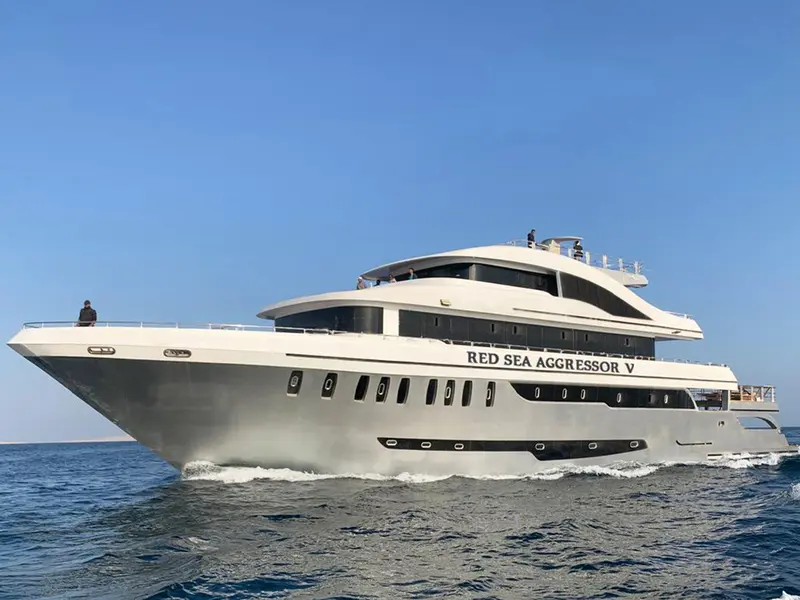
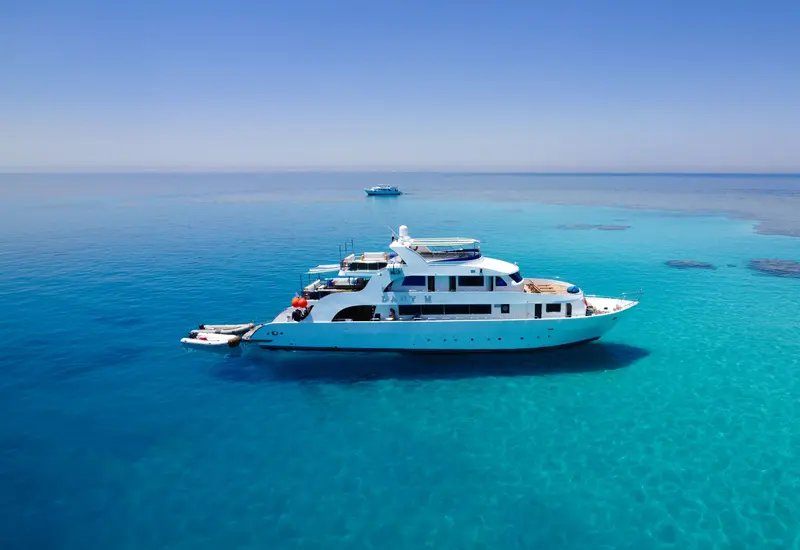
3 liveaboards depart from Hamata another way to explore the region, over several days at sea.
You can explore vivid coral formations along a rich reef wall, with glassfish and sweepers filling its fissures and overhangs. Grey reef sharks patrol the blue, while silver-tip sharks may appear beyond the wall. With patience and luck, you may also see hammerhead sharks near the reef’s edge.
Gota Soraya includes water movement around the reef and open blue beyond the wall. Surge moves through the overhangs and fissures where glassfish and sweepers gather, while currents at the reef’s edge may bring hammerhead sharks into view. You can watch the blue for passing sharks as you follow the wall.
You descend beside a sheer reef wall whose contours lead through crags, crevices, deep overhangs, and intricate fissures. The wall is a detailed, uneven landscape rather than a uniform face, giving you changing areas to explore while revealing sheltered spaces filled with glassfish, sweepers, and coral formations.
You may encounter grey reef sharks patrolling the blue along the wall and silver-tip sharks visiting the open water beyond it. Hammerhead sharks can also appear near the reef’s edge when conditions and luck align. These encounters take place alongside the reef’s smaller life and vivid coral formations.