
Scuba World Divers
Google 4.6/5 (165 reviews)
Soma Bay · Egypt · Red Sea
Max. depth · 9 mDescend into Gotha Abu Nugar South, a shallow Red Sea coral garden where vibrant life thrives in less than ten metres of water.
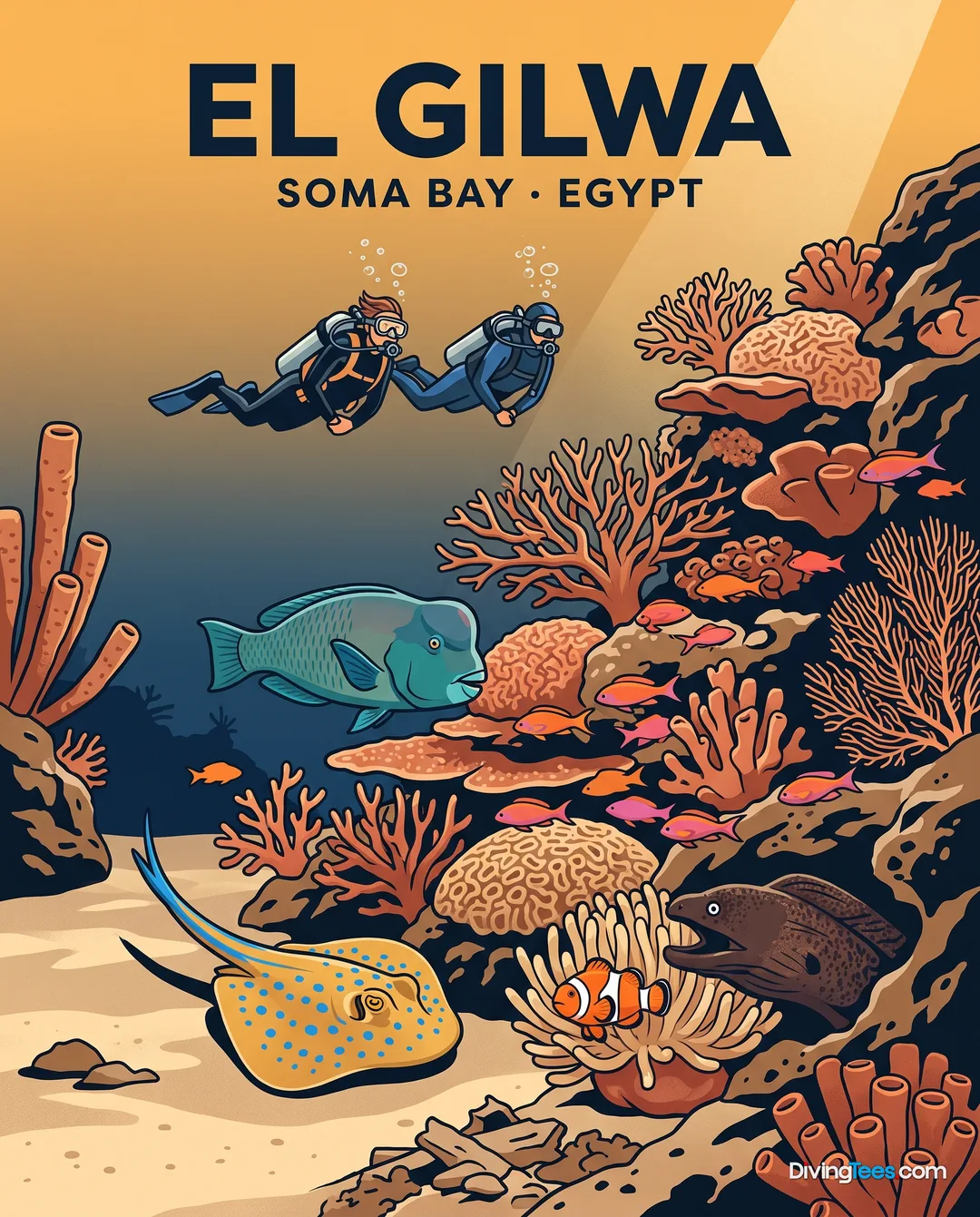
Gotha Abu Nugar South invites you into a coral garden experience that stands out in the northern Red Sea. From the moment you descend, the vibrant colours and intricate structures of the coral formations immediately capture your attention. The entire site is characterized by its remarkable health and diversity, creating an environment where life flourishes in every crevice and along every branch, a true testament to the Red Sea's ecological richness.
The dive profile at Gotha Abu Nugar South makes it accessible and rewarding for a wide range of divers. The seabed gradually slopes, reaching a maximum depth of nine metres, allowing for extended bottom time and ample opportunity to explore the intricate details of the reef. Sunlight penetrates easily through the shallow water, illuminating the colours of the corals and attracting a diverse array of reef fish, creating a visually rich spectacle from start to finish.
This site is primarily defined by its extensive coral formations, which are among the finest you will encounter in the region. You will find yourself navigating through intricate labyrinths of hard and soft corals, each vying for space and light. The sheer density and variety of coral species here provide shelter and hunting grounds for countless smaller reef inhabitants, making every glance into the reef's structure a discovery.
Even at its shallow depths, the feeling of immersion at Gotha Abu Nugar South is absolute. You become part of the tranquil rhythm of the reef, observing the subtle interactions between its inhabitants. The overall impression is one of a thriving, self-sustaining ecosystem showcasing the delicate balance of the marine environment at its best, a prime example of a healthy shallow reef system.
This dive site is characterized by an exceptionally shallow profile, reaching a maximum depth of nine metres. It is suitable for all levels of divers.
Gotha Abu Nugar South is suitable for all levels of divers. Its shallow profile and gradually sloping seabed make the site accessible while still offering plenty to explore. You can spend time observing the reef’s intricate structures, colourful corals, and smaller inhabitants in a calm, shallow-water setting.
Gotha Abu Nugar South reaches a maximum depth of nine metres. The seabed slopes gradually, and the shallow profile allows extended bottom time for exploring the reef. Sunlight penetrates easily through the water, illuminating the coral formations and making detailed observation and macro photography practical throughout the dive.
At Gotha Abu Nugar South, you will see healthy coral formations with varied hard and soft corals arranged in intricate structures. The reef provides shelter and hunting grounds for smaller reef inhabitants, while sunlight highlights the colours and details. Reef fish and the interactions among reef life add to the scene.
Gotha Abu Nugar South combines a maximum depth of nine metres with strong sunlight penetration, giving you time and visibility for close observation. You can explore coral labyrinths, examine detailed formations, and look into the reef’s crevices for smaller inhabitants. The site is also suited to macro photography.