
Blue Island Divers
Google 5/5 (210 reviews)
8.5 km away as the crow flies
Roatan · Honduras · Americas
Max. depth · 100 mMary's Place offers a unique dive experience through a dramatic network of vertical fissures and a vibrant coral garden, revealing a submarine landscape shaped by planetary forces.
For subtitles in English: start the video firstthen click the gearat the top right of the video, select “Subtitles/CC”, then “Auto-translate” and choose “English”.
Mary's Place begins on a plateau, forming an elbow shape, with the shallower end at 9 meters extending to 18 meters at its tip. This initial section serves as an entry point before the dramatic descent into the signature vertical fissures. The site is a geological anomaly, formed by seismic activity, creating a series of deep crevasses that cut through the reef structure, offering a unique dive experience unlike others in the region.
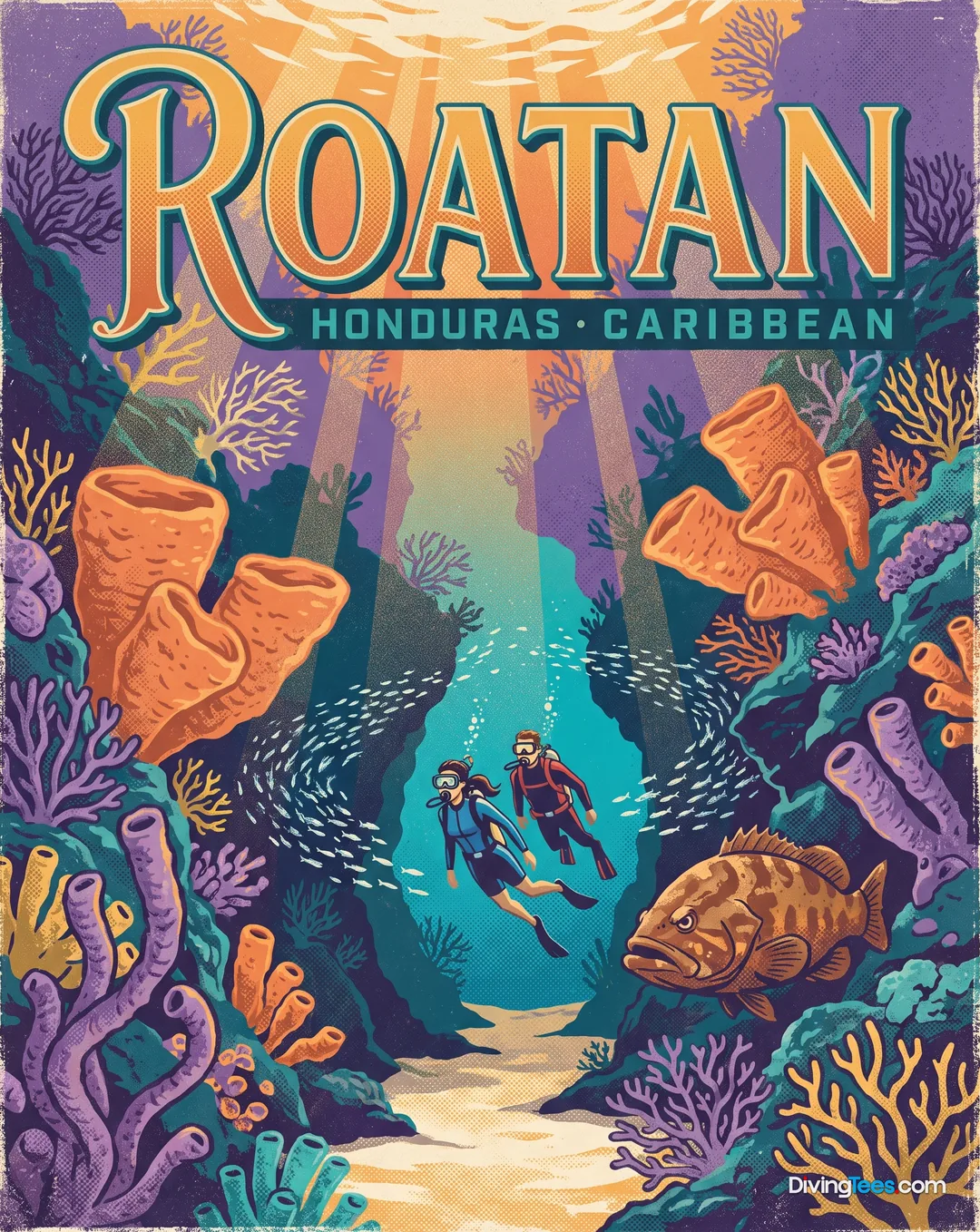
The defining feature of Mary's Place is a spectacular vertical fissure that cleaves through the reef, starting near the surface and extending to depths of 30 to 36 meters, sometimes even pushing down to 100 meters on the sheer wall beyond. These narrow passages are not just geological marvels; they are vibrant ecosystems, their surfaces covered in an intricate mosaic of hard and soft corals, including massive sponges and delicate black corals. The play of light filtering down into these crevices creates a captivating visual effect, guiding your way through the reef's interior.
As you descend deeper within the fissures, you encounter a transition to a profound wall environment. This wall supports a dense growth of bushy and feathery black corals, along with various gorgonians that have adapted to the light conditions and flow within these protected channels. You will also find large barrel sponges and fireworms (Hermodice carunculata) adhering to the overhangs and ledges, testament to the undisturbed nature of these deep reef sections.
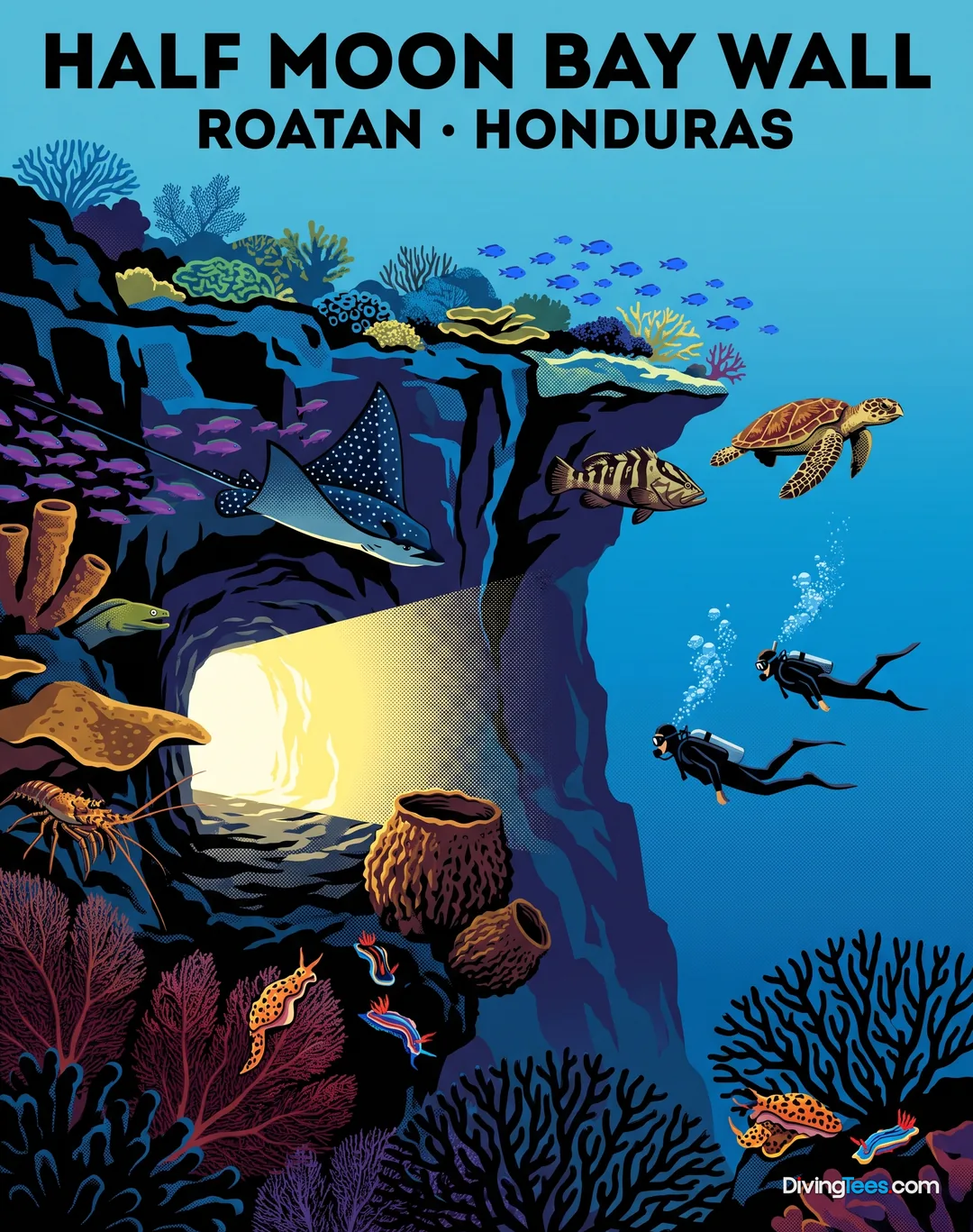
Beyond the immediate confines of the main fissure, the dive extends along an impressive reef wall. This wall is known for its healthy coral structures and supports a variety of reef fish. You'll observe angelfish (Pomacanthidae), parrotfish (Scaridae), and grunts (Haemulidae) patrolling the reef face, utilizing the complex topography for refuge and feeding. The ecosystem here benefits from its position on the south side of Roatan, which exposes it to different current patterns, contributing to the richness of the coral growth.
While the focus often remains on the geology and fixed marine life within the fissures, Mary's Place also offers glimpses of larger pelagic species. The deeper wall section provides habitat for various reef fauna, including lobsters (Nephropidae), crabs (Brachyura), and different species of eels (Anguilliformes), often found tucked into the myriad cracks and small caves along the reef. Large schools of jacks (Carangidae) can sometimes be seen cruising the deeper open water beyond the wall, using the drop-off as a hunting ground.
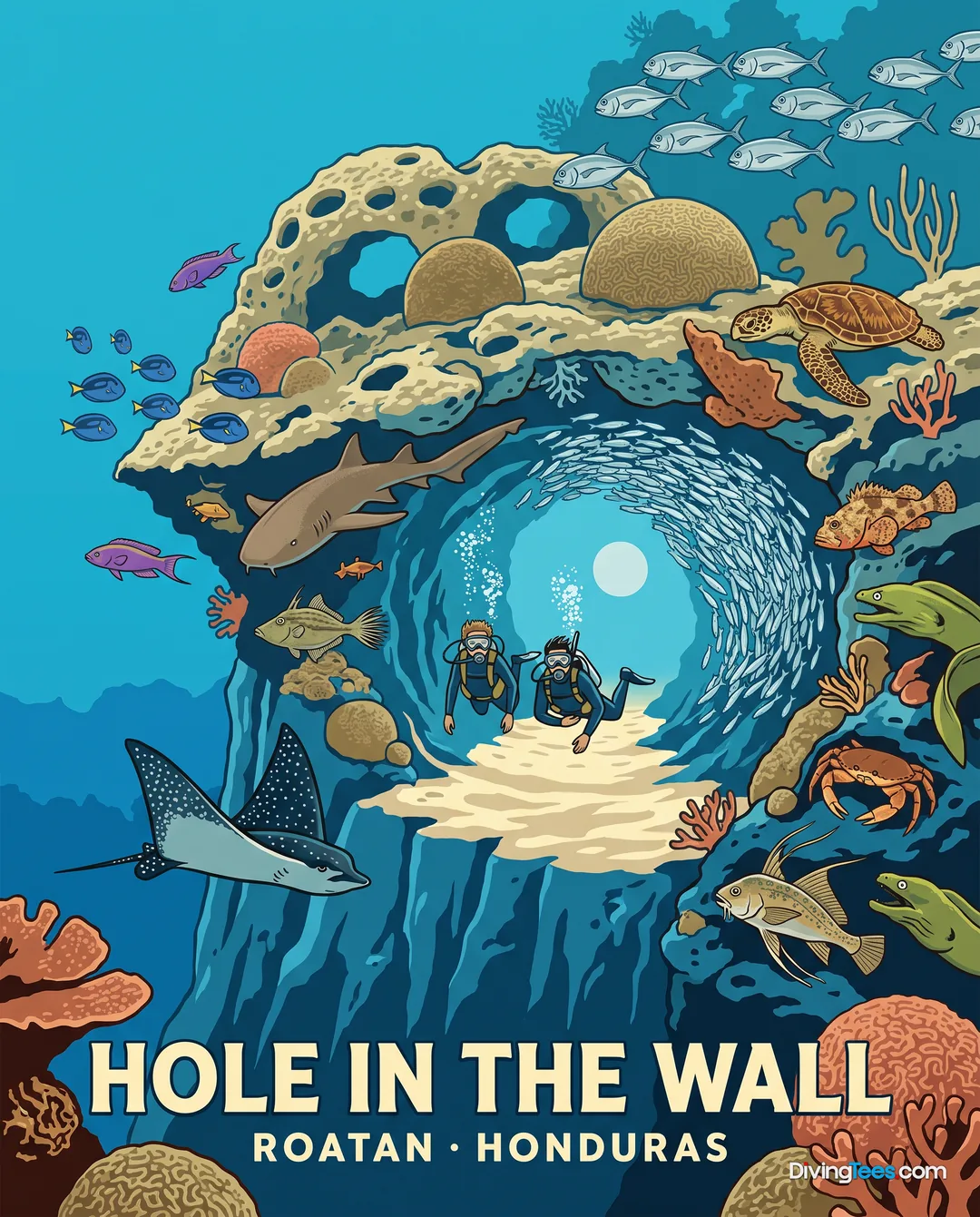
One of the more intimate aspects of diving Mary's Place involves navigating its numerous passages. These narrow routes through the reef offer an exciting and distinct experience. They are not merely transit points but complete micro-habitats, sheltering smaller reef creatures that thrive in the reduced light and calmer water. Divers move slowly through these sections, observing the intricate details of the coral and sponge growth on the walls, often spotting garden eels (Heterocongrinae) in sandy patches nearby.
The journey through Mary's Place is a continuous discovery of interconnected features, transitioning from one dramatic geological formation to the next. Following the cavern, you encounter a final fault, an intricate passage that completes the circuitous route through the reef's interior. These features create a varied and engaging dive profile, keeping you constantly aware of your surroundings and the formations you are navigating.
This intricate network of deep fissures and crevasses culminates in a magnificent coral garden as you reach the upper plateau. Here, the light brightens, illuminating a thriving ecosystem where the vibrant hard and soft corals provide refuge for smaller, often overlooked, inhabitants. This shift from the deeper, darker cuts to the radiant plateau truly defines the dynamic character of Mary's Place.
Amidst the vibrant hues of the coral garden, the search for specific, prized marine life begins. This shallower section is renowned for its delicate inhabitants, including seahorses (Hippocampus) and various species of nudibranchs. Patience and a keen eye are rewarded here, as these creatures blend seamlessly with their surroundings, offering a chance for close observation and appreciation of their intricate beauty. The abundance of marine life throughout the dive is a testament to the health and richness of this reef system.
This dive requires Advanced Open Water certification at minimum, with a strong emphasis on buoyancy control due to the narrow passages and delicate coral structures. Divers should have excellent mastery of their buoyancy to navigate the site's unique topography without impacting the reef, with at least 50 logged dives recommended for comfort in these conditions. Depths range from a minimum of 9 meters down to 40 meters, with sections reaching over 24 meters and a main wall that extends to 100 meters for deeper exploration. Visibility is generally good, typically between 20 and 30 meters, offering clear views of the extensive coral formations and the light filtering into the crevasses. Currents are generally minimal within the fissures but can be more variable on the exposed wall sections, especially on the south side of the island. The regional waters maintain a comfortable temperature between 27°C and 29°C. The optimal period for diving this site extends from March through November.
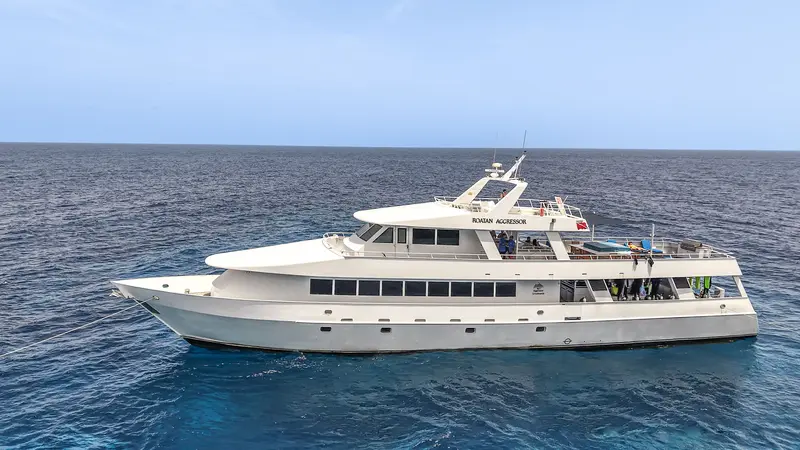
1 liveaboard departs from Roatan another way to explore the region, over several days at sea.
The optimal period for diving Mary's Place extends from March through November. Regional water temperatures remain between 27°C and 29°C. Visibility is generally good, typically ranging from 20 to 30 meters, which helps you see the coral formations and light filtering through the site's crevasses.
Mary's Place requires Advanced Open Water certification at minimum. You should have excellent buoyancy control to move through narrow passages and around delicate coral structures without touching the reef. At least 50 logged dives are recommended for comfort, particularly when navigating the site's interconnected fissures, canyons, and unusual topography.
Mary's Place begins at 9 meters on its plateau and descends through fissures reaching 30 to 36 meters, with deeper sections extending to 40 meters and a main wall reaching 100 meters. Currents are generally minimal inside the fissures but can become more variable on exposed wall sections, especially south of the island.
At Mary's Place, you can see vertical fissures, interconnected passages, canyons, black corals, gorgonians, barrel sponges, fireworms, and light shafts. Reef life includes angelfish, parrotfish, grunts, lobsters, crabs, eels, garden eels, and schools of jacks. On the plateau, look for seahorses, nudibranchs, and a vibrant coral garden.