

Roatan Divers
Google 5/5 (408 reviews)
1.5 km away as the crow flies
Roatan · Honduras · Americas
Max. depth · 20 mExplore an intricate network of underwater passages and vibrant marine life, culminating in a mesmerizing silverside spectacle.
For subtitles in English: start the video firstthen click the gearat the top right of the video, select “Subtitles/CC”, then “Auto-translate” and choose “English”.
The Blue Channel dive site is a significant underwater passage, beginning where the shallow inner reef meets a distinct channel that carves a path towards the coral ridge off West End. This unique topography offers a dynamic descent, starting close to the surface and gradually deepening along a sloping wall. The channel itself runs parallel to the shore, creating a natural underwater highway for marine life and divers alike, with the initial descent revealing a wide-open expanse before its intriguing transition.
A significant feature of Blue Channel is its system of underwater passages. The southern wall houses an intricate network of tunnels and smaller grottos waiting to be explored, while the northern wall presents a series of lively overhangs. Further into the dive, a labyrinthine section of tunnels can occupy you for a solid 7 to 8 minutes, demanding good buoyancy control and situational awareness. This transition from open reef to enclosed spaces offers a varied dive profile, shifting the light and experience profoundly.
Your journey through Blue Channel is characterized by a gradual ascent, moving from the deeper section up towards the coast, ultimately reaching depths of approximately 6 to 8 meters. What truly sets this site apart is the intricate network of crevasses and caverns that you'll utilize throughout the dive. These formations aren't merely small cracks; they are substantial features that offer a constant sense of discovery, guiding you through the reef in a way unlike any other site in the region.
Beyond the structural complexity, Blue Channel is a macro photographer's haven, particularly within its expansive seagrass habitat. Here, you'll encounter a concentrated diversity of smaller creatures, from nudibranchs moving along the blades to sea stars and upside-down jellyfish pulsating gently above the substrate. Keep a close eye out for juvenile drum fish (Equetus punctatus) and the resident green moray eels (Gymnothorax funebris) and trumpetfish (Aulostomus maculatus) at the channel’s entrance, often found tucked into crevices.
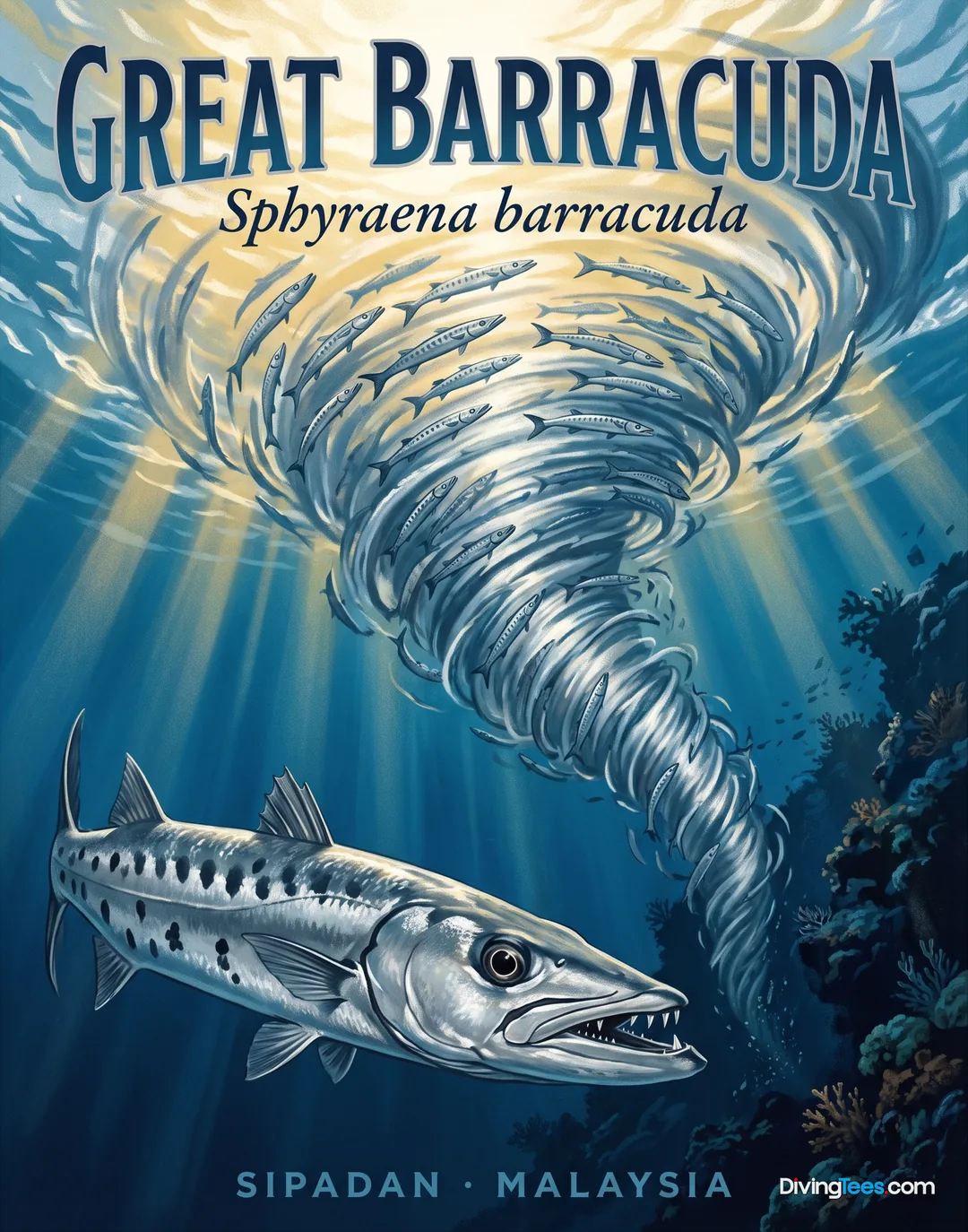
The site also experiences seasonal shifts in its marine population, particularly during August and September when massive schools of silversides (Atheriniformes) migrate through the southern wall of the channel. These aggregations can become so dense that they momentarily reduce visibility to just a few meters, creating a unique, albeit temporary, phenomenon. Barracudas (Sphyraena barracuda) and large schools of Bigeye Scad (Selar crumenophthalmus) are often seen patrolling the main channel, taking advantage of the concentrated baitfish.
The coral coverage across Blue Channel is rich, supporting over 70 documented species that form the backbone of the ecosystem. Alongside the corals, fireworms (Hermodice carunculata), large sea plumes, and lobsters (Palinuridae) find shelter within the reef’s many nooks and crannies. The diversity extends to wrasses, juvenile snapper (Lutjanidae), juvenile groupers (Epinephelinae), grunts (Haemulidae), surgeonfish (Acanthuridae), and goatfish (Mullidae), all contributing to the site's vibrant reef community.
One notable aspect of Blue Channel's topography is a gently sloping wall that can be followed from a depth of 3 meters down to 14 meters. This continuous slope, combined with the relative shallowness of much of the site, makes it an ideal location for buoyancy practice. While generally a calm dive, traversing the tunnels and navigating the current fluctuations that occasionally sweep through the main channel requires attentive diving. A partial wreck of a small sailboat also rests here, adding another point of interest to explore.
The dive culminates at the shallower end of the channel, where a distinct cavern frequently serves as a gathering point for schools of silversides. These shimmering fish create a dynamic, living curtain within the cavern, their coordinated movements a mesmerizing spectacle. This final, vibrant highlight provides a memorable closing act to a dive already rich with geological interest and ensures you finish your bottom time in a truly active environment, surrounded by life.
Depths at Blue Channel vary from a shallow 3 meters on the reef crest down to 20 meters within the deeper sections of the channel and its wall, with an ascending dive profile reaching 6 to 8 meters. This site is accessible for all certification levels, including Open Water Divers, though navigating the confined spaces of the tunnels requires solid buoyancy control. Visibility is generally excellent, often extending beyond 20 meters, but can drop to a few meters during silverside aggregations in August and September. Currents are typically mild, allowing for relaxed exploration, but occasional fluctuations can sweep through the main channel. The best time to experience Blue Channel is between March and November, with optimal conditions.
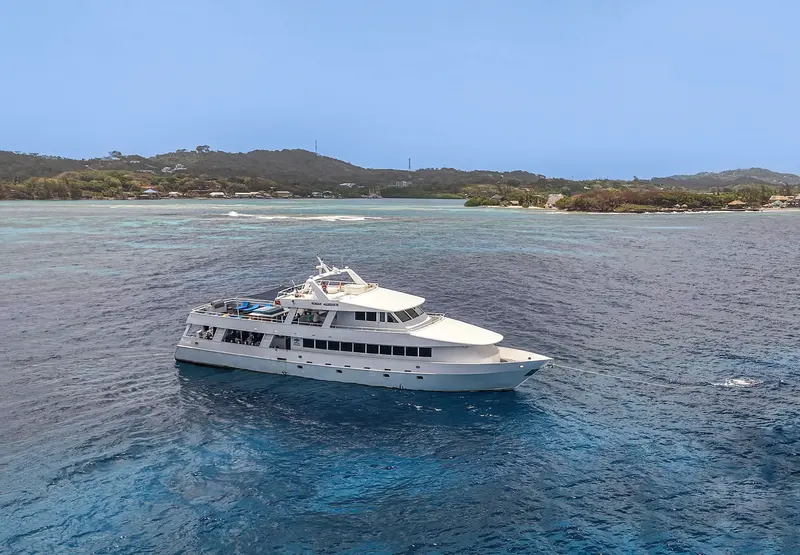
1 liveaboard departs from Roatan another way to explore the region, over several days at sea.
You can dive Blue Channel between March and November, when conditions are described as optimal. If you visit in August or September, expect seasonal silverside aggregations along the southern wall and in a cavern. These schools can temporarily reduce visibility from generally excellent levels to only a few meters.
Blue Channel is accessible to all certification levels, including Open Water Divers. You should have solid buoyancy control before entering the confined tunnels and grottos, where careful movement and situational awareness are important. The site also offers a gently sloping reef and relatively shallow areas for buoyancy practice.
Blue Channel ranges from 3 meters on the reef crest to 20 meters in its deeper channel and wall sections. The dive follows an ascending profile toward 6 to 8 meters. Currents are typically mild, though occasional fluctuations can sweep through the main channel and require attentive diving.
At Blue Channel, you can explore underwater tunnels, crevasses, caverns, overhangs, a sloping wall, and part of a small sailboat wreck. Marine life includes nudibranchs, juvenile drum fish, green moray eels, trumpetfish, barracudas, Bigeye Scad, silversides, lobsters, sea plumes, and diverse corals and reef fish.