

Azores Diving
★ 4.9/5 (552 reviews)
5.8 km away as the crow flies
Sao Miguel · Azores · Atlantic
Max. depth · 50 mDescend onto the exposed crest of Dollabarat, an offshore pinnacle rising from the deep Atlantic, where strong currents bring pelagic action to shallow reefs.
Dollabarat is an offshore seamount that breaks the surface of the open Atlantic, forming a shallow crest around 3 to 5 metres before dropping away into deeper water. This isn't a sheltered coastal reef; you're diving in blue water, exposed to the ocean's forces. The seamount's basaltic rock forms a series of terraces and rocky slopes, stepping down from around 8 to 10 metres to depths between 20 and 30 metres, with the structure reaching down to 50 metres in places. Approaching the site, you'll typically descend from the boat, often seeking the lee side for a more controlled entry, particularly given the site's reputation for strong currents.
Once you're down, the topography of Dollabarat offers a varied dive profile. Beyond the initial shallow crest, you'll find reef-edge drop-offs and, in some areas, swim-throughs carved into the volcanic rock. The basalt structures provide shelter and habitat for a dense community of reef fish, while the surrounding blue water draws in larger oceanic species. The site functions as a nutrient-rich upwelling area, which fuels the entire food chain, from the smallest invertebrates to the biggest pelagics, making it a vibrant ecosystem.
The currents at Dollabarat are a defining characteristic of the dive. They can be strong and are a constant presence, influencing how you plan and execute your dive. However, there are calmer windows when anchoring might be possible, allowing for exploration of the shallower parts of the crest. You'll need to be comfortable with drift diving and managing your buoyancy in moving water, but it's these same currents that bring in the nutrient-rich waters, attracting the diverse marine life that makes this site exceptional.
Visibility at Dollabarat is typically excellent, often ranging between 25 and 40 metres, giving you an expansive view of the seamount and the pelagic realm beyond. This clear water, combined with the strong currents, creates an environment where you can often spot schooling fish from a distance, or see pelagics approaching from the blue. The interplay of light filtering through the clear water onto the dark basalt provides a dramatic backdrop to the marine activity.
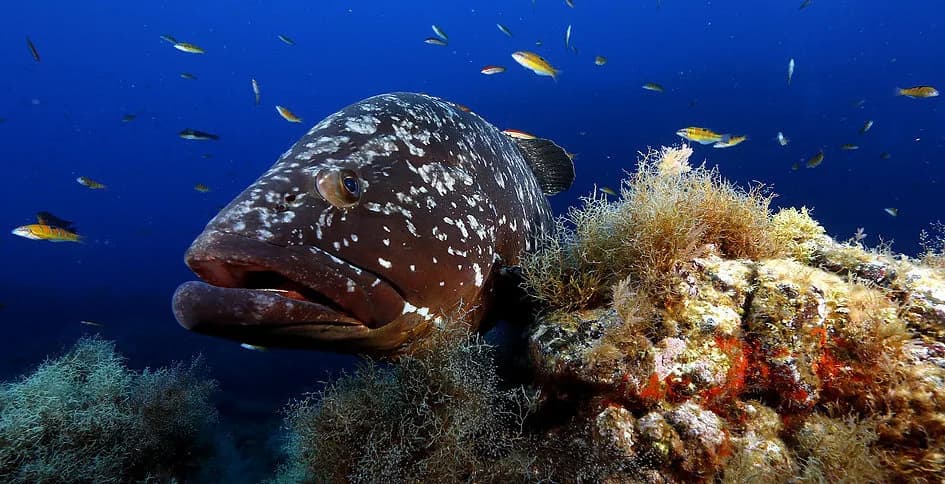
The marine life at Dollabarat is a rich blend of resident reef species and transient pelagics. You'll encounter groupers (Serranidae), including black grouper (Mycteroperca bonaci), dusky grouper (Epinephelus marginatus), and the impressive Atlantic goliath grouper (Epinephelus itajara) often sheltering in the deeper sections of the reef. Schools of sea chub (Kyphosus sectatrix) are common, as are various triggerfish (Balistidae). Keep an eye out for black coral (Antipatharia) growing on the deeper parts of the pinnacle.
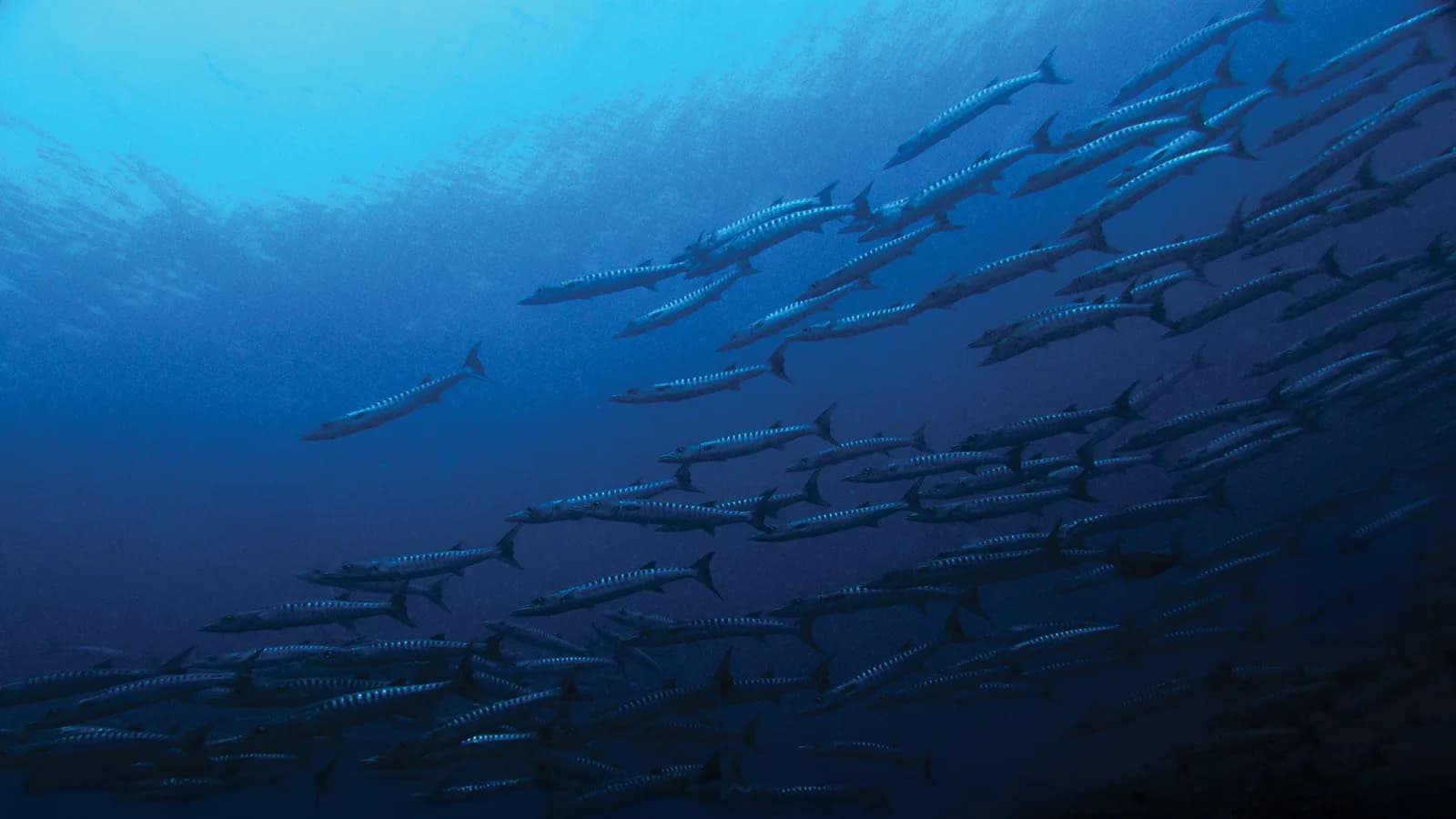
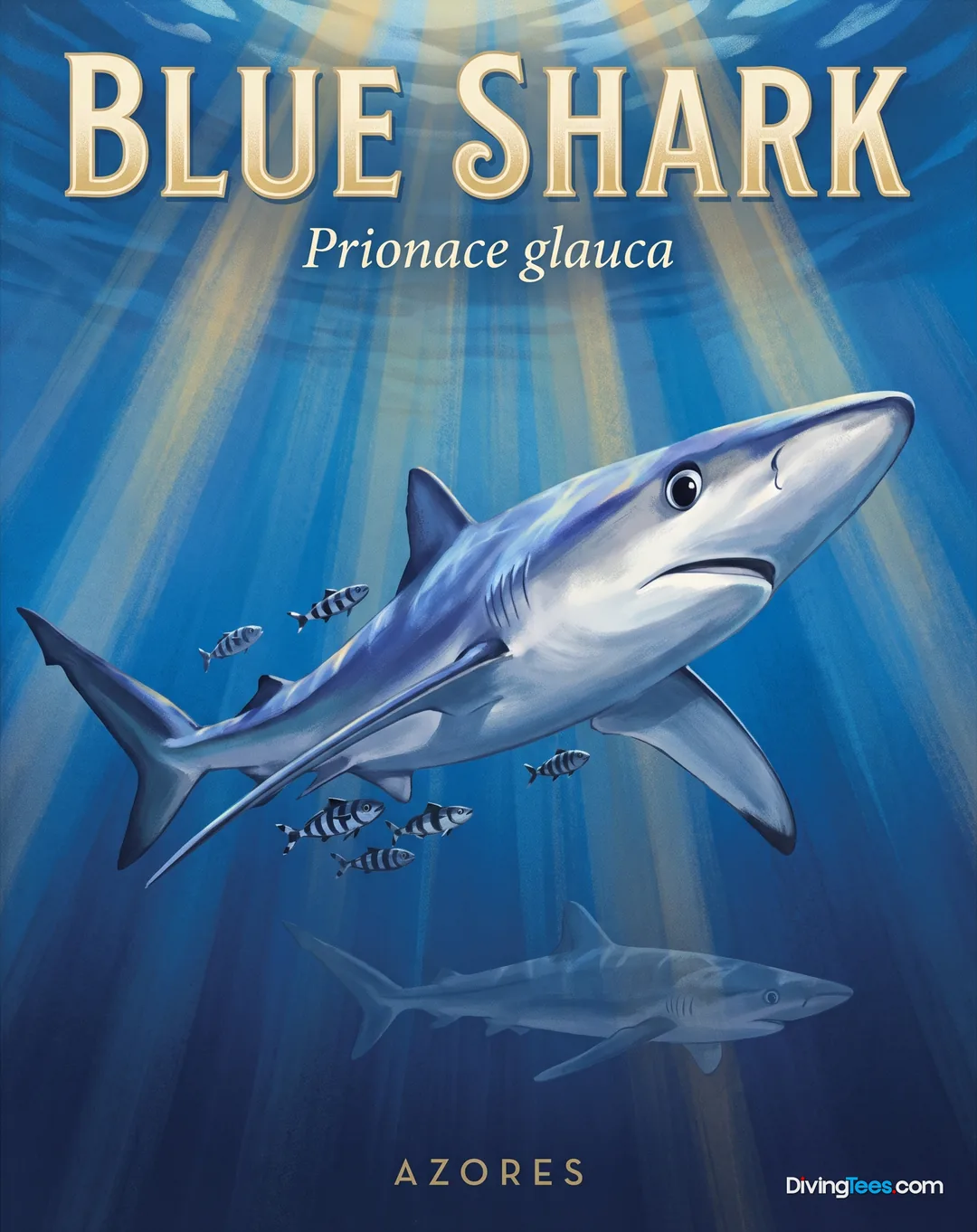
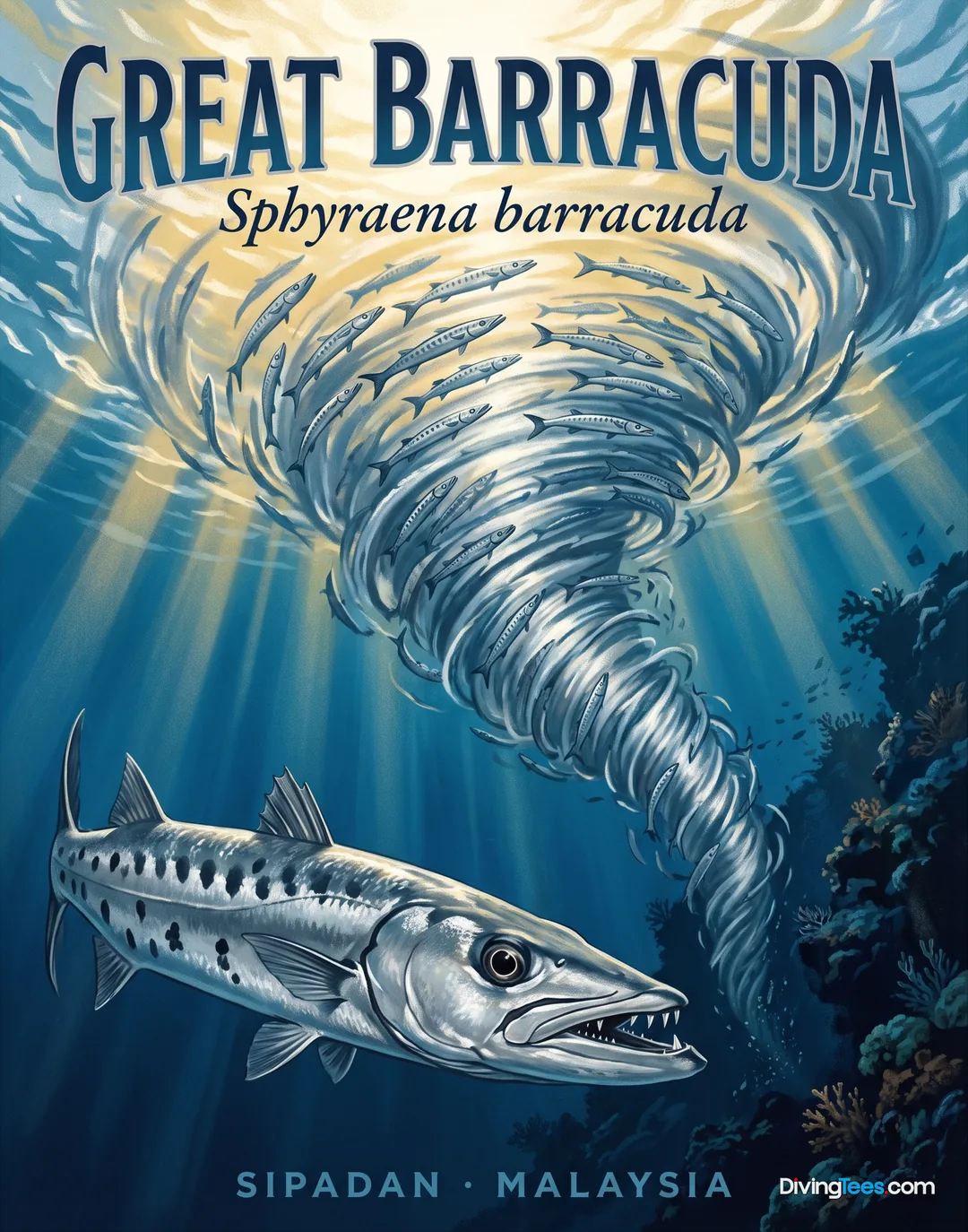
What truly sets Dollabarat apart is the consistent presence of large pelagic species. While reef fish populate the seamount, the open-ocean exposure means you're regularly in the presence of sharks (Selachimorpha), with blue sharks (Prionace glauca) making appearances, especially from late spring through summer. Barracuda (Sphyraena), jack (Carangidae), tuna (Thunnini), and wahoo (Acanthocybium solandri) are frequently seen cruising the currents. Occasional sightings of manta rays (Mobula birostris), turtles (Cheloniidae), and dolphins (Delphinidae) further underscore the site's importance as an oceanic waypoint.
Diving Dollabarat is an immersion into a dynamic, open-ocean environment. It offers a distinct experience compared to more sheltered island sites, presenting both the challenges of strong currents and the rewards of extraordinary marine encounters. The sheer volume of pelagic activity, combined with the healthy reef ecosystem on the seamount itself, places Dollabarat among the standout dives in the Azores, an experience that captures the raw power and beauty of the Atlantic.
Dollabarat is a challenging dive, recommended for advanced divers with experience in strong currents. The dive depth ranges from a shallow minimum of 3 metres at the crest, down to 50 metres along the slopes. Visibility is consistently good, usually between 25 and 40 metres. The currents are reliably strong, requiring careful dive planning and good buoyancy control. While accessible year-round, late spring to summer offers potentially better opportunities for pelagic encounters.