
Acuarios Dive Center
Google 4.9/5 (282 reviews)
Canary Islands · Atlantic
Sheltered volcanic bays, sandy plains, rocky drop-offs, octopus and winter angel sharks shape Costa Calma’s straightforward diving holiday on Fuerteventura’s southern coast.
For subtitles in English: start the video firstthen click the gearat the top right of the video, select “Subtitles/CC”, then “Auto-translate” and choose “English”.
Volcanic rock shelves, sandy ground and sheltered bays define diving around Costa Calma, rather than a single dramatic wall or wreck. The station makes a useful base for exploring the south-east of Fuerteventura, with many outings starting from the coast and some reaching sites by boat. Shallow water and moderate depths suit first dives and early training, while deeper or more exposed rock formations give experienced divers something to add. Above water, long beaches and open volcanic landscapes make a sensible partner to the diving.
The underwater scenery shifts between dark volcanic rock, low rocky reefs, sandy plains and drop-offs, with some traversing formations to explore. Many dives are straightforward coastal outings in sheltered bays, where a slow route over sand and rock can be more rewarding than chasing a dramatic profile. Current is generally light, although exposed sites can bring more surge or movement than the protected bays. Visibility commonly reaches 15 to 20 metres, particularly in summer and autumn, but swell can stir sediment in shallow water and reduce the view. Most diving is from the shore, with occasional boat access for sites that suit it. This makes Costa Calma easy to approach, but it is not a destination to book on the assumption that every dive will be a deep drop-off or a consistently clear-water sortie.
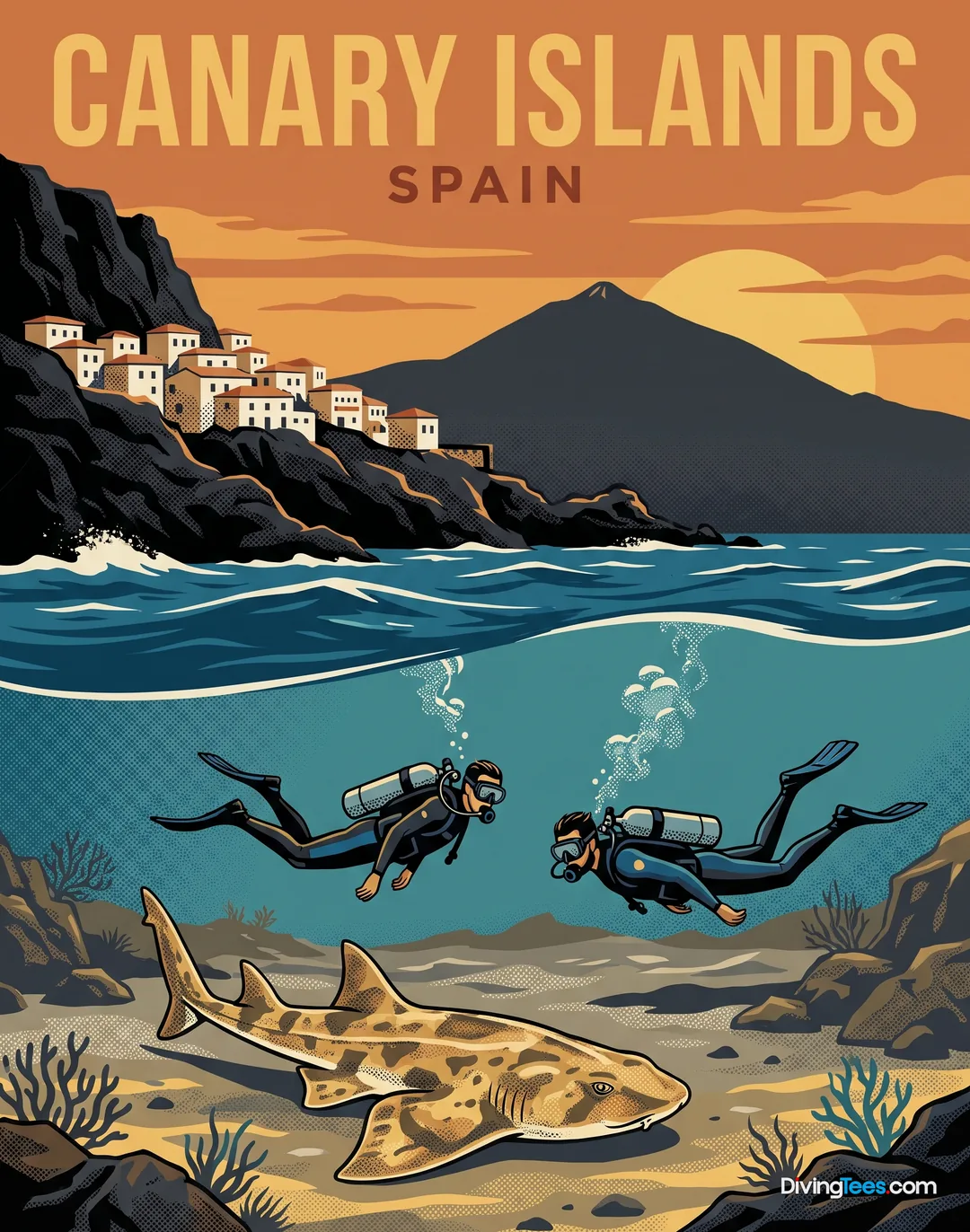
The reward here is close observation rather than a guaranteed parade of large animals. Octopus and cuttlefish are regular year-round encounters, particularly where rocky ground meets sand and there are cracks or cover to search. Starfish are also seen throughout the year. Winter brings occasional reports of angel sharks, a possibility worth keeping in mind without making it the reason for every dive. On sandy patches, a careful, unhurried scan is more useful than swimming quickly from one piece of rock to the next. Good positioning and a controlled pace help reveal animals resting against the bottom, while the mixture of rock and sand keeps the view changing even on a modest coastal profile.
Costa Calma can be dived throughout the year, but June to October is the practical choice for the best combination of calmer water and clearer conditions. Summer and autumn usually give the strongest visibility, often around 15 to 20 metres. The reason to favour these months is not a rainy season or monsoon pattern, but the likelihood of less swell disturbing sediment in the bays. Winter remains worthwhile, especially if an occasional angel shark is part of the appeal, though conditions can be less settled. Outside the main European school holidays, the beaches and local diving schedule are generally quieter.
This is a sensible destination for beginners, refresher dives and divers who prefer uncomplicated coastal profiles. Sheltered, shallow bays can suit a first dive or early PADI, SSI or BSAC training when the conditions are favourable. No specialist qualification is needed for the usual outings. More experience becomes useful when choosing deeper or exposed sites, where swell and stronger movement may replace the calm water found in the bays. A diver should match the site to the day, rather than assume that every southern outing has the same level of shelter.
From London Heathrow, London Gatwick or Manchester, the journey begins with a flight to Fuerteventura. From the island’s airport, continue by road to Costa Calma, allowing roughly an hour for the drive depending on traffic and the final destination. A ferry is not needed for this route. Once in the resort, a centre near your accommodation may be reachable on foot, but the diving area extends beyond Costa Calma. Outings may use launch points towards La Lajita, Tarajalejo or Morro Jable, so expect a road transfer or arrange access to a vehicle when the chosen site is not local. Confirm the meeting point before assuming that a booking labelled Costa Calma starts from the resort itself.
Ask exactly where the day’s entry will be before committing to a schedule. A dive sold under the Costa Calma name may use La Lajita or another southern locality, which changes the morning’s road journey. Keep sheltered bays as a fallback when wind or swell affects an exposed site, and do not assume that every part of the south is equally protected. Visibility is not constant: sediment can cloud a shallow bay after rougher conditions. If avoiding busy beaches and full schedules matters, travelling outside the main European school holidays is the simplest adjustment. Bring personal accessories that matter to your comfort, as replacing small items locally may be inconvenient. Treat Costa Calma as a base for accessible coastal dives, not solely as a destination of deep drop-offs. Leave a non-diving day before flying, using it for the beaches or Fuerteventura’s volcanic and desert landscapes.
A seven-day stay gives enough room for several diving days without turning the holiday into a run of identical mornings. Alternate coastal outings with a day on the long beaches, a walk through volcanic or desert scenery, or water sports around Sotavento. Accommodation close to a local centre can make early starts simple, while stays farther out require planning for transfers. Snorkelling from rocky shorelines works when conditions are calm, and Morro Jable or nearby villages provide straightforward excursions on non-diving days.
Hello, I'm Marina, DivingDeal.com's AI assistant. I guide you through destinations, areas and countries.
Thinking about the whole trip and the flights? Talk it over with Edith →
Marina is an AI. Some links are affiliate links: DivingDeal may earn a commission, at no extra cost to you. Bookings are made with the partner.
Costa Calma can be dived throughout the year, but June to October is the practical choice for calmer water and clearer conditions. Summer and autumn visibility commonly reaches 15 to 20 metres. Winter can be worthwhile for occasional angel shark sightings, though conditions may be less settled. Outside main European school holidays, schedules are generally quieter.
Costa Calma suits beginners, refresher dives and divers who prefer uncomplicated coastal profiles. Sheltered, shallow bays can support a first dive or early PADI, SSI or BSAC training when conditions are favourable. Usual outings need no specialist qualification. More experience helps at deeper or exposed sites, where swell and stronger movement may occur.
You can look for dark volcanic rock, low rocky reefs, sandy plains and rocky drop-offs, with routes crossing formations and sheltered bays. Octopus and cuttlefish occur year-round, and starfish are also seen throughout the year. Winter brings occasional angel shark reports. Snorkelling from rocky shores is possible when conditions are calm.
Use Costa Calma as a base for accessible coastal dives, but confirm the meeting point because outings may start near La Lajita, Tarajalejo or Morro Jable. From Fuerteventura’s airport, allow roughly an hour by road. Arrange vehicle access or transfers, and leave a non-diving day before flying. A seven-day stay can mix diving with beaches and volcanic or desert scenery.