Canopee Lodge
★ 9.1/10 (160 reviews)
14 km away as the crow flies
Dive centre · Nosy Be · Madagascar
4.949 Google reviewsExplore the diverse reefs and shark points of Nosy Be aboard dedicated speed boats with a professional, family-run team.
For subtitles in English: start the video firstthen click the gearat the top right of the video, select “Subtitles/CC”, then “Auto-translate” and choose “English”.
Tropical Diving has been operating in Nosy Be, Madagascar, since 2008. The centre is a small-scale, family-run operation that focuses on providing high-quality service for daily diving trips throughout the local archipelago.
Located directly on the beach in the village of Ambatoloaka, the centre offers easy access to the water. Boats depart from the beach immediately in front of the shop, and for those staying at hotels along the Ambatoloaka or Madirokely beaches, hotel pick-up is available.
The centre is led by Jean-Michel, a professional with over 20 years of experience in the diving industry. The team consists of three expert instructors who are all local to the Nosy Be area. Unlike many larger operations, the centre does not use trainees or temporary staff, ensuring a consistent level of expertise on every trip.
Safety is a core priority for the team, supported by a strong history of safe diving operations. All dives are led by experienced divemasters, and the centre maintains a strict ratio of six divers per guide to ensure close supervision and personalised attention.
Tropical Diving offers training through both PADI and CMAS affiliations. For those looking to experience the underwater world for the first time, they provide PADI Discover Scuba (maximum depth of 6m) and PADI Discover Scuba Diving (maximum depth of 12m).
While the current data focuses on these introductory programmes, the centre's professional structure and local expertise are well-suited to supporting divers as they progress through their certification journeys.
The centre operates speed boats specifically designed for diving, featuring rear platforms to make entries and exits easier for divers. Each boat has a capacity for up to six divers and is equipped with sun protection, a GPS, a sounder, and GSM connectivity. For safety, oxygen kits and first aid kits are carried on board every vessel.
On shore, the centre maintains a well-equipped facility with regularly serviced and renewed kit. They provide 20 complete Scubapro sets for hire and have a large inventory of 40 aluminium 12-litre cylinders, available in both DIN and INT valves. Air is supplied by two new Bauer compressors.
Safety equipment is readily available, with oxygen kits maintained at both the dive shop and on the boats. The centre also provides full equipment hire for those not travelling with their own kit.
The Mitsio Wreck is a fishing boat intentionally sunk in 2007, creating a thriving artificial reef. You can dive around and inside the structure to find large schools of sardines, fusiliers, yellow snappers, and various species of moray eels and groupers.
Grand Banc, also known as Shark Point, features a wall facing the Mozambique Channel. It is a premier site for seeing reef sharks, including whitetip reef sharks and grey reef sharks, alongside large schools of snappers and fusiliers.
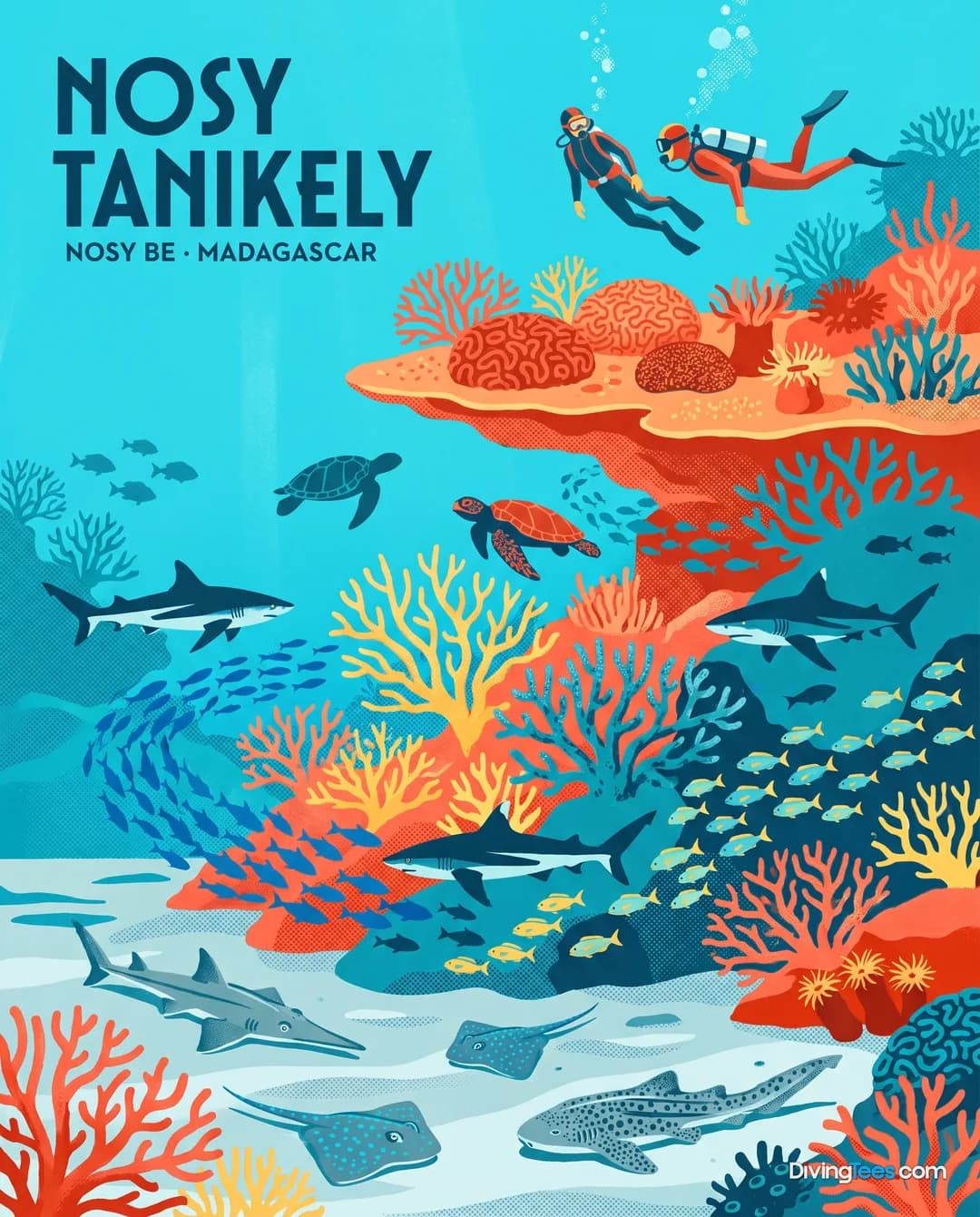
Nosy Tanikely Marine Park serves as a protected natural aquarium, offering three main dive sites with diverse ecosystems. It is an ideal location for seeing a full range of reef fish, turtles, and large groupers across various coral habitats.
Canyon is a unique site for experienced divers, defined by its striking topography. Three massive coral blocks at the base of a wall have created deep canyons covered in spectacular giant gorgonians.
down to 22 m
down to 22 m
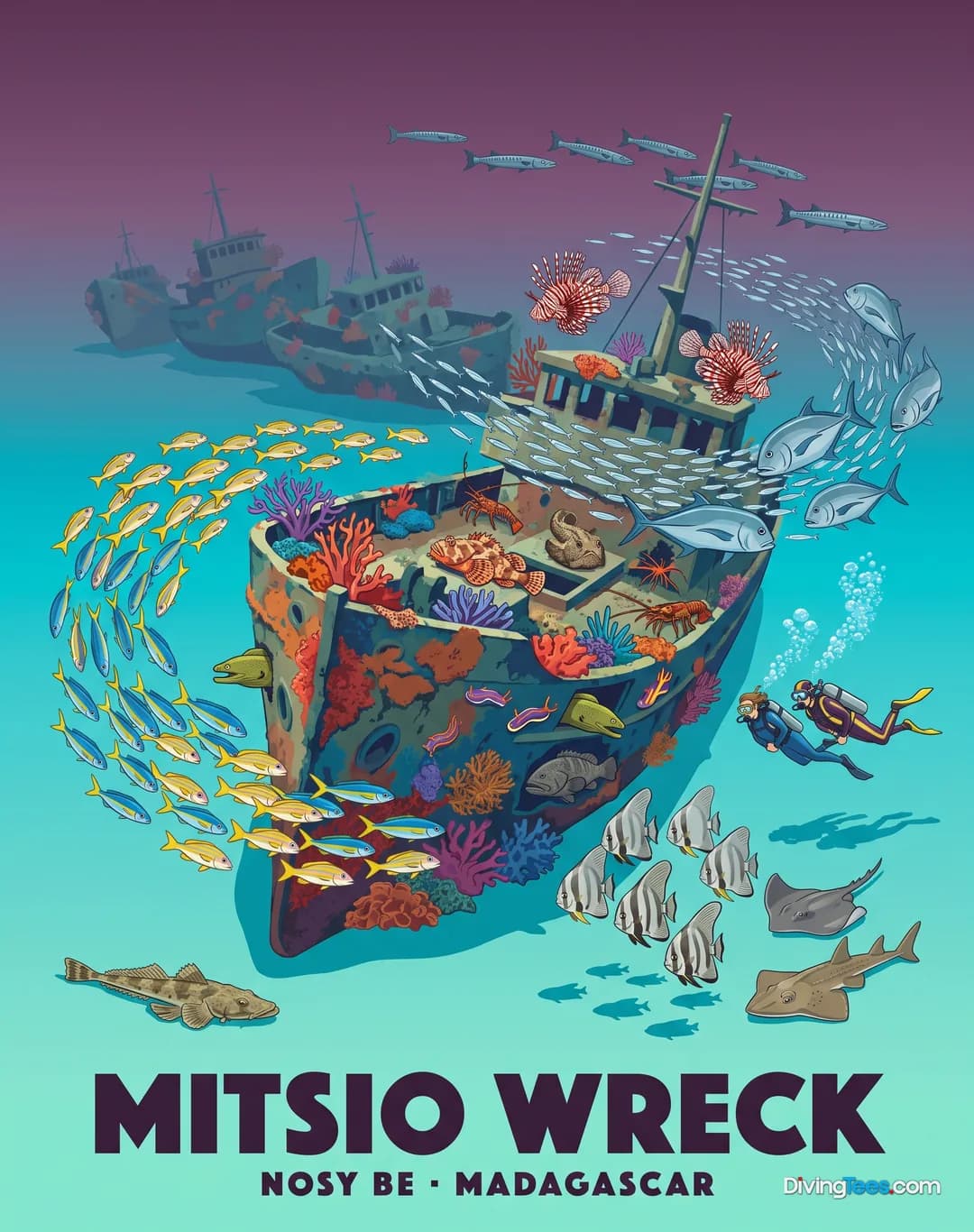
down to 28 m
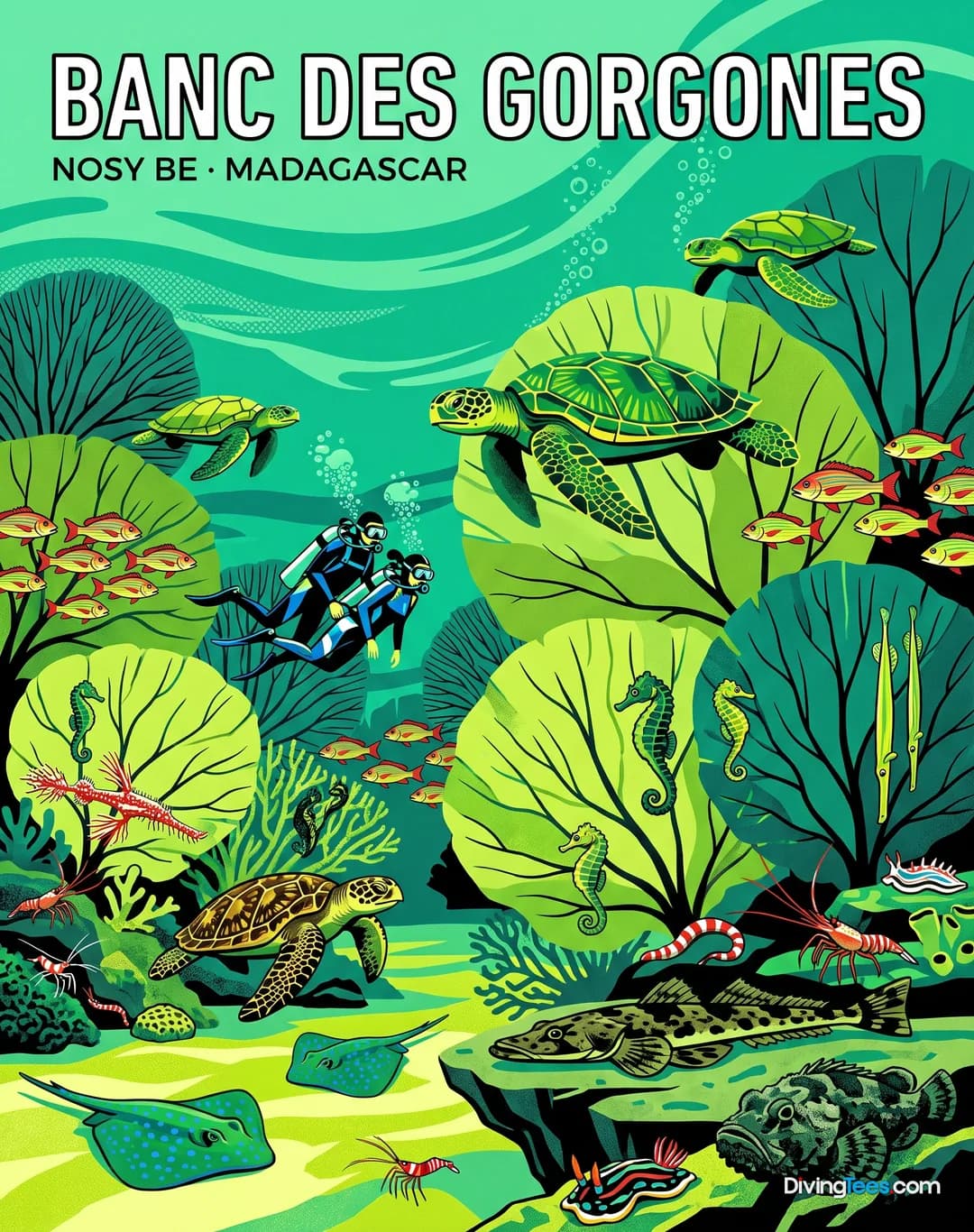
down to 19 m
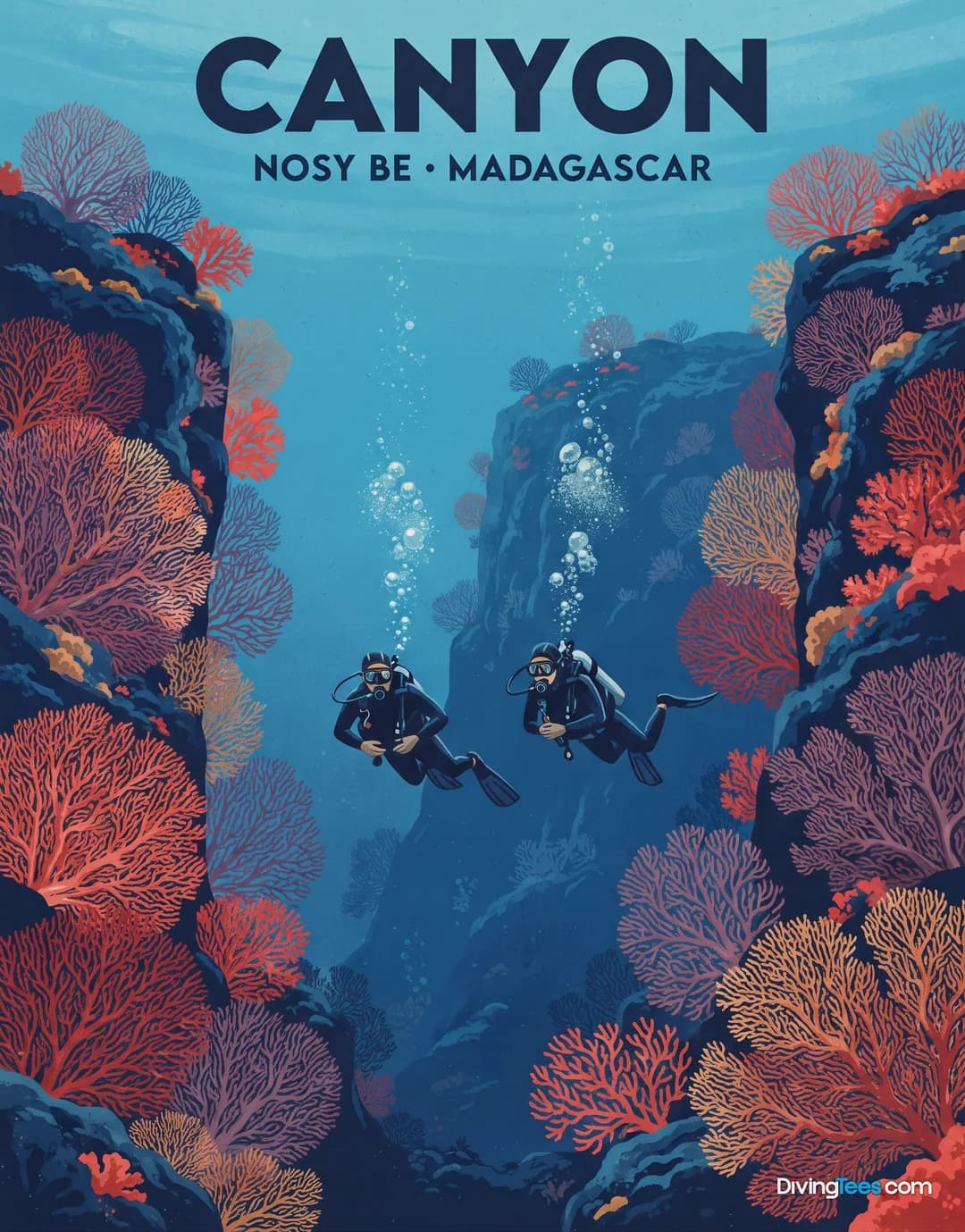
down to 40 m
And some of the dive sites the centre runs.
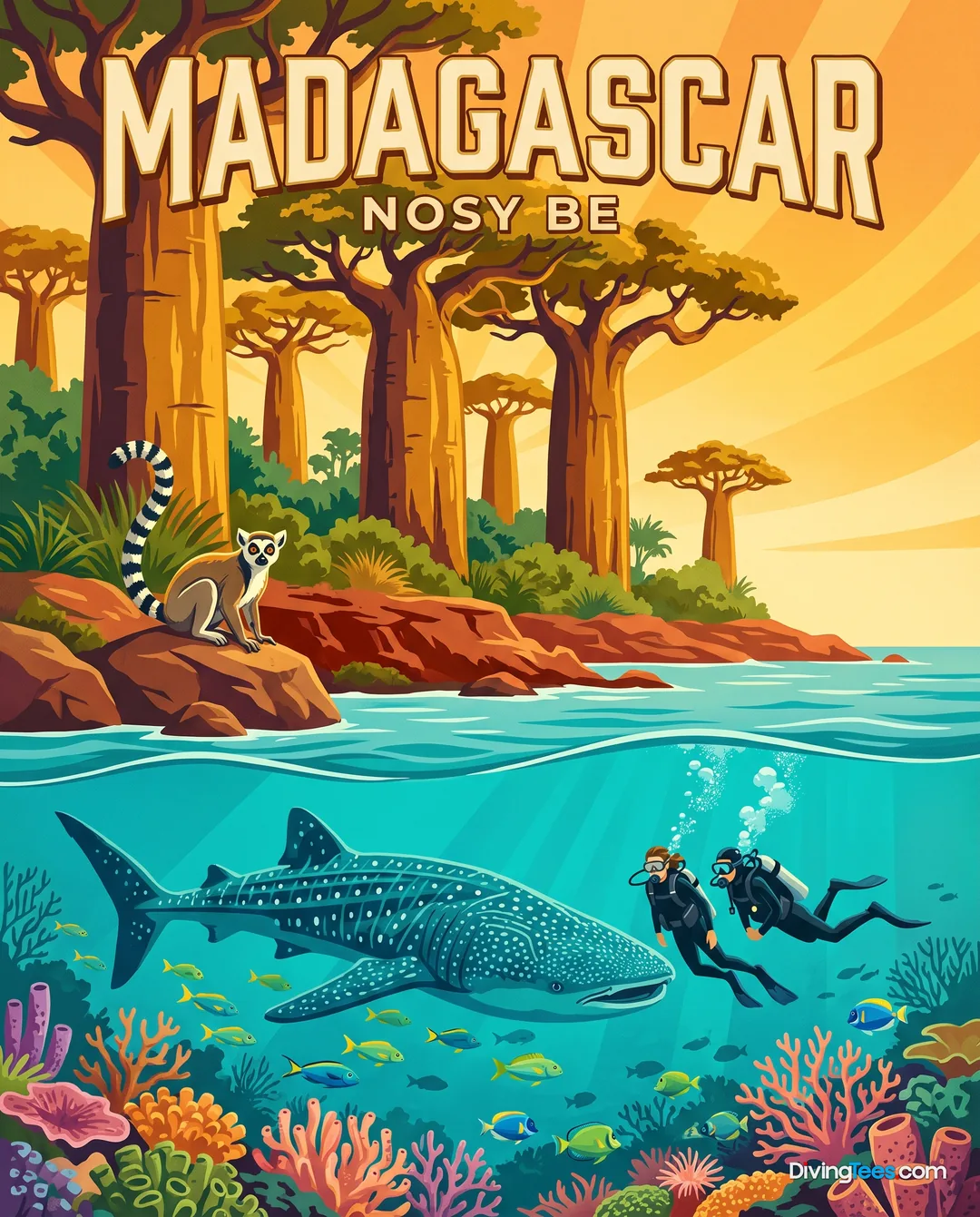
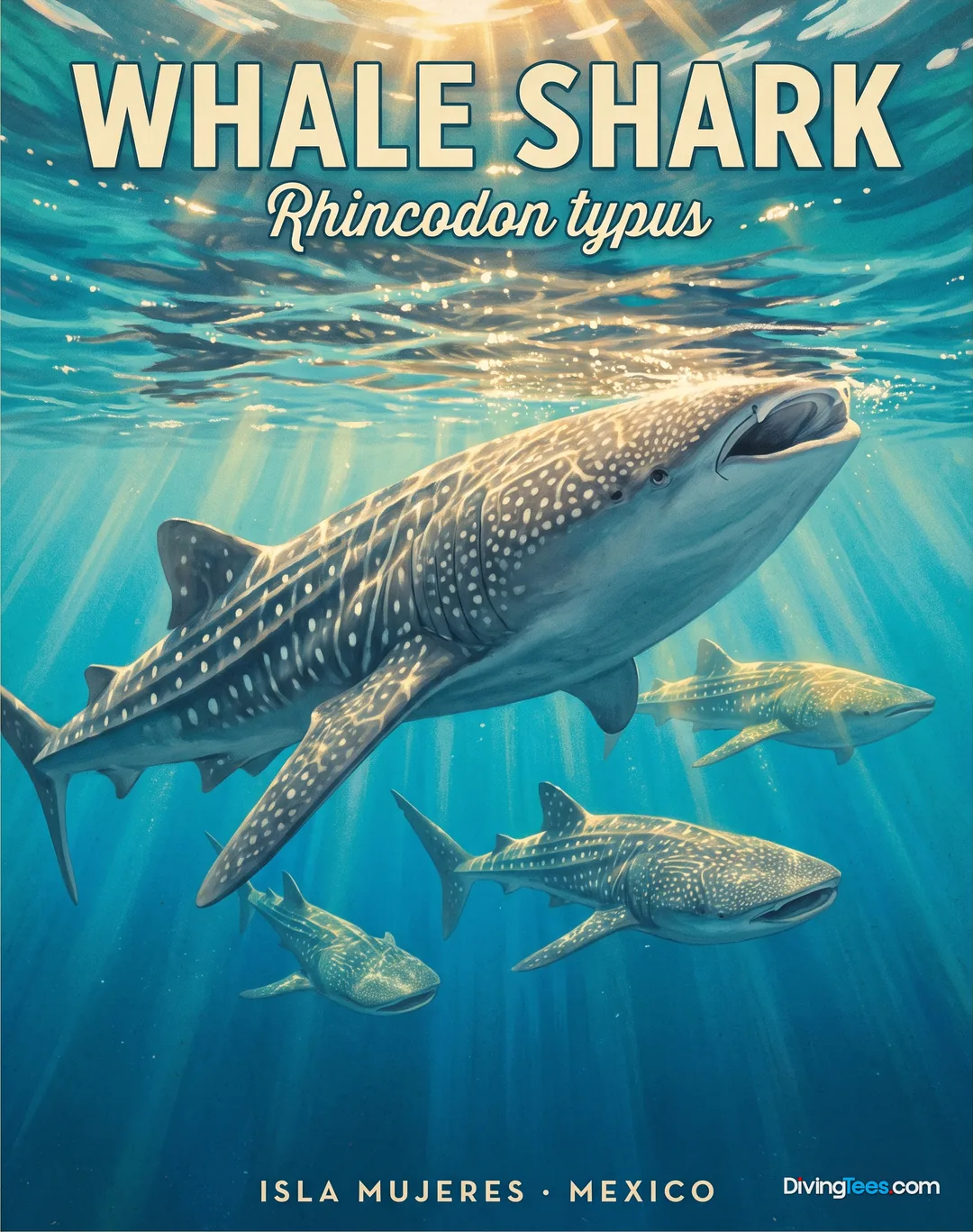
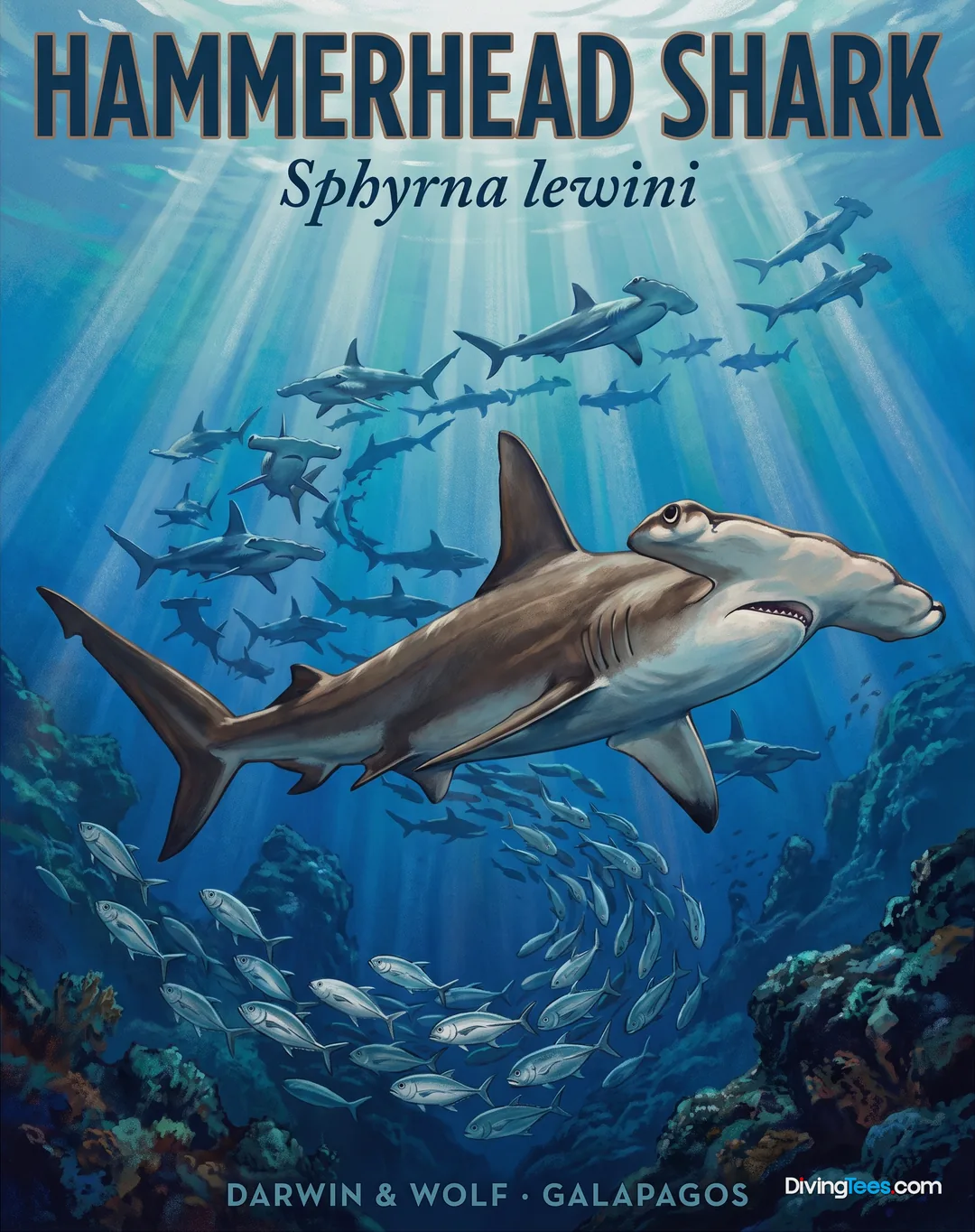
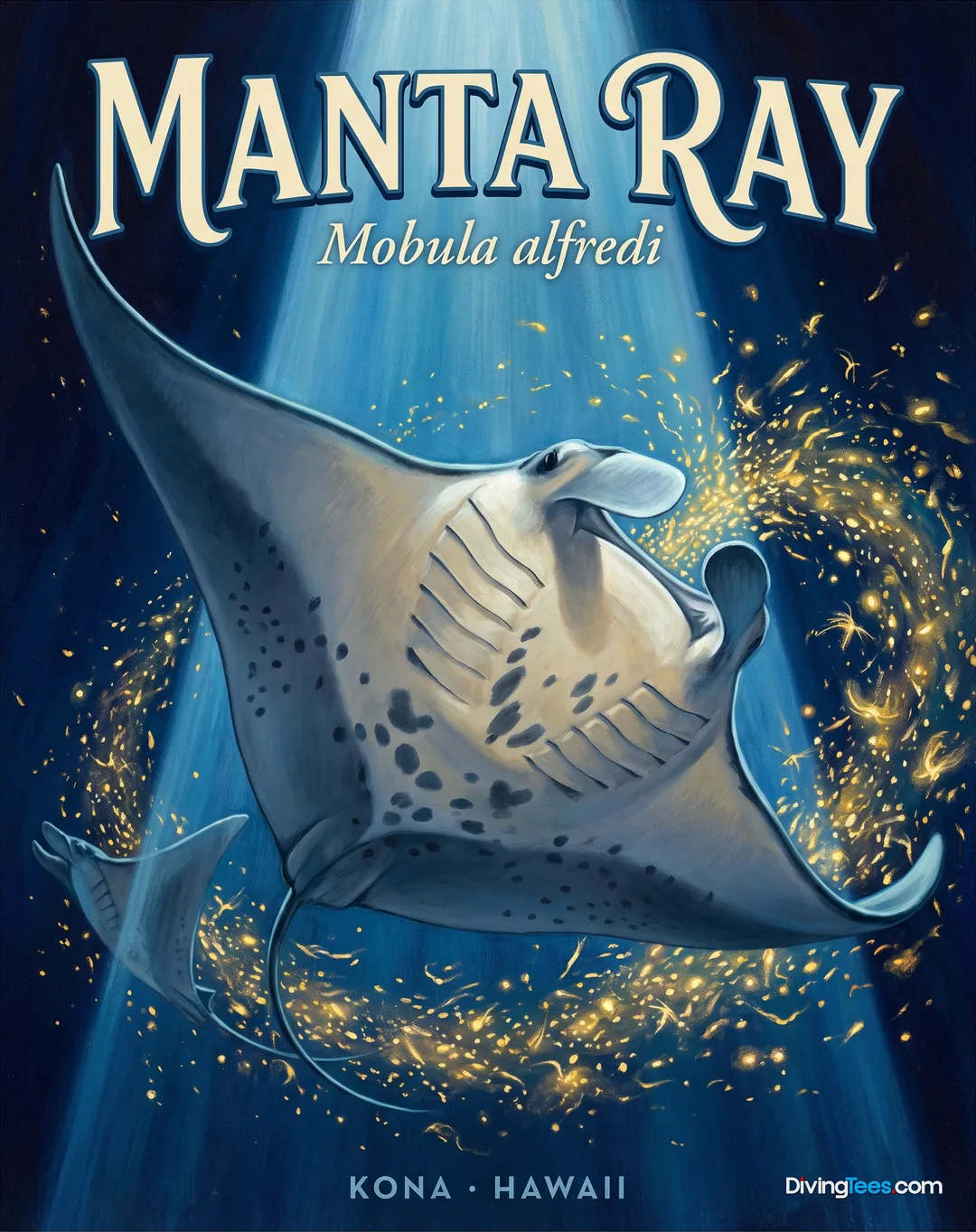
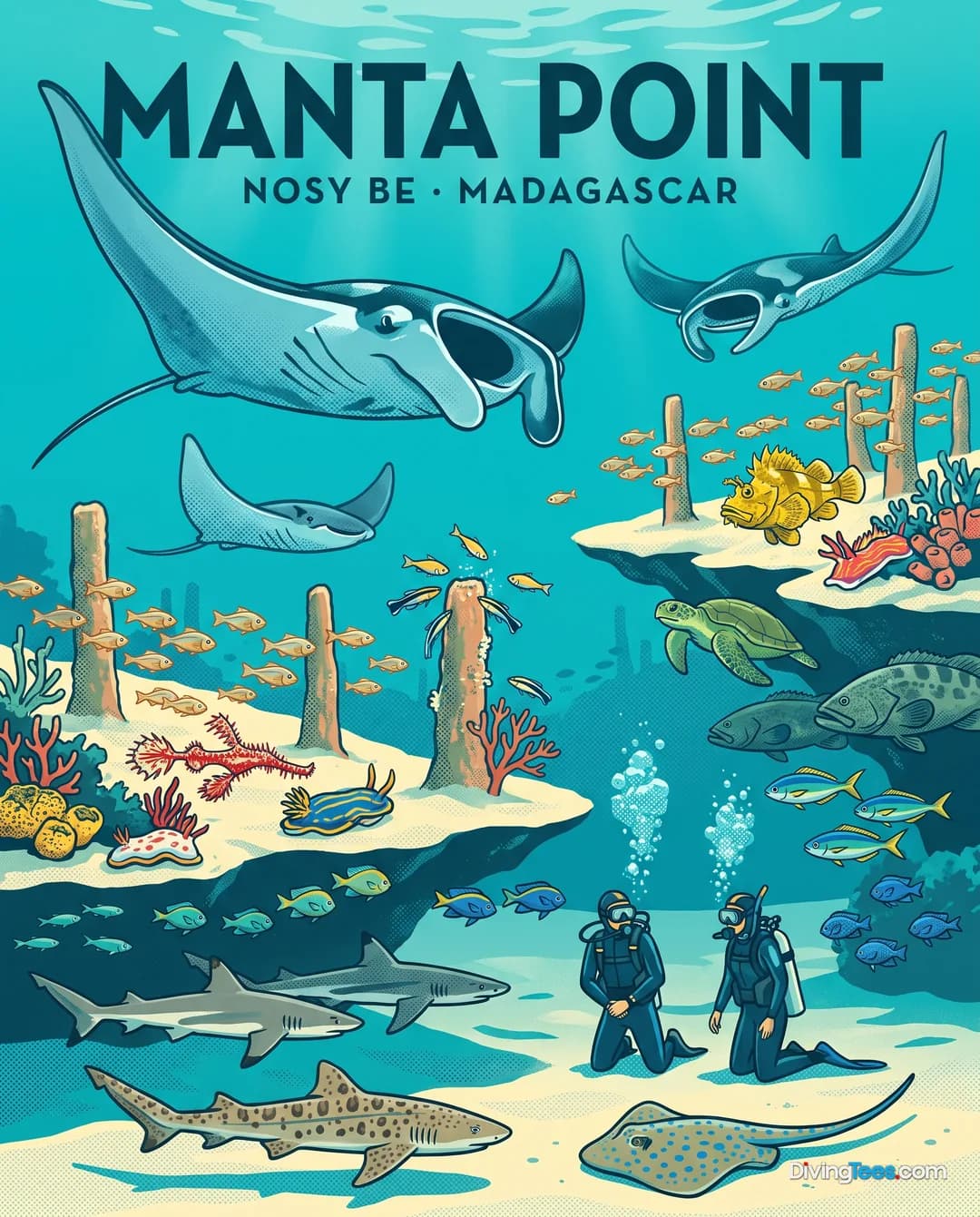
The reefs of Nosy Be are home to a vast array of pelagic life. You can encounter whitetip reef sharks (Triaenodon obesus), grey reef sharks (Carcharhinus amblyrhynchos), and occasionally hammerhead sharks (Sphyrna lewini) or manta rays (Mobula alfredi). During October and November, the area becomes a prime location for seeing whale sharks (Rhincodon typus).
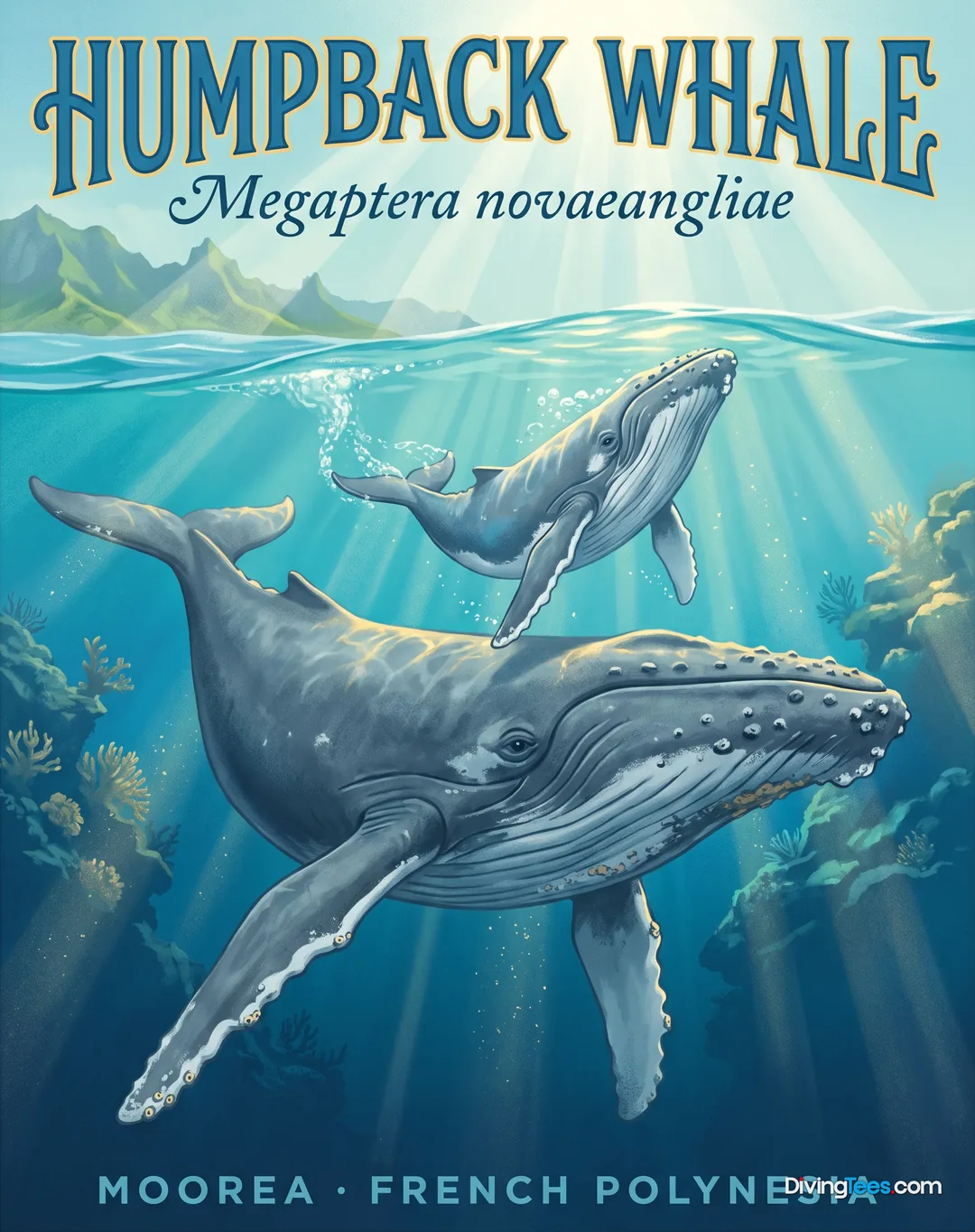
For those interested in larger marine life, humpback whales are also present in the region from August to October. You may also spot dolphins (Delphinidae) during your boat transfers to the various dive sites.
On the reef itself, the biodiversity is immense. You will find various species of turtles (Cheloniidae), including green sea turtles (Chelonia mydas) and hawksbill turtles (Eretmochelys imbricata), alongside large groupers (Epinephelus), barracudas (Sphyraena barracuda), and various species of jacks (Carangidae). The coral gardens are populated by colourful reef fish, including angelfish, triggerfish (Balistidae), and fusiliers (Caesio).
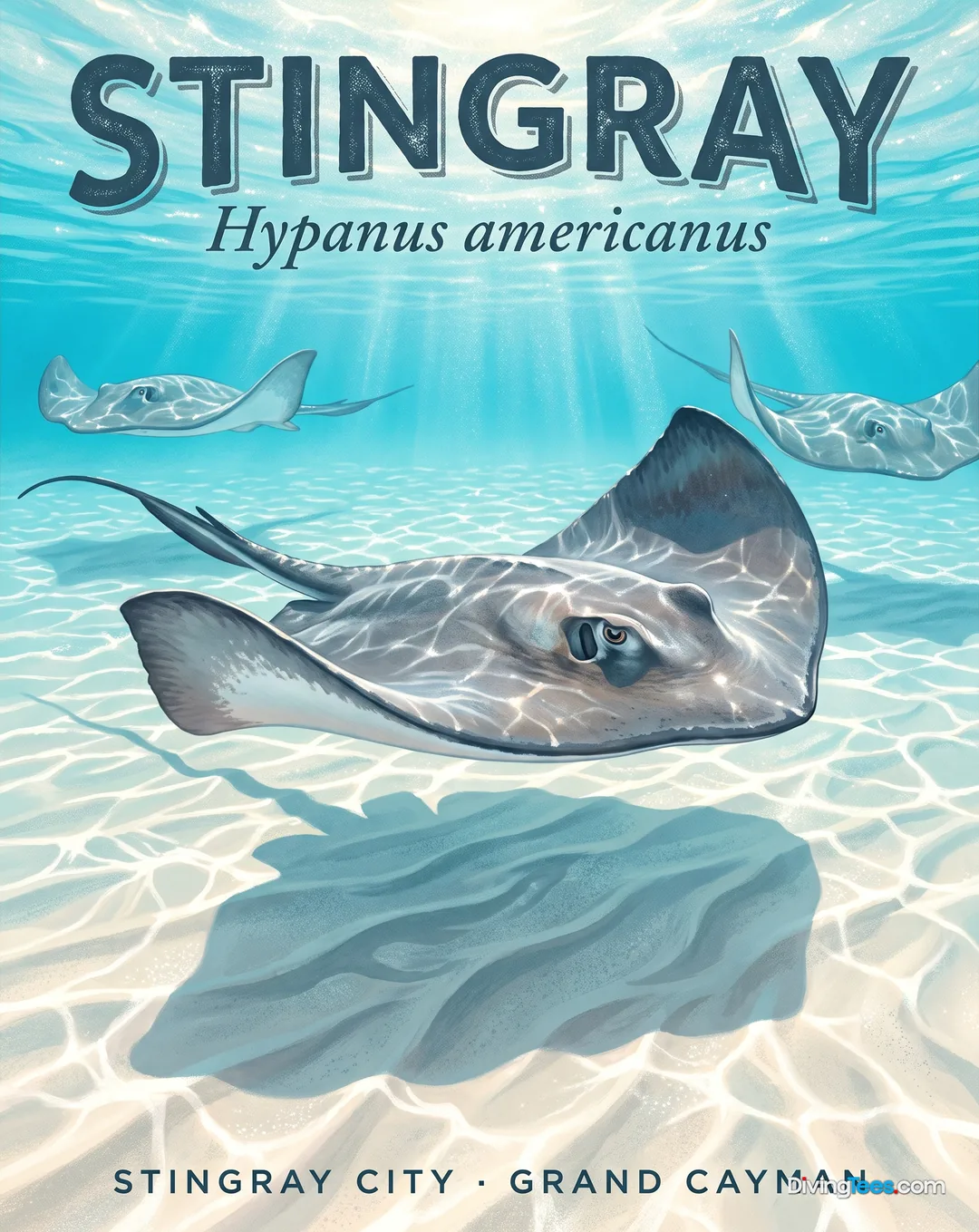
Macro enthusiasts will find plenty to observe among the corals and sponges. The sites host a variety of nudibranchs (Chromodoris willani), ghost pipefish (Solenostomidae), scorpionfish (Scorpaenidae), and stonefish (Synanceia). You can also look for blue-spotted stingrays (Hypanus americanus), leaf fish, and various species of seahorses (Hippocampus kuda).
The best time to visit the archipelago is between March-April and November-December. During October and November, a profusion of plankton in the water attracts whale sharks to the area.
The dive sites vary from shallow reefs and sandy plateaus to deep walls and canyons, catering to different experience levels and interests.
Hello, I'm Marina, DivingDeal.com's AI assistant. I answer in detail about hotels, dive centres and liveaboards.

Thinking about the whole trip and the flights? Talk it over with Edith →
Marina is an AI. Some links are affiliate links: DivingDeal may earn a commission, at no extra cost to you. Bookings are made with the partner.
★ 9.1/10 (160 reviews)
14 km away as the crow flies
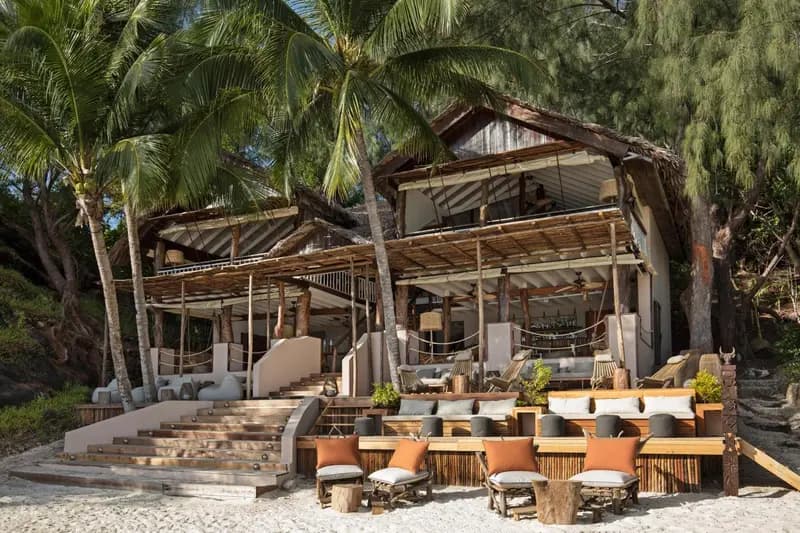
★★★★★
★ 9.8/10 (46 reviews)
55 km away as the crow flies
★★
★ 9.1/10 (79 reviews)
less than 1 km away as the crow flies
★★
★ 8.4/10 (424 reviews)
18 km away as the crow flies
Your last day stays dry: no diving in the 18-24 hours before a flight the perfect window to see the destination from another angle.
 Culture
⏱ 6 h · ★ 4.8 (32 reviews)
from €86
see on Viator ↗
 Culture
⏱ 9 h · ★ 4.4 (14 reviews)
from €80
see on Viator ↗
Ratings and reviews collected by Viator and Tripadvisor.