Soneva Fushi
Google 4.8/5 (344 reviews)
124 km away as the crow flies
Baa Atoll · Maldives · Indian Ocean
Descend into Coral Gardens to explore two thriving reefs alive with hard corals and the possibility of encounters with eagle rays, Napoleon wrasse, and passing tuna.
Coral Gardens unveils itself as a dual-reef system, providing distinct profiles for exploration. The upper reef is a panorama of hard corals, a testament to the resilience and growth of these vital marine structures. As you glide above this pristine landscape, the intricate architecture of the coral formations provides shelter and feeding grounds for a myriad of smaller reef fish, creating a constant, colourful display.
Transitioning from the shallower shelves, the reef continues into deeper sections where the dynamics begin to shift. Here, the current often dictates the pace, subtly guiding you along the contours of the reef. It is in these deeper reaches that the chances of encountering larger denizens of the Maldivian waters increase, offering a different perspective on the site's ecosystem.
While the upper reef captivates with its dense coral growth, the deeper perimeters act as a thoroughfare for pelagic species. Keep a keen watch for the elegant passage of eagle rays (Aetobatus narinari), their distinct, wing-like pectoral fins propelling them effortlessly through the blue. These graceful hunters are a common sight, often seen patrolling the reef edge in search of prey.
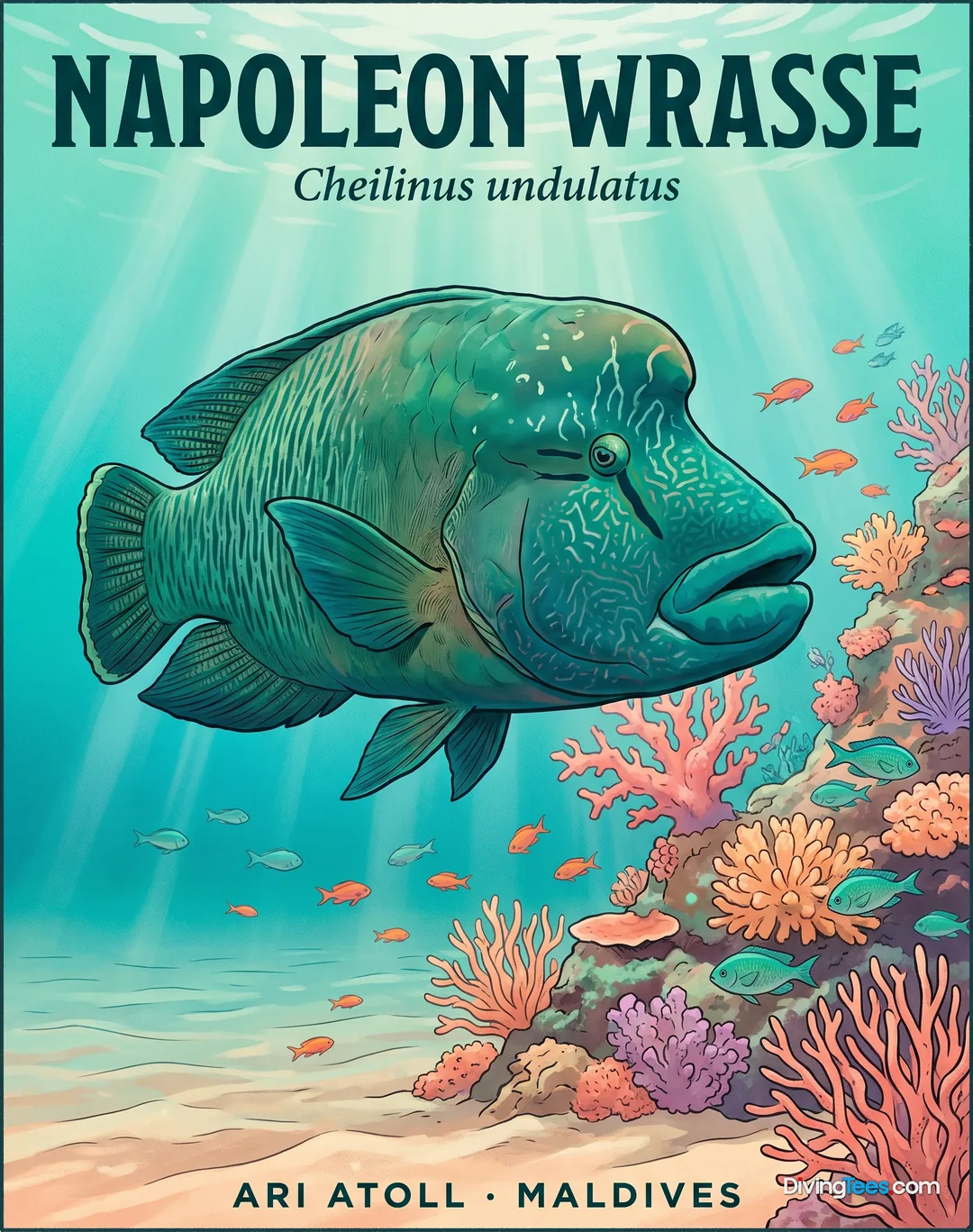
Beyond the eagle rays, the deeper sections of Coral Gardens are also frequented by other significant marine life. Napoleon wrasse (Cheilinus undulatus), identifiable by their prominent forehead bump, navigate the reef with a quiet confidence. And on occasion, sleek tuna (Thunnus spp.) can be observed cutting through the open water, a reminder of the powerful oceanic currents that sweep past these coral formations.
15 liveaboards run trips to Baa Atoll.
Coral Gardens features a dual-reef system with distinct profiles for exploration. The upper reef presents extensive hard coral formations, while deeper sections offer a different environment shaped by changing reef contours and passing pelagic species. You can explore contrasting reef settings within the same site, from dense coral growth to open water.
On the upper reef at Coral Gardens, you can observe extensive hard coral formations creating an intricate underwater landscape. These structures provide shelter and feeding grounds for smaller reef fish, producing a colourful display as you move above the reef. The dense coral growth gives this section a distinct character.
At Coral Gardens, the current often dictates the pace in the deeper sections, subtly guiding you along the reef contours. The deeper perimeters also act as a thoroughfare for pelagic species, with powerful oceanic currents sweeping past the coral formations. Your exploration there follows the movement of the surrounding water.
At Coral Gardens, deeper areas may bring encounters with eagle rays patrolling the reef edge, Napoleon wrasse navigating the reef, and passing tuna in open water. The upper reef supports smaller reef fish among its hard corals, while the deeper sections provide opportunities to observe larger animals and pelagic species.