

Undersea World Scuba Diving
Google 5/5 (655 reviews)
7 km away as the crow flies
Protaras · Cyprus · Mediterranean
Max. depth · 16 mExplore a network of underwater caves and tunnels, where light shafts pierce the blue and stingrays glide across sandy floors.
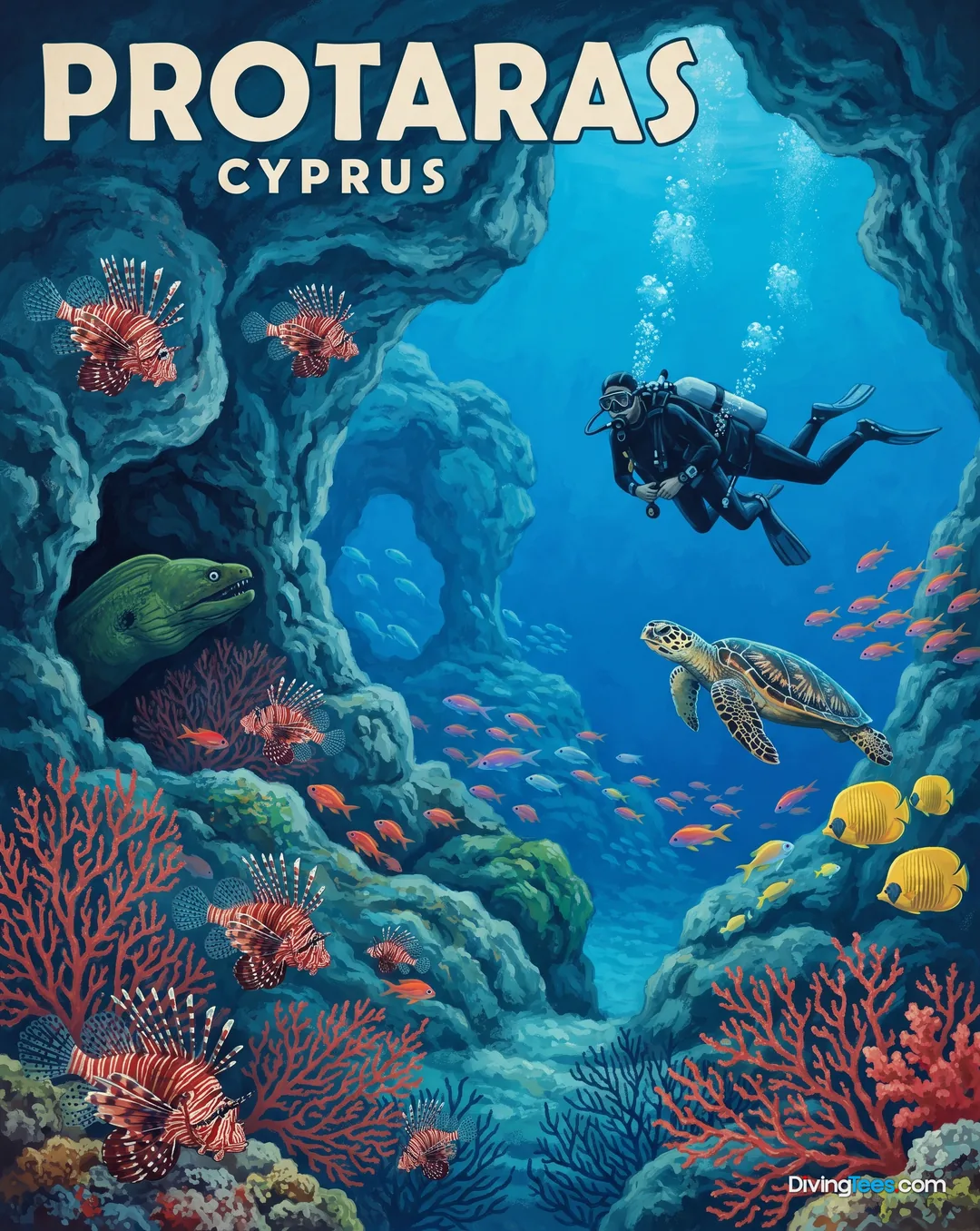
Diving into the Caves site in Protaras & Ayia Napa, you'll find a distinct geological profile, defined by its intricate network of caverns and swim-throughs. The entry brings you quickly to a plateau, with the main cave system unfolding along a south-facing wall. This area transitions into a flat, sandy seabed around 50 metres, which is often where you'll begin to encounter the various cave entrances and unique topography that defines this dive. The site offers a gradual descent, making the progression into deeper sections comfortable and controlled.
The dive profile typically starts with a gentle slope from around 2-3 metres, reaching a maximum depth of 16 metres as you navigate the different systems. As you approach the cave entrances, you'll notice the change in surrounding rock formations, which house a variety of marine life. Soldierfish and cardinalfish often seek refuge here, while trumpetfish and octopus move between the crevices. You'll have multiple options for exploration, each cave presenting its own character and passage.
One particularly striking feature is a cave accessible after working along the wall. This cave opens from an overhang, with an entrance approximately 1.5 metres high, expanding as you move further inside. Keep an eye on the ceiling here for the delicate 'Neptune's Beard' corals. A notable two-metre-diameter hole in the ceiling provides direct access to the surface, allowing for a unique interaction with the overhead environment and a play of light that illuminates the interior. This natural skylight offers an unforgettable visual experience as the light filters through the water.
Beyond this main cave, the system continues to narrow, yet remains wide enough for two divers to navigate comfortably side-by-side. The bottom shifts to larger pebbles, which contributes to maintaining good visibility within the confined spaces. As you exit the main cave, you'll find yourself entering a smaller canyon, itself dotted with numerous smaller grottos. This area is particularly rich in fish life, offering ample opportunity for observation and photography.
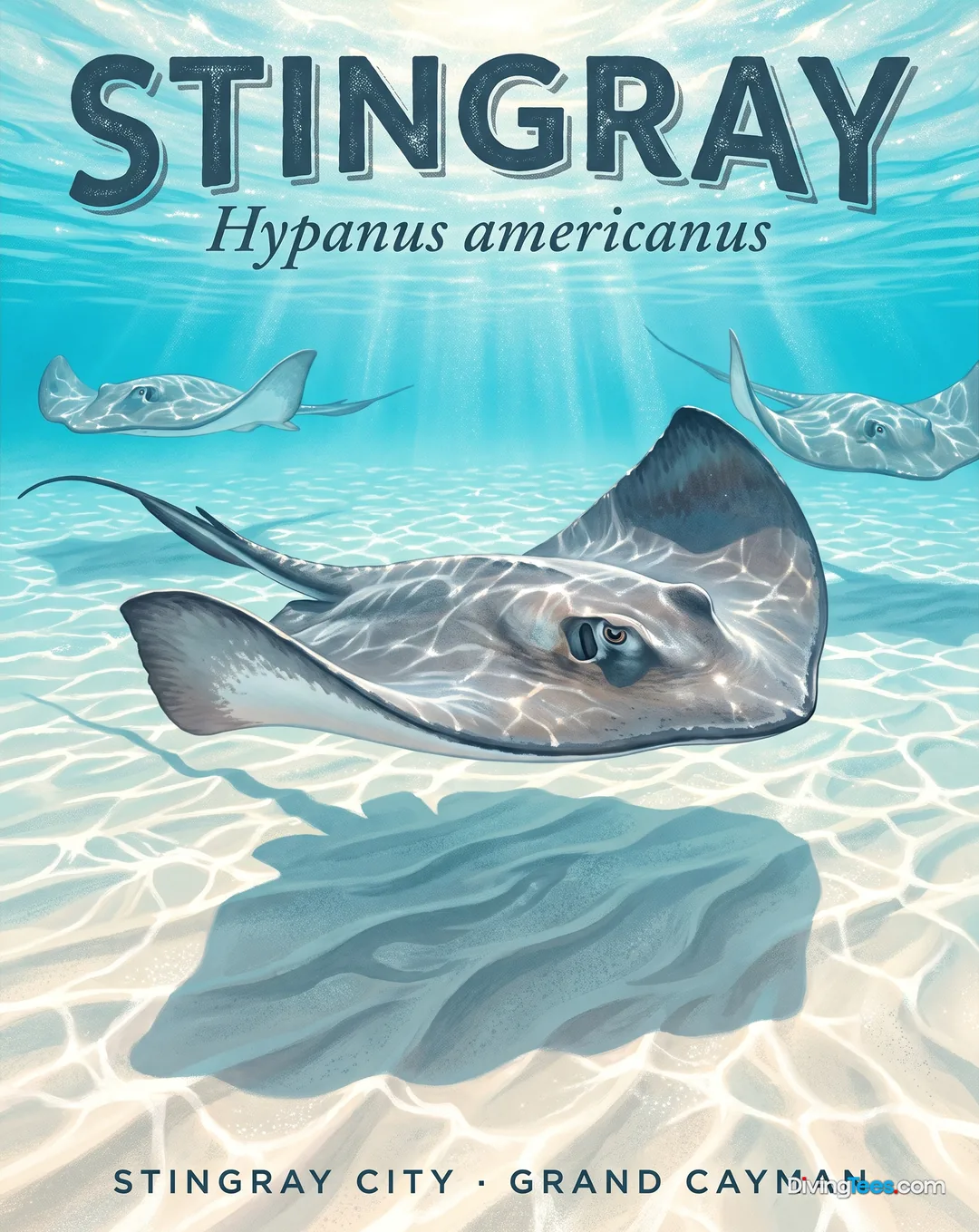
On the return leg, along the sandy bottom, you are likely to encounter stingrays (Dasyatis pastinaca) camouflaged against the substrate, often accompanied by flatfish and razorfish. This sandy expanse provides a different habitat compared to the rocky caves, expanding the range of species you'll observe during a single dive here. The change in scenery from cavern to open sand keeps the dive dynamic and engaging, ensuring consistent points of interest.
The site is also a reliable spot for observing moray eels. You'll find both the local Mediterranean moray (Muraena helena) and, on occasion, an immigrant species from the Red Sea, distinguished by their unique markings. These encounters are common within the various rock formations and crevices throughout the dive, adding another layer of biodiversity to the site. The presence of several eel species highlights the varied ecosystems supported by the Caves.
Throughout the cave system, the natural formations invite confident finning and buoyancy control. While the currents are generally light, traversing the confined spaces requires attention to detail. The crystalline blue waters combined with the light interplay from the surface openings create an immersive environment. It's a site that allows for skill development in a controlled setting, providing rewarding encounters with marine life in a memorable environment.
This site is accessible for all levels of divers, making it suitable from Open Water Diver certification. Depths range from a minimum of 2 metres to a maximum of 16 metres. Visibility is consistently good, allowing for clear views of the intricate cave systems and marine life. Currents are generally light here, providing a comfortable diving experience.
Caves is accessible to all levels of divers, including those starting from Open Water Diver certification. Its gradual descent and controlled progression into deeper sections support a comfortable dive profile. You should still use attentive buoyancy control and confident finning when moving through the confined cave passages and swim-throughs.
Caves begins in shallow water at around two to three metres and reaches a maximum depth of sixteen metres. The profile slopes gradually toward the cave systems, so you can progress comfortably while exploring different entrances, tunnels, grottos, and the sandy seabed along the route.
Currents at Caves are generally light, creating a comfortable diving experience. Visibility is consistently good, helping you see clearly inside the cave systems and around the marine life. Confined passages still require attention to your finning and buoyancy control as you move through the swim-throughs.
At Caves, you can explore natural underwater caves, tunnels, swim-throughs, and grottos illuminated by natural light shafts. Marine life includes soldierfish, cardinalfish, trumpetfish, octopus, Mediterranean and Red Sea moray eels, stingrays, flatfish, and razorfish. You may also see Neptune’s Beard corals around a cave ceiling.