

Aquanaut Diving School
Google 5/5 (563 reviews)
1.9 km away as the crow flies
Protaras · Cyprus · Mediterranean
Max. depth · 50 mDescend along abrupt cliff faces at Cyclops, exploring sponges and diverse Mediterranean life down to 50 metres, with the unexpected sight of a sunken jet ski at 18m.
For subtitles in English: start the video firstthen click the gearat the top right of the video, select “Subtitles/CC”, then “Auto-translate” and choose “English”.
Diving Cyclops, you’ll find yourself exploring a dramatic, rugged coastline that drops off steeply into the Mediterranean. Access to the site is via a path leading down from the cliff top, a careful entry by either a seated backroll, giant stride, or a roll-in, depending on the conditions and your preference. Once in the water, a short surface swim brings you to the descent point where impressive rock formations quickly become apparent, marking the start of your dive along the sheer walls. The dive layout here allows for open exploration; you can choose your depth and trajectory as you navigate around the point.
The underwater topography at Cyclops is predominantly rocky, characterized by sharp cliff faces that plunge towards deeper water. While sandy patches are limited, you will encounter areas of seagrass, which provide shelter for smaller marine species. This site is particularly known for its rock walls and the impressive drop-offs, making it a compelling environment for those who appreciate vertical exploration. The path back towards the surface is a gradual one, allowing for a comfortable ascent during your dive.
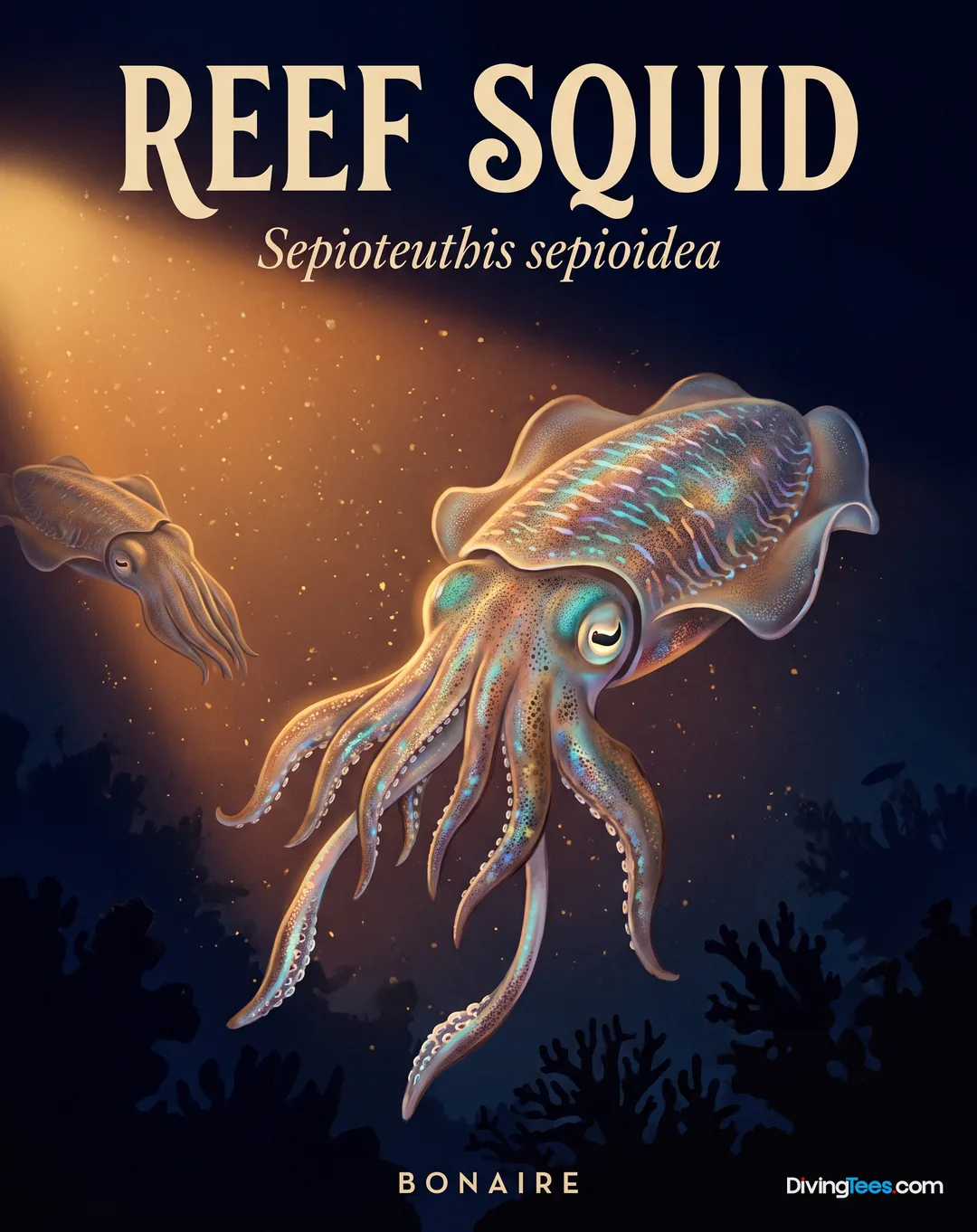
Throughout your dive along the walls, you will encounter diverse invertebrate life, notably black and golden sponges clinging to the rock faces. Keep an eye out for cephalopods like cuttlefish and squid, which are frequently seen here, often camouflaging themselves against the rocky background. The site also hosts a range of fin fish, including parrotfish, seabream, and the distinctive blue-spotted cornetfish. These species are generally observed foraging in the crevices and along the less exposed sections of the wall.
As you explore the deeper sections of Cyclops, you might encounter some unique points of interest. At approximately 18 metres, a sunken jet ski rests on the seafloor, providing a focal point and an interesting contrast to the natural reef. Further along the wall, deeper down, you can also spot the remains of an old moped, adding to the site's character. These man-made features create sheltered spots that can attract various marine life, offering additional nooks to inspect.
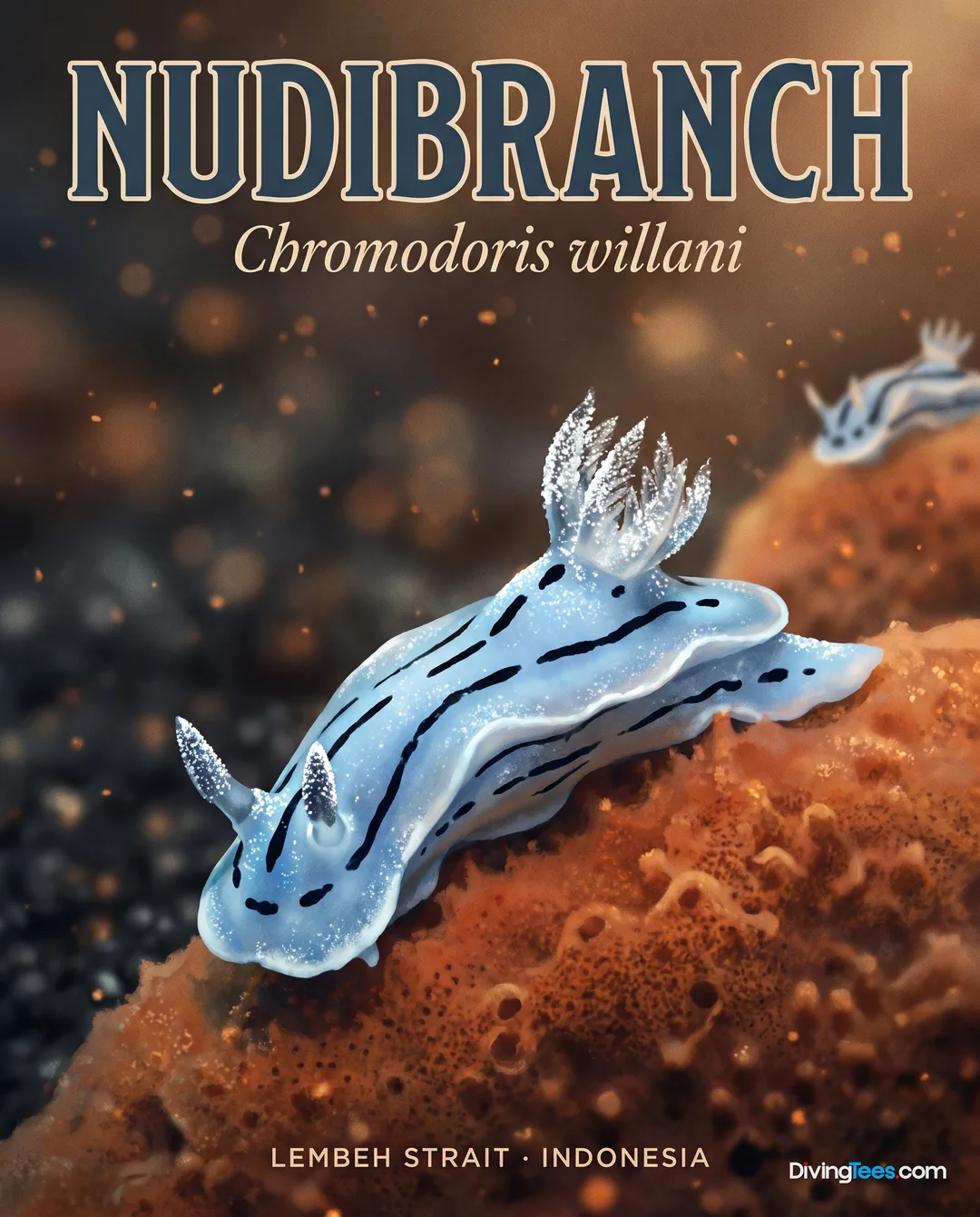
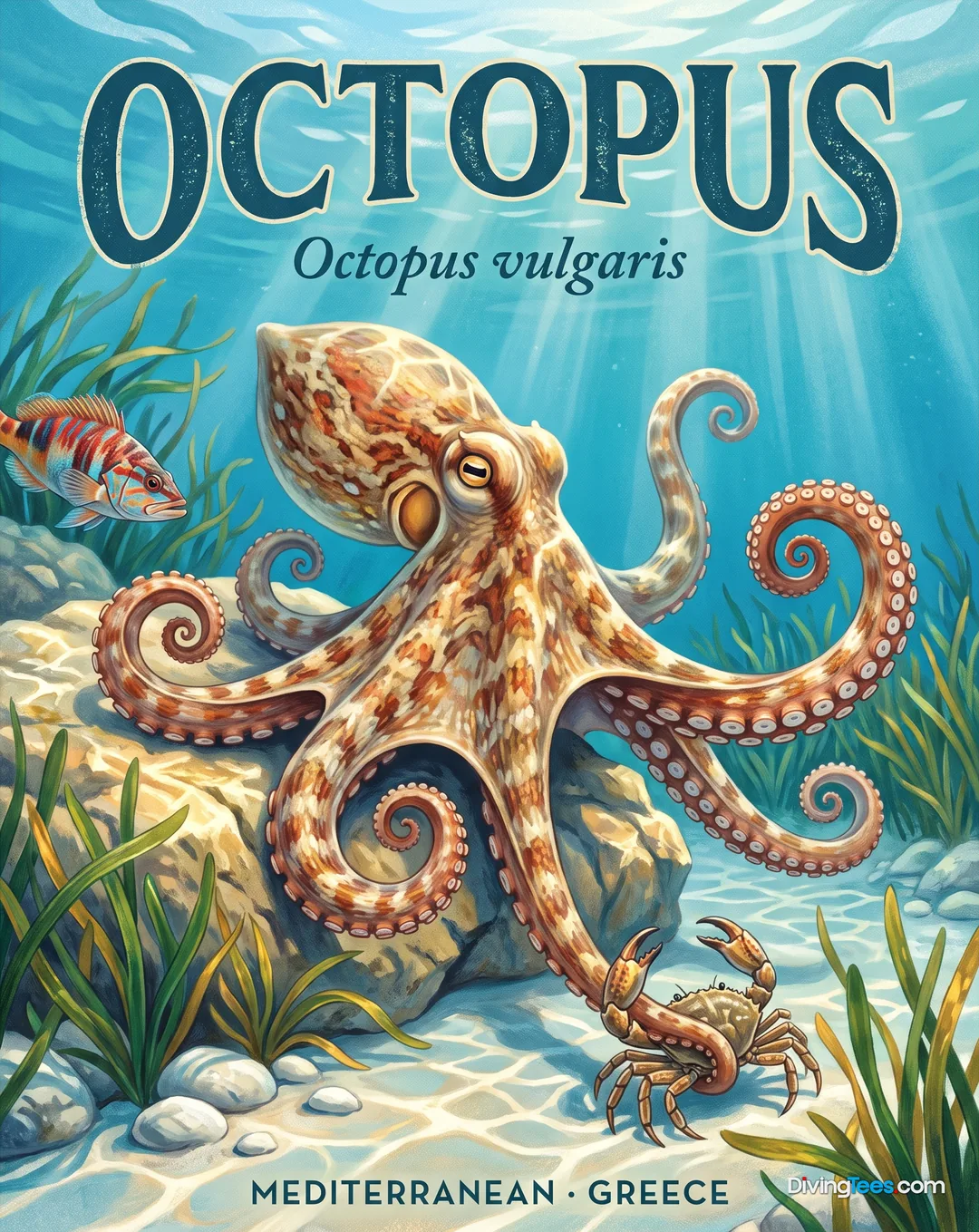
Fish activity at Cyclops is consistent; you’ll see scorpionfish often resting on rocky ledges, blending into their surroundings. Barracudas are known to patrol the open water sections, particularly around the deeper drop-offs, while juvenile amberjacks are also present. For macro enthusiasts, looking for nudibranchs is always rewarding, as these colourful molluscs are found decorating the sponges and rocks. Octopuses are also resident here, often hiding in the numerous rock crevices and under ledges.
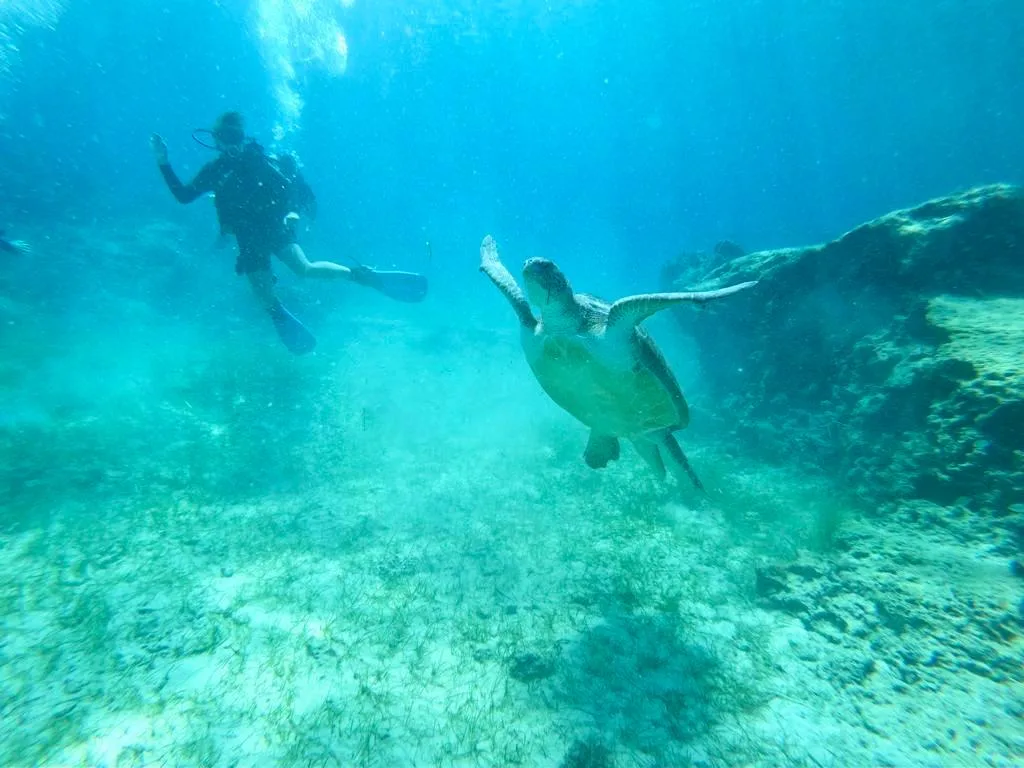
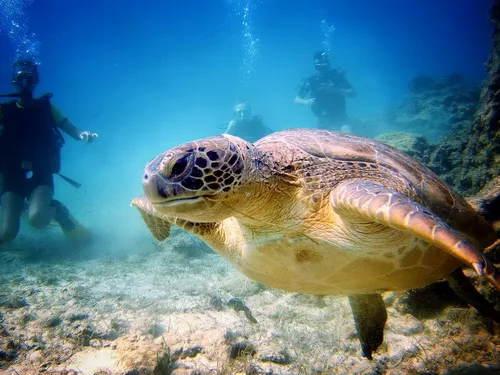
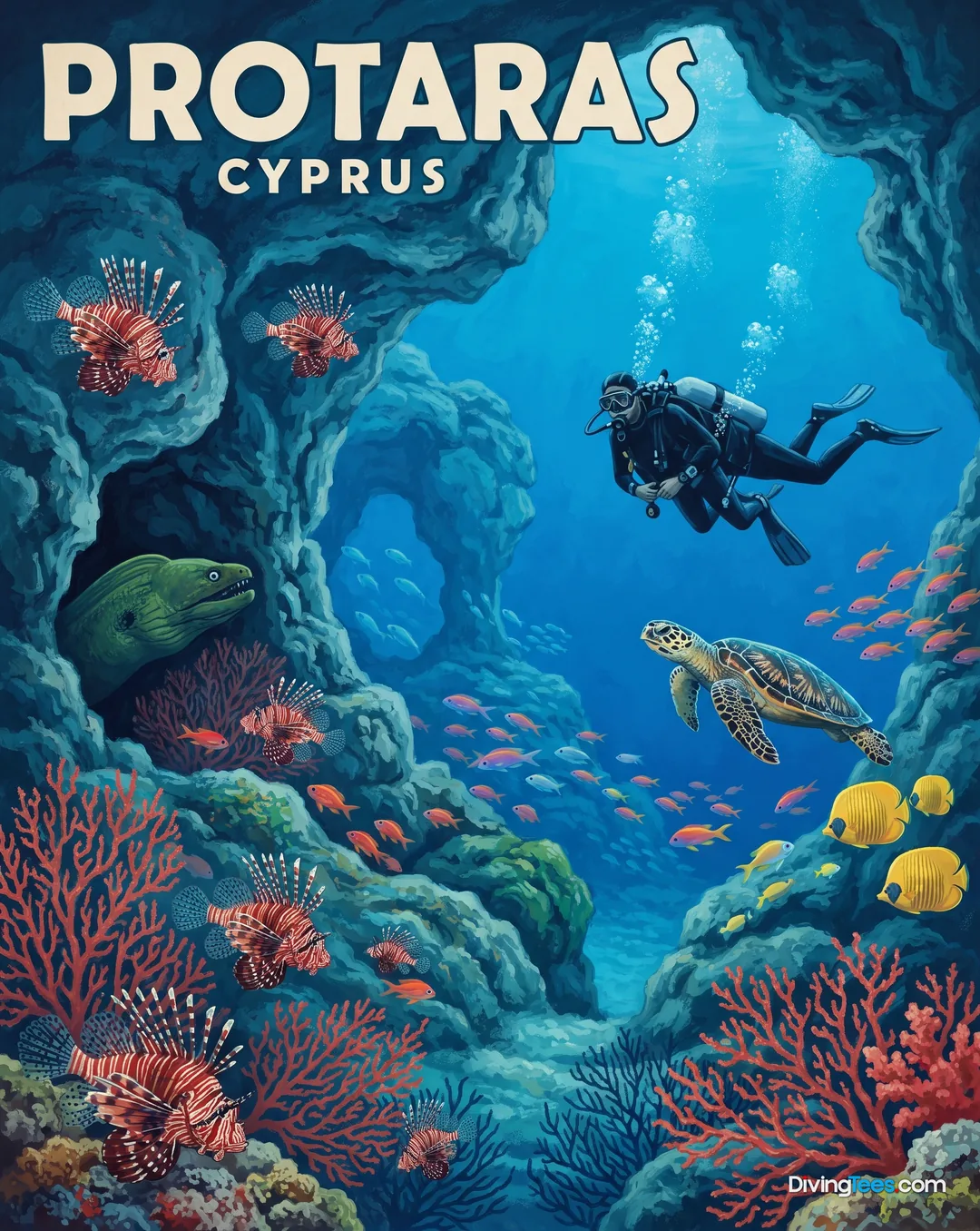
Larger marine species also make appearances at Cyclops. Depending on the season and prevailing conditions, you may have encounters with green sea turtles (Chelonia mydas), particularly along the shallower sections or in a seagrass bed. While less common, the occasional eagle ray (Aetobatus narinari) is also a possibility, often gliding gracefully deeper along the wall. Moray eels are also resident, peering out from their rocky shelters, adding to the site’s predatory population.
Nearer the bottom and in sandy depressions, you might spot weaver fish, often partially buried, so maintain good buoyancy and awareness. Other species like rabbitfish and triggerfish contribute to the general activity, inhabiting the rocky and seagrass areas. The sheer abundance and variety of observed species, from the smallest nudibranch to the occasional turtle, reflect a healthy and active reef ecosystem, making each dive at Cyclops dynamic and engaging.
Cyclops offers a substantial depth range, allowing dives down to a maximum of 50 metres, with a shallower entry point at 10 metres. Due to its significant depth and the exposed nature of the site, Cyclops is best suited for advanced divers who are comfortable with deeper profiles and potential variations in conditions. There is currently no specific information regarding currents or typical visibility for this site.
Cyclops is best suited to advanced divers who are comfortable with deeper profiles and potential variations in conditions. Its exposed setting and substantial depth range require confidence while exploring steep walls and drop-offs. You also need to manage a careful shore entry and a gradual ascent along the route back toward the surface.
Cyclops ranges from a shallower entry point at 10 metres to a maximum depth of 50 metres. A sunken jet ski rests at 18 metres, while the remains of an old moped lie deeper along the wall. You can choose your depth and trajectory as you explore the rocky formations and drop-offs.
Access to Cyclops follows a path down from the cliff top, with entry by seated backroll, giant stride, or roll-in depending on conditions and your preference. After a short surface swim, you reach the descent point. The site is exposed, and conditions may vary while you explore its steep, rocky coastline.
At Cyclops, you can see dramatic cliff walls, black and golden sponges, cuttlefish, squid, scorpionfish, octopuses, moray eels, seabream, parrotfish, and blue-spotted cornetfish. Barracudas patrol open water, while green sea turtles and eagle rays may appear. Nudibranchs, juvenile amberjacks, rabbitfish, triggerfish, and weaver fish also inhabit the site.