
Apollo Corfu Diving Center
Google 4.9/5 (219 reviews)
8.5 km away as the crow flies
Corfu · Greece · Mediterranean
Max. depth · 7 mExplore a network of ten interconnected cavities and swim-throughs located at a maximum depth of 7 metres.
For subtitles in English: start the video firstthen click the gearat the top right of the video, select “Subtitles/CC”, then “Auto-translate” and choose “English”.
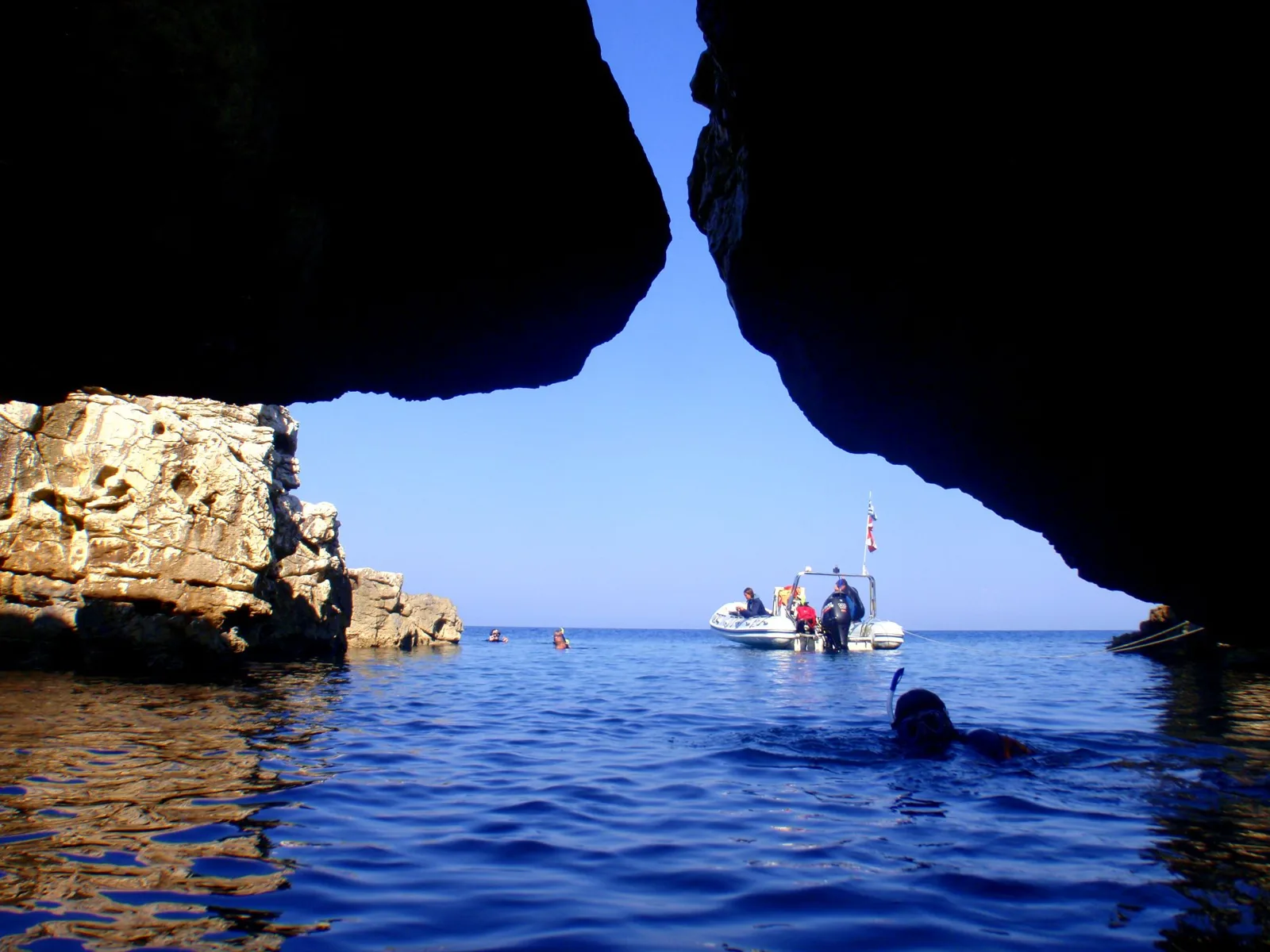
Located near the Corfu channel on the northeast coast, Barbaros Cave offers a unique topography compared to the deeper walls of the Ionian Sea. The site consists of a complex arrangement of roughly ten different cavities, including four larger chambers and six smaller ones. These spaces are linked by a series of navigable passages that allow you to move through the reef structure. Because the site is concentrated in a relatively small area, the layout requires you to be mindful of your orientation as you navigate the connections.
The depth profile is remarkably shallow, with the maximum depth reaching only 7 metres. This makes the site accessible to a wide range of divers, but the proximity to the surface means you will feel the influence of surface conditions and light more intensely. As you enter the different chambers, the light shifts through the openings, creating a dynamic environment. You will find that the rock surfaces are heavily populated by red coral and various species of red and yellow zoanthids. These encrusting organisms provide a dense layer of texture across the cave walls.
Navigation at Barbaros Cave is dictated by the interconnected nature of the rock formations. You will find yourself moving between larger open areas and tighter swim-throughs that connect the various segments of the system. It is important to maintain precise buoyancy, especially when transitioning between the open water and the enclosed passages. The layout encourages a slow, methodical approach to ensure you can inspect the details of the rock without disturbing the sediment or the organisms living on the walls.
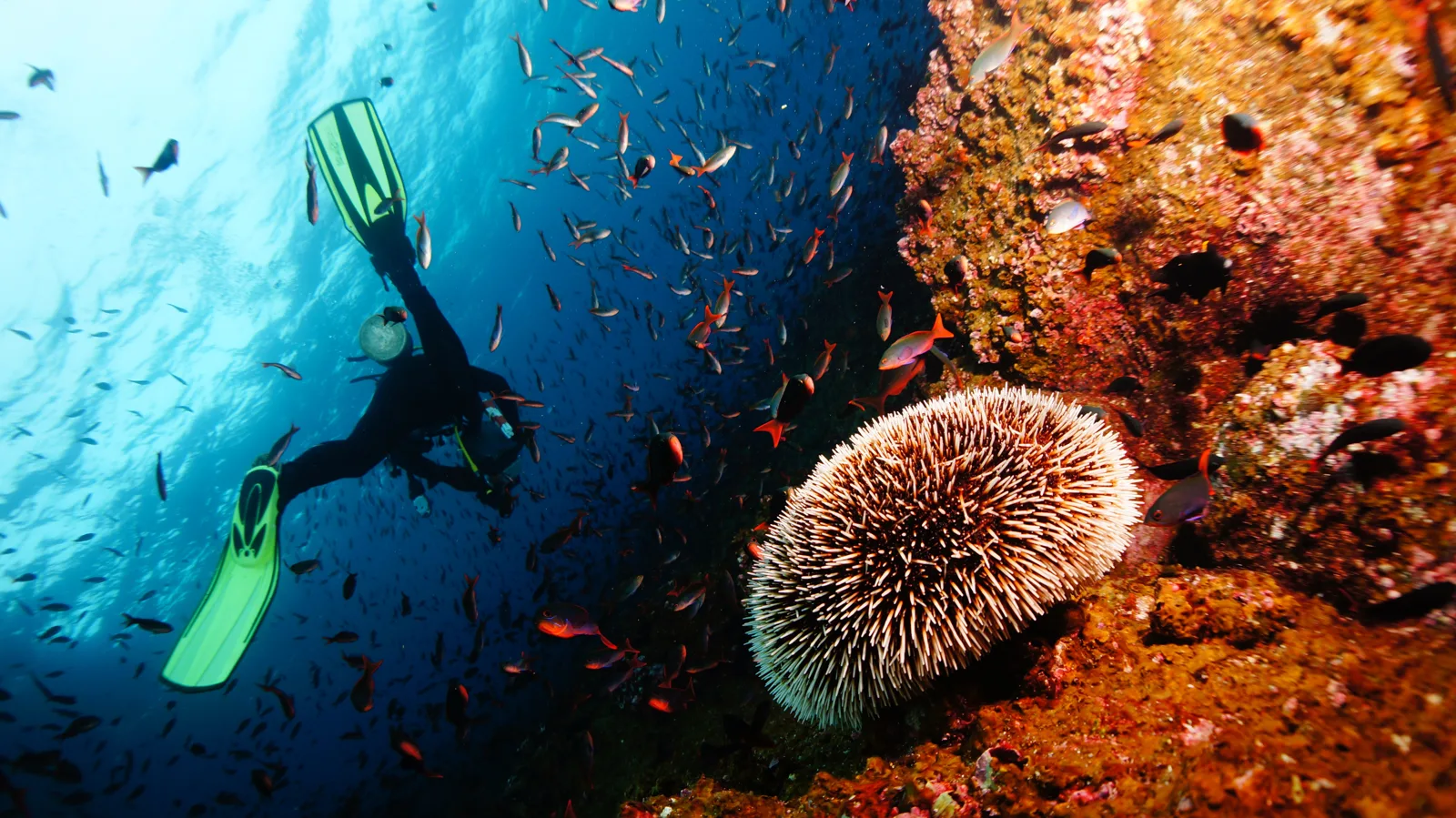
The marine life at this site is closely tied to the structure of the caves and the surrounding reef. You can find various invertebrates inhabiting the crevices, such as crabs and shrimp that move through the darker corners of the cavities. Nudibranchs are also present, often found on the rocky surfaces or near the coral growths. The presence of these smaller organisms makes the site a focused experience for those interested in macro life within a cave environment.
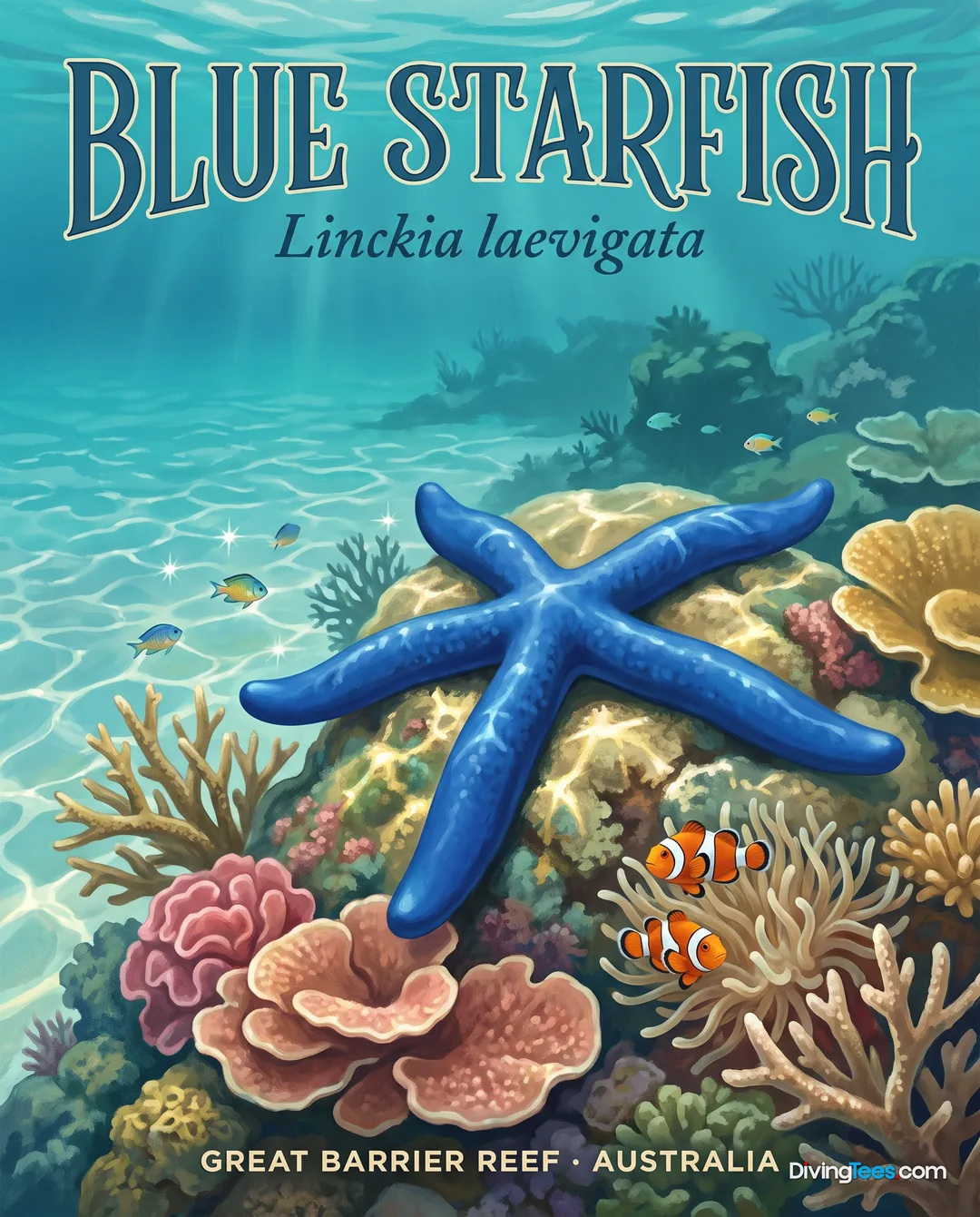
The seafloor and walls also host Christmas tree worms, which are often visible among the reef structure. Starfish are scattered across the rocky substrate, adding to the biological diversity of the shallow zone. Because the site is shallow, the visibility of these species is high, provided you manage your bubbles and movement to avoid clouding the water. The combination of colorful zoanthids and small crustaceans creates a dense biological profile within a very limited depth range.
Current is a significant factor at Barbaros Cave due to its location near the Corfu channel. The site is exposed to strong currents that can make entering or exiting certain cavities difficult depending on the time of day. You will notice that the accessibility of the passages changes according to the flow, meaning the best way to dive the site depends heavily on the current window provided by your boat operator. When the current is high, you may find it necessary to stay in more protected areas of the system.
The site's character is fundamentally defined by this interplay between its shallow, intricate topography and the movement of the water. Unlike deeper wrecks or vertical walls, the interest here lies in the spatial experience of moving through a semi-enclosed limestone environment. The concentration of different sized cavities means that every dive offers a different route through the system. It is a site that rewards careful observation of the small-scale life tucked into the cracks of the coral-covered walls.
Maximum depth is 7 metres. The site is accessible from Open Water Diver level, but experience with caves and swim-throughs is required due to the topography. Strong currents are present, and access to certain cavities is only possible during specific tidal or current windows.
You should dive Barbaros Cave when the current window allows access to the passages and cavities you want to enter. Strong currents near the Corfu channel can make entry or exit difficult, and the available route changes with the flow. Your boat operator provides the relevant tidal or current timing.
Barbaros Cave is accessible to you at Open Water Diver level, but you need experience with caves and swim-throughs because of the topography. The interconnected cavities require careful orientation, while precise buoyancy helps you move between open areas and enclosed passages without disturbing sediment or organisms on the walls.
Barbaros Cave reaches a maximum depth of 7 metres. You will feel surface conditions and light more intensely at this shallow site, with changing illumination entering through the openings between chambers. Its limited depth keeps the dive focused on navigating the rock structure and inspecting the walls and passages.
At Barbaros Cave, you can see walls covered with red coral and red and yellow zoanthids, along with Christmas tree worms among the reef structure. Look into crevices and darker corners for shrimp and crabs, and inspect the rocky surfaces for nudibranchs and starfish scattered across the substrate.