


Apollo Corfu Diving Center
Google 4.9/5 (219 reviews)
less than 1 km away as the crow flies
Corfu · Greece · Mediterranean
Max. depth · 32 mA versatile site transitioning from a shallow rocky plateau to a steep reef wall reaching 32 metres.
For subtitles in English: start the video firstthen click the gearat the top right of the video, select “Subtitles/CC”, then “Auto-translate” and choose “English”.
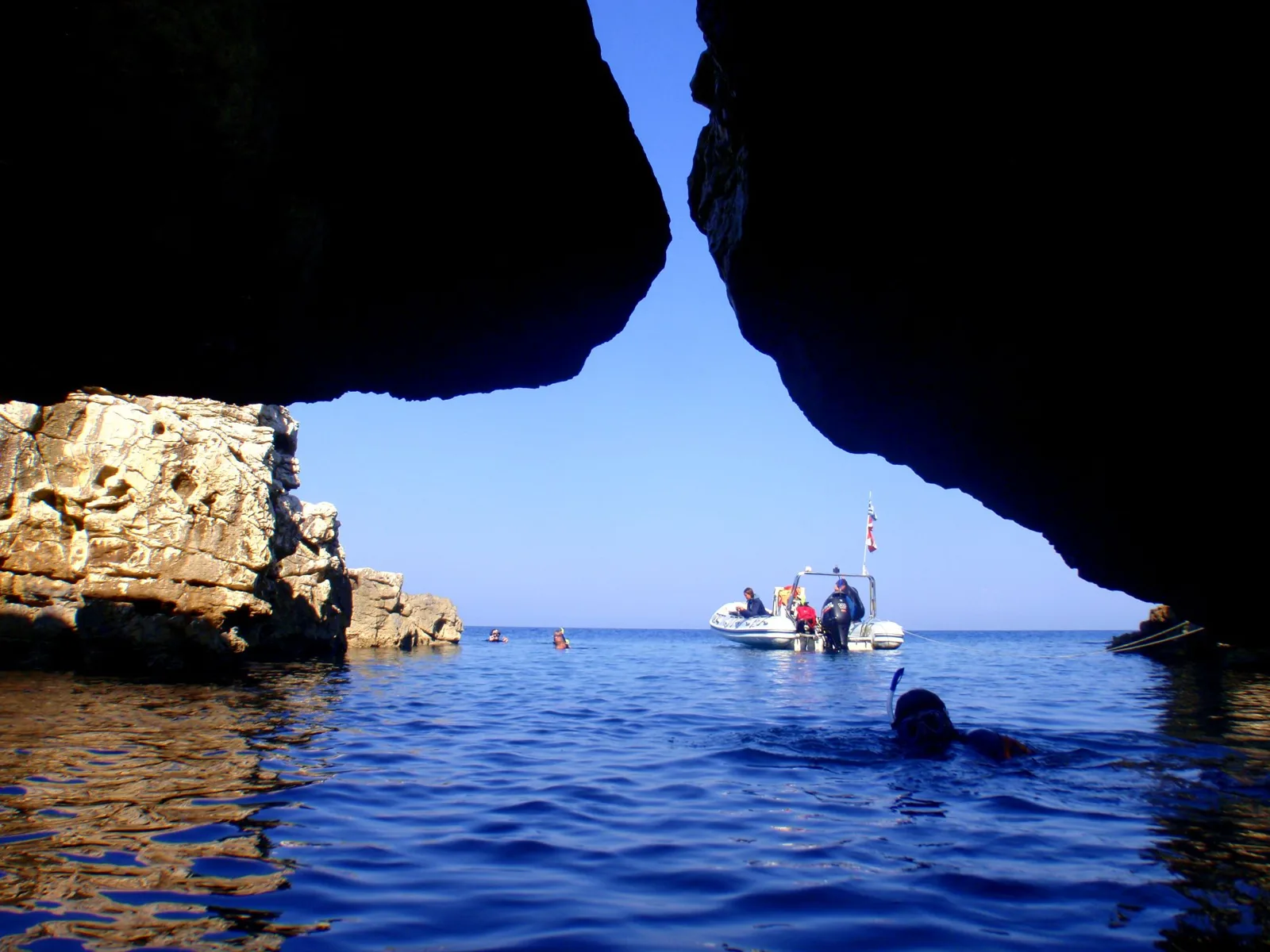
The topography of Nissaki is defined by a clear transition between two distinct marine environments. You begin your descent on a shallow rocky plateau at approximately 5 metres, where the terrain is relatively easy to navigate. This upper zone is characterized by various reef formations and several swim-throughs that provide a more relaxed environment for navigation. It is a common starting point for those looking to explore the reef structure without immediate depth concerns.
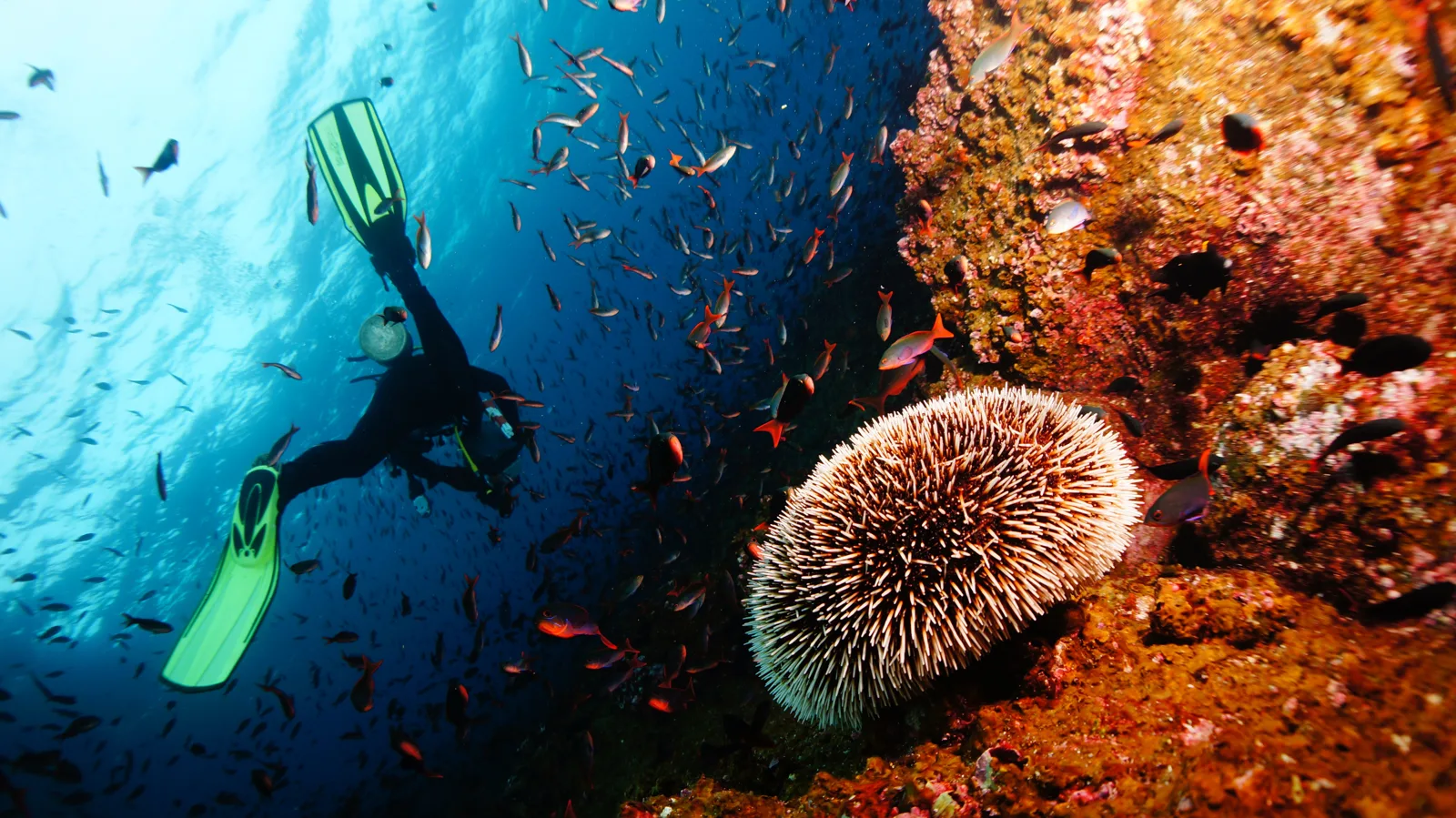
As you move away from the plateau, the seafloor drops away into a prominent reef wall. This wall descends steadily, reaching depths between 20 and 27 metres, before transitioning into deeper sections. The verticality of the terrain provides a different experience as the light shifts and the water temperature begins to drop slightly. This wall structure is the primary feature of the site and is best explored by following the contour of the reef.
At the base of the slope, you may encounter a small wreck sitting at approximately 32 metres. It is important to distinguish this wreck from the main reef route, as the site encompasses several different areas. This deeper section is not part of the immediate shallow reef structure and requires more careful planning. Divers looking for wreck elements should treat this as a separate objective from the shallow reef exploration.
The biodiversity of the reef is found within the crevices and along the vertical faces of the wall. You can find various species of octopus and cuttlefish using the rock formations for camouflage. Moray eels are common residents of the reef, often found patrolling the holes in the rock. The structure is also heavily populated by sponges and sea urchins, which provide texture to the seabed.
The visibility at Nissaki typically ranges between 15 and 25 metres, making the details of the wall quite clear. The light levels change noticeably as you move from the plateau down to the 27-metre mark. This visibility is consistent enough to allow for confident navigation through the shallower swim-throughs. The combination of clear water and structured terrain makes for a productive environment for observing reef life.
The site is highly accessible, depending on which section you intend to explore. The shallow reef and house-reef sections are easily accessible via shore entry from Nissaki Beach. For those wanting to reach the deeper sections or the small wreck, boat access is the standard method. This duality allows the site to serve both casual divers and those looking for more technical profiles.
Depths range from 5 to 32 metres. This site is accessible to Open Water divers, though the deeper sections are intended for Advanced Open Water divers. Visibility is between 15 and 25 metres.
Nissaki offers depths from 5 to 32 metres. You begin on a shallow rocky plateau at approximately 5 metres, while the reef wall descends between 20 and 27 metres. A small wreck rests at approximately 32 metres, beyond the immediate shallow reef structure.
Nissaki is accessible to Open Water divers, particularly around the shallow plateau and upper reef. You can explore several swim-throughs in this area without immediate depth concerns. The deeper sections, including the reef wall and small wreck, are intended for Advanced Open Water divers and require more careful planning.
At Nissaki, you can explore reef formations, upper-reef swim-throughs, and a steep wall with vertical faces and crevices. Marine life includes octopus, cuttlefish, moray eels, sponges, and sea urchins. A small wreck lies at approximately 32 metres as a separate deeper objective.
Nissaki’s shallow reef and house-reef sections are accessible from Nissaki Beach by shore entry. Boat access is the standard method for reaching the deeper sections and small wreck. Visibility typically ranges between 15 and 25 metres, helping you navigate the shallower swim-throughs and view the wall.