
Poseidon Diving Center
Google 5/5 (201 reviews)
11 km away as the crow flies
Corfu · Greece · Mediterranean
Max. depth · 25 mA shallow reef system surrounding a rocky islet, offering easy boat access and consistent fish life.
For subtitles in English: start the video firstthen click the gearat the top right of the video, select “Subtitles/CC”, then “Auto-translate” and choose “English”.
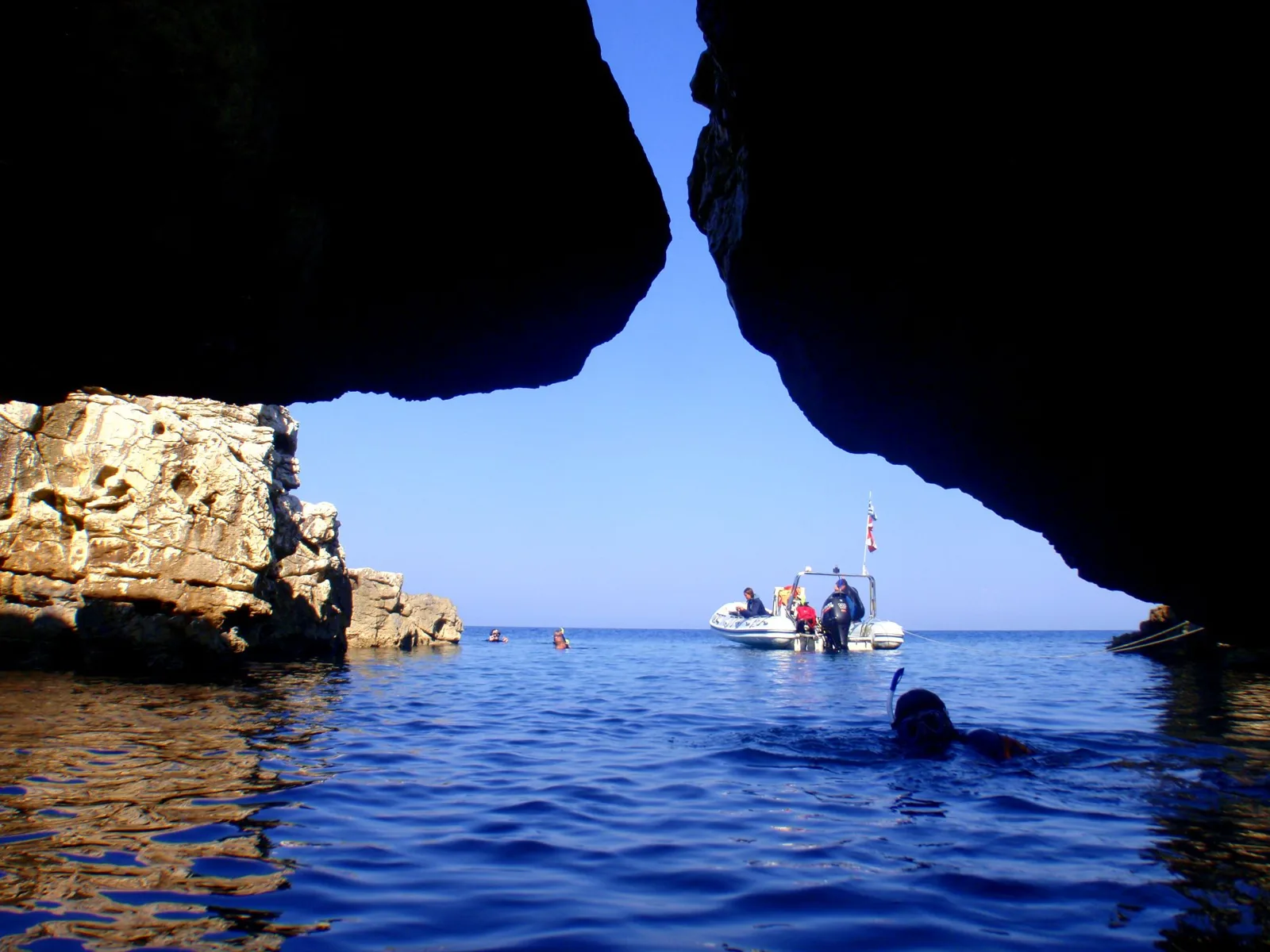
The Skeludi Reef site, sometimes referred to as Skeloudi, centers around a small rocky island located off the coast of Corfu. The underwater topography follows the shape of the islet, presenting a reef structure that descends from a shallow plateau down to approximately 25 metres. For those looking for more depth, the reef relief continues further down to 60 metres, though the primary recreational diving occurs in the upper layers. Accessing the site is efficient, as it is situated only about five minutes by boat from most local dive centers.
Approaching the site, you will typically find the reef starting at a depth of about 9 metres, where a wall or drop-off begins. The descent is straightforward, leading you along the edges of the rocky formation. The terrain is varied, offering different angles for exploration depending on which side of the island you choose to follow. On the south-western sector, the topography becomes more interesting with the presence of a fissure or small cave located around the 30-metre mark. This feature provides a different perspective on the reef's structure compared to the open walls.
The current at Skeludi is generally light, making it a manageable site for most divers. While conditions can shift slightly depending on the time of day, such as during the late afternoon, it typically remains a calm environment. This lack of strong surge or heavy current makes it an ideal location for those who want to focus on buoyancy and observation without fighting a constant flow. The sheltered nature of the reef around the island helps maintain these stable conditions, providing a reliable environment for successive dives.
Visibility at this site is consistently good, often reaching between 20 and 30 metres. This clarity allows you to see the reef structure and the movement of fish from a significant distance. As you move along the walls, the light penetrates well into the upper 25 metres, highlighting the textures of the rock and the various organisms living within the crevices. The combination of clear water and a shallow depth profile makes for an easy visual experience, even for those just beginning to explore reef systems.
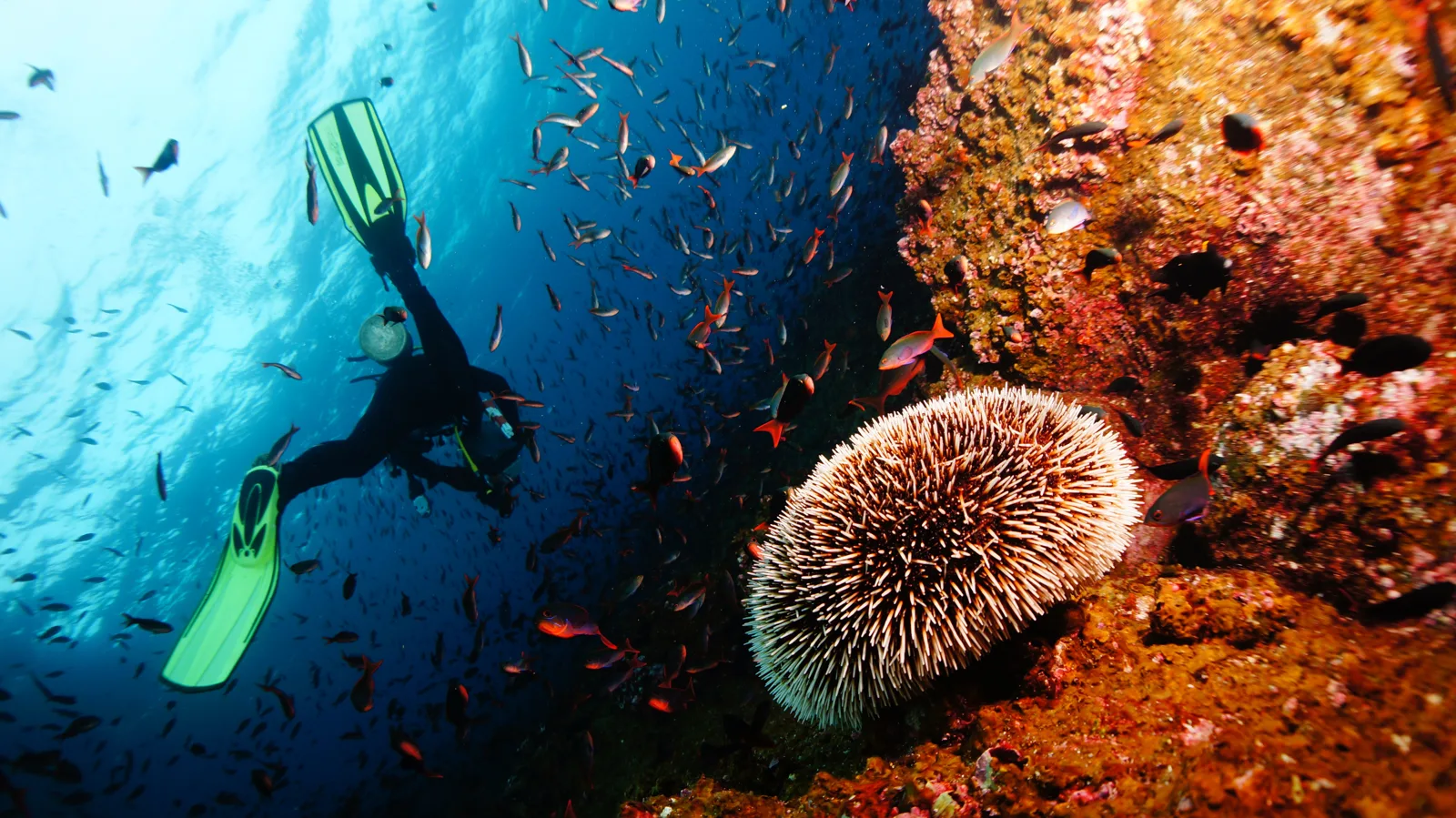
The resident fauna is quite diverse, with plenty of life tucked into the reef's nooks and crannies. You will frequently encounter various species of fish, such as white seabream (Diplodus sargus) and salema (Sarpa salpa), which move in groups along the reef edges. Red scorpionfish (Scorpios scorpio) are often found camouflaged against the rocks, requiring a keen eye to spot. Looking closer into the crevices, you can find octopus and moray eels (Muraena helena) waiting in their sheltered spots.
Mid-water and reef sections are also populated by larger groups of fish, including European pilchard (Sardina pilchardus) and various groupers. If you keep a watchful eye on the open water near the reef edges, you may encounter schools of barracuda. These fish often move through the area, adding a sense of motion to the dive. The presence of these larger predatory fish indicates a healthy ecosystem supported by the nutrients moving around the island's structure.
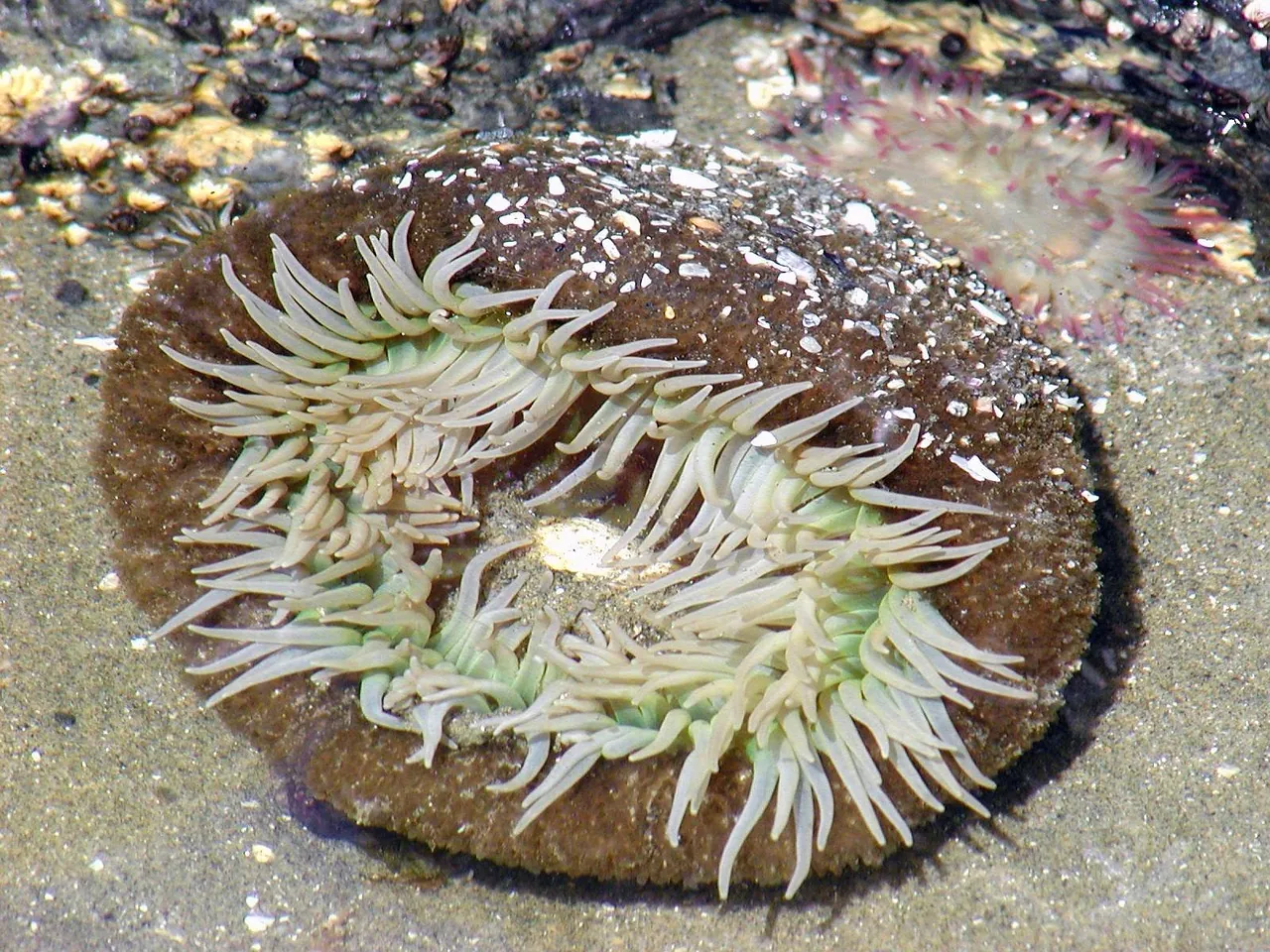
For those interested in smaller details, the reef provides many opportunities for macro-style observation. The rocky substrate is home to various invertebrates and smaller reef dwellers that utilize the protection of the island. While the main attraction is often the larger fish and the topography, the complexity of the reef ensures there is always something to look at during your bottom time. The site is well-suited for divers who prefer a relaxed pace to observe the natural behaviors of these Mediterranean species.
The site has a depth range of 9 to 25 metres, with some reef features extending to 60 metres. It is accessible from the Open Water Diver level, though depth experience is recommended for the deeper sections. Currents are generally light, and visibility typically ranges from 20 to 30 metres. The best time to dive is between May and October.
You can dive Skeludi Reef between May and October. The site is reached by a short boat trip from Corfu, taking about five minutes from most local dive centers. Visibility typically ranges from 20 to 30 metres, helping you appreciate the rocky reef and fish activity during the dive.
Skeludi Reef is accessible from the Open Water Diver level. You can begin around 9 metres and explore the main recreational reef down to approximately 25 metres. Depth experience is recommended for deeper sections, including the fissure or small cave around 30 metres and reef relief extending to 60 metres.
Skeludi Reef generally has light currents in a sheltered environment around the islet. Conditions can shift slightly depending on the time of day, including during the late afternoon, but the site typically remains calm. You can focus on buoyancy and observation without regularly dealing with strong surge or heavy current.
At Skeludi Reef, you can explore varied rocky topography, walls, a fissure or small cave, and reef crevices. Fish may include white seabream, salema, groupers, pilchard and barracuda. You can also look for red scorpionfish, octopus, moray eels and smaller invertebrates among the rocks.