CMAS
Nero-Sport Diving Center, Zakynthos, Griechenland
Google 5/5 (650 reviews)
4.6 km away as the crow flies
Zakynthos · Greece · Mediterranean
Explore two distinct tunnels and a large cavern at Faros, a shallow dive site in Zakynthos known for its unique underwater acoustics.
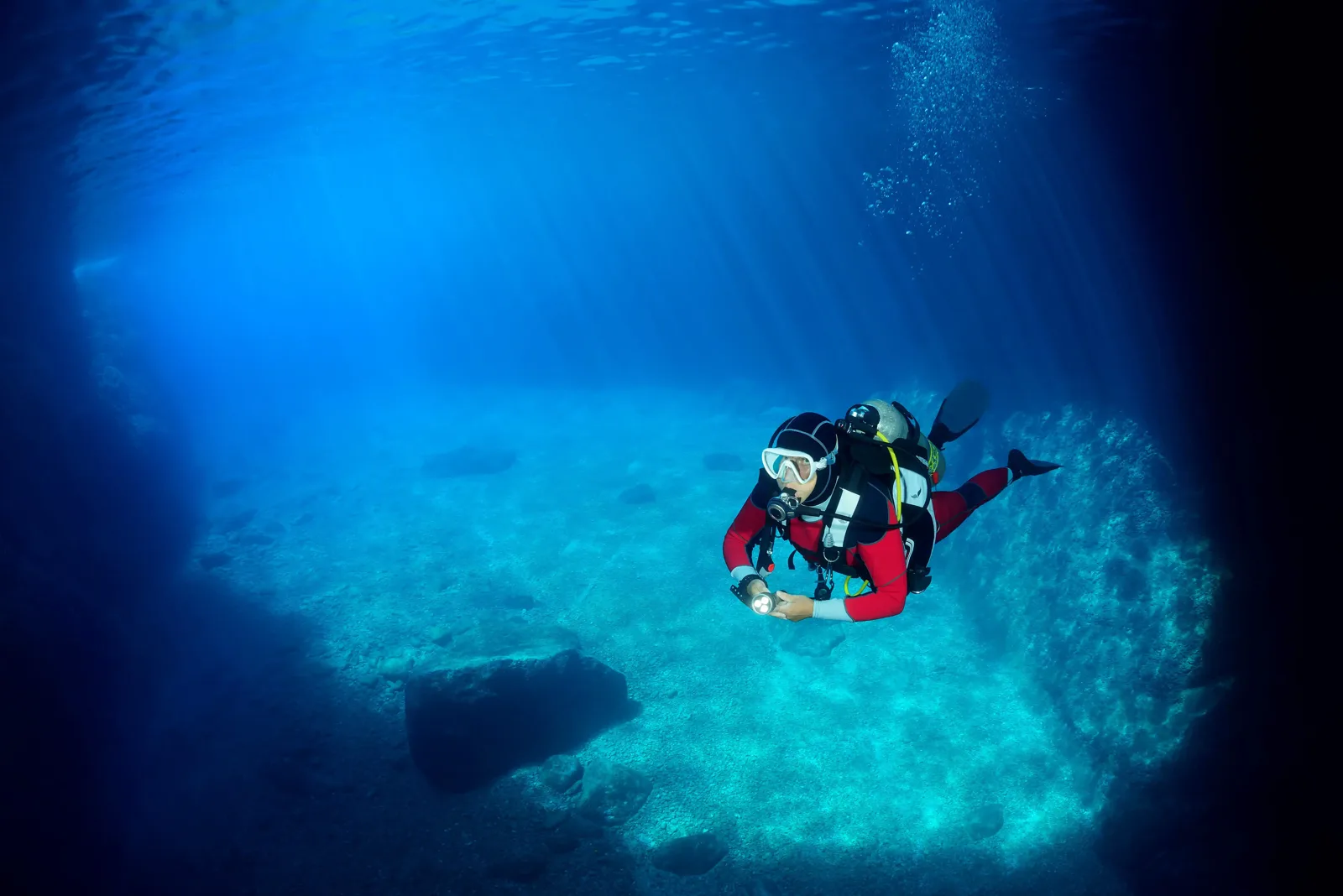
Faros, sometimes referred to as Farrow, provides a shallow, arch-like dive profile distinct from many of Zakynthos' deeper open-water sites. Located a 40-minute boat ride from the harbour, the site is defined by its two primary tunnels and a large central cavern. You'll descend into an environment where light plays across rock formations, creating a sense of exploration without the demands of significant depth.
The primary feature here is the series of passages and the cavern, which offer a navigable route through the underwater landscape. As you move through the tunnels, particularly the narrower sections, the water pressure changes create an audible 'cannonball' sound, a unique acoustic phenomenon that adds to the sensory experience of the dive. This is not a reef or a wall; it's a geological exploration.
The topography at Faros focuses on internal structures rather than expansive vistas. You'll navigate through swim-throughs and into the larger cavern, observing how the marine life adapts to these sheltered, often dimly lit spaces. The focus is on the interaction between water, rock, and the organisms that call these features home, providing a different perspective on underwater environments.
This site is particularly noted for its accessibility and gentle conditions, making it a good choice for those looking to experience cavern diving without requiring advanced certifications. The relatively shallow depth allows for extended bottom times, providing ample opportunity to explore the intricacies of the tunnels and cavern. It stands out in the region for offering a protected, architectural dive experience.
Faros is a shallow dive, with depths ranging from a minimum of 12 metres. The site is accessible from Open Water Diver level, making it beginner-friendly. Access to the site is exclusively by boat, typically a 40-minute journey from the harbour. There is no notable current at this location, ensuring a relaxed dive profile throughout.
Faros is accessible from Open Water Diver level, making it suitable for beginners. You can experience its shallow, arch-like profile, two underwater tunnels, and large central cavern without needing advanced certifications. The site focuses on navigating geological features rather than managing significant depth or challenging conditions.
Faros is a shallow dive with depths starting at twelve metres. Its profile is arch-like rather than a deep open-water descent, with tunnels and a large cavern forming the main route. The relatively shallow depth allows extended bottom times while you explore the underwater rock formations.
Faros has no notable current, creating a relaxed dive profile. You can move through the two tunnels and explore the large cavern in gentle conditions, while focusing on the rock formations, passages, and sheltered spaces. Access is exclusively by boat, with the journey typically taking forty minutes from the harbour.
At Faros, you will see two distinct underwater tunnels, a large central cavern, and rock formations shaped into passages and swim-throughs. The site is geological rather than a reef or wall. In narrower tunnel sections, changing water pressure creates an audible cannonball sound, while marine life occupies sheltered, dimly lit spaces.